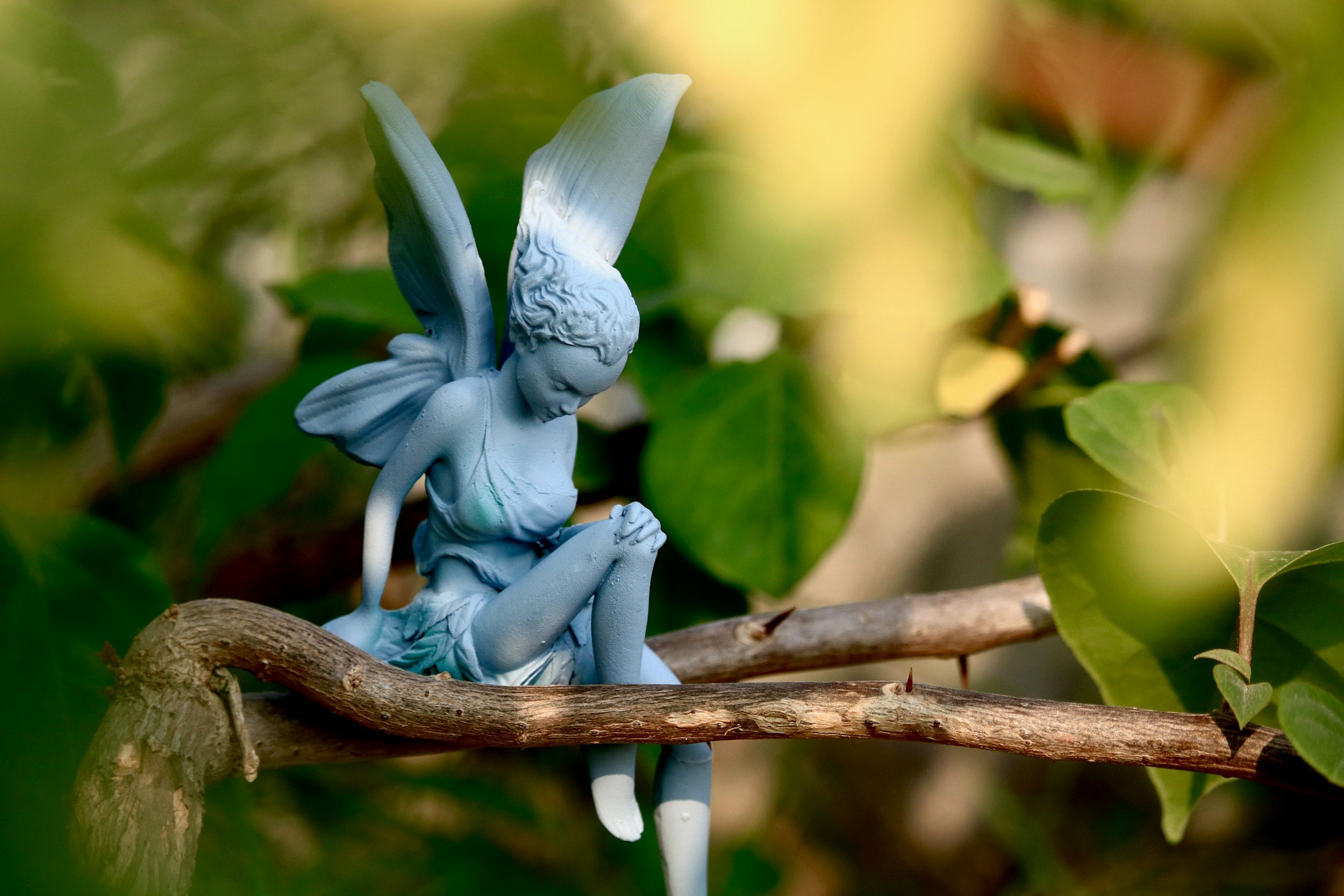
Are fairies real? Fairies are real as enduring figures of folklore, literature, local belief, and some modern spiritual practice, but there is no verified scientific evidence that they exist as a biological species or objectively demonstrated supernatural beings. They reflect historical ways of understanding the natural world.
Historical Fairy Beliefs in the British Isles
The terminology and folklore of fairies vary significantly across the British Isles, with distinct traditions such as the Irish Aos Sí, Scottish Sìthichean, Welsh Tylwyth Teg, and English fairies. In early modern Scotland, fairy belief was often documented in witchcraft trials, where accused individuals claimed to have interacted with the "Good People." These historical accounts often depict powerful, ambivalent, or dangerous beings, rather than the universally benevolent nature spirits found in later literature. The Scottish trials provide a window into a worldview where the unseen was an active, sometimes threatening presence in daily life. Accused individuals described encounters that were treated with utmost seriousness by both the populace and the authorities, reflecting a deeply ingrained belief system that governed social and environmental interactions. The narratives from these trials reveal a complex relationship between humans and the fairy realm, characterized by a need for careful negotiation and appeasement. These are records of beliefs and allegations produced under the pressures of legal proceedings, not scientific documentation of supernatural beings.
Robert Kirk's 1692 work, The Secret Commonwealth, described fairies as having their own laws and customs, living in a parallel society. This text provides a key contemporary account of these beliefs, illustrating how fairies were often seen as a parallel society, sometimes associated with the dead or demonic forces. Kirk, a Scottish minister, documented the beliefs of his parishioners, detailing a complex hierarchy and social structure among the fairies. Traditional offerings to fairies included milk, honey, bread, and oats, often left to appease them and prevent mischief. These offerings were not acts of worship but practical measures to maintain harmony with unpredictable neighbors. The folklore emphasizes caution, warning against accepting fairy food or revealing true names, underscoring the perceived danger of these interactions. The belief in changelings, where a human child was thought to be replaced by a fairy, further highlights the fear and anxiety associated with these beings in historical contexts. This fear was a driving force behind many of the protective practices and rituals that characterized early modern fairy belief.
The Shift to Folklore and Spiritualism
During the nineteenth and early twentieth centuries, the study of fairies shifted towards folklore collection and spiritualism. The Cottingley Fairies photographs, taken in 1917, highlighted the intersection of traditional belief, new technology, and the desire for empirical proof. While endorsed by Sir Arthur Conan Doyle, the creators later admitted the photographs were staged with card figures. The staged images were later promoted as evidence, and their cultural impact demonstrates the enduring appeal of attempts to photograph the supernatural. The Science Museum Group records detail how these images captured the public imagination during a time of profound social change and loss following the First World War, offering a comforting vision of a hidden, magical world. The desire to find empirical evidence for the supernatural reflects a broader cultural shift towards scientific inquiry, even as traditional beliefs persisted in new forms. This period also saw the rise of folklore societies dedicated to preserving the oral traditions of rural communities, recognizing them as valuable cultural heritage rather than mere superstition.
It is crucial to distinguish between the historical record, which documents fairy belief as a serious and often fearful system, and the romanticized versions found in Victorian literature. The latter often features winged sprites that diverge significantly from older folklore. Writers and artists of the Victorian era transformed the formidable beings of early modern belief into diminutive, often benevolent creatures suitable for children's stories. Modern occult and popular uses often blend various traditions and psychological interpretations, further complicating the understanding of fairy beliefs. This blending can obscure the specific regional and historical contexts from which these beliefs originated, leading to a homogenized view that does not accurately reflect the diversity of the folklore. The transition from feared neighbors to literary subjects marks a significant evolution in how fairies are perceived and represented in Western culture. This literary transformation has had a lasting impact on popular conceptions of fairies, often overshadowing the more complex and ambivalent figures of traditional folklore.
Regional Names Are Not Interchangeable
The English word fairy is often used as a convenient umbrella, but Irish, Scottish Gaelic, Welsh, and English sources do not describe one standardized population. Aos Sí belongs to Irish-language and Irish folkloric contexts. Sìthichean appears in Scottish Gaelic contexts, while Tylwyth Teg is a Welsh term with its own narratives and place associations. English fairy traditions also vary by region, period, and genre.
Translation can hide those differences. Rendering every name as “fairy” may help a general reader, but it can also suggest that customs recorded in one place apply throughout the British Isles. A warning from a Scottish trial narrative should not automatically be attributed to Irish belief, and a Victorian English illustration should not be treated as evidence for early Welsh tradition. Accurate discussion names the region, language, source type, and approximate period whenever the evidence permits.
What Counts as Evidence for Fairies?
Historical evidence can establish that people told fairy stories, reported encounters, feared consequences, and used customs connected with those beliefs. Trial records, folklore collections, manuscripts, photographs, and museum objects can document those human activities. They do not, by themselves, verify that a supernatural being caused the reported event. A legal deposition also reflects questioning, power, and the conditions under which testimony was recorded.
The Cottingley materials illustrate the difference. The photographs and cameras are real historical objects, and the public debate around them is well documented. Science Museum Group records also explain that Elsie Wright and Frances Griffiths used card figures to stage the images and later described how they were made. The collection therefore provides evidence for photographic experimentation, spiritualist reception, and popular belief, not verified zoological or supernatural proof.
Personal testimony belongs to another category. An experience may carry religious or emotional meaning for the person reporting it, yet private conviction is not the same as independently repeatable evidence. The most accurate answer to “are fairies real?” can respect folklore and living belief while stating that no scientifically verified fairy species or objectively demonstrated supernatural entity has been established.
Modern Perspectives and Psychological Interpretations
Modern interpretations follow several different paths. Some Pagan practitioners understand fairies as spirits of nature or place. Folklorists study how stories, landscape, memory, and social expectations shape reports of encounters. Psychologists may examine perception, absorption, dreams, or responses to ambiguous sensory information without establishing a fairy as the external cause. These frameworks address different questions and should not be blended into one explanation. A personal experience can be meaningful to the person reporting it while remaining unverified as objective evidence.
Fairy beliefs are deeply tied to specific landscapes and local traditions. Practices such as leaving offerings at specific local sites or using specific protective charms are rooted in these contexts. Borrowing these practices without understanding their local significance or the historical context of fear and appeasement can be seen as appropriative. It is essential to approach these traditions with respect and an understanding of their cultural boundaries. Recognizing the difference between a living, localized tradition and a generalized modern practice is key to engaging with these concepts responsibly. The folklore of the British Isles offers a rich, complex narrative that requires careful study rather than casual adoption. Understanding the historical and cultural roots of these beliefs allows for a more nuanced appreciation of their significance and the ways they continue to influence modern thought and practice. This careful approach ensures that the distinct voices and traditions of different regions are acknowledged and respected.
Practical Section: Respectful Land Etiquette When Asking Are Fairies Real
A respectful modern approach focuses on folklore study, land etiquette, and environmental stewardship without attempting to summon or bind local spirits. A practice of bonding with the land can begin with observing local flora, fauna, weather, and place names. This attention encourages appreciation for the landscapes connected with historical narratives while keeping modern reflection distinct from regional customs that may have living community contexts.
Quiet reflection can be framed as communicating with the land, while connecting with the land may take the concrete form of conservation work, habitat restoration, or learning local natural history. Food, drink, candles, ribbons, and non-biodegradable objects should not be left outdoors. A litter-removal walk or donation to a local conservation group is safer than an offering that could disturb wildlife or violate site rules.
Modern spirit-oriented readers may frame consistent attention as developing a relationship with the spirits of place. The faerie of lost things offers another example of contemporary esoteric interpretation. Such practices remain modern reflections and should not be confused with historical testimony or local custom. Environmental care, accurate folklore study, and respect for access restrictions provide firmer practical standards than attempts to produce proof of fairies.
Historical narratives can also shape present-day attitudes toward landscape. Reading about local beliefs alongside modern discussions of spirits makes the difference between folklore evidence and personal interpretation visible. Neither approach establishes biological or supernatural proof. The practical result can still be concrete: learn the history of a site, obey access rules, avoid damaging habitats, and support the people who care for the land.
If you want to go further with this, my book walking with spirits walks you through how to connect and work with spirits.