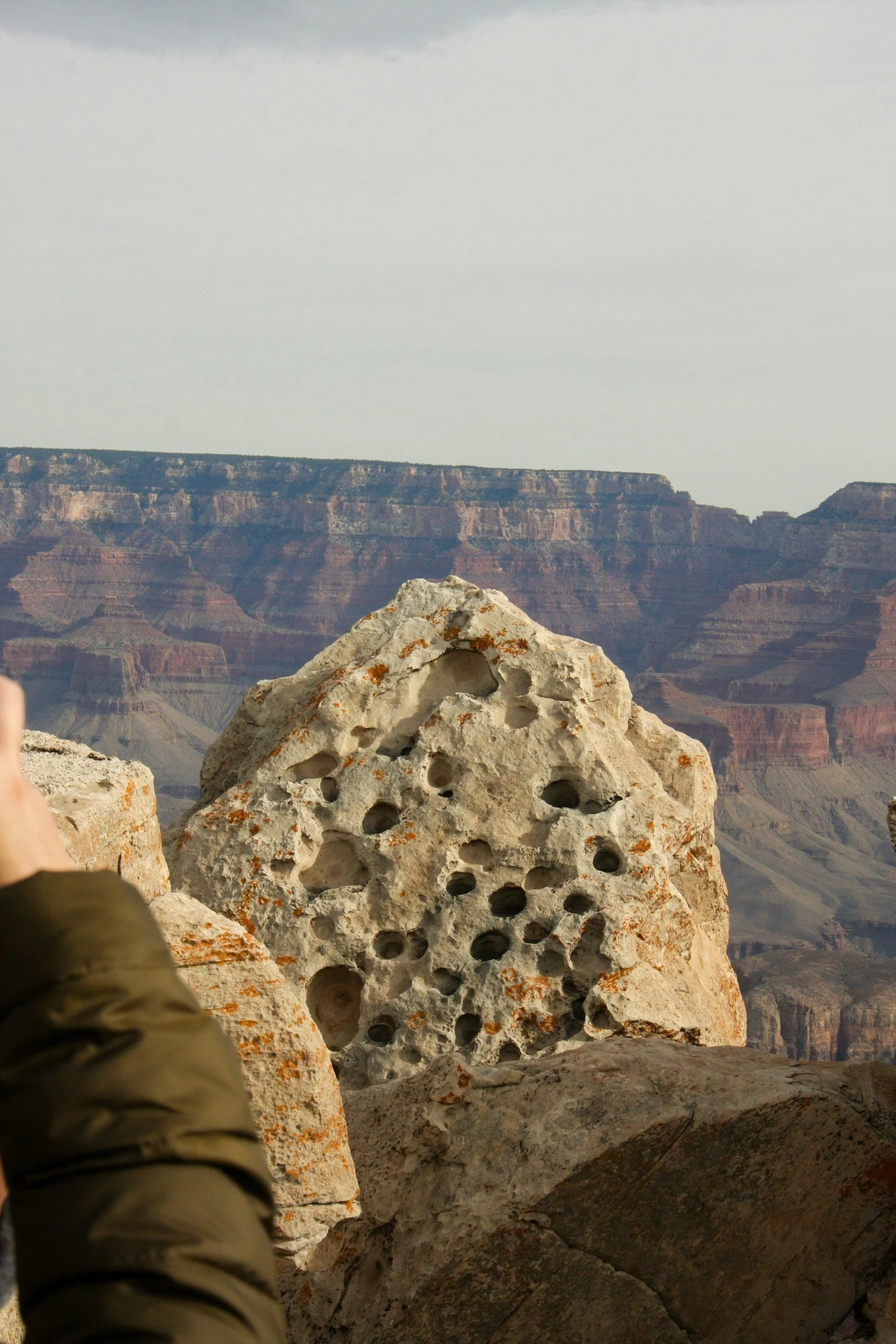
A hag stone is a naturally perforated rock, often shaped by erosion, abrasion, weathering, or rock-boring organisms. British and European folklore collections document holed stones as protective objects for homes, sleepers, and livestock, although names and uses vary by region. Modern practitioners may use one as a symbolic ward, viewing tool, or focus for reflection.
The Geological Formation of a Hag Stone
The creation of a hag stone is a slow geological process driven by the relentless forces of nature. These stones are most commonly found along coastlines, riverbeds, and chalk cliffs, where the constant movement of water and abrasive particles gradually wears away the weaker parts of a rock. Over decades or even centuries, this continuous friction can bore a complete hole through the stone. In some cases, the holes are created by the boring action of marine organisms, such as certain types of bivalve mollusks, which drill into softer rocks like limestone or chalk to create protective shelters.
Because the formation process requires specific environmental conditions and a significant amount of time, finding a naturally holed stone is often considered a rare and fortunate event. The type of rock plays a significant role in how the hole forms. Softer sedimentary rocks are often more susceptible to erosion and biological boring, so they frequently supply naturally perforated objects later used when creating magical tools. Harder igneous or metamorphic rocks are less likely to develop these natural perforations, though it is not impossible given enough time and the right circumstances.
The natural origin of the hole is a key element in the stone's perceived magical value because it distinguishes a found object from a drilled bead. Modern writers sometimes explain its protection through associations with moving water, but this is not a universal historical doctrine and not every specimen formed in flowing water. The visible geology should be identified before a symbolic account is added.
Regional Names and the Adder Stone Distinction
Naturally holed stones occur in many places, but their names do not form one global taxonomy. English-language sources use terms such as hag stone or witch stone, while German Hühnergötter, literally chicken gods, refers to holed stones associated with household or poultry protection. The Stone of Odin was a particular perforated monolith in Orkney, not a general name for every small holed pebble. Regional labels should remain attached to their own evidence.
Modern writing often conflates a hag stone with the adder stone, but the oldest descriptions do not establish that they were identical. In Natural History, Pliny the Elder reports a Gallic claim about an anguinum produced by intertwined snakes and cast into the air, where it had to be caught before touching the ground. He says its owner expected success with rulers and lawsuits. This polemical Roman report describes a snake-generated object, not plainly a water-worn pebble with a hole.
While modern usage often treats the terms interchangeably, the earlier adder stone tradition involved a specific mythological origin related to snakes, whereas the folklore of the holed stone centers primarily on its natural water-eroded perforation and protective qualities against witchcraft and nightmares. The conflation likely occurred because both were highly valued natural amulets with protective properties, but their historical origins and specific uses were distinct.
Documented British and European Protective Folklore
Among the uses recorded for naturally holed stones in British and European folklore, protection is especially prominent. They belong within the wider study of ancient and traditional magical artifacts, but each claim needs a date and region. Sources describe stones placed around homes, beds, stables, or animals to guard against nightmares, illness, witchcraft, or harmful night beings.
In rural communities, these stones were frequently used to protect valuable livestock from disease and malevolent magic. Farmers would hang them in barns, stables, and over the doors of cowsheds. It was believed that witches or hags could steal the milk from cows or ride horses to exhaustion during the night, a phenomenon known as being hag-ridden. A holed stone suspended by a natural cord, such as red thread or leather, was thought to prevent these afflictions.
The stones were also sometimes tied directly to the animals, particularly horses, or placed in their drinking troughs. This practice reflects the deep concern for the health and well-being of livestock in agricultural societies, where the loss of an animal could have severe economic consequences. The stones served as a tangible form of insurance against unseen threats, providing peace of mind to the farmers who relied on their animals for survival.
Within the home, the stones served a similar protective function. Edward Lovett, in his 1925 work Magic in Modern London, documented the continued use of holed stones as charms against nightmares and disease in early twentieth-century Britain. The stones were often hung above the bed or tied to the bedpost to prevent the night hag from sitting on the sleeper's chest and causing terrifying dreams or sleep paralysis.
They were also placed near doorways and windows to prevent malevolent spirits from entering the home, acting as a physical and spiritual barrier when working with spirits of home and land. Modern practitioners sometimes describe the hole as a trap or filter for harmful influence, but that language should not be projected onto every historical use. This use of the stone as a domestic ward highlights its role in providing psychological comfort and a sense of security in an unpredictable world.
Looking Through the Hole: Customs and Beliefs
Looking through a naturally formed hole is a recurring motif in later folklore and modern retellings, where the stone may expose a witch, fairy, spirit, or hidden influence. The evidence is regional and uneven, so it is safer to describe this as a cluster of viewing customs than as one belief shared across all Celtic or British traditions.
In such accounts, the hole acts as a framing device through which an otherwise hidden being or danger might be recognized. That is a statement about folklore, not evidence that the stone changes human vision. The simple action of narrowing the visual field may also explain why modern practitioners use it to concentrate attention on a place, object, or question.
Popular culture often turns the motif into a reliable supernatural lens. Historical reports do not justify that certainty, and focused meditation is a modern adaptation rather than a proven explanation for every earlier custom. A careful practice can acknowledge the story while using the hole only as an ordinary visual frame.
Modern divinatory use extends this lens metaphor to lost objects, confusing situations, or suspected harmful influence. Such use should be labeled contemporary unless a dated regional source is available. It should never be treated as evidence that another person caused misfortune.
Modern Magical Practice and Misconceptions
In contemporary magical practice, the holed stone remains a popular and versatile tool. Practitioners continue to use them as protective amulets, often incorporating them into reviewing protection magic or carrying them as personal talismans. The stones are also used in meditation and visualization exercises, drawing on the historical belief in their ability to provide clarity and insight.
However, several misconceptions and modern urban legends have emerged surrounding these stones. One common claim is that a true holed stone must be found by the person using it and cannot be bought or gifted. While finding a stone oneself can certainly add personal significance to the object, there is no widespread documented rule prohibiting the purchase or exchange of these amulets. The effectiveness of the stone is generally considered to depend more on the practitioner's intention and connection to the object than on how it was acquired.
Another modern legend involves the claim that Aleister Crowley cursed the town of Hastings and that only a holed stone can break the curse. This is a contemporary urban legend with no basis in historical folklore or Crowley's documented activities. It serves as an example of how traditional beliefs can be adapted and incorporated into modern narratives.
Practitioners should reject historical claims that these stones can cure snakebites or diseases. While they were historically used as charms against illness, they should never be used as a substitute for professional medical advice or treatment. The value of the stone lies in its symbolic and psychological significance, not in any literal medical efficacy.
Historical Sources and Folklore Documentation
The study of holed stones and their associated folklore relies on a variety of historical sources and ethnographic documentation. These records provide valuable insights into the ways in which human societies have historically interacted with their environment and sought protection from unseen threats.
Evidence What it supports What it does not prove Pliny the Elder, Natural History, first century CE A Roman report of a Gallic snake-generated anguinum associated with rulers and lawsuits That the anguinum was an ordinary water-worn hag stone Edward Lovett, Magic in Modern London, 1925 Continued British collection and use of holed stones as protective charms That every modern interpretation was present in earlier centuries Regional folklore collections Protective placement near sleepers, households, stables, livestock, or thresholds One name, method, or belief shared throughout Europe Geological examination Whether abrasion, weathering, boring organisms, or another natural process formed the hole Any supernatural effect or guaranteed symbolic meaning
These sources document different objects, periods, and beliefs rather than one unbroken tradition. Pliny's anguinum belongs to a Roman report about Gaul, while Lovett's holed stones belong to much later British collecting and charm use. Comparing them is useful only when the gap and the uncertain identification are kept visible.
Practical Applications in Contemporary Settings
For those interested in incorporating these stones into their own practices, there are several practical methods grounded in documented custom. The most common application remains the use of the stone as a protective ward. Hanging a stone near the front door or above the bed is a simple and traditional way to create a sense of security and boundary within the home.
The stone can also be used as a focal point for observation. Holding it while considering the geological processes that formed it can support attention to the local environment and work with the genius spirit of the land. Looking through the hole can serve as a visualization technique, helping to clear the mind of distractions and focus on a specific intention or question.
If cleaning is needed, use plain water at home and dry the stone fully. Do not place soap, salt, oil, or ritual substances in a stream, and do not assume every stone formed in running water. The object's physical texture and visible wear can serve as reminders that symbolic use begins with an ordinary natural process.
The continued use of these natural amulets reflects a broader human desire to find tangible connections to the past and the environment. Whether used for protection, meditation, or simply as a beautiful natural object, the holed stone remains a compelling symbol of the intersection between the natural world and human belief.
By understanding the history and folklore associated with these stones, practitioners can engage with them in a way that is both respectful of tradition and relevant to modern life. Holding a stone shaped by abrasion, weathering, organisms, or other natural processes can support patient observation and a sense of connection to the wider environment.
Ethical Foraging and Environmental Considerations
Before collecting any stone, check the rules for the specific beach, river, park, archaeological area, or protected habitat. Laws vary by jurisdiction, ownership, conservation designation, and quantity removed. Public access does not automatically grant permission to take natural material, and even lawful removal can damage a sensitive site when repeated by many visitors.
Ethical foraging practices emphasize leaving no trace and respecting local laws and regulations. Practitioners are encouraged to appreciate the stones in their natural environment while walking the land, perhaps photographing them or using them as temporary focal points for meditation before returning them to the landscape. If one wishes to acquire a stone for personal use, seeking legally obtained specimens from reputable vendors or finding them on private land with permission are responsible alternatives.
The desire to connect with nature through the use of natural amulets should not come at the expense of the environment. By adopting sustainable and ethical practices, practitioners can honor the traditions associated with these stones while ensuring that the natural landscapes that produce them are preserved for future generations.
If you want to go further with this, my book Walking with Nature Spirits shows you how to connect with nature spirits to create relationships with the land.