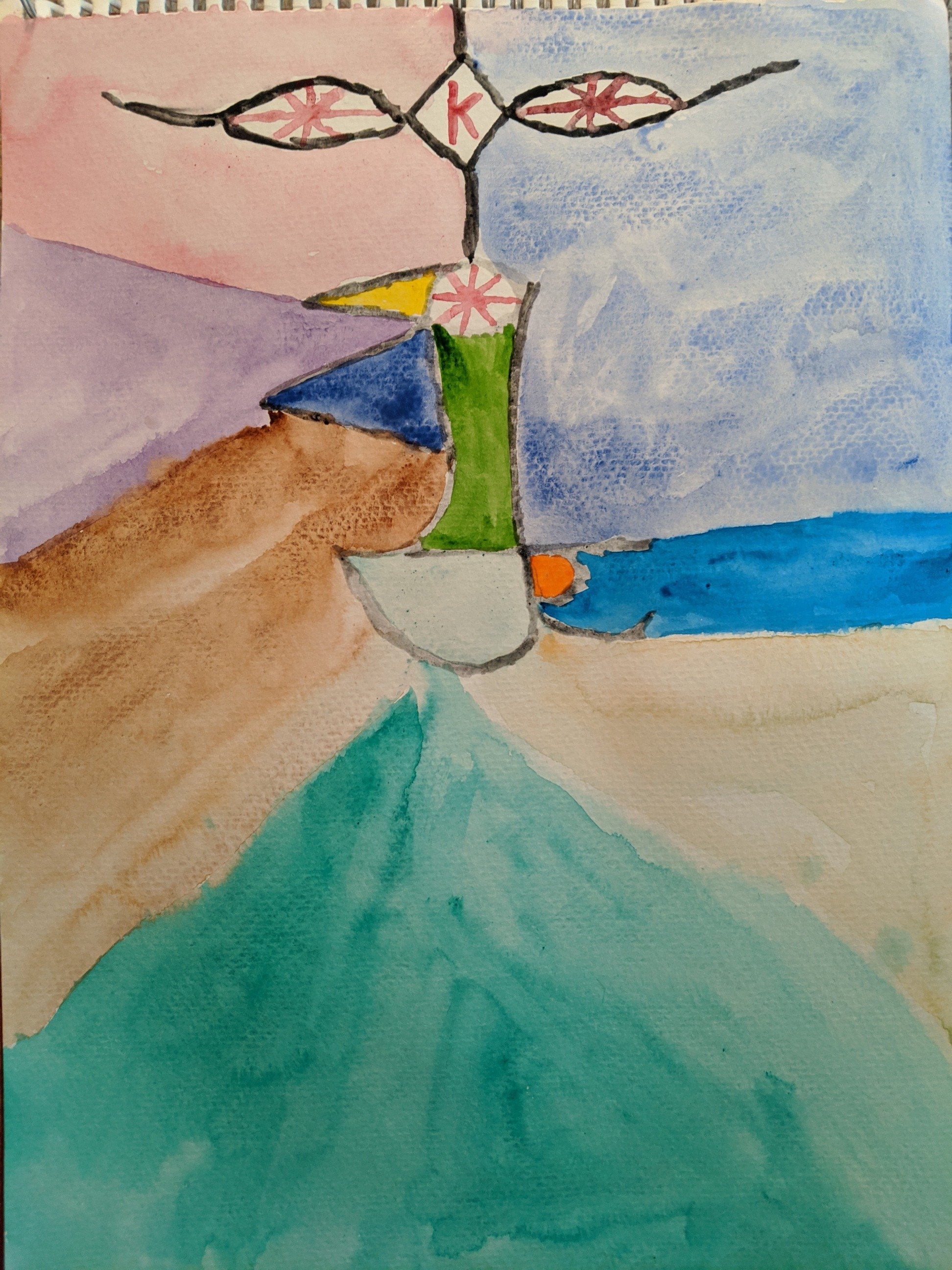
A servitor is an intentionally created, semi-autonomous psychic entity designed to execute a specific task without the practitioner's constant attention. Often described as magical software, it is programmed with a clear purpose, set rules, and a defined lifespan to achieve a practical outcome.
What Is a Servitor?
The concept of a servitor as a deliberately constructed, semi-autonomous psychic entity or "magical software" is a cornerstone of modern chaos magic, popularized by figures like Phil Hine. While the broader idea of thoughtforms has older roots in esoteric traditions, the specific, pragmatic approach to programming a servitor for a limited task is a modern development. The psychological model views these constructs as portions of the practitioner's psyche that are deliberately "budded off" and given a name, trait, and symbol.
A servitor is a programmed construct designed for a specific task without moment-to-moment attention. It acts as an automated process running in the background of consciousness or the environment. By defining a clear purpose, practitioners create a tool that operates independently to achieve a practical outcome. This approach strips away unnecessary complexity, focusing entirely on utility and results. The practitioner does not need to constantly visualize the desired outcome because the servitor is designed to handle that continuous effort.
The psychological model suggests that creating a servitor involves isolating a specific desire or intention and giving it a distinct identity. This separation allows the practitioner to interact with the intention objectively, reducing the interference of conscious doubt or anxiety. The servitor becomes a functional extension of the will, executing its programming until its task is complete or its lifespan expires. By externalizing the intention, the practitioner bypasses the internal resistance that often hinders magical operations.
It is crucial to understand that a servitor is a tool, not a sentient companion. Treating it as conscious can lead to erratic behavior or energy drain. The effectiveness of a servitor relies on precise programming and strict boundaries, ensuring it remains a controlled and predictable mechanism for magical work. Anthropomorphizing the construct introduces unnecessary variables and risks compromising the integrity of the operation.
Servitor vs. Egregore vs. Thoughtform
Clarifying terminology is essential for effective practice. A servitor is a simple, non-sentient construct designed for a limited task. It is created by an individual practitioner and operates according to strict programming. Its existence is entirely dependent on the parameters set during its creation, and it possesses no independent will or consciousness. It is a single-purpose utility, much like a specialized piece of software designed to perform one specific function efficiently.
A thoughtform is a broader category that encompasses any psychic entity created by focused thought or emotion. While a servitor is a specific type of thoughtform, not all thoughtforms are servitors. Some thoughtforms are created unintentionally through intense emotional states, while others are deliberately constructed for complex purposes. The term thoughtform is sometimes viewed as representing more advanced or multifaceted constructs than simple servitors. Thoughtforms can range from fleeting emotional impressions to persistent entities that influence a specific location.
An egregore is a collective thoughtform powered by a group of people. It arises from the shared focus, beliefs, and rituals of a community or organization. Unlike a servitor, which is controlled by a single practitioner, an egregore is sustained by the aggregate attention of its contributors. Egregores can become highly complex and influential, shaping the behavior and experiences of the group that feeds them. They often develop a degree of autonomy that a simple servitor lacks.
Practitioners must distinguish between a servitor and a tulpa to avoid accidentally creating an entity with free will. A tulpa is an advanced thoughtform designed to achieve sentience and independence, a process that requires significant time and energy. A servitor, by contrast, must remain a strictly controlled tool with no capacity for independent thought or deviation from its programming. Blurring these lines can result in a construct that resists termination or acts outside its intended parameters.
How to Create a Servitor: Step-by-Step
Practitioners typically follow a structured creation process to ensure the servitor functions correctly and safely. The first step is defining a clear, positive intention. This intention must be unambiguous and focused on a single, achievable outcome. Vague programming leads to unpredictable results, so the task must be defined with precision. The statement of intent should be written in the present tense, avoiding negative phrasing or conditional statements.
Once the intention is set, the next step is designing the form, name, and attributes of the servitor. The form should reflect its purpose, whether it is an abstract geometric shape, an animal, or a mechanical object. The name should be unique and resonant. From the name or the statement of intent, practitioners create a sigil, which serves as the primary interface for interacting with the construct. Understanding what's underneath the squiggle is vital for creating an effective symbol. The sigil acts as the control panel for the servitor.
Anchoring the servitor to a physical object is a common convention to provide a focal point. This object, known as a housing or vessel, can be a stone, a piece of jewelry, a drawing, or a small statue. The physical anchor gives the servitor a stable presence in the material world and provides the practitioner with a tangible point of interaction. It also simplifies the process of termination, as destroying the anchor can serve as the kill switch.
The creation process requires focus and discipline. The practitioner must clearly visualize the servitor, imbuing it with the defined attributes and linking it to the sigil and the physical anchor. This mental construction forms the foundation of the entity, preparing it for programming and activation. The visualization should be detailed and consistent, establishing a strong mental link between the practitioner, the symbol, and the intended function.
Programming Rules and Energy Sources
Establishing rules and limits is a critical part of programming a servitor. These rules define how the servitor operates and prevent it from causing unintended consequences. A common and necessary rule is "do no physical harm," ensuring the construct's actions remain safe and ethical. The programming must be exhaustive, covering all potential scenarios related to the task. Practitioners should consider potential loopholes in their instructions and close them before activation.
Determining an energy source is equally important. A servitor requires energy to function, and if a source is not explicitly defined, it may draw energy from the practitioner or the environment in unpredictable ways. Practitioners must specify what feeds the construct, such as the practitioner's focused attention, sunlight, moonlight, or a specific element like fire or water. This regulation prevents unintended energy drain and ensures the servitor operates efficiently. The energy source should be easily accessible and appropriate for the servitor's nature.
Learning how to build energy and intention over time is crucial for maintaining a servitor. The energy source must be consistent and appropriate for the task. For example, a servitor designed for protection might be fed by the energy of a burning candle, while a servitor designed for healing might draw energy from the earth. The practitioner must establish a routine for feeding the servitor if it relies on their direct attention.
The programming must also include instructions on how the servitor should respond when its energy source is depleted or unavailable. It should be programmed to enter a dormant state rather than seeking alternative, unauthorized sources of energy. Clear programming and regulated energy sources are the hallmarks of a safe and effective servitor. Without these safeguards, the construct may become unstable or parasitic.
How to Launch and Activate Your Servitor
Launching the servitor is the process of transitioning it from a mental construct to an active entity. This firing process involves formally assigning the task and providing the initial burst of energy required to begin operation. The launch must be deliberate and focused, clearly communicating the programming and the rules to the construct. This is often done through a formal ritual or a period of intense concentration.
Activation is typically achieved through focused visualization or a gnostic state. The practitioner enters an altered state of consciousness, temporarily suspending the analytical mind, and focuses entirely on the servitor's sigil and purpose. This intense concentration charges the sigil and embeds the programming into the construct. The gnostic state allows the intention to bypass the conscious mind and take root in the subconscious, where the servitor will operate.
During the launch, the practitioner formally names the servitor, states its purpose, outlines its rules, defines its energy source, and establishes its lifespan and kill switch. This formal declaration solidifies the construct's parameters and initiates its operation. The practitioner then releases the servitor to perform its task, trusting the programming to guide its actions. The release must be decisive, severing the immediate conscious link to allow the servitor to function independently.
After the launch, the practitioner should employ the "charge and forget" protocol, deliberately shifting attention away from the servitor and its task. Constantly checking on the servitor or worrying about its progress can interfere with its operation and drain its energy. The servitor must be allowed to work independently, relying on its programming and its designated energy source. Obsessive attention, often referred to as lust of result, is a common cause of failure in magical operations.
Common Problems: Lifespans and Kill Switches
A critical safety measure is defining the servitor's operational lifespan and a specific kill switch before launch to prevent it from becoming a parasitic thoughtform. A servitor should never be created with an indefinite lifespan. It must be programmed to cease operation and dissolve once its task is complete or a specific date is reached. An open-ended lifespan increases the risk of the construct developing unintended behaviors or draining energy unnecessarily.
The termination protocol, or kill switch, is a mechanism designed to instantly deactivate and destroy the servitor if it malfunctions or is no longer needed. This protocol can be a specific word, a physical action, or the destruction of the physical anchor. The kill switch must be simple, reliable, and known only to the practitioner. It serves as an emergency override, ensuring the practitioner always maintains ultimate control over the construct.
Vague programming is a common source of problems. If the instructions are ambiguous, the servitor may interpret them in unexpected ways, leading to unpredictable and potentially harmful results. The programming must be precise, exhaustive, and unambiguous, leaving no room for misinterpretation. Practitioners should review their instructions carefully before launch, looking for any potential misunderstandings.
Another common problem is treating the tool as a sentient companion. A servitor is a mechanism, not a pet or a friend. Interacting with it emotionally or attributing consciousness to it can blur the boundaries of its programming and lead to erratic behavior. Practitioners must maintain a detached, objective relationship with their servitors, treating them strictly as tools for achieving specific practical outcomes. Emotional attachment can make termination difficult and compromise the safety of the practice.
If you want to go further with this, my classes Magical Entities and Custom Attention Entities walks you through how to create and work with magical entities so you can create better results