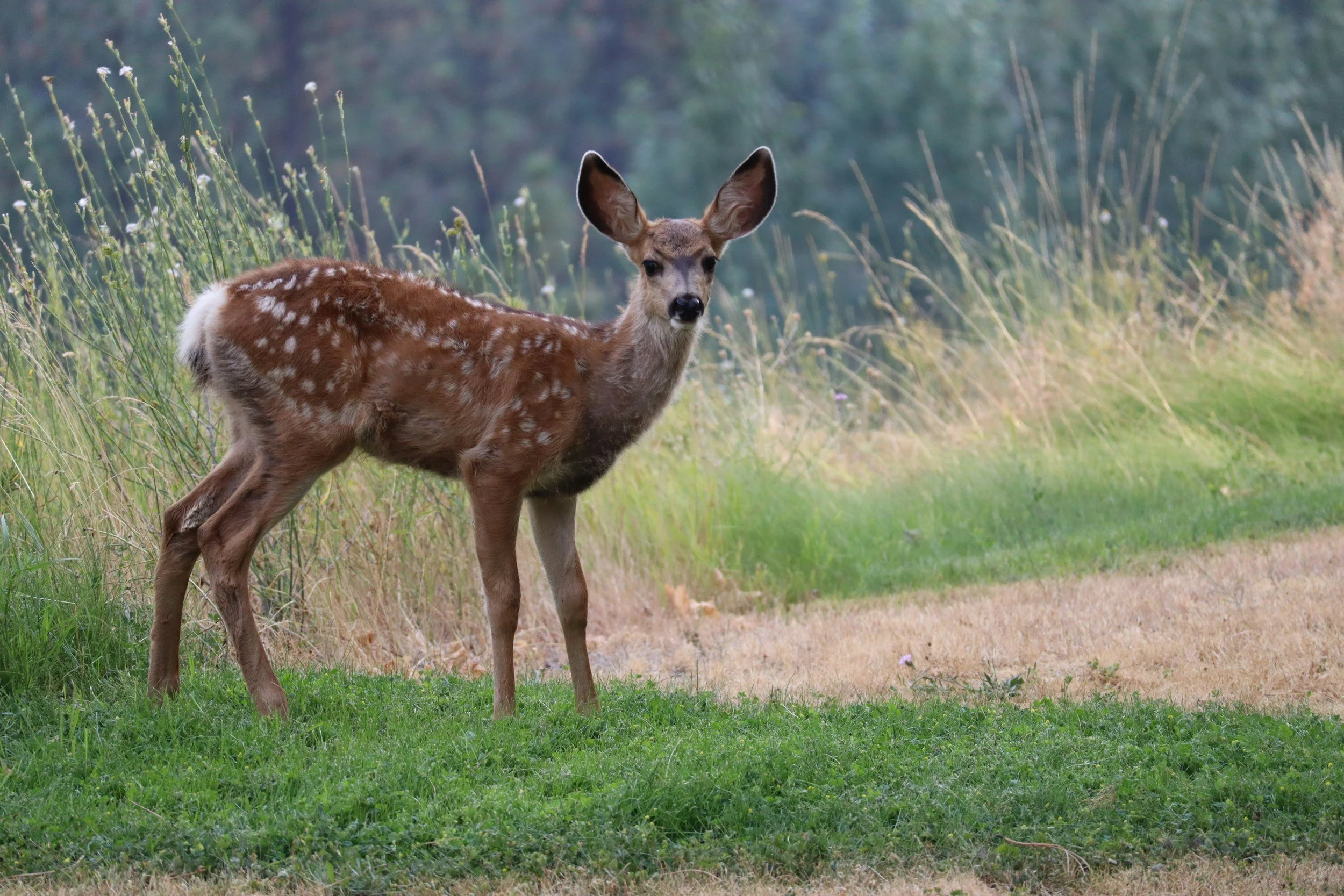
In modern reflective practice, deer spiritual meaning often centers on alertness, gentleness, adaptability, and timely retreat. Historical meanings are not universal: Greek myth, Christian legend, Wixárika religion, and contemporary occult practice each interpret deer within a distinct cultural and religious setting.
Understanding Deer Spiritual Meaning in Modern Practice
When exploring deer spiritual meaning, it is essential to recognize that this is a modern interpretive question rather than a universal doctrine. In contemporary reflective practices, the deer is often viewed as an animal guide that encourages individuals to cultivate alertness, gentleness, and adaptability. These modern associations draw loosely from observable traits of the Cervidae family. White-tailed deer, for example, possess highly evolved physical adaptations, including enhanced hearing, peripheral vision, and the ability to move swiftly through dense forests. These traits inform the modern symbolism of heightened sensitivity and the capacity for timely retreat when faced with danger.
In modern esoteric and psychological frameworks, the deer frequently represents the ability to move gracefully through transitional or liminal spaces. Just as a deer moves between the deep, shadowed forest and the open, sunlit clearing, practitioners often view the deer as a symbol of moving between the physical and spiritual worlds. This interpretation draws on the animal's natural behavior to inspire mindfulness and a deeper connection to one's environment. It is a practice of observing nature and applying those observations to personal growth, rather than claiming a message from a specific historical or cultural tradition.
While some modern interpretations distinguish between the gentle, nurturing doe and the protective, aggressive stag, these are not fixed gender meanings established as historical fact. Instead, they serve as useful imagery for individuals seeking to balance different aspects of their own lives. The stag might inspire a focus on boundaries and protection, while the doe might encourage empathy and care. Both aspects contribute to the broader understanding of deer symbolism in contemporary personal development.
The concept of liminality is particularly relevant to the deer. Liminal spaces are thresholds, the areas between one state of being and another. The deer's habit of feeding at dawn and dusk, the times between day and night, further reinforces this association. Practitioners of modern reflective spirituality often use the image of the deer to help them transition through difficult periods in their own lives, finding inspiration in the animal's ability to remain calm and alert in uncertain environments.
Furthermore, the deer's antlers, which are shed and regrown annually, are often interpreted as symbols of regeneration and renewal. This biological cycle provides a powerful metaphor for personal transformation. Individuals facing significant life changes may look to the deer as a reminder that growth often requires letting go of the old to make way for the new. This perspective emphasizes the importance of aligning oneself with natural cycles and embracing the inevitability of change.
Historical Record and Folklore
The symbolism of the deer has a rich history in various cultural records and folklore, distinct from modern generalized interpretations. In ancient Greek mythology, the deer is closely associated with Artemis, the goddess of the hunt and the wilderness. The Ceryneian Hind, a creature with golden antlers and brazen hooves, was sacred to Artemis and featured prominently in the labors of Heracles. This mythological representation highlights the deer's connection to the untamed natural world and divine protection.
Medieval Christian legends also feature the stag as a divine messenger. The stories of Saint Hubertus and Saint Eustace both involve a vision of a magnificent stag with a crucifix between its antlers, leading to their conversion. In these narratives, the deer serves as an instrument of divine revelation, a motif that underscores the animal's perceived purity and connection to the sacred. These historical and folkloric examples demonstrate how different cultures have interpreted the deer's presence, but they should not be conflated with modern concepts of spirit animals.
Indigenous Traditions and Cultural Boundaries
When discussing the spiritual significance of animals, it is necessary to maintain explicit distinctions among historical record, folklore, and living religious traditions. Many Indigenous cultures have profound, specific relationships with the deer, which are distinct from modern popular interpretations and often closed to outsiders. For instance, in the Wixárika (Huichol) tradition, the Blue Deer, known as Kauyumari, is a central tutelary spirit linked to peyote and maize. This is a specific living religious tradition with its own cosmology and sacred practices, not a generalized symbol for public appropriation.
Wixárika accounts cannot be generalized into a single Indigenous meaning of deer. The Blue Deer belongs to a particular religious complex involving pilgrimage, maize, and peyote, and published ethnography does not make its ceremonies available for casual reproduction. Other Indigenous nations maintain their own narratives, responsibilities, and community authorities, which require nation-specific sources rather than a blended summary.
The popular phrase "spirit animal" is often used without reference to the specific nations, languages, kinship systems, or ceremonial responsibilities that outsiders claim it represents. A modern personal encounter is better described as animal symbolism, an animal guide, or a reflective association. It should not be labeled a "Native American meaning" without a named nation and an appropriate community source.
Respecting these cultural boundaries is a fundamental aspect of ethical spiritual practice. It requires acknowledging that not all knowledge or symbolism is available for universal consumption. By learning about these specific traditions without attempting to adopt their practices, individuals can develop a more nuanced and respectful understanding of the diverse ways in which human beings relate to the natural world. This approach fosters a deeper appreciation for the complexity of global spiritual traditions.
Removing a symbol from its language, ceremonial setting, and community authority can turn a complex religious relationship into a generic self-help image. Biological observation and clearly labeled personal reflection offer a non-appropriative alternative. They allow the deer to function as a modern metaphor without claiming access to another community's sacred knowledge.
Cultivating Intuitive Awareness: A Practical Approach
For those interested in integrating the symbolism of the deer into their personal lives, a safe and respectful practical approach involves cultivating intuitive awareness based on the animal's biological traits. This modern reflective practice focuses on developing acute hearing, peripheral vision, and swift movement in a metaphorical sense. By observing how a deer interacts with its environment, individuals can learn to "listen" more closely to their surroundings and respond to personal challenges with grace and sensitivity.
To begin this practice, find a quiet space where you can sit undisturbed. This aligns with the need to cultivate silence in your spiritual practice, allowing you to tune out distractions and focus on your internal state. Close your eyes and take several deep breaths, imagining the stillness of a forest clearing. Visualize the physical traits of a deer: its large ears swiveling to catch the faintest sound, its wide-set eyes taking in a broad view of the landscape. Use this imagery to inspire your own mindfulness.
As you sit in silence, practice expanding your awareness. Notice the subtle sounds in your environment that you might normally ignore. Pay attention to the physical sensations in your body and the thoughts passing through your mind. This exercise helps to apply awareness to spirit work and daily life, enhancing your ability to perceive subtle shifts in energy or mood. When you encounter a challenging situation, recall the deer's ability to remain alert and make swift, graceful decisions. This approach allows you to internalize your connection with spirits and nature without appropriating closed Indigenous terminology.
If you encounter a deer in the wild, use the opportunity to practice presence. Observe its behavior without attempting to interact or project a specific cultural message onto the experience. Record the actual context of the encounter in a journal, noting the time of day, the weather, the deer's actions, and your own feelings in that moment. This method of observation is an alternative approach to working with spirits that grounds your spiritual practice in tangible reality. By focusing on personal reflection and biological reality, you can draw meaningful inspiration from the deer while respecting cultural boundaries.
Maintaining clear boundaries is also a crucial aspect of this practice. Just as a deer knows when to retreat to the safety of the forest, practitioners must learn to recognize when to step back from overwhelming situations. This understanding is essential for spiritual cleansing and internal work, ensuring that you protect your energy and maintain emotional balance. By studying the deer's natural adaptability, you can develop a more responsive and grounded approach to your personal and spiritual development.
Another practical exercise involves spending time in nature, specifically in areas where deer are known to live. This does not mean actively seeking them out, but rather immersing yourself in their habitat. Pay attention to the signs they leave behind, such as tracks or grazed vegetation. This practice of tracking, even without the intent to hunt, can sharpen your observational skills and deepen your connection to the natural world. It encourages a state of active presence, requiring you to be fully engaged with your surroundings.
Finally, consider incorporating the concept of timely retreat into your daily routine. The deer's survival depends on its ability to sense danger and move away quickly. In a modern context, this translates to recognizing when a situation is no longer beneficial or safe and having the courage to remove yourself from it. This might involve setting firmer boundaries in relationships, stepping away from a stressful work environment, or simply taking a break from the constant stimulation of digital media. By embracing the deer's wisdom of retreat, you can cultivate a more balanced and resilient approach to life's challenges.
If you want to go further with this, my class How to work with spirits covers a step by step process for learning how to work with spirits, including animal spirits, so that you can build collaborative relationships with them and create more meaningful results.