The hecate symbol most securely rooted in ancient Greek religion is not a single graphic sign but a group of attributes tied to Hecate, especially torches, keys, dogs, and crossroads. The labyrinth-like image now called Hecate's Wheel is a modern devotional emblem, not a verified ancient design.
What a Hecate Symbol Meant in Ancient Greek Religion
In ancient Greek religion, Hecate was a goddess of thresholds, transitions, protection, and encounters with powers that stood near the edges of ordinary life. That setting matters because the question of a "symbol" can be misleading. Ancient worship did not revolve around one universal logo. Instead, Hecate was recognized through recurring attributes in texts, images, dedications, and ritual settings. Those attributes could overlap, but they did not carry one fixed meaning in every place and period.
The clearest early literary witness is the Homeric Hymn to Demeter. In that hymn, Hecate hears Persephone's cry, meets Demeter while carrying a torch, and later becomes Persephone's attendant and companion. This passage supports the torch as an ancient attribute and places Hecate within a story about loss, search, return, and movement between worlds. It does not describe a sigil, seal, or line drawing that functioned as an official emblem.
That distinction helps prevent a common modern mistake. A contemporary search for a hecate symbol often assumes that ancient religion worked like modern branding, with one image standing for a deity across all contexts. The historical record is less tidy. Greek religion was local, practical, and shaped by setting. A figure honored at a doorway, a crossroads, or a civic sanctuary could share a divine name while appearing in different visual and ritual forms.
Torches, Keys, Dogs, and Crossroads
Torches are among Hecate's best-attested attributes. In literary and artistic contexts, they mark illumination, night travel, searching, and guidance through uncertain spaces. The torch can suggest movement between darkness and visibility, but its meaning should stay close to the source at hand. In the Demeter hymn, the torch belongs to a scene of witness and accompaniment, not to a generalized theory that Hecate always ruled every hidden mystery.
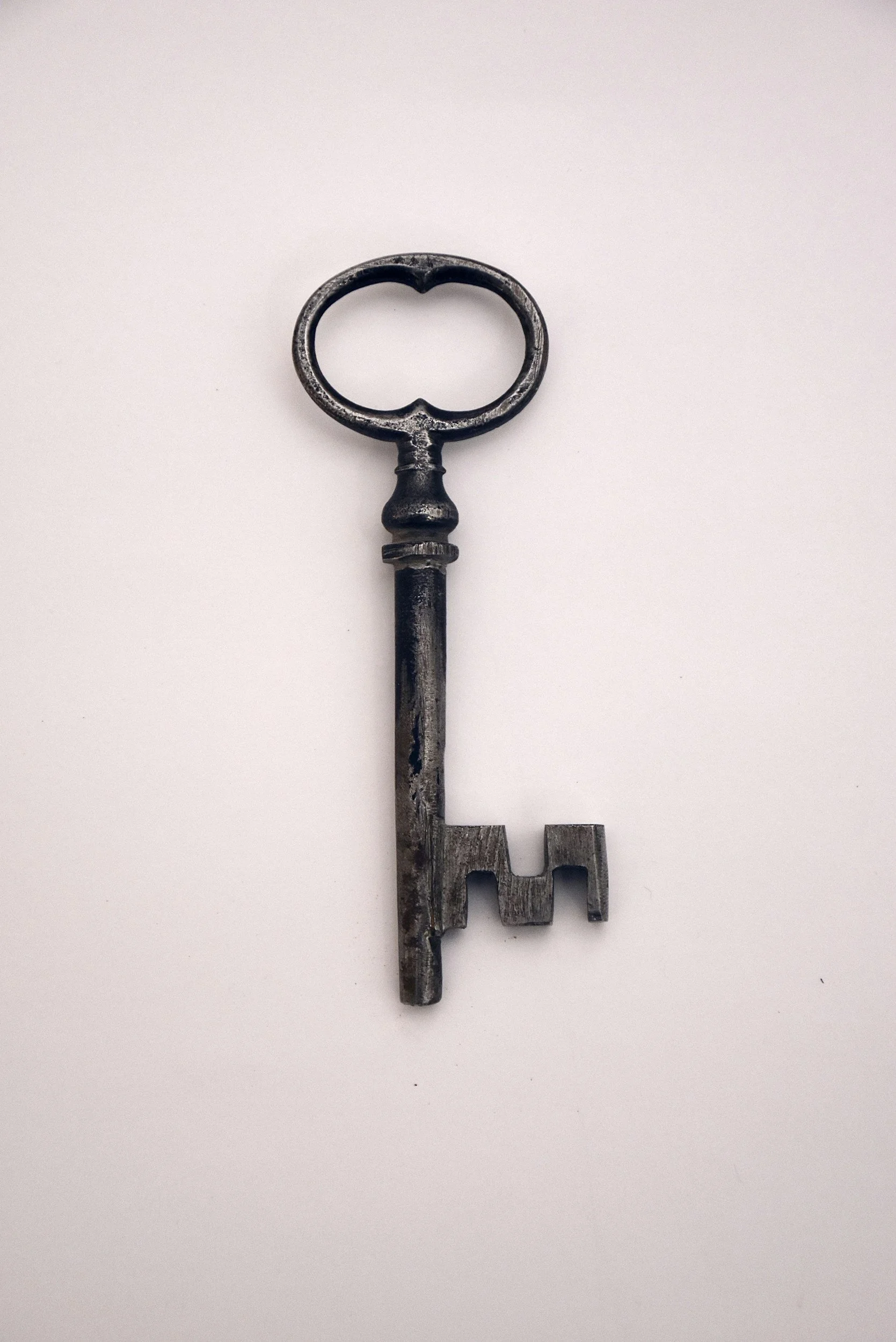
Keys also belong to Hecate's historical image, especially in later Greek usage and titles that present her as a keeper of access. A key is a fitting attribute for a goddess connected to gates, liminal spaces, and guarded passages. Even so, care is needed. The key should not be turned into proof that every modern key charm sold for devotion reproduces an ancient cult object. The historical point is narrower: key-bearing language and imagery are part of the record, and they fit Hecate's association with thresholds.
Dogs are likewise important. Ancient evidence links Hecate with dogs through imagery, epithets, and sacrificial contexts discussed in modern scholarship. This association should be described precisely. It supports the dog as a historical attribute, but it does not justify sentimental claims that dogs were always gentle companions in the modern pet-keeping sense or that every canine image in later occult art preserves an uninterrupted ancient meaning.
Crossroads are one of the most persistent settings for Hecate. Greek evidence especially connects her with three-way junctions, doorways, and boundary points. These were practical and symbolic places where protection, pollution, movement, and uncertainty could converge. Because of that setting, Hecate could be represented in triple-bodied form, often called a Hekataion, with figures facing different directions. Modern summaries sometimes flatten this into the claim that she was originally a timeless triple goddess in the Maiden-Mother-Crone sense. That is not an ancient Greek taxonomy. The better reading is that triple form relates to place, outlook, and function, especially at three-way boundaries.
Why Place and Period Matter
One of the most useful corrections in recent scholarship is the reminder that Hecate did not look or function the same everywhere. The major sanctuary at Lagina in Caria shows this clearly. There, Hecate was not simply a nocturnal crossroads figure in miniature. She also appeared as a monumental civic goddess within a state-sponsored cult and festival setting. Scholarship on Lagina emphasizes her public role, her importance to local political and religious life, and the fact that single-bodied representations belonged to that context.
This evidence matters because it breaks the habit of treating one familiar modern image as the essence of the goddess. A household threshold, a roadside offering place, and a civic sanctuary did not carry the same religious emphasis. Keeping domestic devotion, crossroads practice, and Hellenistic civic cult in separate frames, even when they involve the same deity, is therefore essential to accurate description.
The same caution applies to language about magic. Hecate is often connected in modern writing with witchcraft, herbs, ghosts, and ritual power. Some of those associations have a basis in ancient and late antique materials, but they belong to different genres and periods. A Greek hymn, a local cult statue, a magical text, and a modern devotional handbook are not interchangeable evidence. Treating them as if they were all parts of one unbroken system produces a false sense of continuity.
The Strophalos in Late Antiquity
The term strophalos appears in late antique material, especially in discussions of the Chaldean Oracles and related theurgical traditions. In that context, the word refers to a ritual implement associated with motion, turning, or spinning. Modern scholarship also relates it to the iynx, another ritual device. However the exact reconstruction is framed, the key point is stable: the ancient strophalos was a tool used in ritual, not a verified two-dimensional badge printed on amulets, social media posts, or altar cloths.
This is where historical source criticism is most needed. Modern articles often place an elegant labyrinth-like wheel beside the word strophalos and imply that the picture itself is ancient. No secure archaeological or textual basis establishes the familiar modern wheel design as an ancient graphic sign of Hecate. The late antique evidence supports a spinning implement, not the current line drawing.
That does not make the modern design meaningless. It means the design belongs to modern reception history. When a current practitioner uses the wheel as a devotional focus, that act can be sincere and significant within contemporary Pagan practice. It simply should not be labeled an archaeological recovery from classical Greece or Late Antiquity.
Modern Hecate's Wheel and Other Contemporary Readings
The image now widely called Hecate's Wheel gained visibility in contemporary Pagan circles in the late twentieth century. Practitioner writing has helped popularize it as a modern emblem linked to Hecate devotion. In that same modern environment, the Maiden-Mother-Crone model was sometimes mapped onto Hecate's triple form. Both developments belong to recent religious interpretation, not to the earliest Greek evidence.
Presenting those developments honestly does not diminish them. It simply locates them where they belong. Living religions regularly reinterpret older figures through new symbolic systems, new psychological language, and new ritual needs. The problem begins only when modern adaptation is presented as ancient fact. For Hecate, that usually happens in three ways: by calling the wheel an ancient sigil, by treating Maiden-Mother-Crone as an original Greek identity, or by claiming that every attribute always meant exactly the same thing from archaic Greece to present-day occult practice.
A more accurate approach separates the layers. Ancient Greek religion supplies torches, keys, dogs, thresholds, crossroads, and some triple representations. Hellenistic and local cult evidence adds regional complexity, including the civic prominence of Lagina. Late antique ritual texts introduce the strophalos as a ritual implement in a different religious environment. Contemporary Paganism adds the wheel as a graphic emblem and often frames practice in devotional or psychological terms that are modern in tone and purpose.
How to Evaluate Claims About Any Hecate Symbol
A strong test is to ask what kind of source stands behind a claim. If a statement concerns ancient Greek religion, the best support usually comes from primary texts, inscriptions, archaeological context, museum records, or peer-reviewed scholarship. If a statement concerns living Pagan practice, a practitioner source may be appropriate, but it should be identified as evidence of modern usage rather than proof of ancient custom.
This method helps sort common online claims. A torch in the Homeric Hymn to Demeter is early textual evidence. A scholarly discussion of dog sacrifice or key-bearing titles is modern interpretation of ancient material. A modern essay explaining Hecate's Wheel is evidence for current devotional language. Each can be useful, but each answers a different question. Mixing them without labels is how mythology, folklore, reconstructed practice, and ancient cult become blurred into a single invented tradition.
Readers who want broader context for boundary work can compare the modern image of the magician at the crossroads with the older religious setting of actual thresholds and junctions. For a general modern framework, the site's discussion of how magic works shows how contemporary systems often reinterpret older symbols rather than preserve them unchanged.
Practical Modern Use of the Hecate Symbol
Practical modern use of the hecate symbol is safest when it stays clearly contemporary. A respectful practice does not try to reconstruct an ancient rite from fragmentary evidence or treat a modern wheel design as if it had a verified classical pedigree. Instead, it can use historically attested attributes as study prompts and modern emblems as optional devotional art.
One simple approach is to choose a single historical attribute and reflect on its documented setting. A torch can be studied through the Demeter hymn as a sign of searching and accompaniment. A key can be used as a reminder of thresholds, privacy, and transitions. Dog imagery can call attention to Hecate's traditional animal associations without making claims about ancient ritual that the evidence cannot support. A crossroads image can invite reflection on choice, boundary, and uncertainty while remaining symbolic rather than theatrical.
A contemporary altar or journal practice may also include the modern wheel, provided it is labeled honestly as a recent emblem. Some practitioners connect this kind of observance with the dark moon and Deipnon-inspired household reflection. In practical terms, that can mean cleaning a room, setting aside a few minutes for quiet review, and placing a key, candle, or dog image in a dedicated space indoors. If food is used as an offering, responsible disposal matters. Public littering, rotting food, and materials that can harm wildlife should be avoided.
Readers interested in adjacent modern practices can explore an astrological magic working for an example of how present-day practitioners frame timing and symbolism, or review how to work with spirits for broader discussion of devotional boundaries. Those resources belong to a modern instructional environment, which is exactly why they should be kept distinct from claims about ancient Greek cult.
Used this way, the modern hecate symbol can serve as a thoughtful devotional or reflective aid without pretending to solve historical questions that the sources answer differently. The most accurate summary is also the most useful one: ancient Hecate is identified by a cluster of attributes and settings, while the wheel most people recognize today belongs to modern Pagan reception.
If you want to go further with this, my class How to work with spirits shows you how to create collaborative connections with spirits.