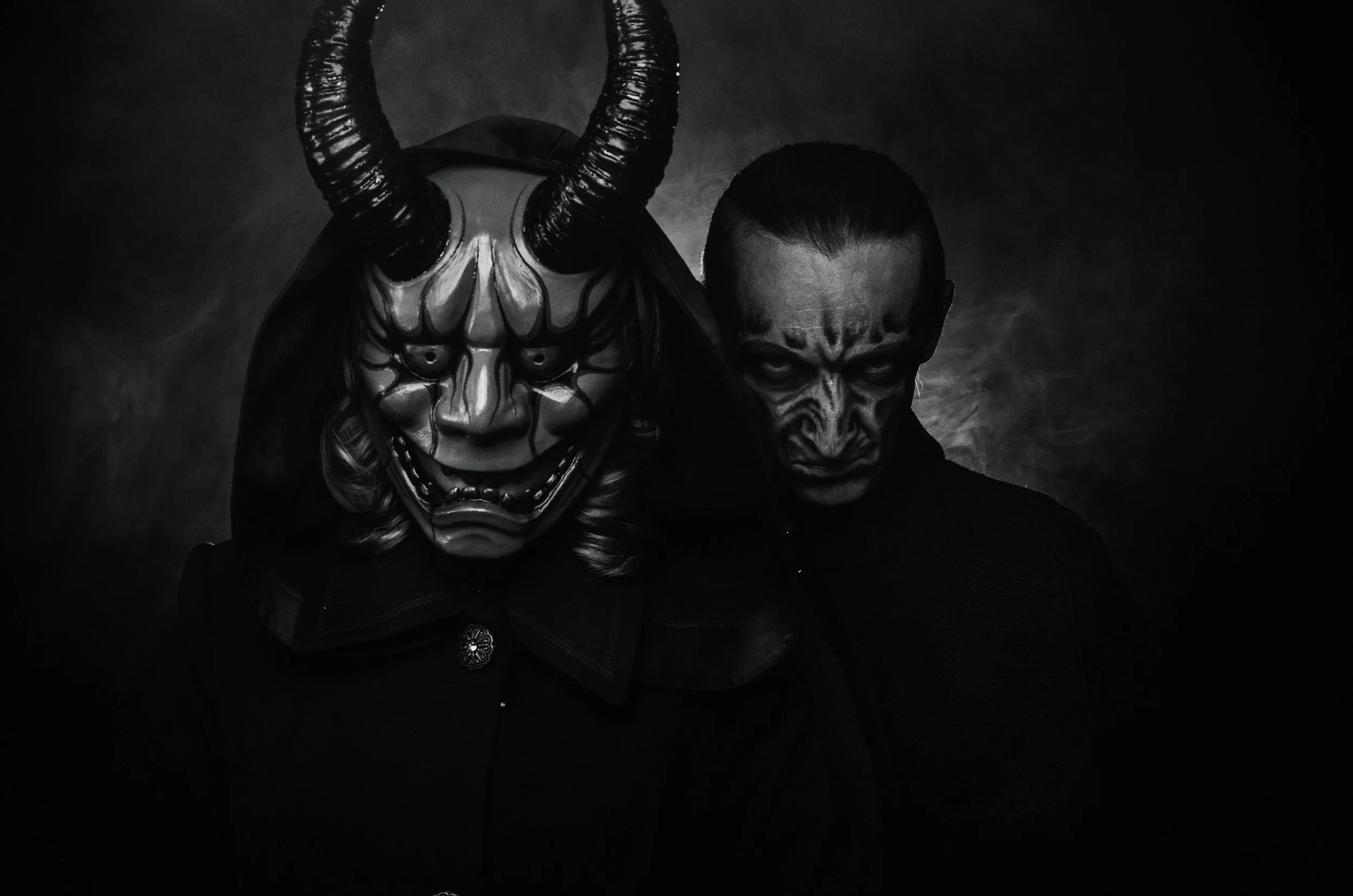
Mephistopheles is a literary demon who appears in the 1587 German Faustbuch and later in plays by Christopher Marlowe and Johann Wolfgang von Goethe; the figure functions as tempter, interlocutor, and philosophical foil who negotiates Faust’s fate, symbolizing skepticism, moral consequence, and the psychological shadow in cultural debate and literary analysis.
Mephistopheles: origins and early context
The earliest printed appearance of Mephistopheles is in the 1587 Historia von D. Johann Fausten, a German chapbook usually called the Faustbuch. That anonymous text presents the character as a demonic servant summoned by Faust to secure knowledge, power, and sensual pleasures in exchange for a soul. The chapbook is rooted in early modern concerns about magic, sorcery prosecutions, and Protestant moral instruction rather than in a preserved pre-Faust cult or classical demon catalogues. The Faustbuch frames the pact as a warning against illicit knowledge and the dangers of transgressing ecclesiastical boundaries.
Contextualizing the character requires separating literary creation from later occult appropriation. Mephistopheles does not appear among the 72 spirits listed in the Ars Goetia and should not be treated as a Goetic figure. Researchers and practitioners who incorporate mythological figures into narrative or ritual work should distinguish between the chapbook’s fictional apparatus and older religious or grimoire traditions; for methodological guidance on tracing literary versus historical roots, consult the discussion of researching mythology for magical workings.
Textual variants and name history
Early texts and translations show multiple spellings: Mephostophiles in the 1587 chapbook, Mephistophilis in Marlowe’s English, and Mephistopheles as fixed by Goethe and later editors. Scholarly attempts to derive a definitive etymology have produced a range of speculative proposals from Hebrew, Greek, or Latin elements, but none is conclusive. The safest scholarly stance treats the name as a literary coinage that acquired associative resonances through successive retellings rather than as a preserved ancient label.
Textual variants also reflect changing authorial aims. The Faustbuch is didactic and punitive; Marlowe’s adaptation heightens psychological torment and tragic momentum; Goethe’s work transforms the figure into a polemical and ironic interlocutor. Editions, marginal commentary, and performance history each affect how readers and audiences perceive Mephistopheles’ status, intent, and moral position.
Marlowe’s Mephistophilis and the theatrical tragic form
Christopher Marlowe’s The Tragical History of Doctor Faustus, composed in the 1590s, relocates the Faust narrative into English Renaissance tragedy and engages with theological concerns of damnation, free will, and pride. Marlowe’s Mephistophilis speaks with a mixture of servility and bitter insight. Passages that dwell on hell, separation from God, and the condition of the damned function as theatrical counterweights to Faustus’s hubris. Those speeches supply emotional and moral depth, making the demonic figure both instigator and reluctant witness to human error.
From a dramatic perspective, Marlowe uses blank verse and rhetorical flourish to stage the collision between Renaissance humanism and Protestant orthodoxy. Mephistophilis’ language often returns to images of confinement and loss, which complicates a simple categorization of the character as mere tempter. The interaction between Faustus and Mephistophilis produces moral tension on stage: the devil offers spectacle and gratification while also manifesting the spiritual cost of Faust’s choices.
Marlowe’s play influenced cultural perceptions of temptation and the cost of forbidden knowledge. It also shaped later interpretations that examine how theatrical representation constructs moral feeling. For connections between psychological framing and the religious context of spirit figures in literature, see analysis of psychology and religion and their role in spirit work.
Goethe’s Mephistopheles: dialectic, irony, and the wager
Johann Wolfgang von Goethe reworked the Faust legend across most of a life and presented Mephistopheles as a complex intellectual adversary in a two-part drama published in 1808 and 1832. Goethe’s character famously declares himself "the spirit that always negates," a definition that situates him as a dynamic critical force rather than a one-dimensional villain. The wager with God and with Faust reframes the exchange from a fixed contract to a trial of satisfaction: Faust loses his soul only if he finds an instant he wishes to preserve forever.
Goethe’s Mephistopheles functions as interlocutor, satirist, and ironic conscience. He exposes the limits of various systems of knowledge, mocks pretension, and at times facilitates creative action. The drama stages Enlightenment debates about reason, feeling, and social transformation; Romantic and classicist aesthetics also collide within the text. Mephistopheles’ role shifts across episodes, from urbane cynic in urban scenes to cosmic antagonist in larger allegorical sequences, which complicates binary readings of good and evil.
Goethe’s treatment influenced opera, visual arts, and philosophical commentary across Europe. The figure became a vehicle for exploring cultural skepticism, social critique, and the ethical cost of ambition. Modern treatments that recycle Faustian themes often reference Goethe’s emphasis on continuous striving, critique, and Faust’s eventual redemption despite the wager; these continuities appear in recent mappings of media and magical imagination as in pop culture discussions such as pop culture magick 20 years later.
Adaptations in music, theatre, and visual arts
Adaptations emphasize different facets of Mephistopheles: theatrical menace, seductive irony, or comedic sarcasm. Romantic composers and nineteenth-century dramatists found the character suited to musical dramatization, while later twentieth- and twenty-first-century artists have used the figure as shorthand for ethical compromise and technological Faustian bargains.
Charles Gounod’s opera Faust gives Mephistopheles a mocking, urbane persona that interacts with the lyricism of the score.
Hector Berlioz and other composers use orchestration to render diabolic presence and inner tension in musical form.
Arrigo Boito adapts Goethe’s scope, highlighting the cosmic and metaphysical dimensions of the character.
Visual artists and filmmakers compress the figure into emblematic scenes that interrogate desire, exchange, and consequence. For discussion of how imagination and spirit concepts intertwine in contemporary creative practice, see work on the connection between spirits and the imagination.
Psychological and Jungian interpretations
Modern psychological readings, especially within Jungian analysis, treat Mephistopheles as an archetypal figure rather than a literal entity. The most prominent Jungian framing identifies Mephistopheles with the shadow archetype: the repressed, denied, or unintegrated aspects of personality that present as provocation, temptation, and projection. Mephistopheles compels confrontation with desires and impulses that social or moral structures have suppressed.
Within individuation theory, Mephistopheles can function as an inner antagonist who forces the subject to acknowledge limitations, errors, and unexamined motives. The figure’s negation exposes one-sidedness in belief or identity, prompting a more complex self-assessment. Jungian commentary underscores that projection of the shadow onto external figures perpetuates moral blindness; reading Mephistopheles as a symbol highlights how inner conflict often appears as an external adversary.
Beyond the shadow concept, Mephistopheles can also be read through archetypal patterns such as the trickster, which complicates straightforward moral categorizations. The trickster-emissary role destabilizes norms, produces disruption, and sometimes catalyzes creative reconfiguration. Psychological readings therefore treat engagement with the figure as interpretive work: symbolic use of Mephistopheles helps explore ethical ambivalence, creative risk, and the structure of desire.
Practical guidance for researchers and practitioners
Approach Mephistopheles as a literary and symbolic resource. Recommended practices when studying or using the figure in creative, scholarly, or reflective contexts include:
Consult primary texts and authoritative translations to observe how the figure changes across editions and historical contexts.
Keep literary evidence distinct from claims about historical ritual or grimoire lineages; treat modern attributions of cultic practice as contemporary inventions unless supported by archival sources.
Use interpretive frameworks, including Jungian archetypes, to make explicit when a reading is symbolic rather than factual.
Document sources and provide context when adapting the figure in fiction, pedagogy, or practice to avoid misleading assertions about origins.
Reflect on ethical implications before incorporating provocative imagery or pact motifs into public or communal settings; prioritize consent and clarity when engaging others in symbolic work.
Scholars and creators who wish to use Mephistopheles as a motif can draw on broader conversations about how imagination shapes spirit concepts and meaningful practice. See reflections on why subjectivity is important in magick for arguments about interpretive responsibility, and consult lessons from a fantasy book about magic for guidance on adapting literary motifs with care.
Ethical and reflective considerations
Ethical engagement requires clear separation between literary history and asserted spiritual facts. Present Mephistopheles as a constructed figure emerging from the 1587 Faustbuch and later artistic elaboration rather than as an ancient supernatural being. Avoid attributing pre-Faust cultic origins or Goetic status. When offering interpretive readings, indicate whether the claim is historical, literary, psychological, or speculative. Encourage critical reflection on social anxieties that produce fascination with bargains promising rapid gain at moral cost. For interdisciplinary perspective on how imagination and spirit concepts interact in modern practice, consult work on the connection between spirits and the imagination and investigations of pop culture magick 20 years later.
When drawing on Mephistopheles in pedagogical settings, emphasize archival evidence and historiography, and credit translations and commentaries. When using the character symbolically in therapeutic or ritual contexts, prioritize informed consent, psychological safety, and collaboration with qualified practitioners where relevant. Clear contextualization reduces the risk that symbolic language will be read as historical assertion.
Concise closing
Mephistopheles remains a potent literary creation whose form and function shift across the 1587 Faustbuch, Marlowe’s play, and Goethe’s drama. Treat the figure as a malleable cultural symbol useful for exploring ethics, aesthetics, and inner conflict while maintaining historical precision and ethical care in interpretation or reuse.
If you want to go further with this, my book Walking with Daemonic Spirits walks you through how to work with daemonic spirits collaboratively. so you can get better results.