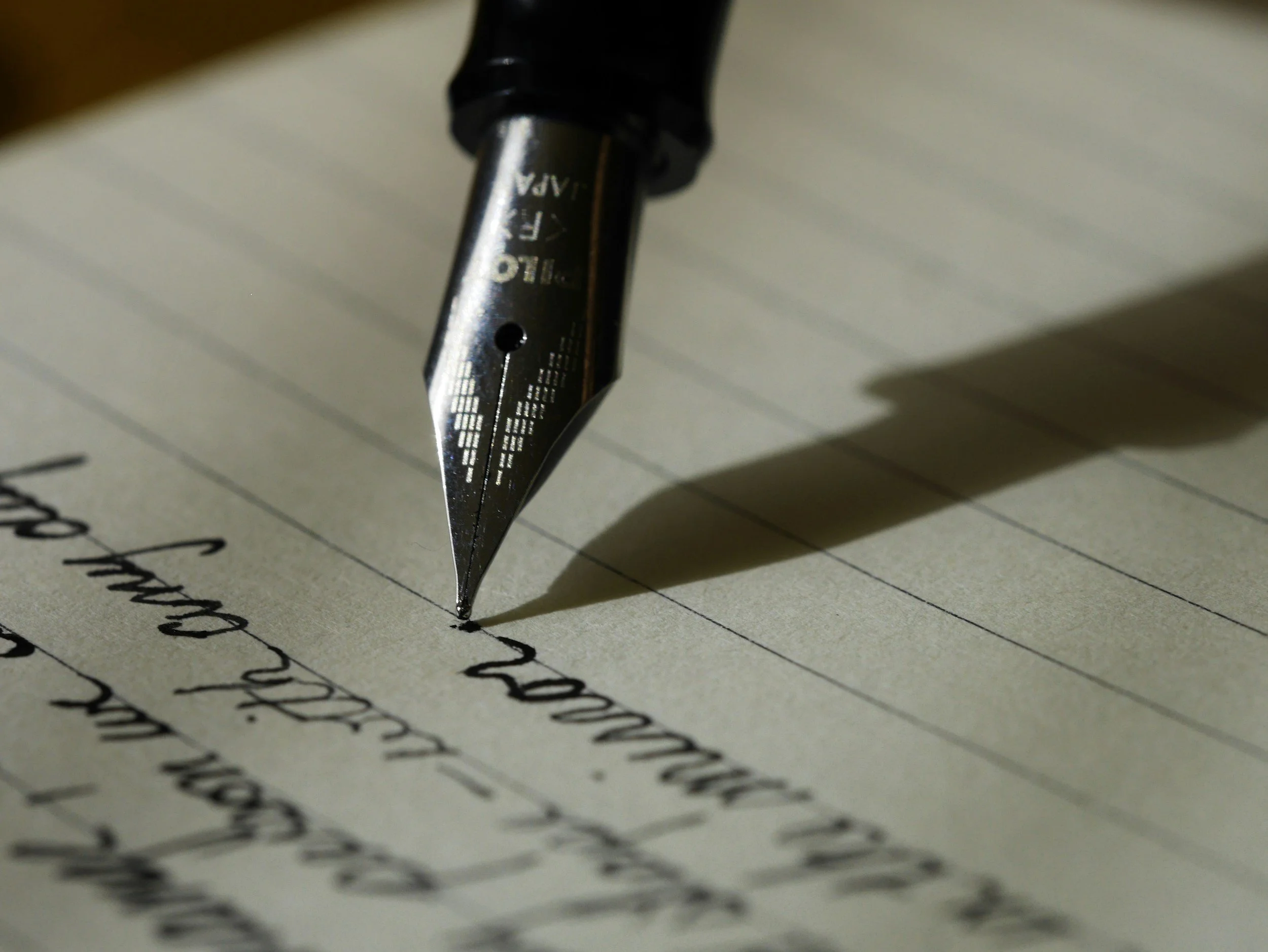
Magical alphabets, such as Theban or Runes, are specialized scripts used by practitioners to abstract writing from everyday language. This abstraction forces the writer to slow down and concentrate fully on the inscription, turning the act of writing into a focused ritual that aids in the manifestation of intent.
What Are Magical Alphabets and Why Use Them?
A magical alphabet is a non-standard writing system adopted specifically for ritual, spellwork, or esoteric record-keeping. While everyday language is processed automatically by the brain, writing in an unfamiliar script requires deliberate effort. This disruption of normal cognitive processing is the primary psychological benefit of using a magical alphabet. By forcing the writer to slow down and concentrate on each individual character, the act of writing itself becomes a focused ritual.
The abstraction provided by a magical alphabet separates the magical working from mundane communication. When an intention is written in a specialized script, it ceases to be a simple sentence and becomes a visual symbol of the desired outcome. This process of abstraction helps to bypass the conscious mind's critical filters, allowing the intention to be planted more deeply into the subconscious. The effort required to learn and use the script acts as a form of energetic investment, charging the written words with the practitioner's focus and dedication.
It is a common misconception that magical alphabets were primarily used to hide information from persecution during the historical witch trials. In reality, the idea that these scripts were used to evade the "Burning Times" is largely a modern myth. Historically, magical alphabets were more often employed by ceremonial magicians, scholars, and cryptographers who sought to encode their work for intellectual or esoteric reasons, rather than out of a need for physical safety. The true value of a magical alphabet lies in its psychological and spiritual utility, not in its capacity for secrecy.
The Theban Alphabet: The Witches' Alphabet Explained
The Theban alphabet is perhaps the most widely recognized magical script in modern practice, often referred to as the "Witches' Alphabet." Despite its strong association with contemporary Wicca and modern witchcraft, it is not an ancient pagan script. The alphabet was first published by the German abbot and polymath Johannes Trithemius in his 1518 work, Polygraphia. It was later popularized by his student, Heinrich Cornelius Agrippa, in his influential text Three Books of Occult Philosophy.
The script is often misattributed to a legendary figure named Honorius of Thebes, but there is no historical evidence to support an ancient origin. The Theban alphabet is a substitution cipher for the Latin alphabet, meaning that each Theban character corresponds directly to a Latin letter. This one-to-one mapping makes it relatively easy for modern English speakers to learn and use, contributing to its widespread popularity.
In contemporary practice, the Theban alphabet is frequently used for inscribing tools, writing in a Book of Shadows, or creating talismans. Its elegant, flowing characters lend a sense of formality and ritual weight to the written word. However, it is important to remember that the script itself does not possess inherent power. The efficacy of using the Theban alphabet comes from the practitioner's intention and the focused effort required to write it.
Runic Alphabet Magic: Carving Intent and Destiny
Runes represent a different category of magical alphabet, as they were originally used as a functional writing system before acquiring their esoteric associations. The Elder Futhark, the oldest form of the runic alphabets, originated with Germanic peoples around the second century CE. Unlike the Theban alphabet, which was created specifically for cryptographic or magical purposes, runes were used for everyday communication, trade, and memorial inscriptions.
The magical use of runes is deeply tied to the physical act of carving. In historical contexts, runes were often carved into wood, bone, or stone. The angular shapes of the characters were designed to be easily cut into hard surfaces, avoiding horizontal lines that would run parallel to the grain of wood and potentially split it. The act of carving a rune was considered a magical act in itself, a way of physically altering reality and shaping destiny.
Each rune in the Elder Futhark is associated with specific concepts, forces of nature, or deities. When used in magic, a practitioner might carve a single rune or a combination of runes (a bindrune) to invoke these specific energies. The focus is not merely on spelling out a word, but on calling upon the underlying power represented by the symbol. This makes runic magic a highly intentional and grounded practice, requiring a clear understanding of the historical and symbolic context of each character.
Other Notable Scripts: Celestial, Ogham, and Enochian
Beyond Theban and Runes, several other magical alphabets are utilized in various esoteric traditions. The Celestial Alphabet, also known as Angelic, was derived from the Hebrew alphabet by ceremonial magicians in the sixteenth century. It is primarily used for communicating with higher beings, inscribing angelic names on talismans, and creating astrological seals. The characters are characterized by small circles at the ends of the lines, representing the stars and constellations.
Ogham is an early medieval alphabet used primarily to write the early Irish language. It consists of a series of parallel strokes carved along a central edge or line. In modern practice, Ogham is often associated with Celtic reconstructionism and is used for divination, spellwork, and connecting with the spirits of trees and nature. Each letter is traditionally linked to a specific tree or plant, providing a rich symbolic vocabulary for magical workings.
Enochian is a complex system of magic and a constructed language transmitted to John Dee and Edward Kelley in the late sixteenth century. The Enochian alphabet is used to write the Enochian language, which is employed in elaborate ceremonial rituals to communicate with angelic entities. The system is highly structured and requires significant study to use effectively, making it less common in everyday practical magic but highly regarded in ceremonial traditions.
The Limits of Transliteration
A significant challenge when using magical alphabets is the process of transliteration, converting words from one writing system to another. Many modern practitioners use magical alphabets as simple substitution ciphers, replacing each English letter with a corresponding magical character. While this is a common and accessible method, it often fails linguistically and historically.
True transliteration relies on sounds (phonetics) rather than a direct letter-for-letter mapping. Many magical alphabets were designed for languages with different phonetic structures than modern English. For example, the Elder Futhark does not have direct equivalents for several English letters, such as 'C', 'Q', or 'X'. Attempting to force English spelling into a historical script can result in nonsensical inscriptions that do not accurately reflect the intended meaning.
When using a magical alphabet, it is more effective to spell words phonetically, focusing on how the word sounds rather than how it is spelled in English. This approach requires a deeper understanding of both the target language and the magical script. It also reinforces the intentionality of the practice, as the practitioner must actively analyze the sounds of their intention rather than passively substituting letters.
How to Use a Magical Alphabet Chart in Your Practice
Incorporating a magical alphabet into a daily practice requires patience and consistency. A magical alphabet chart is an essential tool for beginners, providing a visual reference for the characters and their corresponding sounds or meanings. When starting, it is advisable to choose one alphabet and study it thoroughly rather than attempting to learn multiple scripts simultaneously.
Begin by practicing the characters on scrap paper, focusing on the physical sensation of drawing each line and curve. As familiarity grows, the alphabet can be integrated into magical workings. A common application is writing intentions or spells in a Book of Shadows. The use of a specialized script adds a layer of ritual formality to the record-keeping process and helps to separate the magical journal from mundane notebooks.
Magical alphabets are also highly effective for creating talismans and amulets. An intention can be translated into the chosen script and inscribed onto a physical object, such as a piece of wood, metal, or parchment. The act of inscription should be performed with full concentration, treating each character as a vital component of the overall working. The finished object then serves as a physical anchor for the intention.
Where to Start and Common Problems
For those new to magical alphabets, the most practical starting point is to select a script that aligns with the broader context of their practice. The Theban alphabet is an excellent choice for general spellwork and journaling due to its simplicity. Those drawn to Norse or Germanic traditions may find the Elder Futhark more appropriate, while practitioners of ceremonial magic might explore the Celestial or Enochian scripts.
A common problem is treating magical alphabets merely as aesthetic fonts. Writing something in a specialized script does not automatically make it magical. The power of the alphabet lies in the intention and focus of the practitioner. If the script is written hastily or without concentration, it is no more effective than plain English. The abstraction provided by the alphabet is a tool to aid focus, not a substitute for it.
Another frequent failure mode is assuming that the script itself holds inherent power. While some traditions, such as runic magic, attribute specific energies to individual characters, the alphabet as a whole is a neutral tool. It requires the active engagement of the practitioner to become effective. Relying on the visual appearance of the script without understanding its context or applying clear intention will yield weak results.
Alphabet Origin/History Primary Magical Use Common Misconception Theban Published by Johannes Trithemius in 1518; popularized by Agrippa. Spellwork, talismans, Book of Shadows entries. It is an ancient pagan script used to hide from witch trials. Runic (Elder Futhark) Germanic peoples, circa 2nd century CE. Divination, carving intent to alter destiny, invoking specific energies. Runes are merely a substitution cipher for English letters. Celestial Derived from Hebrew by 16th-century ceremonial magicians. Communicating with higher beings, astrological seals. It is a language spoken by angels rather than a constructed script. Ogham Early medieval script for the Irish language. Divination, connecting with nature and tree spirits. It was primarily used as a secret druidic code.
If you want to go further with this, my book the Magic of Writing walks you through how to turn your writing into a magical working that gets results.