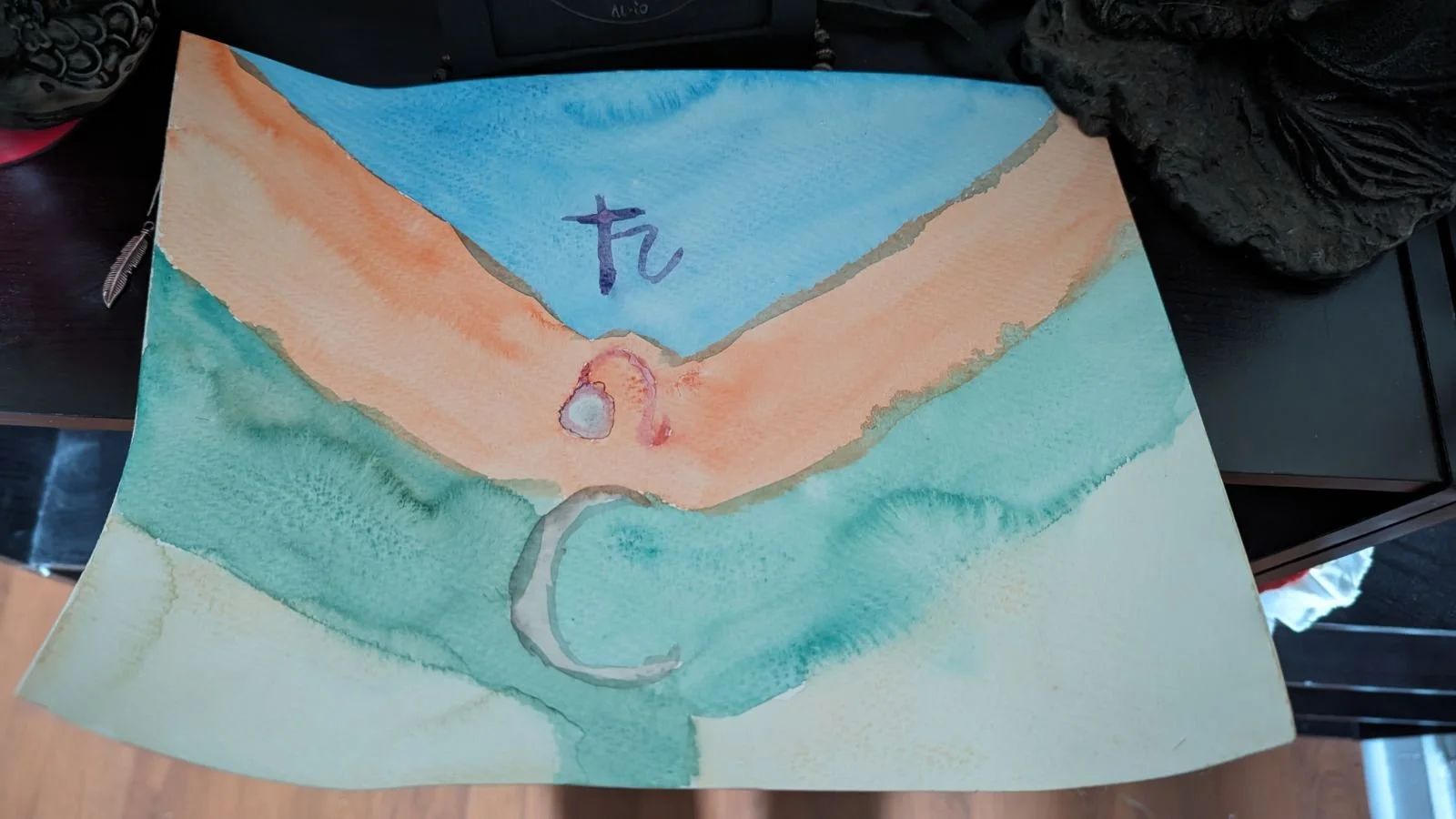
Charging a sigil is the process of focusing energy and intention into the symbol, often through an altered state of consciousness called gnosis. Activating, or firing, a sigil is the deliberate release of that intention into the subconscious or the environment, frequently by destroying the physical symbol.
How Does Sigil Magic Work?
Sigil magic operates primarily through a psychological mechanism designed to bypass the conscious mind's analytical filters. By distilling a complex desire into an abstract symbol, the practitioner embeds the intention directly into the unconscious. The sigil acts as a container and interface for an intangible essence or desired result. This process relies on the idea that the conscious mind often sabotages desires through doubt, anxiety, or over-analysis. By hiding the intention behind a symbol, the conscious mind is distracted, allowing the subconscious to process the goal without interference. The abstract nature of the sigil prevents the conscious mind from immediately recognizing the original desire, thereby neutralizing any inherent skepticism or resistance.
Once the symbol is internalised, consciousness accepts it, which then subtly affects attention and action along a path of least resistance. The practitioner begins to notice opportunities and make decisions that align with the original intention, often without consciously realizing why. This shift in perception is a crucial component of the process. Note that the exact mechanism remains contested. While chaos magic relies heavily on this psychological model, other traditions view the process as interacting with external energies, spirits, or the fundamental fabric of reality itself. Regardless of the underlying theory, the practical application remains largely consistent across different approaches. The focus is always on the creation, charging, and release of the symbol.
The effectiveness of this mechanism depends heavily on the clarity of the initial intention. If the desire is vague, contradictory, or rooted in fear, the resulting sigil will carry those flaws into the subconscious. Therefore, the foundational step of defining the intention is just as critical as the subsequent charging and activation phases. A well-crafted intention provides a clear directive for the subconscious to follow, while a poorly constructed one can lead to unpredictable or counterproductive results. Claims that sigils can directly cause physical transformation are medically unsupported; the changes occur primarily in perception, behavior, and the recognition of opportunities.
How to Charge a Sigil in Chaos Magick
Charging is the period of focused attention that occurs between creating the symbol and activating it. This phase builds the necessary association between the physical symbol and the underlying intention. Without a sufficient charge, a sigil remains nothing more than a meaningless drawing. Practitioners employ various practical methods to build energy and intention over time. The goal is to associate a high level of emotional or physical energy with the visual representation of the sigil, effectively programming it with the desired outcome.
These methods include deep meditation, focused visualization, controlled breathwork, rhythmic movement, intense emotion, and repetitive sound. The approach can vary from a gradual accumulation of energy over several days to intense, peak-state work completed in a single session. For example, a practitioner might spend ten minutes each day meditating on the symbol, slowly building a reservoir of focused attention. This slow-burn approach is often used for long-term goals or complex intentions. Alternatively, they might use a sudden burst of physical exertion to reach a peak state of energy, focusing entirely on the sigil at the moment of exhaustion. This method is typically employed for immediate, short-term needs.
The chosen method depends on the practitioner's preferences, physical capabilities, and the nature of the intention. Emotional charging is another powerful technique, where the practitioner evokes a strong emotion, such as joy, anger, or sorrow, and directs that feeling into the sigil. However, emotional charging should avoid provoking trauma responses, as this can embed harmful associations into the working. The key is to maintain absolute focus on the symbol during the charging process, ensuring that the energy is directed precisely where it is needed. Distractions during this phase can dilute the charge and reduce the effectiveness of the final activation.
Gnosis and Sigil Charging
Gnosis is an altered state of consciousness where the analytical mind is temporarily suspended, allowing the intention to bypass normal cognitive filters. Achieving gnosis is often considered the most critical component of charging a sigil. During this state, the practitioner's focus narrows entirely onto the symbol, excluding all other thoughts, sensory inputs, and distractions. This intense concentration is what allows the intention to be firmly planted in the subconscious mind. There are two primary categories of gnosis: inhibitory and excitatory.
Inhibitory gnosis involves stillness, meditation, and sensory reduction. Techniques include deep breathing exercises, sensory deprivation, staring at a fixed point, or repeating a monotonous mantra. The goal is to quiet the mind and reduce external stimuli until only the awareness of the sigil remains. It is generally considered a safe and accessible method, suitable for most practitioners. This approach requires patience and practice to master, as the modern mind is often accustomed to constant stimulation. The stillness allows the symbol to sink deeply into the subconscious without resistance.
Excitatory gnosis, on the other hand, involves sensory overload, vigorous dancing, hyperventilation, or intense physical exertion. The goal is to overwhelm the conscious mind through sheer intensity, pushing the body and mind to a point where analytical thought is no longer possible. This method carries physical and psychological risks and should be avoided by individuals with underlying health conditions. It is crucial to remember that gnosis is a temporary tool used specifically for charging, not a permanent state of being. Prolonged attempts to maintain gnosis can lead to exhaustion, disorientation, and a detachment from mundane reality. Safety and self-awareness are paramount when employing excitatory techniques.
How to Activate a Sigil
Activation is the deliberate action that places the charged sigil into active use. This step marks the transition from the charging phase to the release of the intention. While charging builds the potential energy, activation is the catalyst that sets the process in motion. A successful activation requires a clear, specific intention that avoids overly broad or complicated phrasing. If the initial intention was vague or shaped by fear, the activation is less likely to produce the desired outcome.
The method of activation should ideally align with the nature of the intention. For example, a sigil designed to banish a negative habit might be activated through destruction, symbolizing the removal of the habit from the practitioner's life. Conversely, a sigil intended to attract wealth might be activated by placing it in a wallet or near a workspace. The physical act of activation serves as a psychological trigger, signaling to the subconscious that the work is complete and the intention has been released. This definitive action helps to sever the conscious attachment to the goal, facilitating the necessary "charge and forget" protocol.
It is important to distinguish between charging and activation, although the two processes can sometimes overlap. Charging is the accumulation of energy, while activation is the deployment of that energy. Some practitioners prefer to separate these steps by several hours or even days, allowing the charged sigil to rest before it is fired. Others perform both steps in a single, continuous ritual. The choice depends on the specific requirements of the working and the practitioner's established conventions. Regardless of the timing, the activation must be a deliberate and conscious act.
Sigil Activation Methods
There are several distinct methods for activating a sigil, depending on the desired duration and effect. Destructible activation involves destroying the physical symbol to release the intention quickly. Common methods include burning the paper, dissolving it in water, or tearing it into small pieces. When burning a sigil, practitioners must always observe proper fire safety precautions, using a fire-safe container and keeping water nearby. Dissolving a sigil drawn on water-soluble paper is a safer alternative that achieves a similar psychological effect without the risk of fire. Tearing the paper into tiny fragments and scattering them in the wind is another effective method of destructible activation.
Temporary activation involves applying the sigil for a short duration. This might include drawing it on the body with skin-safe oils or water, allowing it to fade naturally over a few hours. Another common method is carving the sigil into a candle that will burn down, releasing the intention gradually as the wax melts. This method is particularly useful for intentions that require a sustained release of energy over a specific period. The act of watching the candle burn can also serve as a secondary form of meditative charging. The temporary nature of these methods ensures that the sigil does not overstay its welcome or become a source of obsession.
Permanent or passive activation involves placing the sigil in a specific location, such as above a doorway or inside a book, to act continuously over time. This method is often used for protection, ongoing influence, or establishing a specific atmosphere in a room. Digital activation involves using digital media, such as setting the sigil as a phone wallpaper or creating a digital animation. However, practitioners must account for the volatility and persistence of digital files, as deleting a file does not always guarantee its complete removal from a system. The digital environment presents unique challenges for the traditional "fire and forget" approach, requiring careful consideration of how the symbol will be managed over time.
How to Fire a Sigil
Firing a sigil is the final step of releasing the charged symbol into the universe or the subconscious mind. This is often accompanied by the "charge and forget" protocol, which advises the practitioner to deliberately stop thinking about the sigil and the desired result. The theory behind this protocol is that conscious obsession interferes with the subconscious processing of the intention. By forgetting the sigil, the practitioner allows the subconscious to work without hindrance. This can be one of the most difficult aspects of the practice, as human nature often compels us to dwell on our desires. Engaging in a completely unrelated, mundane activity immediately after firing the sigil can help facilitate this necessary forgetting.
Failing to release attention can lead to a "lust of result," where obsession and anxiety block the manifestation of the goal. When a practitioner constantly worries about whether the sigil will work, they are effectively sending a counter-intention of doubt and lack to the subconscious. There are several common problems with sigil magic that can cause a working to fail. These include vague intentions, the inability to release attention, fear-shaped wording, and using too many sigils simultaneously. Overloading the subconscious with multiple, conflicting directives can dilute the effectiveness of all the sigils involved. It is generally recommended to focus on one primary intention at a time to ensure maximum clarity and impact.
If a practitioner creates a sigil based on fear or desperation, the subconscious may amplify those negative emotions rather than the desired outcome. It is crucial to frame intentions positively, focusing on what is desired rather than what is feared. For example, instead of phrasing an intention as "The practitioner will not be poor," it should be framed as "The practitioner has abundant resources." Finally, charging and firing a sigil does not guarantee manifestation without a mundane pathway. Practical action in the physical world is always required to allow the result to occur. A sigil designed to help find a new job will be ineffective if the practitioner never submits any applications or attends any interviews. The magic provides the opportunity, but the practitioner must take the necessary steps to realize it. The integration of magical practice with practical action is the cornerstone of successful sigil work.
If you want to go further with this, my class Ultimate Sigil Magic walks you through my advanced secrets of sigil magic, showing you how to create and fire multiple sigils at the same time