You can build a collaborative relationship with your land. I discuss how to build that relationship and share what it can look like, especially as you get to know the land and develop a communication and dialogue with the spirits that live on the land.
How we shape and are shaped by spirits

Picture copyright Joanna Brook 2024
The other day I visited some land that a friend is working on. He’d asked Joanna and I if we could stop by and share our impressions of the land with him. It ended up being a very moving experience. We walked the land and I immediately felt the spirit of the area reach out and connect with me. We walked up a hill and I felt drawn to a bright spot that was lit by incandescent presence. The sun shone through the canopy of trees to this spot, which was a convergence of ley lines, creating a well of power, the Earthlight melding with the cosmic breath of the Sun. We continued walking the land and it spoke to all of us in whatever way was best suited for each of us.
One of the impressions I got from the land is that it didn’t like the fences that had been put in place to mark the human boundaries of the land. It felt like those fences were cutting into its essence and its overall sense of unity. It was like having a splinter in the skin, causing a consistent ache that was annoying and didn’t feel right. It wanted the splinter to be removed because it was taking away from what it really was. The fences were shaping its identity in a way it didn’t want and that didn’t feel right. The fences were an imposition put on the land because of a need to mark a territory. The problem with that need is that it prioritized human concerns over the land and in the process was fracturing the identity of the land.
After we left, I got to thinking about the spirit of that land and I wondered how it might have felt different as an identity and presence without those fences or without all the other changes humans had brought to the land. I wondered if it would have felt larger and encompassed a bigger, more diverse area. I began thinking about how the identity of the land may have changed over time. I thought of a yew tree grove on a different farm I had visited and wondered if at one time that yew tree grove had been part of a larger identity of the land that stretched over the area and then become its own distinct identity because of how the land had been shaped by the human need to create borders and declare ownership of the land.
In my book Walking With Nature Spirits, I discuss how nature spirits aren’t really concerned with helping people get results. What they want from us, if anything, is to recognize that we are part of the land. The actions we take with the land shape its identity, but we are also shaped by the land we live on and co-exist with. A good example of that connection is the story our host shared with us when we visited him on the land he was working on. The people who had previously occupied that land had planned on building a weed farm there. They spent two years, but didn’t get much accomplished. The spirit of that land resisted them. We saw this with all the tools and structures that were abandoned. In one sense, the place felt like a ghost town and I surmised that the land had subtly influenced the previous people to leave because it didn’t want them there.
At our home, Joanna and I are working with the spirit of the land we live on. It’s a distinct spirit that is separate from the land around it. It is separated by fences, roads, and it is much quieter than the spirit I encountered on the farm we visited. Yet even though it is quieter, it is also still present with us and has its own sense of being that makes itself known to us. When I walk in my yard, practice Kung Fu or do work on the garden, I can feel the spirit of the land interacting with me, shaping me, even as I shape it. The land wants to work with me because of the respect and collaborative relationship I’ve developed with it.
I’ve worked with the life on that land. In some cases I’ve worked to pare back the life, such as when I get took all the English Ivy off the fences, and in other cases I’ve planted seeds and plants in the land to help create the sacred space that we live in. All of that work is a cooperative process. I’m dialoguing with the land, listening to the spirit make itself known to me so that I can work with it in a way that opens me to being shaped by it as well. When we work with the land in this way, it teaches us that we are part of it and that our identities are shaped by the interaction with the land, even as we shape the identity of the land.
We name the land. For example, Joanna and I have named our home the together home. It’s a name that has personal meaning to us, but it also creates an identity for the home. We could name the land the together land and that too would shape the identity of the land, but also ourselves. The irony is that while naming provides identity, it also provides differentiation and separation. At one time the land was simply the land and then someone came along and named the land. Maybe they name it after someone or maybe they named it for a particular aspect of the land that they noticed. That act of naming shaped the identity of the land, gave it a bit more form in human consciousness and a way to interact with us directly, but it also separated that named part of the land from the rest of the land. We have done this again and again and it creates distinct presences. This is neither good nor bad. It simply is a reality of how we interact with the world and with each other.
Names have power and distinction. They confer presence and awareness. The benefit of names with spirit work is they provide us a way to conceptualize and approach spirits. The same applies to the land. We live in something so vast and yet we have brought it down to a level that we can make sense of, by naming parts of it and giving those parts their own identities. It is good to keep this in mind as we interact with the land…and to ask ourselves if its possible to meet the land on its terms and level of being, and what that might teach us as a result.
Want to actually do this, not just read about it?
Walking with Spirits is where I teach how to build spirit relationships that hold up over years. Get the book →
Not ready to buy anything? Why Your Spells Don't Stick is a free guide to the most common reasons a working stalls, and where to start fixing it.
If you want help with a specific situation, work with me one to one.
Why Subjectivity is important in magic
In Holy Daimon by Frater Acher (affiliate link) the author makes an insightful point when he notes the following, “While objectivity is certainly necessary in, for instance, medicine and some fields of physics, it causes real problems when it is applied to all modes of human enquiry.” I agree with his point about objectivity because objectivity is often held up as a holy grail for all methods of inquiry to aspire to, but this isn’t realistic, because not all methods of inquiry can be rooted in objective study. Magic is one such method of inquiry, and with magic it is better suited to ask the questions, “Does it work?” or “Am I getting results?” then to focus on finding objective proof of magic.
These are subjective questions and subjectivity is often treated as less than reliable because it becomes more personal, and the question of proof arises. Can you prove that X helped really happened because of Y? is a question that may naturally arise from a skeptical person. My answer has always been to look at the overall consistency of magic in my life and note through observation whether there are repeatable patterns. Yet, there are also situations where I do magic for a specific situation or to have a specific experience and I may never need to do that magical working again. Even then, what I look to is the overall efficacy of the magical work.
Has this work changed my life? Am I moving in a direction that I want to go toward? Am I having meaningful, life changing experiences? These are the questions I am interested in answering, as well as the inevitable question, Can I experiment with this idea and this process and get a result. I’m less interested in proving that magic is objectively real. I think the evidence for that question is already present by the fact that magic, in one form or another, continues to be a prevalent part of humanity.
Subjectivity is important in magic because it allows us to make room to explore the intersection between out human consciousness and the liminal aspects of reality that don’t fit neatly into conveniently labeled categories that are thrust upon us by people craving certainty, instead of embracing the uncertainty that is life. Subjectivity allows us to be present with the unknown and consider alternate ways of knowing that can bring as much value to us as objectivity can.
A person on the magical path ought to recognize as well that the path IS highly personal. None of us will walk exactly the same path, nor do we need to. Subjectivity helps us recognize this reality of magic and embrace it. My experience isn’t the same as yours and it doesn’t need to be. At the same time, it IS good to apply some rigor to the work. Making fantastical claims without backing those claims up just makes the work harder for all of us, but if you can apply some rigor to your experiences you’ll find consistent patterns in your work that speaks to the questions I mentioned above. Embrace your subjective experience and also track it!
Want to actually do this, not just read about it?
How Magic Works is where I teach how to take a desire from intent to an actual result, step by step. Start the class →
Not ready to buy anything? Why Your Spells Don't Stick is a free guide to the most common reasons a working stalls, and where to start fixing it.
If you want help with a specific situation, work with me one to one.
What is the Magic of the New Year?
The transition from one calendar year to another has become a moment of magic. I explore why the arbitrary nature of such moments is powerful magic in and of itself. I also discuss how to use the liminal aspects of this transition to help you with your own magical work.
Somatic dissolving through posture and movement

I recently picked up the book Become as Supple as a Leopard, which is fascinating book about posture. I’ve picked it up because I’m currently doing a lot of work with my posture in my Kung Fu and Qi Gong studies. I’m paying particular attention to how straight I stand and how I position my back when I am lifting something or otherwise bending over. This is a crucial detail that can effect your physical health and your overall well being.
I’m also continuing to focus on breathing, specifically doing a continuous in and out breath during qi gong, where I breathe in as I move my arms up and breathe out as I move my arms down. While doing this breathing I focus on my lungs and diaphragm, expanding my awareness to fully use the capacity of my organs and in the process dissolve blockages.
The blockages are dissolved by using your awareness. You become aware of the blockage and you place your awareness on it, so that the blockage is gradually dissolved. Your awareness is like a waterfall flowing around the blockage, making it softer and softer until it releases on all levels of your being. While you do this releasing work you can continue doing some type of qi gong practice. The practice I typically do is either Cloud Hands, Heaven and Earth or Gods Playing in the Clouds. Each of these practices brings you into somatic alignment with your body consciousness.
I also like to do this work with standing meditation. When you stand its important to focus your awareness on the alignment of your body with your posture. Your feet should be aligned with each other like two wheels of a car or a train and facing forward. You want arms to hang at your sides comfortable. You want to slightly squat with your hips and pelvic area so that you are “seated” in your posture. Then focus on breathing, drawing the breath in and releasing it out. As you breathe, scan your body with your awareness, starting at the top of your head and slowly going down your body. Keep in mind that the work your doing is a gradual release and it may feel like you are releasing a layer at a time.
Each release of a layer of a blockage also releases with it emotional and mental stresses that are embedded in the body. The human body retains memories of traumatic events and experiences and the best way to release those memories is through this kind of release work. You may not be consciously aware of how embedded the trauma is, but by doing this release work you can gradually loosen it and then dissolve it altogether.
You can do this work through both standing meditation and moving practices. The key is to focus on your breath and specifically on using your breath with standing and movement to help you go deeper and deeper into your body as you work to release the physical, emotional and mental blockages. Eventually you’ll reach a state of great calm and emptiness and you can fully relax into that experience allowing it to lead you to even deeper states of awareness and transcendence.
The Daimonic as the voice of the Divine
I’ve lately been reading a fascinating book on Daimonic spirits. I share what I’m learning and some ideas it brings up around the nature of the divine and how working with these spirits can help us connect to the divine nature within ourselves.
Developing your Energy through Posture and Qi
How to cultivate your internal energy through standing meditation and qi practices. The benefit of this work can be felt through the somatic practices you embrace and apply to your life. I share how I’ve applied this work to my own practices.
Psychology and Religion and their role in Spirit Work

I recently finished reading Joseph Lisiewski’s Howlings from the Pit (Affiliate link), which is a collection of essays about grimoire magic and of curse his particular argument as to why you have to do spirit work with daemons in a specific way. I don’t agree with Lisieswki’s approach and I’ve gotten efficacious results through my own system of spirit work, but I do think he makes some interesting points that are worth considering, both in regards to spirit work and magical work in general.
Point 1: You have to honor the original religious/spiritual belief system you were raised with - Lisiewski makes the argument that if you were raised in a different religious/spiritual system than the current religfious/spiritual system you are in, and you want to do spirit work, you have to honor original religious/spiritual system at least once or twice a year. I disagree with the author on this limited belief and think it speaks more to his religious/spiritual issues than being an actual and effective axiom.
I was raised episcopalian and was a born again Christian for a time and I never found that I needed to go to a sermon or make some kind of offering at a church in order to do effective spirit work. When a person makes a rule or axiom around any magical work, we ought to carefully consider the subjective nature of such rules. What works for one person may not work for another and may not even be relevant.
Point 2: If you put your power in magical tools this takes away from the power you bring to rituals. - This is an interesting argument that I find myself agreeing with in some ways. Lisiewski is specifically referring to the creation of tools for the Golden Dawn rituals and how part of that process involves embedding your personal energy within those tools, which ends up taking away from the efficacy of your work with other magical systems.
I do think its possible to invest a lot of yourself into a given magical tool, which is one reason I recommend not relying on any given magical tool too much. A magical tool is meant to be an aid and representation of something you are working with. It can help you access certain frames of mind and being, but it should never be something you rely upon so much that you can’t do anything without it.
Point 3: If you don’t do the magical working the right way, you can suffer adverse effects (aka his slingshot method). I don’t think there’s a right or wrong way to do magic, but you can definitely tell if a given process or methodology is working by the results that are being generated with that process. Keeping careful track of the results, consequences, and adverse effects that come with magical work is a good idea because it helps you recognize what is working or what can be improved upon.
Sometimes you will experience adverse effects with magical work. These may show up as synchronicities indicating the confluence of possibilities lining up to manifest the result or spiritual forces showing up to help or hinder the work involved. The key is not read too much into anything, and continue doing the work until you’ve finished the operation.
Point 4: Your psychological, spiritual, ideological values play a role in your magical work. This point is a bit similar to point 1, but also distinct. What we believe and think about ourselves, other people, and the world around us plays a role in the magical work we do. It’s important to acknowledge the internal reality and the role it plays in our magical work. In my own experience the majority of the time a magical working doesn’t work is because of the internal reality of a person and what is out of alignment with that internal reality and the desired result the person is going for.
Point 5: You have to do specific activities at specific times with specific items. Ironically, one of the points the author made in contradiction to point 2 was that you need to use certain items at certain times in order to get results. I won’t argue that a given system of magic may speak to specific necessities around magical tools, times, etc., but what I find personally powerful about magic is that you can come up with your own systems and processes and get results that are consistent and powerful. You can also do this with a pre-existing system, but you do operate within the constraints of that system. Either way can work, but its important to figure out what works for you. The beauty of magic is that it provides a versatility that can be explored and experimented with, provided we’re willing to question the underlying narrative that magic has to be done a specific way in order to be effective.
How to Work with Qi when Wintering
I discuss how to work with qi when wintering. I share why working with the element of water can be very helpful and allow you to restore and recover your energy when doing qi work.
The form and the essence of magical work

I was recently reading Howlings from the Pit by Joseph Lisiewski and I was struck by something he wrote in regards to ceremonial magicians creating magical tools that took away from the actual experience and success of magic they worked. What struck me is that the magicians were giving up the essence in favor of the form, when in fact they ought to take the opposite approach and give up the form to understand and work with the essence.
Being the magical nerd that I am also made me think of a scene in God of War Ragnarok where Brok the Dwarf tells Kratos that to create the form you have to find the essence. The essence is the key to the form. The form doesn’t exist without the essence. It made me consider Lisiewski’s perspective from another angle: How much of the essence do we give to the form, which in turn causes the form to have the power, presence, magick, etc that would otherwise stay with the essence?
In my own magical work, I’ve typically taken a minimalistic approach to my magic and spirit work operations. I have sometimes added some effects because I recognized that those effects would enhance the overall work, but even with the inclusion of those effects the question I always ask is: Does this help me connect with the magic/spirit more effectively? This is the question that any magician ought to ask themselves in order to best understand how magic can work.
What helps me get to the essence of the work? Is the form a distraction or does it actually help me truly connect with what I want to work with? These are additional questions that are useful to ask. I personally would never take the approach that Lisiewski takes, which is grimoire based because I find that form distracts from the essence. My form, developed and personalized to help me with both magical and spiritual work allows me to connect with the essence of the work I am doing…but Lisieswki would have similar issues, in no small part because of his adherence to his own system of magic and the limitations he operates in.
A given system of magic has its specific rules and limitations. If we recognize this we can see past the form to the essence and focus on working with the essence to help us achieve the ideal form we planned for. We naturally want to attend to the details of a magical working but part of attending to those details is taking the time to understand how the form magic takes actually allows us to connect with the essence and what that means as a result of the work we do.
How to use minimalism in your magical practice

One of the yearly practices that I do is around this time of the year, when the winter season sets in. The longer dark nights and the coldness of the season creates a natural sense of introspective awareness that simultaneously calls for some minimalism in spiritual practice. Recently my magical mate and I followed through on this sense of introspective awareness by creating a wintering altar, where we took many of our ritual and magical items and “retired” them for the season.
Doing this activity gives those ritual and magical items a rest, and it also gives us a chance to evaluate what is absolutely essential to our spiritual practice. Sometimes, when you do an activity like this, what you are really doing is also creating a specific purpose for whatever you leave out. In the case of the wintering alter, leaving out only the essential ritual and magical items involves picking out what would be used for wintering practices, but you can apply this same understanding to a different type of ritual and find that you would use different ritual items based on the purpose of the magical work.
One of the minimalistic practices that I’m applying with wintering is the use of a candle flame, where I stare into the flame for a time, with no other light in the room and allow my consciousness to appreciate the light of the candle, in relationship to the dark. I then blow out the candle and close my eyes, allowing the after image of the flame to imprint itself on my mind. Eventually even the after image fades to darkness and I contemplate the darkness. I can then start up the process again or leave it as it is.
You can do similar process with sound. Take a bell and ring it. Listen to the sound as it fades. Then listen to the silence. Then ring the bell again and repeat the process. When we create practices around our senses that incorporate this kind of minimalism it can teach us a lot about how to incorporate one of our most potent tools into magical and spiritual work: Our bodies.
A minimalistic approach to magic, for whatever the reason or purpose asks that we get creative about our practice because it calls on us to give away what isn’t absolutely essential to our practice, but to figure that out we have to actually assess our practice and determine what to keep and what to let go (for a time). Yet the essentialist aspect of this work also challenges us to discover how we create an experience with less that nonetheless takes us to more.
Why you don't want to draw on your own energy for magick
I discuss why its not a good idea to draw on your own energy for magick and share what some of the potential issues can be when you draw on your energy too much instead of taking the necessary precautions to draw on other sources. I share a personal example and the consequences of doing this based on my own experience.
How to connect to the Energy of a Season
I share some different processes for connecting with the change of the seasons magically, and discuss how to harness that change to help you in your magical practice. I also discuss what that seasonal magic can look like and how we can work with it in our lives in a way that helps us be in touch with the rhythms of our lives.
The Role of Astrological Cycles in Iterative Magic

Iterative magic is a form of space/time magic which employs the cyclical rhythm of time and space in order to create consistent results. One of the cyclical rhythms that iterative magic draws on are found in the astrological cycles and currents that all of us experience in our lives. In iterative magic, we purposely draw upon these cycles to empower and inform our magical work. Each iteration of a cycle refers to the previous and future cycles. When we understand this we can draw on the past, present, and future cycles of a given cycle to enhance the magical work we are doing.
For example Mercury going retrograde would be an example of an astrological cycle that all of us experience. While this cycle is notorious for bad communication, it can also be treated as an opportunity to apply iterative magic to our lives. We recognize that Mercury is going retrograde and instead of hoping that we’ll somehow avoid miscommunication we do iterative magic to either help us improve our communication skills or apply the mercurian cycle in other ways that are related to its influence. We can also apply this same approach to when Mercury is going direct.
We can actually apply iterative magic to any retrograde/direct cycle for any of the planets. Being able to do this doesn’t even necessarily require that you become well versed in astrology either. It may require working with an astrologer or learning some basic knowledge, but once you have that knowledge you can develop iterative magic workings for specific cycles and use that to help you tap into the deeper energies that are present and utilize them for your magical work.
Another approach I’ve taken to astrological influences is to do iterative magic around sun and moon cycles. The moon cycles every 28 days and sometimes there are eclipses which can also be factored in for this work. The sun has its own cycle which we experience through the progression of a year. Each of these can also be used as examples of astrological cycles we can work with iteratively. For instance you can choose to work with the sun at different times of the year (we see this with the wheel of the year) and have each time of the year reference the next and previous times. The same understanding can be applied to moon cycles.
We don’t need to limit iterative magic to astrological cycles, but they are one of the more obvious examples of this work and can be helpful for understanding how iterative magic works and how it can be applied to ongoing magical practices.
A space/time Divination Experiment
I share my latest experiment with divination and discuss the protocols of the experiment.
Why you don't want to be an archetype
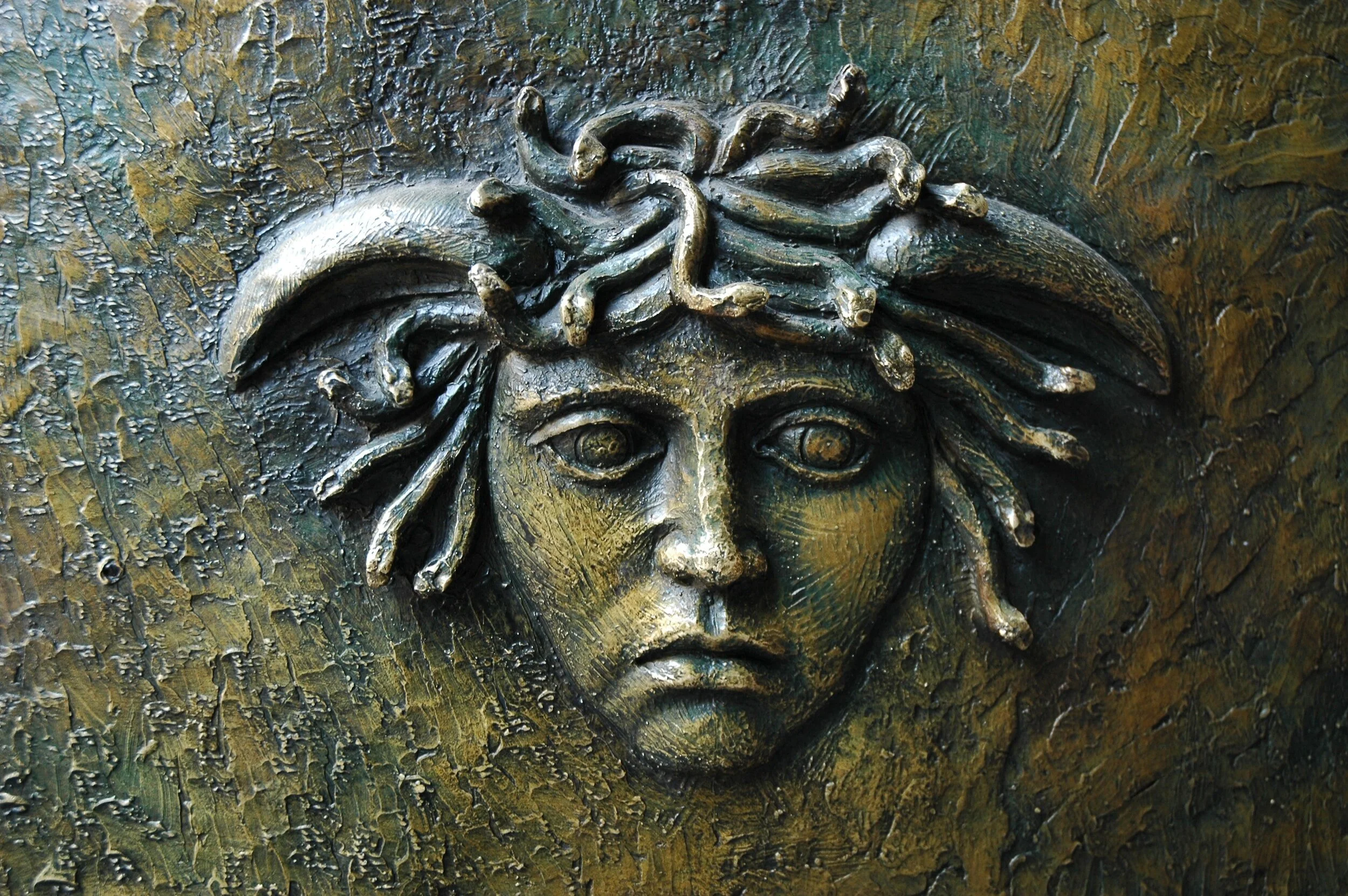
I find it fascinating when a person overly identifies with a role they’ve taken on in their lives or profession. Part of the fascination is based off my pop culture studies, where I’ve noted how the persona in pop culture takes on a life of its own. The person who makes up the base identity of the persona is overshadowed by the persona and the attention and energy directed toward it by the people who are interested in the persona.
However this isn’t the only way that identity can be eclipsed by a persona. Identity can also be eclipsed by taking on an archetypal identity and overly associating with it. While there can be a lot of value in working with a given archetype, because of the patterning that the archetype provides, there can also be a limitation involved when you overly associate your identity with the archetype.
When I apply this awareness to my own life I consider that while I practice magic and write books (among other activities) overly associating with the role of magician or author would be very limiting. There are times to take on those roles because they serve a specific purpose and put me into a specific identity, but inhabiting that identity all the time would prevent me from experiencing the richness of my life.
Consider your own life and the archetypal roles you take on. How do those roles serve you? How do they limit you? Do you want to inhabit that role or is something you can outgrow and let go of?
For a long time I have identified myself as a magical experimenter. It’s been a good role to play, but as I continue to walk my life path, I also think about what other roles I might step into as well as what value might be discovered in the process. I will always experiment with magic, but it’s not the only purpose of my life. When I recognized that I was able to step into other roles and let go of some of the attachment I’ve previously held with the magical experimenter role.
We ought to consider carefully who we become as it relates to the archetypes we connect with. Each archetype has a purpose, but we also have purpose beyond the archetype. Getting curious about the overall purpose of your life and being can be just as empowering as any other role you might take on.

A Couple Factors to Consider in Fueling Magic
Whether you are creating a magical entity, putting together a magical working, or doing some other kind of magical operation, one important aspect of the work you always to consider is how you are fueling your magical working. Today I share why that’s important and help you consider the factors that are involved in such work.
How to use Tower Times as a catalyst for change

There are moments in our lives where it seems like the world is ending and everything is going wrong. I call these moments Tower Times and they can be moments that happen in a flash or they can be moments that last years. I have experienced a fair amount of what I would consider to be Tower Time in the last 6 or so years and with each of those experiences what I have discovered is how much they help me transform my life, especially when I took on a perspective where I welcomed the tower time as an opportunity for growth.
In the face of events where everything seems to come crashing down on you, it can be hard to cultivate a perspective where you welcome the experience. There is suffering that occurs during tower time and this is normal to feel. Life as you know it is changing and usually its changing in a way where you are losing something important to you. What are you losing though? Often what is being lost, as painful as it may be, is ultimately something that could be holding you back from something greater.
What is that something greater? The only way to discover this is to embrace the tower time as a time of growth. For example, I used a breakup to motivate me to explore my relationship with myself and my masculinity. I recognized I needed to change something about myself and that the tower was signaling the need for a significant change in my life. I also realized that my old patterns were simply not working and that I needed to break those patterns by choosing to do something, which in my case meant doing some deep work around my identity as a man.
Tower times challenge us and in the moment the challenge is happening it can feel like the situation is hopeless but by cultivating a spirit of curiosity, you can discover the opportunities that lie in wait and open yourself to new perspectives. It won’t necessarily make the experience easier, but it also reminds you that these times will pass and that if you do the work, you will gain clarity and focus around what really matters to you and make that the focus of your life.
With that in mind, I want to share some processes you can apply during a tower time event to help you navigate that event. These processes won’t make the tower time go away, but they will help you get through them to the other side.
The first process is to breathe and be present with yourself. That seems simple enough but it can be hard sometimes. What I also do in this situation is tell myself that I love myself. I remind myself that the situation will pass and that life will continue on. It may take a while before the overall situation gets better, but I find each moment and treasure it.
The second process is to do some activities each day that help you with your process. For instance, I meditate each day and I also go walking and do somatic exercises. These different processes help me work through whatever comes up and allow me to stay present with the feelings and thoughts.
The third process is to do activities which are enriching and nourishing for you, activities that you like to do which feed your soul. For me, that’s going to Kungfu, my men’s group, and also attending cultural events. For you it might be something else, but making time for nourishing activities and making the effort to connect with other people can make a significant difference in your life and how you handle tower time events.
The fourth process is to take a break from magical workings. You might be tempted to do magical workings to get you through a tower time more quickly, but I recommend slowing down and not trying to magic yourself through the tower time. Treat this tower time as a sacred experience that will enable you to grow and make space for it. You’ll know when to do magic and what to do as well.
If you need help with some of these activities sign up for my free class Inner Alchemy of Wintering. Joanna Brook and I will share our best practices for navigating tower time in that class, as well as other practices you can do to recharge.
Directions, Correspondences, and Intentions
I explore the relationship between directions, correspondences and intentions and use this exploration to demonstrate a profound aspect of magical practice in relationship to how we call in the spiritual forces in our lives.
The Role of Boundaries in Spirit Communication
When we don’t establish the right kind of container with the proper boundaries, spirit communication and work can become problematic. I discuss the importance of setting clear boundaries in your magical work and share why this can benefit you.
If you want to learn more about my upcoming class Advanced Spirit Communication, go here.