ritual

Why we need ritual with magic: A reflection on what ritual brings to our body and being

Summer Solstice 2026

It was hot and bright day out, the kind of day that perfectly fits the Summer Solstice. It was close to noon. I got up from my computer and started collecting the materials I needed for my impromptu Solstice day ritual.

It had been a little while since I had done a proper magical ritual. I cast spells and do workings, but I don’t always add the formal ritual to those workings. But it had been awhile and I felt a deep longing for ritual burn with me. Today deserved something formalized for the sake of what I was calling in and for myself.

I pulled out a box of crayons and a small square piece of paper. I grabbed my rod, my drum and its beater and I went outside to my backyard.

I set everything on the ground other than my rod. I paced a circle calling in the directions, elements and spirits. I got close to the ground and called in mama. I raised my rod to the sky and called in the cosmos. I called in the Sun in all its forms and names that I know.

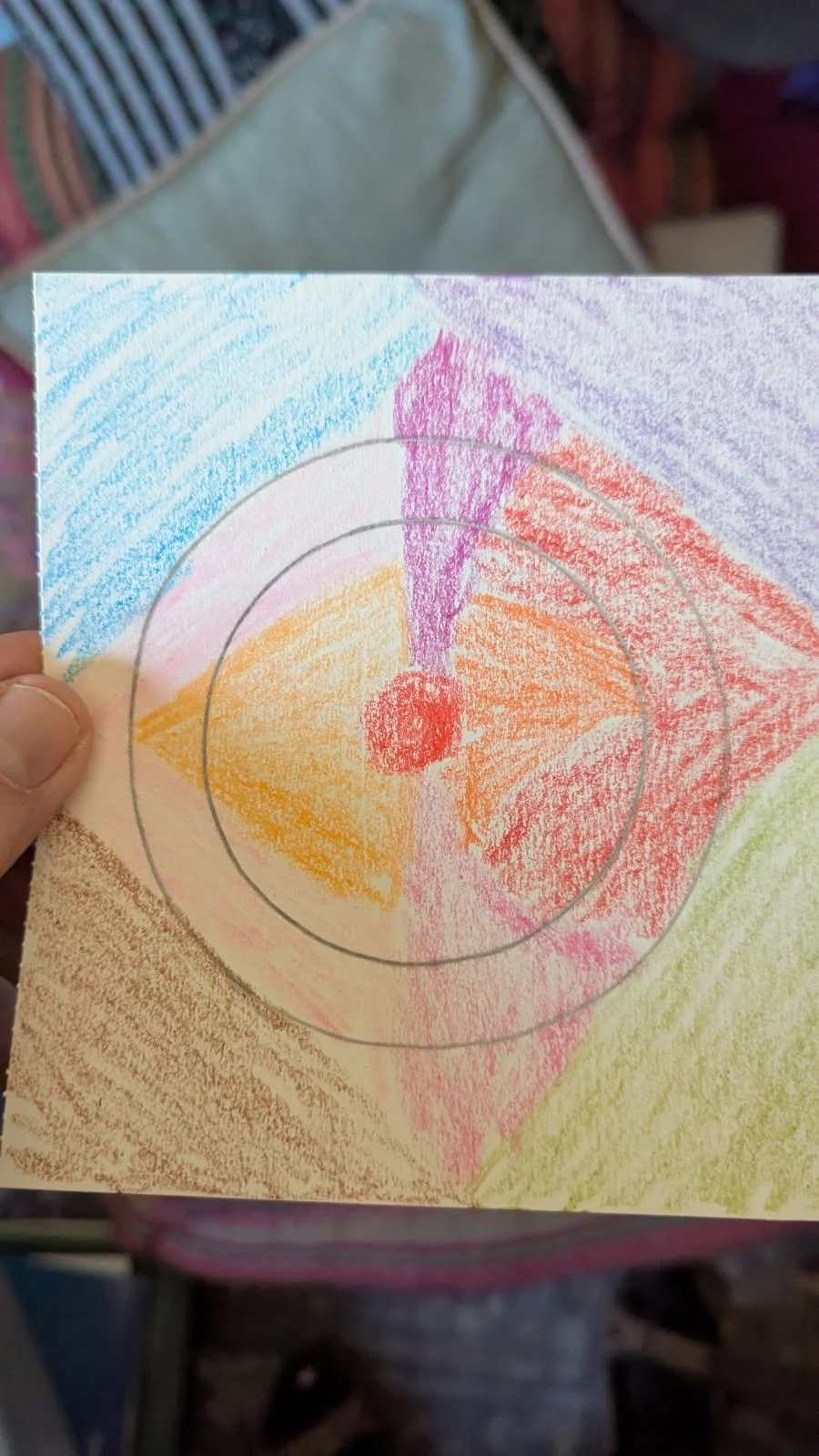
After setting the space and the time, I sat on the ground and I colored my own representation of the sun. Once I was done, I stood up and held my little sun to the sky and asked THE Sun if it would grant a bit of its light so I could keep that light for the winter Solstice to help the sun begin its journey back from the long night. Then I beat a drum as I walked in a circle and I did an impromptu chant as an offering to the sun.

I closed the ritual and thanked the spirits, the sun, the land and then I put my drawing into my ritual box. And afterwards I thought to myself, I really needed this.

Why we need ritual

I talk a lot about practical magic. I’ve developed my fair share of practical magic techniques and for the most part they don’t require ritual. They require focused attention, and ritual can be one way to accomplish that, but there are other ways as well.

Yet there is something to ritual that is essential to the lived experience of being a human. Ritual gets us out of our heads, into our bodies, and connected to something deeper and wider than all of us.

I don’t do formal ritual all of the time. I reserve it for specific occasions or when it feels called for. I can’t deny though how it lands in me. There’s a reason we crave ritual, in general. Ritual provides meaning and connection in a world that often feels disconnected.

Article continues below, but first…
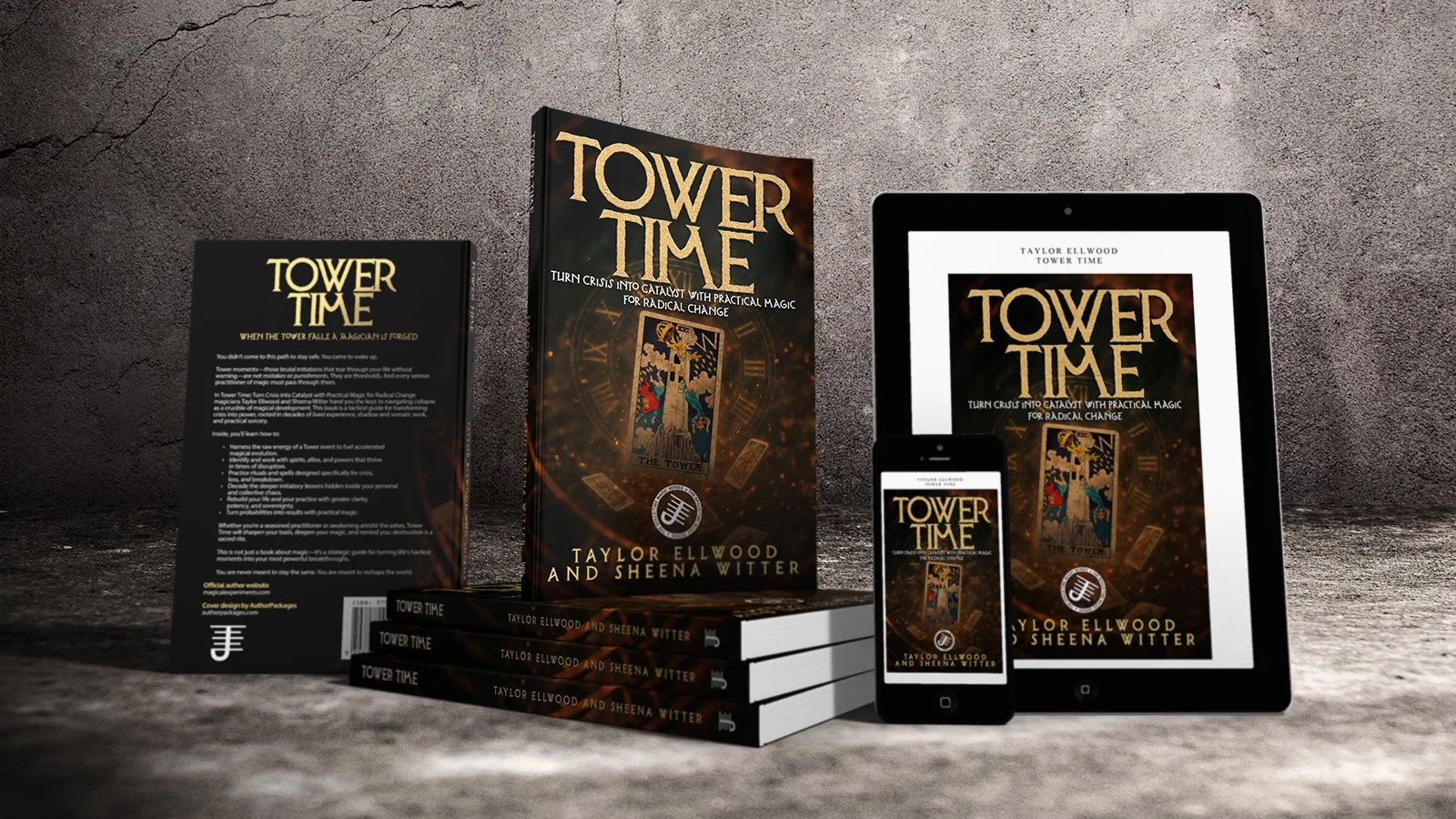
Tower Time is officially available!

When the Tower falls, a magician is forged.

You didn’t come to this path to stay safe. You came to wake up.

Tower moments are initiations that tear through your life without warning, but they are not mistakes or punishments. They are thresholds. And every serious practitioner of magic must pass through them.

In Tower Time: Turn Crisis into Catalyst with Practical Magic for Radical Change magicians Taylor Ellwood and Sheena Witter hand you the keys to navigating collapse as a crucible of magical development. This book is a tactical guide for transforming crisis into power, rooted in decades of lived experience, shadow and somatic work, and practical sorcery.

You can order from retailers OR order directly from us.

What stops people from doing ritual

I think what stops people from doing ritual is the perception that ritual is complicated. And certainly it can be complicated, but it doesn’t have to be.

I didn’t get dressed in a fancy outfit or pull out a bunch of ritual bling for my solstice ritual. I brought exactly what I needed and nothing more. And I brought one other essential element: My presence.

When I do a ritual, the phone stays out of the circle. When I do a ritual, the focus is on the ritual itself and whoever I’m doing the ritual with. I give myself over to the ritual and that creates the magic of the ritual.

The effect it has on my body and being is really fascinating because there is this felt sense of relaxation that comes through as I do the ritual. The ritual creates an intimate connection between myself and what is called in. There is presence and energy that lands through the entire space of the ritual.

The next time you decide to incorporate ritual into your magic, keep it simple. The focus isn’t on all the objects. It’s on using what’s needed to make the contact come alive. Every gesture, every word, and every tool serves the purpose of ritual. Anything that doesn’t serve the purpose is extraneous and unneeded.

Conclusion

I beat the drum and I came up with words in the moment praising both the sun and the dark. The words weren’t planned. I just knew they were the right words. I let the ritual work through me and I trusted what it brought me.

It brought me to the Sun. It brought me to the Dark. It brought me to the union of all things and in the process it brought me to myself. The best rituals do that. They bring you back to the self that you didn’t even know you were out of touch with.

Ritual magic and walking the land

For Fall Equinox, I decided to visit the Sandy Delta Park, near Portland. I’ve been there before, but it had been a while and I wanted to honor the spirit of the Columbia, while also doing my ritual for the equinox. However I was prompted to get creative with my approach to doing the ritual and thought I would share what I came up with. I ultimately decided to do a walking ritual, where I called in the sphere and the circle while walking the park.

Intention, Attention, and Magic

Intention is another vital aspect of the magical process. Your intention can be thought of as your attitude and beliefs, but it is also more than that. It is volitional attention. In other words it is focused attention that is dedicated toward a particular task or activity a person is doing. Thus intention is focused attention directed toward accomplishing a specific goal, activity, or task. A magical working can be one such task. Not all forms of attention fit intention. Paying attention to TV or multi-tasking is a very different form of attention as compared to focused attention. When you are watching a TV show, your attention can be focused, but rarely is it focused on achieving an outcome. Instead it is a passive form of attention, with the person being more or less receptive to what s/he is watching. Multi-tasking, on the other hand, is a kind of attention that is focused on doing multiple activities at the same time. However, it is not focused attention, because you are having to split and shift your attention to different tasks and activities. It's also not as productive as people make it out to be. While a person may seem to be doing a lot, s/he doesn't get as much done precisely because s/he is having to shift back and forth between one activity or another.

Intention, as it relates to the magical process, can also be thought of as focusing the will of the magician. In fact, I would argue that setting intention is the first step in the magical process. You've defined your result and now you need to set your intention to actually get that result. If you've answered the questions in the previous chapter, you should have a good idea of any blockages or beliefs that might compromise your ability to set your intention. If you do discover such blockages, it's important to either assess whether you really need the result, or do internal work to undo the blockages. If, however, you find that all of you is completely in agreement with the result you want to manifest, then it's time to set intention.

How to Set Intention

Intention is volitional or directed attention. Setting intention involves picking an action that can be used to embody and express your intention in your magical process. That activity can and usually does involve creating an altered state of consciousness that is representative of your focus. In fact, for magic to be effective, the magician needs to enter a state of mind where all possible distractions are ignored or removed, where what the magician is focused on is the process for manifesting the desired result s/he wants to obtain. In one sense, your intention is an obsession for the duration of the magical working, because it demands that your attention be completely focused on the process, ignoring all else. As such, an altered state of consciousness is ideal because any such state typically creates a hyper awareness of your process, while excluding anything else.

There are two basic types of action a magician can take, both of which can produce an altered state of consciousness. The first type of action is inhibitory. It involves inhibiting sensory awareness in order to enter an altered state of consciousness. The second type of action is excitatory. It involves entering into an excited, hyper state of activity in order to enter into an altered state of mind. Both types of actions are equally effective for setting intention, though some people may find it easier to use one type of action over another.

Some people think that setting intention is as simple as stating in a verbal or written format what your intention is, but that is new age thinking at its worst. An intention isn't set through a statement alone, but through directed and focused attention. If you can enter into an altered state of mind when writing or saying your statement of intent, then you have set your intention, but for the majority of people, it usually requires more effort and activity than just stating your intent. A person who can enter an altered state of mind by just making a statement is someone who has learned to discipline and focus the mind through years of daily practice. For the rest of us, however, it's important to use specific activities as part of the process of harnessing the attention effectively. This is why rituals, which can involve repetitive actions, are so effective. The repetition of the actions creates a rhythm that focuses the attention of the person on the magical process.

Not all magical activity is repetitious. Drawing a sigil isn't repetitious, but it can still be used to set the intention of the magician. What's really crucial about any activity you use for magical work is that it is an activity that focuses you completely and utterly on what you are trying to accomplish. Thus writing can be a magical activity (as Mr. Burroughs displayed time and again), and likewise painting can be a magical activity. The successful setting of intention is the creation of an altered state of mind where all that exists is the activity the magician is doing. Below are some questions to consider as you determine how you'll set intention.

What activities do I already do that create an altered state of mind for me?

What activity will best express my intention, and focus my attention?

What activity is challenging for me to do, but will also focus my attention?