Magic

A Writing Magic Exercise

My latest post on Patreon explores how to apply magic to the process of writing.

I'm a firm believer that magic can be done by incorporating creative activities into your magical work. It's one reason I like to do paintings for both practical magic and spiritual offerings. Another practice I enjoy doing involves incorporating writing into my magical work.

Magical Experiments Podcast: Experimenting with Magical Mechanics with Rich Kiska

In this episode Rich Kiska and I discuss experimenting with the mechanics of magic. Rich shares her spiritual journey and how she became a magical experimenter and then we discuss space/time magic, pop culture magic, and how to experiment with magic in general.

Rich Kiska offers spiritual services and works with The Emotion Code which involves divination through channeling and muscle response testing; astrology; identification and removal of energetic/spiritual blocks, contracts, curses, and demons, to name a few. Learn more here

Magical workings as an unfolding process of wholeness

One of the latest sources of inspiration in my magical work is a series of books by Christopher Alexander where he explores how to create life through architecture (affiliate link). While these books admittedly, on the surface, have little to do with esoteric secrets for summoning spirits or the other types of occult lore that is usually so favored by occultists, I nonetheless find them to be quite inspiring because of how they look at the process of creating a building where people feel a sense of life. There is something profound about a discipline that explores how to bring life to the process of building.

And I find that it carries over to magical work, provided one is willing to explore the possibilities and perspectives that are offered. I’m only a bit over halfway through the second book of the series, but nonetheless I have discovered a profound amount of insight and knowledge that be applied to both space/time magic in specific and magic as a discipline in general.

Elemental Balancing Ritual Connection and Truth Month 12

9-21-2021 Today I’ll be switching over to Ouranos (Uranus). This morning my magical partner and I collected dew from the bottles and afterwards we talked about partnerships and feasts and I note this only because it happened while we were collecting and distilling the dew for the archaeus work and since such conversations are happening its worth noting as a relevant and related to the energy and efforts of the work we are doing.

I meditated on plate 12 of The Mutus Liber. It’s almost the same as plate 9 though there are subtle differences. I didn’t get any specific insights beyond what I’ve already gotten, but I noticed the triangle shape again and the offering to Mercury.

Also I did switch over to Ouranos (Uranus)/Metatron and felt a sense of welcome. Last year, the creativity work was ended in such a weird way, because of events. It felt like this month is actually a redemption tour of sorts and I got the cover of my newest book today, so that felt significant as well.

Magical Experiments Podcast: Balancing the Magic with the Mundane, with Soviet Mercedes

Soviet Mercedes and I get together and have a fun conversation around the importance of balancing your magical work with mundane activities. We discuss why it can be good to take a break from your magical practice and how that can help you create a baseline for your magical work, as well as sharing examples from our own experiences about how we’ve balanced the magic with the mundane.

How to figure out what you want

When you know what you want, you can manifest it. But figuring out what you want isn’t always easy and there can be a lot of distractions along the way that lure you from what you want. You have to apply the discipline of essentialism to keep you focused on what matters, but you also need to explore what you might want to narrow down what truly matters and then focus on pursuing it. In this video I share my thoughts around this process and what I’ve learned over the years.

Learning how to do leads to why

monica-leonardi-Bp8rssVTi-o-unsplash.jpg

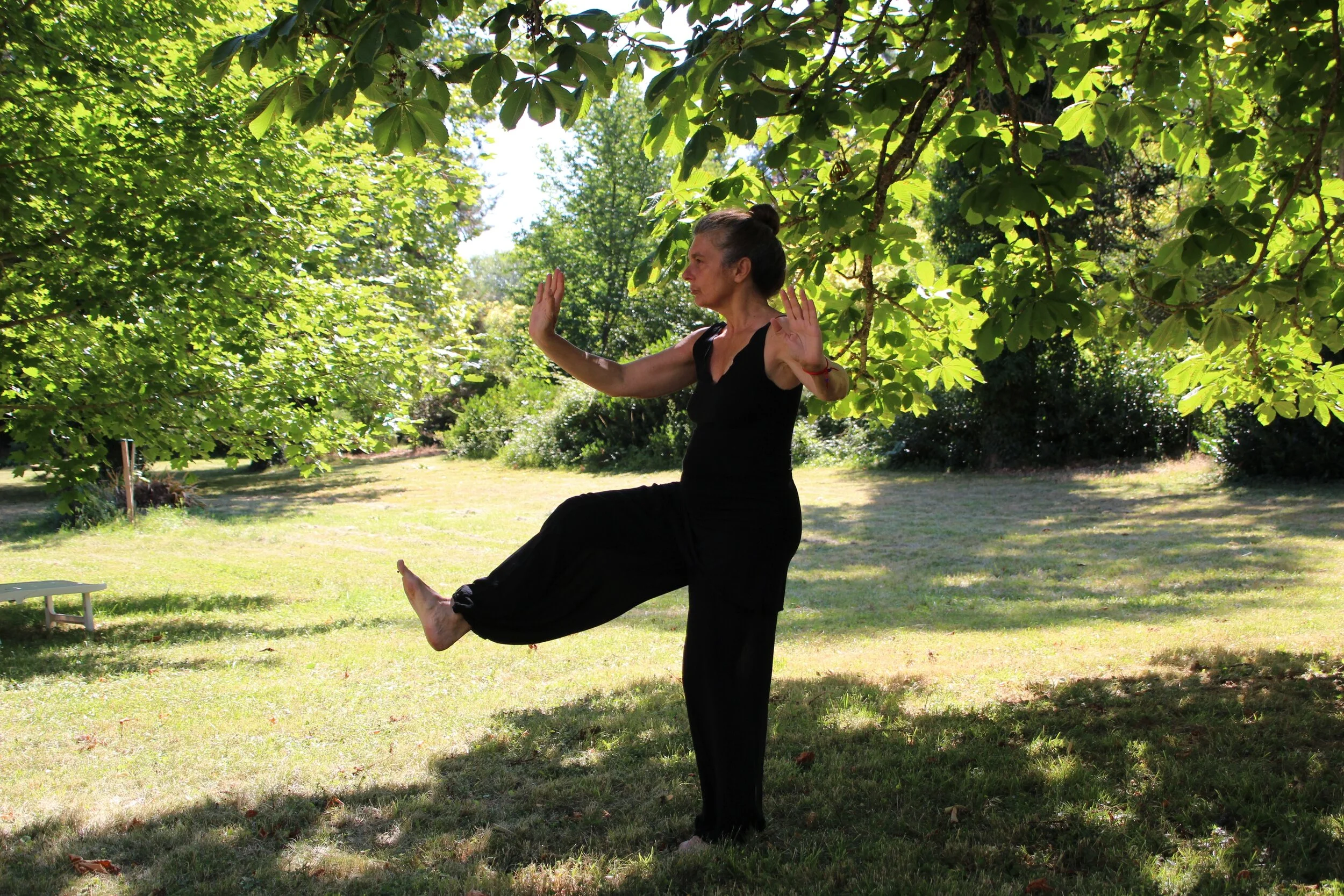
I was recently watching a qi gong training video and the instructor made a really interesting point: Learning How to Do leads to why. The point he was making is that if you want to know the why behind an activity you are doing, you first must necessarily learn how to do the activity. It’s a salient point to make and one often missed when people get caught up in trying to understand the why, without doing anything experiential first.

I will, on occasion, have people ask me questions about a given practice, which is very reasonable to do, but at a certain point the answer becomes, “Do the work,” if the work hasn’t already been done. The reason is simple: A conceptual framework of the actual work can only take you so far. Until you apply the concepts into actual practice, you don’t know the concepts. Theory without practice can only take you so far, especially if theory becomes a crutch that keeps you away from the practice.

I apply this to my own practice by making the choice to do qi gong everyday. Learning the practice allows me to experientially open myself to the concepts and turn them into felt experiences that shape my understanding of the concepts. Each movement I perform and learn leads me deeper into the mysteries I’m exploring, allowing me to discover how to deepen my practice but also illustrating the why behind the practice.

Learning how to do something will naturally create more questions, but it will also answer a lot of your questions. The new questions can lead you deeper into the practice, and while the insights someone else offers can be valuable, the real work begins when you answer your own questions through the engagement in your practice and discover the why through the embodiment of your practice. The whys’ you discover will lead you on to richer and deeper insights, providing clarity and focus around the work.

How to get out of your tunnel vision

One of the challenges a person faces is their own tunnel vision about what they know and what they experience. I share some thoughts on how to recognize your own blind spots in your life and practice and share why I think this is essential, because it is very easy to get in our own ways and limit ourselves with the perspectives we don’t cultivate.

Integrating Qi Gong into Magical Workings

One of the activities I’ve lately been doing, while performing the Sphere of Art, has involved doing some of the Qi gong movements I’ve learned. I was inspired to do this one day, just for the sake of seeing what if anything would happen if I started integrating qi gong into the SOA. I did this with two different Qi Gong movements, Cloud Hands (affiliate link) and Heaven and Earth Qi Gong (affiliate link) and what I found is that with one of those moments it seamlessly integrated into the SOA work, while the other did not.

Pop culture magic and wintering

I am finally coming out of my wintering. Its been a year long process, but in the last few weeks I’ve felt something within me switch. While there is still grief over recent life changes, I felt like the winter snow and ice is melting and the seeds of Spring are beginning to sprout, with the promise of possibilities turning into realities. Still in order to even get to that place, I had to go through the experience of wintering. This proved to be a transformative experience and one of the allies I drew on what Johnny Lawrence from Cobra Kai.

At the beginning of Cobra Kai, Johnny is going through a wintering experience of his own. He’s washed up, just going through the motions, and he has to embark on a hero’s journey to discover himself, but also to help his students. Of course, as with any such journey, Johnny inevitably encounters his share of troubles some of which are created by his own actions. A lot of the times Johnny trips himself up and I could relate to that, because I’ve done the same. It was easy, as a result, to work with him during my own wintering experience.

Magical Experiments Podcast: Elemental Magic with Ivo Dominguez Jr

For the second episode of Magical Experiments Podcast, I have the great pleasure of hosting Ivo Dominguez Jr and we discuss elemental magic and how to incorporate it in your life. We also discuss the problem with categorizations and Ivo shares a couple exercises you can do with elemental magic.

Watch the video on Patreon (Note this interview will be available to the public for a week and then after that only available to people who subscribe to the podcast Tier or above on my patreon.

Identity as the compilation of the past

In the last week and a half I’ve been engaged in an experiment around how I frame my past, in relationship to my present. This experiment came about as a result of reading The Courage to be Happy (affiliate link) In that book the author makes the point that people often use the past to define the present, justifying their current circumstances because of what previously happened. Certainly, this has been my own experience and I found myself in a place where I was feeling on edge because of events that had happened over the course of the last year.

The author makes the point that an alternate perspective can be adapted, where we consider what meaning a person’s present identity is giving to the past. He also argues that the past doesn’t exist, because its something that can’t be regained It is simply gone. Instead what happens is that people compile their past experiences and use them to justify their current sense of identity. Anything that runs counter to the present experience they want to cultivate is conveniently forgotten and ignored. Consequently what ought to be considered is that a person’s now defines their past as opposed to the past defining the present.

How to apply tension-resolution systems to magic

Photo by Evelyn Chong from Pexels

Photo by Evelyn Chong from Pexels

In the book Creating (Affiliate link) the author shares an exercise where throughout the day of a workshop he and his partner randomly pour 7 glasses of water, but don’t explain why they are doing it to the workshop attendees. At the end of the day they ask the attendees to tell them why they are doing this activity and various people share their theories as to why. In the end, it turns out the teachers were doing this activity to illustrate the principle of tension-resolution.

What is the principle of tension-resolution?

It is this: Where there is tension, people will naturally seek to find a resolution for that tension. The author points out that often what is accomplished is NOT a resolution, because people attempt to resolve tension out of a need to control that tension, without fully considering where that need is coming from. It’s a useful lesson that demonstrates the limitations of what we know and control, because it also reveals that in making the choice to act upon tension, we may end up speculating and trying to fill in the gaps instead of being truly open and curious.

Magically speaking, however this inspired some thoughts on my part on how tension-resolution can be applied as a principle of magic. The most obvious lesson is the one the author shared and his sage advice of practicing observing reality objectively. Instead of feeling the need to fill in the gaps with what you think you know, it can be useful to simply observe and take in what you experience without feeling the need to explain it or categorize it or define it. This is no easy task, but it can be very effective for teaching you discipline around how you observe a situation or experience.

The author also makes the following observation about tension: “Tension is the engine that generates energy for action.”

In magical work, we can use tension to empower the workings we do. In fact, one of my go to’s in terms of fueling magical works involves using tension of any type to feed into the work, because tension is a constant and at the same time we are moved toward wanting a resolution (i.e. result). We can use the tension to achieve the result by directing it toward the magical and mundane work we’re doing, and then continually cycling any tension that continues to rise until the resolution is achieved. A good example, would be using the effort and emotions around a job hunt to feed into the magical working that expedites the resolution of the job hunt.

You can also take the opposite approach and delay the resolution by amplifying the tension. The benefit of taking this approach is that by drawing out the tension, you strengthen the result that occurs, because the tension becomes stronger and stronger. The more tension there is in a situation, the more it forces the situation toward a resolution, but if you can delay the resolution, the resultant “explosion” creates a stronger effect of generating a result. For example I used the tension of this summer, doing door dash and dealing with the fallout of my divorce, as well as my internal misery to force several situations to resolve in my favor. Because that tension had been drawn out for so long, it was so powerful that when the time came for desired results to manifest they were almost instantaneous.

We use tension to create movement in our lives. It’s what propels us through any crisis, but any other situation as well. If we can master the awareness of tension, we can apply it meaningfully to our magical work and achieve results by knowing when and how to apply tension to get what we want, when the moment is most opportune to achieve it.

Building a foundation in magic

What does it mean to build a foundation in your magical practice and in your life? I share my thoughts and experiences around this concept of a foundation and how it can change your life if you approach it in the right way. I get philosophical and talk about what it really means to live a magical life and why that isn’t always as easy as one thinks, and I read an introduction Storm Constantine wrote in one of my magical journals.

Breaking the web of reality

In Living Magick (Affiliate link) one of the authors makes an interesting claim about how magic can be used to fundamentally break the web of reality, though apparently it can’t be taught, but only carried out as a unique act (Needless to say I don’t agree with THAT assessment). In contrast, in The Elements of Spellcrafting (affiliate link), the author argues that magic is not the direct cause of change, but is merely an influence of change. I agree with him that a lot of magic is more influence based, but I do think magic can, under the right circumstances have causal aspects to it, and be quite a direct force in a person’s life. These two opposing perspectives, where one can break the web of reality (although supposedly only in a unique way) and that magic is only an influence instead of a direct cause of change illustrates the weaknesses in modern occult theories and the limitations that we all too often readily accept in the explanations other people offer us. My own perspectives and theories and processes have their limitations as well, which is one reason I always say challenge what I share, because its not gospel truth, anymore than what these other two authors, or all the rest share.

My process for creating a magical space out of my home

I recently moved into my own space, and this gave me the opportunity to create a magical space out of my home, because the space is entirely my own to design and shape as I please. I decided to employ principles of organic design that I’ve been learning about from Christopher Alexander’s works as well as Sarah Goldhagen’s work on the topic. Both of these people, as far as I know don’t practice magic. They are architects that help design buildings and landscapes. Their knowledge of designed space is quite profound and has been very useful to me in developing a space of my own that not only reflects who I am but allows me to turn my lived in space into a spiritual sanctuary for my magical practice.

I mention their works because as always I find that the majority of my inspiration in magical practices comes from outside the magical current, where the perspectives of other disciplines can be fruitfully employed to inform the way we practice magic. In this case, I’ve taken the principles these authors have described in their books and used them to help me create an organic generative space that enhances my spiritual work, connects with the entity of the home I’m living in (and allows it to become part of the spiritual work), and at the same creates a space that is very comfortable for people who want to visit. In this article, I will walk you through my thought process and the overall development of this as a case study example of how spatial design can be employed to create an ongoing magical space to work and live in.