
Lucid Dreaming: Techniques That Actually Work

dream

Lucid dreaming is a learnable cognitive skill where the dreamer becomes aware they are dreaming. The most consistently effective approach combines Wake Back to Bed with a cognitive induction technique like MILD or SSILD, supported by a daily dream journal and reality checks. Practice slowly to protect sleep quality.

Are there different types of lucid dreaming?

Yes. Practitioners and researchers commonly distinguish at least three broad forms of lucid dreaming. Spontaneous lucidity occurs when awareness arises within a dream without deliberate induction. This is most common for people who naturally remember dreams well and have high baseline dream recall. Induced lucidity is deliberately produced using techniques such as Mnemonic Induction of Lucid Dreams, Wake Back to Bed, SSILD, sensory cues, or combinations of these. Applied or task-focused lucidity involves using lucidity deliberately to rehearse skills, treat nightmares, or perform meditative practice. The goals and ethics vary by context.

Different types can also be classified by depth of awareness and control. Some lucid dreams involve only the recognition that one is dreaming, while others allow sustained, deliberate shaping of the dream environment. Success and depth differ across individuals and nights. The physiological basis of lucid dreaming is well-established, with neuroscientific research demonstrating increased activation in the prefrontal and parietal regions of the brain, areas associated with metacognition and self-reflection, which are typically suppressed during normal REM sleep. This state is sometimes described as a hybrid form of consciousness, blending elements of both sleep and wakefulness.

Astral projection and lucid dreaming: are they the same, and what about Reddit reports?

Lucid dreaming and astral projection are conceptually different. Lucid dreaming is a scientifically documented state of consciousness occurring during REM sleep, with measurable neural correlates. Astral projection is a metaphysical interpretation of an out-of-body experience that lacks empirical validation. Online forums such as Reddit host many personal reports linking the two. Anecdotes commonly describe sensations of separation from the body during lucid dreams. While subjective experience can feel similar, scientific evidence points to internal cognitive processes rather than external travel. Treat anecdotal claims as personal reports rather than proof of an external phenomenon.

Practitioners may interpret lucid dreams as astral projection, but the physiological evidence points to internal cognitive processes rather than external travel. The concept of an astral body leaving the physical body is rooted in esoteric and spiritual belief systems, whereas lucid dreaming is a cognitive phenomenon that can be objectively verified using electrooculogram recordings of pre-agreed volitional eye movements during polysomnography-verified REM sleep. It is critical to maintain clear distinctions between scientifically verified induction rates and the exaggerated claims often found in popular media or practitioner anecdotes.

What are the best lucid dreaming methods?

Evidence supports a small set of repeatable methods. The best results come from combining techniques rather than relying on one in isolation. Below is a practical comparison to help decide what to try.

Method How it works Evidence and typical success When to use MILD (Mnemonic Induction of Lucid Dreams) Wake after several hours, set a strong intention such as repeating a phrase, then return to sleep aiming to carry that intention into REM. High evidence. The International Lucid Dream Induction Study found strong induction rates when fall-back-to-sleep was quick. Good for those with decent dream recall and the ability to fall back asleep quickly. WBTB (Wake Back to Bed) Wake after 4 to 6 hours, stay awake briefly, then return to sleep to target later REM periods. Moderate evidence as a facilitator. Most effective when combined with MILD, SSILD, or cueing. Use as a framework to increase REM probability during induction practice. SSILD (Senses Initiated Lucid Dream) After brief awakening, cycle attention quickly through visual, auditory, and kinesthetic sensations before sleeping. Comparable to MILD in recent studies for some users. Alternative if prospective memory tasks are difficult. Reality Testing Perform checks during wakefulness to build a habit that may transfer into dreams. Low efficacy alone; best as a supplement to other techniques. Use daily as part of mindset conditioning. Targeted cueing (sensory cues) Pair a sound or light with a lucid intent while awake, then present the cue during REM to reactivate the intent. High induction rates in controlled studies, though lab-grade detection often required. Useful if apparatus or apps can detect REM reliably. Dream incubation and journal Set pre-sleep themes and keep detailed records to increase dream recall and spot dream signs. Strongly supported as foundational for all other methods. Begin here; improves success across techniques.

A common and evidence-aligned protocol is WBTB plus MILD or SSILD, with nightly dream journaling and regular reality checks during the day. Sensory cueing can be added when sleep-stage detection is reliable. Avoid relying on reality testing alone. For step-by-step instructions on standard methods, see the techniques for lucid dreaming overview and the dedicated pages on dream journal techniques, reality testing methods, dream incubation strategies, and trigger and cueing techniques.

What is the best lucid dreaming device, mask, app, book, guided meditation, hypnosis, or music?

No single product reliably guarantees lucidity for everyone. Choices should be guided by evidence, user safety, and personal goals. Devices attempt to detect REM and present sensory cues such as lights, sounds, or vibrations. Historical lab work showed light stimulation during REM can cue lucidity. However many commercial devices do not reliably detect REM and may instead disturb sleep. If using a mask or headband, choose one with independent validation and prefer models that adapt stimulation intensity. Use infrequently to avoid sleep fragmentation. Some devices rely on timers rather than active REM detection, which may stimulate the user during deep sleep, potentially disrupting restorative sleep without inducing lucidity.

Apps fall into two categories: reminder-based (reality-check reminders, intention setting, journaling) and sleep-stage cueing (with audio or light cues). Reminder apps are low risk and helpful for habit formation. Sleep-stage cueing apps require careful selection; only use apps that explain their detection method and publish validation. Avoid apps that encourage repeated nightly sleep interruptions.

Classic, evidence-aligned texts include stepwise guides on techniques and science. Look for books that present MILD, SSILD, WBTB, and dream recall as core practices and that discuss safety and cultural context. For teachings on Dream Yoga and its religious context consult sources dedicated to Tibetan Dream Yoga rather than secular technique manuals.

Guided meditations and hypnosis recordings can help with intention setting and relaxation prior to sleep. They are particularly useful during WBTB to reinforce the MILD phrase or target imagery. Music, including calm binaural-beat tracks or ambient theta-band music, may aid relaxation but has limited direct evidence for inducing lucidity. Use these tools to support sleep onset and intention, not as guaranteed induction methods.

How to practice a reliable nightly protocol

Keep a dream journal: record every morning, even fragments. This improves recall and reveals dream signs. Daily reality checks: choose two to three checks and perform them habitually, but ensure checks are done thoughtfully rather than mechanically. Plan a WBTB night once or twice per week: wake after about 4.5 to 6 hours, remain awake 10 to 60 minutes, then perform MILD or SSILD and return to sleep within five minutes when possible. Practice MILD during WBTB: recall a recent dream, imagine re-entering it while recognizing it as a dream, and repeat an intention phrase until it feels memorized. Stabilize lucidity: upon first becoming lucid, reduce excitement, engage senses (rub hands, touch objects), speak or spin if the dream fades, and anchor awareness to the dream environment. Limit disruption: avoid nightly WBTB more than a few times weekly to protect sleep architecture and daytime functioning.

How to use lucid dreaming safely

Training should protect sleep health and mental stability. Key safety rules include not practicing induction aggressively if there is a history of psychosis, schizophrenia, severe dissociation, or bipolar disorder. Limit WBTB use to avoid chronic sleep fragmentation and daytime sleepiness. Be aware of sleep paralysis and false awakenings. Prepare calming responses rather than panicking if they occur. Avoid unsupervised use of psychoactive supplements such as galantamine without medical consultation, due to potential side effects and drug interactions. Respect cultural practices: Tibetan Dream Yoga and similar spiritual disciplines are part of living religious traditions and require ethical context, guidance, and sometimes initiation. Read about Dream Yoga in its proper context before adopting its terminology or practices, such as the Tibetan yogas of dream and sleep.

Common mistakes and where to start

Begin with low-risk, high-impact foundations. Start by improving dream recall and building reality-check habits before attempting intensive induction. Start a dream journal today and commit to recording every morning for at least four weeks. This alone significantly increases lucid dream likelihood. Learn one reality check and apply it consistently in waking life. Use mental questioning rather than only physical tests. After two to four weeks of stable recall and checks, try a single WBTB night combined with MILD or SSILD. Keep WBTB frequency low while assessing daytime alertness. If interested in cueing, research devices and select validated options that minimize false positives. Use cueing as a supplement, not a replacement for cognitive techniques. Read a reliable techniques overview and follow a progressive practice plan rather than hopping between many methods. If spiritual practice is the goal, consult qualified teachers and study Dream Yoga within its cultural and ethical frameworks rather than adopting isolated exercises.

Common mistakes include expecting immediate results. Lucidity often takes weeks or months of consistent practice. Relying solely on reality testing is another error. Reality checks help but rarely work by themselves. Overusing WBTB and fragmenting sleep is a major mistake. Excessive disruption reduces REM quality and overall health. Mixing induction with untreated mental health conditions can worsen dissociation or psychotic symptoms. Confusing hypnagogia or sleep paralysis with successful lucidity is also common. Those states feel striking but are not necessarily lucid dreaming with cognitive control.

If you want to go further with this, my class Meditation Mastery walks you through meditation and conscious alteration techniques that can help you with lucid dreaming


Astral Projection: How It Works and How to Try It

astral projection

Astral projection is an intentional out of body experience where practitioners report their consciousness separating from the physical body. While science explains this as a neurological or sleep related phenomenon, many esoteric traditions view it as a travel through the astral plane. Here is how the practice works and how to try it.

What is astral projection and how does it work?

Astral projection is a practice rooted in nineteenth century Theosophy, which posited that humans possess an astral body capable of traveling independently of the physical form. Practitioners describe working through an intermediate area known as the astral plane. While the concept draws on older esoteric traditions like Hermeticism and Neoplatonism, the modern understanding was heavily shaped by figures like Helena Blavatsky and later, Robert Monroe, who popularized the term out of body experience.

From a scientific perspective, there is no evidence that consciousness can exist outside the brain. Neurological research links out of body experiences to a failure in integrating sensory information within the brain temporo parietal junction. This multisensory disintegration can create the illusion of disembodiment. Astral projection is also closely associated with sleep related phenomena, particularly sleep paralysis and lucid dreaming, where the body rapid eye movement stage muscle atonia persists into wakefulness.

In some cases, out of body experiences are linked to dissociative states and psychiatric conditions. A case study of a fifteen year old with dissociative identity disorder and dissociative fugue described an out of body experience where he felt his soul leave his body and observe himself from a third person perspective. In this context, the out of body experience is understood as a form of depersonalization and dissociation, often triggered by severe stress or trauma. Out of body experiences have also been reported in association with schizophrenia, anxiety, and depression, highlighting the importance of considering psychological well being when evaluating these experiences.

What is the difference between astral projection and lucid dreaming?

Astral projection and lucid dreaming share significant overlap. Both involve a hybrid state between waking and dreaming. In lucid dreaming, the dreamer becomes aware they are dreaming and can often control the narrative. In astral projection, the practitioner attempts to maintain consciousness while the physical body falls asleep, often using the resulting sleep paralysis as a launching pad for the experience. You can read more about lucid dreaming techniques to understand the similarities.

While practitioners often distinguish between the two, viewing lucid dreaming as an internal psychological event and astral projection as an external travel, scientific consensus views both as profound, internally generated states. Individuals who experience one are more likely to experience the other, and techniques for inducing them are often similar. Research suggests that both phenomena involve a hybrid state between waking and dreaming, with individuals who experience one being more likely to experience the other. The vividness of these experiences can make them feel profoundly real, but they are fundamentally internal, psychological events.

The simplest and most scientifically supported explanation is that astral projection is a profound, internally generated fantasy or dream state, influenced by the brain multisensory processing and the individual suggestibility and imagination. Scientific tests, such as asking a person to project their consciousness to a hidden location and identify objects, have consistently failed to provide proof of literal astral travel.

What is the silver cord in astral projection?

A recurring motif in astral projection lore is the silver cord, a supposed psychic link connecting the astral body to the physical body. This concept, often linked to a metaphorical interpretation of Ecclesiastes, is presented in occult literature as a tether that ensures the traveler can return safely. While there is no empirical evidence for the silver cord, it serves as a comforting visualization for many practitioners.

Other concepts include the idea of different vibrational levels or focus levels, as introduced by Robert Monroe. Monroe approach moved away from occult terminology, using binaural beats to synchronize brain hemispheres and induce states conducive to out of body experiences. This secular framework has heavily influenced modern practices. You can explore concepts of the astral plane to see how these ideas evolved.

While Theosophy synthesized various traditions, the modern concept of astral projection differs from older religious ideas of soul flight. In ancient Egyptian beliefs, the soul could hover outside the body. In various shamanic traditions, soul flight is a specific, often community oriented practice for healing or divination, not a recreational pursuit. In Hinduism, concepts like the subtle body exist, and astral travel is sometimes considered a magical power achieved through rigorous yoga, rather than a standalone practice.

How do you try astral projection safely?

Attempting astral projection requires patience and a focus on relaxation. Practitioners commonly report that the process involves maintaining mental awareness while allowing the physical body to enter a state of deep sleep. There are many techniques for astral projection that you can try. Here is a general method that many practitioners use to initiate the process.

First, find a quiet, comfortable space where you will not be disturbed. Lie down and ensure your body is fully supported. Focus on relaxing every muscle in your body, starting from your toes and working your way up to your head. This physical relaxation is crucial for allowing the body to fall asleep while the mind remains awake. Some practitioners use color focus and afterimages to help maintain mental focus during this stage.

Next, focus on your breathing. Take slow, deep breaths, and allow your mind to clear. As your body relaxes, you may begin to experience hypnagogic hallucinations, such as seeing shapes or hearing sounds. This is a normal part of the transition between wakefulness and sleep. Do not be alarmed by these sensations; simply observe them and remain calm. Some people also use astral projection via touch to help ground their awareness.

Once your body is deeply relaxed and your mind is calm, you can attempt to separate your consciousness from your physical body. One common technique is the rope method, where you visualize a rope hanging above you and imagine yourself climbing it, pulling your astral body out of your physical body. Another method is the roll out technique, where you simply imagine yourself rolling out of your physical body. You can also read about the projection of the astral body for more detailed instructions.

What are the religious views on astral projection?

Astral projection carries several risks and boundaries that must be respected. Culturally, the concept of astral projection has been heavily commercialized by the New Age movement, often appropriating and flattening distinct traditions like Hindu and Buddhist teachings or Sufi mysticism into generic practices. Religiously, mainstream Christianity and Islam generally view voluntary astral projection as spiritually dangerous or forbidden.

In Christianity, voluntary astral projection is widely discouraged and often categorized as an occult practice or a form of sorcery, which biblical texts explicitly warn against. The theological concern is that attempting to cross natural boundaries between the physical and spiritual realms without divine initiation opens individuals to spiritual deception or demonic influence. However, Christian theology does recognize involuntary out of body experiences or visions initiated by God. For instance, the Apostle Paul experience described in the Bible, where he was caught up to the third heaven, is viewed as a divine revelation rather than a self directed astral projection.

In Islam, mainstream perspectives generally view astral projection as forbidden or, at best, a futile distraction from true piety. It is often seen as a postmodern superstition or a commercialized New Age concept that has no basis in orthodox Islamic teachings. However, within Islamic mysticism, there are complex traditions regarding spiritual travel and the exploration of different realms of consciousness. Scholars note that figures like Ibn Arabi discussed spiritual insights and travels, but these are deeply rooted in Islamic metaphysics and piety, and should not be equated with the modern, secularized concept of astral projection.

What are the psychological mechanisms behind astral projection?

Out of body experiences are characterized by a sensation of the self being located outside the physical body, often accompanied by an elevated visuospatial perspective. Neurological research indicates that out of body experiences are linked to a failure in integrating proprioceptive, tactile, and visual information within the brain temporo parietal junction. This multisensory disintegration, combined with vestibular dysfunction, can create the illusion of disembodiment and floating. Studies have shown that electrical stimulation of this cortical area can induce vestibular and multisensory illusions, including out of body experiences. Furthermore, patients with vestibular disorders report out of body experiences at a significantly higher rate compared to those without such issues.

Astral projection is closely associated with sleep related phenomena, particularly sleep paralysis and lucid dreaming. Sleep paralysis occurs when the body rapid eye movement stage muscle atonia persists into wakefulness, often accompanied by hallucinations. Vestibular motor hallucinations during sleep paralysis frequently manifest as feelings of floating, flying, or out of body experiences. Lucid dreaming, where the dreamer is aware they are dreaming, also shares commonalities with astral projection. Research suggests that both phenomena involve a hybrid state between waking and dreaming, with individuals who experience one being more likely to experience the other. The vividness of these experiences can make them feel profoundly real, but they are fundamentally internal, psychological events.

In some cases, out of body experiences are linked to dissociative states and psychiatric conditions. A case study of a fifteen year old with dissociative identity disorder and dissociative fugue described an out of body experience where he felt his soul leave his body and observe himself from a third person perspective. In this context, the out of body experience is understood as a form of depersonalization and dissociation, often triggered by severe stress or trauma. Out of body experiences have also been reported in association with schizophrenia, anxiety, and depression, highlighting the importance of considering psychological well being when evaluating these experiences.

The concept of astral projection has ancient roots, with various cultures and shamanic traditions describing the ability of the spirit to leave the body. However, the modern understanding of astral projection was heavily influenced by nineteenth century Theosophy, founded by Helena Blavatsky. Theosophy posits the existence of seven bodies, including the astral body, which can travel on astral planes. This esoteric framework borrowed from Tibetan, Hindu, and Buddhist traditions. Today, astral projection is often commercialized in New Age circles, with books and seminars promising to teach the technique, despite the lack of empirical evidence for literal travel.

Despite the vivid and sometimes life changing nature of out of body experiences, there is no scientific evidence that consciousness can exist independently of the brain or travel to other locations. Scientific tests, such as asking a person to project their consciousness to a hidden location and identify objects, have consistently failed to provide proof of literal astral travel. The simplest and most scientifically supported explanation is that astral projection is a profound, internally generated fantasy or dream state, influenced by the brain multisensory processing and the individual suggestibility and imagination.

Common Mistakes in Astral Projection

When attempting astral projection, practitioners often make several common mistakes. One of the most frequent errors is confusing sleep paralysis with a spiritual attack. Sleep paralysis occurs when the body rapid eye movement stage muscle atonia persists into wakefulness, often accompanied by hallucinations. This can be a terrifying experience, but it is a natural physiological phenomenon, not a demonic attack.

Another common mistake is attempting to force the experience rather than relaxing into it. Astral projection requires a delicate balance of mental awareness and physical relaxation. Trying too hard can create physical tension, which prevents the body from falling asleep. It is important to approach the practice with patience and a relaxed mindset.

Failing to recognize the role of hypnagogia and brainwave states is also a common error. Hypnagogia is the transitional state between wakefulness and sleep, characterized by vivid sensory experiences. Understanding this state can help practitioners move through the transition more smoothly and avoid panic. Additionally, conflating New Age astral projection with specific religious mystical traditions is a mistake that can lead to cultural appropriation and a misunderstanding of the practices.

Finally, ignoring the psychological risks of dissociation and mental exhaustion is a significant error. Astral projection can be a mentally taxing practice, and prolonged focus on the astral plane may cause dissociation from physical reality. It is crucial to establish grounding practices and prioritize psychological well being when exploring these experiences.

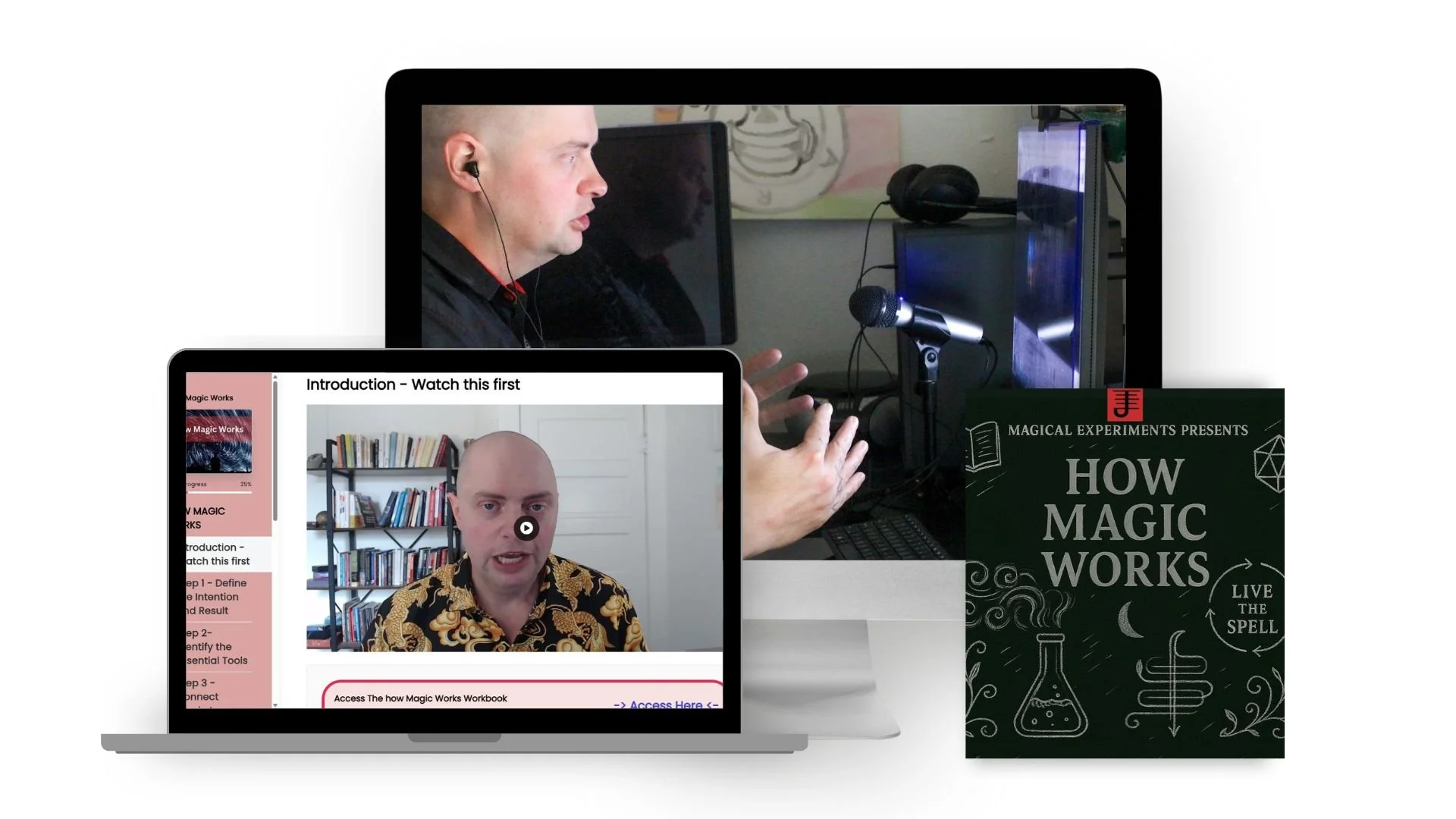
If you want to go further with this, my class How Magic Works covers a step by step process for turning desires into results. I walk you through it step by step so you can apply it to your own practice rather than just read about it.

Reading Tea Leaves: A Guide to Tasseography

Reading tea leaves, known formally as tasseography or tasseomancy, is a method of divination that interprets the patterns formed by loose tea leaves remaining in a cup. Practitioners use the shapes, positions, and relationships of the leaves to gain insight into questions or situations, relying on established symbols and intuitive pattern recognition.

The History and Origins of Tasseography

Divination through residue in a cup does not have a single, certain origin. While tea leaf reading is widely recognized today, related traditions involve interpreting coffee grounds, which have their own rich histories in Ottoman, Balkan, Middle Eastern, and neighboring cultures. According to the Horniman Museum, the exact beginning of reading tea leaves is unknown. The practice became popular in Europe after Chinese tea reached Britain in the seventeenth century. Romani readers participated in European fortune telling economies, but claiming the whole practice as exclusively Romani is inaccurate. The evolution of tasseography reflects a broader human interest in finding meaning in everyday materials. The historical context of reading tea leaves is complex and multifaceted, with various cultures contributing to its development over centuries. In many societies, the act of drinking tea was a communal event, and the subsequent reading of the leaves became a natural extension of this social interaction. The practice was often passed down through generations, with specific techniques and interpretations varying widely from one region to another.

As tea became more accessible in Europe, the practice of tasseography spread rapidly. It was often associated with the parlor culture of the Victorian era, where it was viewed as both a form of entertainment and a serious divinatory tool. Books and pamphlets detailing the meanings of various symbols began to appear, further popularizing the practice. However, it is important to recognize that these published guides often reflected the cultural biases and assumptions of their authors, rather than a universal system of interpretation. The history of tasseography is a reminder that divination practices are always shaped by the cultural and historical contexts in which they emerge.

The spread of tasseography was also influenced by the broader fascination with the occult and esoteric practices during the nineteenth and early twentieth centuries. This period saw a surge of interest in spiritualism, astrology, and other forms of divination, providing fertile ground for the growth of tea leaf reading. Practitioners often combined tasseography with other methods, creating complex and highly individualized systems of interpretation. This syncretic approach remains a hallmark of many modern divinatory practices, reflecting a continuous process of adaptation and innovation.

How to Prepare for Reading Tea Leaves

The preparation process is straightforward but requires specific materials. Use loose leaf tea rather than the fine dust found in typical commercial tea bags, as larger leaves form clearer shapes. A wide, light colored, unpatterned cup helps make the leaves visible against the background. To begin, brew the tea without a strainer. Drink the tea until only a small amount of liquid remains at the bottom. Focus on a specific question or area of inquiry, swirl the remaining liquid and leaves, drain the excess liquid into a saucer, and inspect the patterns left behind. The choice of tea can also influence the reading. Some practitioners prefer specific types of tea, such as black or green tea, believing that the size and shape of the leaves can affect the clarity of the symbols. Others focus on the ritual aspect of the preparation, using the time spent brewing and drinking the tea to center themselves and focus their intentions. This mindful approach can enhance the overall experience and create a more conducive environment for the reading.

When swirling the tea leaves, it is important to do so gently and deliberately. The goal is to distribute the leaves evenly around the cup, creating a clear and readable pattern. Some practitioners recommend swirling the cup a specific number of times, or in a specific direction, but these are matters of personal preference rather than strict rules. The most important thing is to approach the process with a clear and focused mind, allowing the patterns to emerge naturally.

After draining the excess liquid, the cup should be turned upright and inspected carefully. It is often helpful to view the cup from multiple angles, as the appearance of the symbols can change depending on the perspective. Some practitioners also recommend taking a few moments to simply observe the overall pattern before attempting to identify specific symbols. This whole-picture approach can provide valuable context and help to guide the interpretation process.

Interpreting the Cup: Mapping Systems

Mapping systems for reading tea leaves vary among practitioners. A common convention assigns the handle of the cup to represent the querent (the person asking the question). The rim, middle, and base of the cup can represent a timeline from sooner to later, but this is a convention, not a strict law. When interpreting the leaves, practitioners read the shape, location, direction, density, and relationships of the clusters. It is helpful to record the first impression before consulting a symbol list. For more on developing pattern recognition skills, see astrology, divination, and pattern recognition. The spatial arrangement of the symbols within the cup can provide important clues about their meaning. For example, symbols located near the handle are often interpreted as relating directly to the querent or their immediate circumstances, while those located further away may represent external influences or future events. Similarly, symbols located near the rim are often seen as representing immediate or surface issues, while those located near the base may represent deeper, more foundational elements.

The direction in which a symbol is pointing can also be significant. For example, a symbol pointing towards the handle may indicate something coming towards the querent, while a symbol pointing away may indicate something leaving or moving away. The density of the leaves can also provide clues, with dense clusters often interpreted as representing areas of intense activity or focus, while sparse areas may represent periods of calm or inactivity. These spatial and directional cues can add depth and nuance to the interpretation, helping to create a more comprehensive and accurate reading.

The relationships between different symbols are also crucial. A single symbol rarely exists in isolation; its meaning is often shaped by its proximity to other symbols. For example, a symbol representing a challenge or obstacle may be mitigated by a nearby symbol representing support or assistance. Conversely, a positive symbol may be complicated by a nearby negative symbol. By carefully observing these relationships, practitioners can develop a more nuanced and accurate understanding of the reading.

Cup Area Common Association Handle The querent or current situation Rim Immediate future or surface issues Middle Near future or developing factors Base Distant future or foundational elements

Common Symbols and Their Meanings

While intuition plays a significant role, many practitioners reference traditional symbol lists. Common shapes include animals, objects, and geometric forms. For example, a bird might indicate news or travel, while a circle could suggest completion or success. However, the meaning of a symbol can change based on its context within the cup and its proximity to other shapes. Developing a personal vocabulary of symbols takes time and practice. For insights into learning symbolic systems, consider how to learn a divination deck, which shares principles applicable to tasseography. The interpretation of symbols is highly subjective and can vary widely from one practitioner to another. What one person sees as a bird, another might see as a leaf or a cloud. This subjectivity is a fundamental aspect of tasseography and should be embraced rather than feared. The goal is not to find the "correct" meaning of a symbol, but to find the meaning that resonates most strongly with the querent and their specific situation.

In addition to traditional symbols, practitioners may also encounter abstract or unrecognizable shapes. These shapes can be particularly challenging to interpret, but they can also offer profound insights. In these cases, it is often helpful to focus on the feeling or energy of the shape, rather than trying to force it into a specific category. What emotions does the shape evoke? What thoughts or memories does it trigger? By exploring these questions, practitioners can uncover the deeper meaning of even the most abstract symbols.

The process of developing a personal vocabulary of symbols is an ongoing one. As practitioners gain experience, they will naturally begin to associate certain shapes with specific meanings or concepts. This personal vocabulary can be a powerful tool, allowing for more intuitive and accurate readings. However, it is important to remain open to new interpretations and to avoid becoming too rigid in one's thinking. The meaning of a symbol can change over time, and practitioners should be willing to adapt their interpretations accordingly.

The Role of Intuition and Bias

Reading a cup is possible but vulnerable to wishful thinking. Confirmation bias, the Barnum effect, and cold reading can make vague claims feel specific. It is important to approach the practice with a clear mind and an awareness of these psychological factors. Ethical readers avoid instilling fear, creating dependency, suggesting secret curses, or providing medical, legal, or financial certainty. The goal is to offer perspective and reflection rather than absolute prediction. For a broader discussion on the necessity of divination, read do you need divination to get good results. Intuition is a vital component of tasseography, but it must be balanced with critical thinking and self awareness. Practitioners must be careful not to project their own desires or fears onto the reading, and to remain objective and impartial. This requires a high degree of self discipline and a commitment to ethical practice.

Confirmation bias is a particularly common pitfall in tasseography. This is the tendency to interpret information in a way that confirms one's preexisting beliefs or expectations. For example, a practitioner who believes that a querent is facing financial difficulties may be more likely to interpret ambiguous symbols as signs of financial trouble. To avoid this, practitioners must strive to approach each reading with an open mind, free from preconceived notions or expectations.

The Barnum effect is another psychological factor that can influence readings. This is the tendency for individuals to believe that generic or vague statements apply specifically to them. Practitioners must be careful to provide specific and actionable insights, rather than relying on vague or generalized statements. This requires a deep understanding of the symbolic language of tasseography and the ability to communicate complex ideas clearly and effectively.

Where to Start and Common Mistakes

For beginners, the best approach is to start simply. Focus on the process instead of results. Brew a cup of loose leaf tea, formulate a clear question, and observe the patterns without immediately rushing to a symbol dictionary. A common mistake is overcomplicating the reading or trying to force a shape to fit a preconceived notion. Another frequent error is failing to document the readings. Keeping a record helps track progress and accuracy over time. Learn more about the importance of tracking your results and process. Finally, remember that tasseography is just one method of gaining insight; exploring other techniques, such as scrying, can broaden understanding of divination. Starting with simple, straightforward questions can help beginners to build confidence and develop their skills. As they gain experience, they can begin to tackle more complex and nuanced inquiries.

One of the most common mistakes beginners make is trying to interpret every single leaf in the cup. This can quickly become overwhelming and lead to confusion. Instead, it is often more effective to focus on the most prominent or striking symbols, and to allow the overall pattern to guide the interpretation. This selective approach can help to create a more focused and coherent reading.

Another common mistake is relying too heavily on symbol dictionaries. While these resources can be helpful, they should not be used as a substitute for intuition and personal experience. The meaning of a symbol can vary widely depending on its context and the specific circumstances of the reading. Practitioners should trust their own instincts and allow their intuition to guide the interpretation process.

Failing to document readings is a missed opportunity for learning and growth. Keeping a detailed record of each reading, including the date, the question asked, the symbols observed, and the interpretation provided, can be incredibly valuable. This record can help practitioners to track their progress, identify areas for improvement, and develop a deeper understanding of the symbolic language of tasseography.

By approaching tasseography with patience and an open mind, practitioners can develop a meaningful divinatory practice. Whether reading for oneself or others, the focus should remain on clarity, ethical interpretation, and the continuous refinement of pattern recognition skills. Tasseography is a lifelong process of learning and discovery, offering endless opportunities for personal growth and self reflection. For those interested in exploring the ritual aspects of tea, consider spirit fire tea, which offers a different approach to working with this ancient beverage.

Related reading

Ostara and the Spring Equinox: History and Practice

Ostara is a modern neopagan and Wiccan spring equinox festival centered on balance, renewal, germination, and increasing light. It is not an ancient Celtic festival. The March equinox is an astronomical event marking the instant the Sun crosses the celestial equator from south to north.

What is the Spring Equinox?

The spring equinox, also known as the vernal equinox in the Northern Hemisphere, occurs when the Sun crosses the celestial equator moving northward. This astronomical event usually happens around March 20 or 21. During this time, day and night are close to equal in length. However, they are usually not exactly twelve hours long because of how sunrise and sunset are defined, as well as atmospheric refraction that bends light over the horizon. In the Southern Hemisphere, this same astronomical event marks the autumn equinox, while their spring equinox occurs around September.

Understanding the astronomical basis of the equinox is important for practitioners who wish to align their work with natural cycles. The equinox represents a point of balance in the solar year. The period of increasing light begins to overtake the period of darkness in the Northern Hemisphere. This shift in daylight has profound effects on local ecology, weather patterns, and agricultural cycles. Observing these changes provides a grounded foundation for seasonal practice. Practitioners often connect to the energy of a season by noting these observable shifts in their immediate environment.

The equinox is a specific moment in time, but the effects of the changing season unfold over weeks and months. The warming soil, the return of migratory birds, and the budding of trees are all part of the broader equinoctial period. Recognizing these gradual changes helps practitioners avoid treating the equinox as a single, isolated event. Instead, it becomes a marker within a continuous cycle of natural transformation.

Many practitioners find value in tracking the exact time of the equinox and observing the position of the sunrise and sunset on that day. This practice builds a direct relationship with the local landscape and the solar cycle. It requires no special equipment, only consistent observation and a clear view of the horizon. Over time, this simple act of witnessing the solar year can deepen a practitioner's understanding of seasonal rhythms.

The balance of light and dark at the equinox is often used as a metaphor for internal balance. This can involve examining different areas of life, such as work and rest, action and reflection, or giving and receiving. A time balance meditation can be a practical way to explore these themes. However, it is important to remember that perfect balance is rarely achievable or sustainable. The equinox is a fleeting moment of equilibrium in a dynamic system.

The History of Ostara and Eostre

The history of Ostara is complex and often misunderstood. It is necessary to separate astronomy, sparse historical evidence, and modern religion. The eighth-century monk Bede is the only early written source naming Eostre. He stated that an Anglo-Saxon month was named for a goddess whose feasts had been held during that time. The wider cult and exact rites associated with Eostre are not securely documented. There is no extensive mythology or detailed record of how she was worshipped.

Centuries later, the linguist and folklorist Jacob Grimm reconstructed the continental name Ostara based on Bede's account and linguistic evidence. Grimm suggested that a widespread Germanic goddess of the dawn and spring existed, but this remains a scholarly reconstruction rather than a documented historical certainty. The popular tale that a goddess transformed a bird into an egg-laying hare is not an ancient myth. It is a much later invention that attempts to explain the association between the Easter bunny and eggs.

Modern Wiccan and neopagan Ostara is a spring equinox festival that draws on these historical fragments and later folklore. It is centered on themes of balance, renewal, germination, and increasing light. It is important to state clearly that Ostara is not an ancient Celtic festival. The historical Celtic calendar, as understood from sources like the Coligny calendar, did not prioritize the equinoxes and solstices in the same way that modern neopaganism does. Easter, eggs, hares, Bede's Eostre, and modern Ostara have overlapping later stories, but a simple direct line among all of them is not established.

When exploring historical figures and the spring equinox, practitioners must handle a landscape of fragmented evidence and modern interpretation. Acknowledging the gaps in the historical record does not invalidate modern practice. Instead, it allows practitioners to engage with the season honestly, without relying on inaccurate historical claims. The power of a seasonal festival lies in its present meaning and application, not in an unbroken lineage to antiquity.

The development of the Wheel of the Year, which includes Ostara, is a modern synthesis of various European traditions. This framework provides a structured way to observe the changing seasons, but it is not a universal or ancient calendar. Practitioners often find themselves working through the balance between tradition and experimentation when adapting these festivals to their own lives and locations.

How to Celebrate Ostara

Practical observance of Ostara can take many forms, depending on a practitioner's goals and local environment. A simple and effective starting point is to note the local sunrise and sunset times. Observing the light on the equinox provides a direct connection to the astronomical event. Cleaning a physical space is another common practice. This acts as a physical representation of clearing out the old to make way for the new. It is a practical action that yields immediate, tangible results.

Planting suitable seeds is a traditional way to mark the season of germination. This requires understanding the local climate and choosing plants that will thrive in the current conditions. Starting seeds indoors or preparing garden beds aligns the practitioner's actions with the agricultural cycle. Decorating eggs is a modern seasonal craft that many enjoy. While it may not be an ancient pagan rite, it is a meaningful way to engage with symbols of fertility and new life.

Adapting to the local ecology is crucial for a grounded seasonal practice. The signs of spring vary wildly depending on geography. In some regions, the equinox brings blooming flowers and warm weather. In others, snow may still cover the ground. A practitioner in a desert environment will observe different seasonal markers than one in a temperate forest. It is more effective to work with the actual conditions of the local landscape than to force a generic set of seasonal symbols onto an incompatible environment.

For those in the Southern Hemisphere, spring equinoctial observance belongs around September, not March. Following a Northern Hemisphere calendar in the Southern Hemisphere creates a disconnect between the practitioner's actions and the observable natural world. Aligning practice with the local seasons ensures that the work remains relevant and grounded in reality.

When deciding how to use the energy of a holiday in your magical workings, it is helpful to focus on the core themes of the season. For the spring equinox, these themes include balance, initiation, and growth. Workings aimed at starting new projects, establishing healthy routines, or finding equilibrium in challenging situations are well-suited to this time. However, it is important to remember that the equinox does not guarantee success. The practitioner must still put in the necessary mundane effort to achieve their goals.

Balancing Internal and Practical Work

The theme of balance at the equinox extends to the practitioner's own methods. It is common to struggle with how to balance internal work with practical work. Internal work includes meditation, visualization, and psychological exploration. Practical work involves physical actions, mundane effort, and tangible results. Both are necessary for a well-rounded practice.

Focusing entirely on internal work can lead to a lack of real-world progress. A practitioner may spend hours visualizing a goal but fail to take the necessary steps to achieve it. Conversely, focusing entirely on practical work without internal reflection can lead to burnout or pursuing goals that are not truly aligned with the practitioner's values. The equinox provides an opportunity to assess this balance and make adjustments as needed.

One way to approach this balance is to set clear, measurable goals for both internal and practical work. For example, a practitioner might commit to a daily meditation practice while also dedicating time each week to learning a new skill. Tracking progress in both areas helps ensure that neither is neglected. It is also helpful to recognize that the appropriate balance will shift over time. During periods of high stress or external demands, practical work may need to take precedence. During periods of rest or transition, internal work may become more important.

The equinox is a reminder that balance is not a static state, but a continuous process of adjustment. Just as the Earth is constantly moving in its orbit, the practitioner must constantly adapt to changing circumstances. Embracing this dynamic nature of balance can reduce frustration and promote a more sustainable practice.

It is also important to address the obligation of holidays. Practitioners often feel pressure to perform elaborate rituals or observe every festival on the Wheel of the Year. This pressure can lead to stress and resentment, detracting from the value of the practice. It is perfectly acceptable to observe the equinox in a simple, low-effort way, or to skip it entirely if it does not align with the practitioner's current needs. A sustainable practice is one that serves the practitioner, not the other way around.

Equinox Correspondences and Themes

While correspondences are not universal laws, many practitioners find it helpful to organize their seasonal work around common themes. The following table outlines some of the concepts frequently associated with the spring equinox in modern practice.

Category Common Associations
Themes Balance, renewal, germination, increasing light, initiation
Actions Cleaning, planting, planning, observing the horizon
Symbols Eggs, seeds, budding branches, equal-armed crosses
Challenges Unpredictable weather, balancing competing priorities, starting too many projects

These associations are tools for focusing attention, not strict rules that must be followed. A practitioner might find that different symbols or actions resonate more strongly with their personal experience of the season. The goal is to build a practice that is meaningful and effective in the present moment, rather than rigidly adhering to a prescribed list.

The spring equinox is a useful marker in the solar year, offering an opportunity to observe the changing light and reflect on the balance of internal and external work. By grounding the practice in local ecology, acknowledging the complex history of the festival, and focusing on practical, manageable actions, practitioners can engage with the season in a way that is both honest and effective. The focus should remain on what is observable and actionable, avoiding the trap of historical revisionism or overly complex ritual requirements.

Common Mistakes and Where to Start

When approaching the spring equinox, practitioners often encounter a few common pitfalls. Recognizing these mistakes can help simplify the practice and make it more effective.

  • Ignoring local ecology: Trying to force spring symbolism when the local environment is still experiencing winter creates a disconnect. Always prioritize observable local changes over generic calendar dates.
  • Overcomplicating rituals: Believing that a valid observance requires expensive tools, complex scripts, or large group gatherings. Simple actions like cleaning a room or observing the sunrise are often more effective.
  • Treating folklore as history: Accepting modern myths, such as the story of Eostre and the hare, as ancient historical fact. It is better to understand the modern origins of these stories while still appreciating their symbolic value.
  • Expecting perfect balance: Using the equinox to demand perfect equilibrium in all areas of life. Balance is dynamic and temporary; expecting it to be permanent leads to frustration.
  • Neglecting mundane action: Performing workings for new beginnings without taking the necessary real-world steps to support those goals. Magic requires a physical avenue to manifest.

For those wondering where to start, the most effective approach is often the simplest. Begin by observing the environment. Note the time of sunrise and sunset. Look for signs of new growth or changes in the weather. This requires no special equipment or prior knowledge.

Next, choose one practical action that aligns with the themes of the season. This could be cleaning a specific area of the home, planting a few seeds in a pot, or reviewing personal goals for the coming months. Keep the action manageable and focused.

If you want to go further with this, my class Elemental Balancing Ritual covers how to work with a force as an element over time. I walk you through it step by step so you can apply it to your own practice rather than just read about it.

Beltane: History, Meaning, and Practical Observance

Beltane is a seasonal festival marking the start of summer, traditionally observed around May 1. Rooted in Gaelic history, it involves protective fires, greenery, and household hearths. Modern practices adapt these themes, focusing on seasonal change, local ecology, and practical, safe observances.

The Historical Roots of Beltane

Beltane, or Bealtaine, has specific Gaelic roots in Ireland, Scotland, and the Isle of Man. It is one of the four major Gaelic seasonal festivals, alongside Samhain, Imbolc, and Lughnasadh. Historically, it is connected with pastoral movement, specifically the driving of cattle to summer pastures. This movement was accompanied by rituals intended to protect the herds and ensure a prosperous season. These rituals often involved protective or purifying fires, household hearths, greenery, flowers, May bushes, and foods such as bannocks. The lighting of the Beltane fires was a central event, with the flames and smoke believed to have protective qualities.

Note that not every May Day custom is Beltane, nor is a modern Wheel of the Year ritual an unchanged ancient practice. The historical evidence points to specific regional customs rather than a universal ancient script. The practices varied significantly depending on the local geography, economy, and social structures. For instance, the customs in a coastal fishing community would differ from those in an inland farming region. Acknowledging this diversity helps practitioners avoid the trap of seeking a single, pure historical tradition that never actually existed.

Modern neopagan and Wiccan themes of fertility, sacred union, the May Queen, and the Green Man are living adaptations. They draw on various historical threads, folklore, and romanticized interpretations of the past, but they are not a single documented ancient tradition. For example, Maypole symbolism is debated among historians and folklorists. While some modern interpretations assign it a specific phallic meaning, historical evidence suggests a wider range of associations, including community celebration, the arrival of spring, and the assertion of local identity. It should not be reduced to a single, certain meaning. Understanding this history helps practitioners ground their work in reality rather than romanticized myths.

When exploring these historical roots, practitioners often find value in connecting to the energy of a season. This connection is about observing the actual changes in the local environment rather than imposing a distant historical template onto a different climate or context. A practitioner in a desert climate will experience the start of summer very differently than one in a temperate rainforest. The historical practices of Beltane were deeply tied to the specific ecology of the Gaelic regions, and modern practice is most effective when it is similarly rooted in the practitioner's actual environment.

Modern Adaptations and Themes

In contemporary practice, Beltane is often celebrated as a time of growth, vitality, and connection. While the historical roots are Gaelic, modern adaptations have incorporated various themes that resonate with practitioners today. These themes often include fertility, not just in a reproductive sense, but in terms of creative projects, personal growth, and the flourishing of the natural world. The energy of the season is seen as expansive and outward-focused, contrasting with the introspective energy of the winter months.

It is common for practitioners to feel the obligation of holidays, feeling pressure to perform elaborate rituals or conform to specific aesthetic standards. This pressure can detract from the actual work and lead to burnout. However, practical observance can be simple and focused. The key is to find practices that are meaningful and safe within one's current context, rather than trying to replicate a complex ritual found in a book or online.

Couples' practices during Beltane must center on consent and should not assume sex or reproduction. The focus can be on relationship gratitude, mutual support, and shared goals. The energy of the season can be directed toward nurturing partnerships of all kinds, including friendships, familial bonds, and collaborative projects. A ritual might involve setting shared intentions for the coming months, expressing appreciation for the other person, or simply spending focused time together. The emphasis should be on clear communication and mutual respect.

For solitary practitioners, the themes of growth and vitality can be applied to personal development. This might involve starting a new project, committing to a new habit, or focusing on physical health and well-being. The outward energy of the season can be harnessed to push past obstacles and make tangible progress toward goals. The focus is on action and manifestation, using the momentum of the changing season to support personal endeavors.

Practical Observances for Beltane

Practical observances for Beltane can take many forms, depending on a practitioner's resources, location, and tradition. A common practice is setting up an altar. This might involve creating a Beltane altar using seasonal local plants, a battery candle, or a safely contained flame. The altar serves as a focal point for the season's themes and a physical representation of the practitioner's intentions. It can be a place for daily reflection, meditation, or specific magical workings.

For those who prefer a more visual approach, or who have limited space, a collage altar can be an effective way to represent the themes of growth and vitality without requiring physical objects. This involves creating a visual representation of the season's energy using images, words, and symbols. Understanding the underlying concepts of an altar helps in designing a space that supports the intended work, regardless of the specific materials used. The altar is a tool for focus and intention, not just a decorative display.

Other practical observances include a seasonal meal, threshold cleaning to mark the transition into summer, or a bath with skin-safe ingredients. A seasonal meal might incorporate local produce, emphasizing the connection to the land and the changing seasons. Threshold cleaning involves physically cleaning the entryways to the home, symbolizing the removal of stagnant energy and the welcoming of new growth. A bath can be a ritual of purification and renewal, using ingredients like oats, milk, or safe herbs to support the intention.

Outdoor attention to local seasonal change is also a powerful way to observe the festival. This might involve a walk in a local park, observing which plants are blooming, or simply spending time outside. The goal is to develop a direct relationship with the local ecology, noticing the subtle shifts in temperature, light, and plant life. This direct observation grounds the practice in reality and prevents it from becoming purely abstract or theoretical.

Fire Safety and Common Mistakes

Fire is a traditional element of Beltane, but fire safety is non-negotiable. The historical practice of lighting large bonfires was done in specific contexts, often by communities with experience in managing such fires. In modern contexts, especially in urban or suburban areas, large fires are often illegal and highly dangerous. Common mistakes include jumping fires, passing animals through smoke, burning unknown plants, or lighting outdoor fires without legal permission. These practices pose significant risks to people, animals, and property.

Instead of large bonfires, practitioners can use a battery-operated candle or a small, safely contained flame indoors. A candle can serve as a focal point for meditation or a symbol of the season's energy without the risks associated with an open fire. If an outdoor fire is legal and safe, it must be kept small, attended at all times, and fully extinguished afterward. The symbolic power of fire does not require a dangerous blaze. The intention and focus of the practitioner are more important than the size of the flame.

Another common mistake is assuming that all historical practices are safe or appropriate for modern contexts. Burning unknown plants can release toxic smoke, causing respiratory distress or allergic reactions. Passing animals through smoke, a historical practice intended for purification, can cause severe distress and harm to the animals. It is essential to prioritize physical safety and animal welfare over historical reenactment. Modern practice requires critical thinking and adaptation, not blind adherence to the past.

Practitioners should also be aware of the legal and environmental regulations regarding fires in their area. Many regions have burn bans during certain times of the year due to the risk of wildfires. Ignoring these regulations is not only illegal but also highly irresponsible. A magical practice should not cause harm to the community or the environment.

Where to Start with Beltane

For those new to observing Beltane, the best place to start is with simple, safe practices. Begin by observing the local environment. What plants are blooming? What is the weather like? How does the energy of the season feel in your specific location? This observation forms the foundation of a grounded practice. It connects the practitioner to the actual world rather than an idealized version of it.

Next, consider how to incorporate these observations into a practical working. This might involve using the energy of a holiday in your magical workings. A simple working could be a relationship gratitude rite, focusing on appreciating the people in your life. Alternatively, it could be a focus on a creative project that needs energy to grow. The working should be relevant to the practitioner's current needs and circumstances.

Start small. Set up a simple altar with a few local flowers and a battery candle. Clean the threshold of your home. Cook a meal using seasonal ingredients. The goal is not to perform a perfect historical reenactment, but to connect with the themes of the season in a way that is meaningful, safe, and practical. Overcomplicating the practice often leads to frustration and failure. Simplicity allows for greater focus and clarity.

It is also helpful to document the process. Keep a record of what was done, what materials were used, and what the results were. This documentation allows the practitioner to track their progress, identify what works and what doesn't, and refine their practice over time. A magical practice is an ongoing process of experimentation and learning, and Beltane is just one point in that cycle.

Historical Practice Modern Adaptation Safety Consideration Large community bonfires Battery candle or small contained flame Fire safety is non-negotiable; avoid illegal or unmanaged fires. Passing cattle through smoke Symbolic purification of the home Do not expose animals to smoke; it can cause respiratory distress. Gathering specific historical plants Using local, seasonal, and safe plants Ensure any plants used are non-toxic and legally gathered. Jumping over the fire Stepping over a symbolic boundary or candle Avoid physical risk; symbolic actions are sufficient for the working.

By focusing on safety, local ecology, and practical application, practitioners can observe Beltane in a way that honors its history while remaining grounded in the present reality. The festival becomes a tool for connection and growth, rather than a source of stress or danger. The true value of the observance lies in its ability to support the practitioner's ongoing work and development.

Ultimately, Beltane is an opportunity to acknowledge the changing of the seasons and to align one's actions with that energy. Whether through a simple meal, a quiet meditation, or a focused magical working, the observance should be practical, safe, and relevant to the practitioner's life. By stripping away the romanticized myths and focusing on the core themes of growth and vitality, practitioners can create a meaningful and effective Beltane practice.

The transition into summer is a time of increased activity and outward focus. By preparing for this shift, practitioners can make the most of the season's energy. This preparation might involve setting clear goals, establishing boundaries, or simply taking the time to appreciate the beauty of the natural world. Whatever form the observance takes, it should be grounded in reality and focused on practical results.

Beltane is a complex festival with deep historical roots and diverse modern adaptations. By approaching it with a critical eye and a focus on safety and practicality, practitioners can integrate its themes into their work in a meaningful way. The key is to remain adaptable, observant, and grounded in the present moment, using the energy of the season to support ongoing growth and development.

If you want to go further with this, my class Elemental Balancing Ritual covers how to work with a force as an element over time. I walk you through it step by step so you can apply it to your own practice rather than just read about it.

Related reading

Witch Journal, Book of Shadows, and Grimoire: A Guide to Magical Records

A witch journal, Book of Shadows, and grimoire are distinct records of magical practice. A Book of Shadows is traditionally associated with Wicca and may contain coven material. A grimoire is a broader manual of magical procedures and occult knowledge. A witch journal is an informal personal record of daily practice.

Understanding the Terminology: Witch Journal, Book of Shadows, and Grimoire

The terms witch journal, Book of Shadows, and grimoire are often used interchangeably in modern practice, but they have distinct historical and practical meanings. Distinguishing these terms helps practitioners organize records effectively without imposing one universal definition on every tradition. The way a practitioner categorizes writings often reflects a specific approach to magical work and the traditions drawn from. While the boundaries between these categories can blur, understanding the historical context of each term provides a solid foundation for building a personal system of record keeping.

In Wiccan history, a Book of Shadows is strongly associated with Gerald Gardner and the development of Wicca in the mid-twentieth century. In some initiatory traditions, it contains specific coven material, rituals, and teachings, and it may have strict privacy rules regarding who can read or copy it. The contents are often passed down from initiator to initiate, forming a core part of the tradition's identity. However, modern solitary practitioners often use the term more broadly for a personal working book where they record rituals, spells, and seasonal observances. This adaptation reflects the changing nature of modern magical practice, where individual experimentation often sits alongside traditional frameworks. The Book of Shadows, in this modern context, becomes a living document that evolves with the practitioner.

A grimoire is a broader manual of magical procedures, prayers, spirit lists, correspondences, or instructions. Grimoires have a much older and diverse history, often associated with ceremonial magic and the cataloging of specific occult knowledge. Historical grimoires were often complex texts requiring significant study and preparation to use effectively. They served as reference manuals rather than personal diaries. The focus of a grimoire is typically on the mechanics of magic, detailing the exact steps, materials, and timing required for specific operations. For more on this concept, see concepts of the grimoire and Book of Shadows.

A witch journal is typically an informal personal record. It is where a practitioner might note daily observations, reflections on meditations, or the immediate results of a spell. Unlike a formal grimoire or a traditional Book of Shadows, a journal is often messy, chronological, and highly personal. It captures the day-to-day reality of magical practice, including doubts, questions, and mundane factors that might influence a working. The same notebook can serve more than one function if its purpose is clear to the person using it. The key is to understand the difference between reading versus working a book of magic.

Choosing the Right Format for Magical Records

The most useful format for a magical record is simply one that gets used. There is no single correct way to keep a journal or grimoire; the best approach depends on individual habits, needs, and the specific requirements of the practitioner's tradition. The physical or digital form of the record should support the work, not hinder it. Experimenting with different formats can help identify the most effective method for long term use.

Bound notebooks are traditional and offer a sense of permanence. They create a chronological record of a practitioner's development over time. However, they require careful organization. If using a bound notebook, it is highly recommended to include page numbers and reserve the first few pages for an index. This makes it much easier to find specific rituals, correspondence lists, or notes later. Without an index, a bound notebook can quickly become a disorganized collection of thoughts that is difficult to reference during practical work. The tactile experience of writing in a bound book can also be a grounding practice in itself.

Binders allow for rearrangement, which is useful for practitioners who want to group similar spells, rituals, or correspondences together over time. A binder system allows the practitioner to create sections for different types of magic, such as protection, divination, or seasonal observances. This flexibility makes it easier to update information and remove outdated material. It also allows for the inclusion of printed materials, photographs, or pressed herbs alongside handwritten notes. The ability to add and remove pages means the binder can grow and change as the practitioner's focus shifts.

Digital systems offer significant advantages, including the ability to search, backup data, and use templates for consistent recording. A digital grimoire can be accessed from multiple devices and easily updated. However, digital records require attention to privacy and data security. Practitioners must consider how they will protect sensitive information and ensure that records are not lost due to hardware failure or software obsolescence. Regardless of the format, the magic of writing helps solidify intentions and track progress.

What to Include in a Working Entry

A working entry should be detailed enough to allow the practitioner to replicate the working or understand why it succeeded or failed. Consistency in recording is crucial for developing a reliable practice. Without accurate records, it is difficult to determine which techniques are effective and which need adjustment. A well documented entry serves as a blueprint for future magical endeavors.

A comprehensive entry should record the date, the specific aim of the working, the method used, any variables (such as weather, mood, or lunar phase), the materials employed, and any necessary safety notes. It is also important to record immediate observations during the working, the criteria for judging the result, the expected outcome window, and a later review of what actually happened. This level of detail is essential for the process of experimenting with magic.

Element Description Date and Time When the working was performed, including relevant astrological or seasonal timing. Aim The specific, measurable goal of the magical act. Method The step-by-step procedures taken during the ritual or spell. Materials Herbs, candles, symbols, or other items used, including sources. Variables Mundane factors like mood, physical health, or environmental conditions. Observations Sensations, thoughts, or occurrences during the working itself. Review Notes added later regarding the outcome and any necessary adjustments.

When including material from other sources, always cite them. It is vital to separate inherited tradition, published sources, personal hypotheses, and observed results. This clarity prevents confusion and helps build a reliable personal system. Knowing where a particular correspondence or ritual structure came from allows the practitioner to evaluate its effectiveness objectively. For further insights, explore the magic of writing part 2.

The Role of the Journal in Developing Magical Skill

A well-maintained magical record is more than just a diary; it is a tool for developing skill and understanding. By consistently recording actions and outcomes, practitioners can identify patterns in their work. They may notice that certain types of magic are more effective during specific lunar phases, or that particular materials consistently produce better results. This pattern recognition is a cornerstone of advanced magical practice.

This analytical approach is crucial for moving beyond beginner practices. It allows the practitioner to refine techniques based on evidence rather than assumption. When a spell fails, the journal provides the data needed to troubleshoot the problem. Was the aim unclear? Were the materials inappropriate? Was the timing off? Without a record, these questions are difficult to answer. The journal acts as an objective observer, providing feedback that might otherwise be lost to memory.

Furthermore, the act of writing itself can be a magical act. It focuses the mind, clarifies intentions, and creates a physical manifestation of the practitioner's will. The journal becomes a repository of magical energy, reflecting growth and dedication over time. Understanding how to organize magical workings practically is more important than aesthetics, as it ensures the record remains a functional tool.

Common Mistakes in Keeping Magical Records

Several common pitfalls can make a magical record less useful or even frustrating to maintain. Recognizing these mistakes early can save practitioners significant time and effort. Avoiding these errors ensures the record remains a helpful asset rather than a source of stress.

One major mistake is decorative perfectionism. While a beautiful book can be inspiring, the pressure to make every page visually perfect often prevents practitioners from actually recording their work. A messy, frequently used journal is far more valuable than a pristine, empty one. The primary purpose of the record is utility, not artistic display. If the fear of making a mistake prevents a practitioner from writing down a working, the format is hindering the practice. The focus should always remain on the content and its practical application.

Another common error is copying unattributed correspondence lists without testing them or noting the source. Correspondences are not universal laws; they vary by tradition, culture, and personal association. A list found online or in a book should be treated as a hypothesis to be tested, not an absolute truth. Recording the source of the information allows the practitioner to evaluate its reliability over time. It is also unethical to record other people's private information without consent, especially in shared or coven contexts. Respecting privacy is a fundamental aspect of ethical magical practice.

Finally, practitioners should avoid treating every coincidence as proof of a spell's success. A rigorous approach requires noting failures as well as successes. If a spell is performed to find a lost item, and the item is found three months later during a routine cleaning, it is important to record the timeline accurately rather than immediately attributing the discovery to the magic. This is why the importance of tracking results and process cannot be overstated.

Where to Start with a Witch Journal

Starting a magical record does not require expensive materials or a complex system. Begin with a simple notebook or a secure digital document. The most important step is simply to begin recording. The initial entries do not need to be elaborate; they just need to capture the essential details of the practice.

First, define the purpose of the book. Will it be a daily journal, a record of formal rituals, or a collection of research? It can be all three, provided the entries are clearly marked. Establishing a clear purpose helps maintain focus and ensures the record remains useful. Next, establish a basic template for recording workings, ensuring it includes the date, aim, method, and space for later review. This helps in defining the process of magic.

Commit to writing something regularly, even if it is just a brief note about a meditation or a thought on a particular symbol. The habit of recording is more important than the length of the entries. Over time, this record will become an invaluable tool for understanding personal growth and the effectiveness of different magical techniques. Do not worry about making it perfect; focus on making it accurate and useful for specific practice. The journal will naturally evolve as the practitioner gains experience and refines their approach to magic.

If you want to go further with this, my free ebook Why your spells don’t stick has templates you can use to start tracking your magical workings.

Understanding and Addressing the Witch Wound

The witch wound is a modern metaphor for fear of visibility, punishment, and rejection around spiritual practice. It is not a diagnosis. Address it by tracking triggers, regulating bodily cues, using gradual exposure, setting firm boundaries, testing communities carefully, documenting results, and seeking licensed care when symptoms significantly disrupt life.

Defining the Witch Wound Today

The term witch wound refers to anxieties about being seen, rejected, or punished for spiritual beliefs or magical work. It uses the image of the witch because historical witch persecutions occupy a powerful place in cultural memory. As a modern framework, it can organize attention around current challenges such as reluctance to speak openly, avoiding groups, feeling exposed when learning a craft, or expecting betrayal from authority figures. Some practitioners do not relate to the term; others find it clarifying. Either stance is reasonable. The practical test is whether the framework helps reduce fear, improve discernment, and support ethical participation in life now.

Using the witch wound metaphor effectively requires separating it from clinical diagnoses. It is a thematic lens, not a medical condition. While it often describes trauma-like responses, such as hypervigilance or avoidance, it is not a substitute for clinical assessment. When discussing it, maintain clarity between spiritual reflection and mental health care.

Historical Context and Accuracy

Rhetoric around the witch wound often draws on historical persecutions. Accuracy here is crucial because exaggerated claims can unnecessarily inflate present-day fear. For example, some sources claim nine million people were executed during the European witch trials. This figure is historically inaccurate. English Heritage estimates roughly 30,000 to 60,000 executions occurred during the main era of persecution. While still a profound tragedy, the accurate number provides a more grounded context.

Furthermore, the victims were not exclusively women, nor were they predominantly goddess-worshipping herbalist midwives, as some modern narratives suggest. Men were also prosecuted, sometimes in substantial proportions depending on the region. Understanding the historical reality helps practitioners separate inherited, generalized stories from specific, evidence-based facts. This separation is a key step in reducing the overwhelming nature of the fear.

Intergenerational Trauma vs. Metaphor

Some discussions of the witch wound suggest that modern practitioners biologically inherited trauma from accused witches. While research on intergenerational trauma is real and ongoing, human epigenetic mechanisms remain difficult to isolate. Claims that specific fears are biologically inherited across many centuries are speculative.

It is more practical to treat the witch wound as a psychological and cultural metaphor rather than a biological certainty. This approach focuses on how cultural narratives, family histories, and societal norms shape current fears. For instance, identifying identity work you need to do can clarify how personal and cultural narratives intersect with spiritual practice. Similarly, learning how to identify ancestral blockages and how to work through ancestral blockages can help contextualize fears within family history without relying on speculative biology.

Grounded Practices for Addressing Fear

Addressing the witch wound requires grounded, practical steps rather than abstract theorizing. The goal is to build tolerance for visibility and reduce the impact of fear on daily life. This process is gradual and requires patience.

The first step is to identify the specific present-day fear. Is it fear of losing a job, alienating family, or facing online harassment? Pinpointing the exact concern makes it manageable. Next, separate evidence from inherited stories. Ask whether the fear is based on current, observable facts or on a generalized narrative about persecution.

Mapping triggers and bodily responses is also essential. Notice when the heart races, breathing becomes shallow, or the urge to hide arises. These physical cues signal that the nervous system is reacting to perceived danger. Learning to be present with and work through fear involves observing these sensations without immediately acting on them.

Graduated Acts of Visibility

Once triggers are mapped, practitioners can begin graduated acts of visibility. This means choosing small, manageable ways to be seen, rather than making large, sudden reveals. For example, one might read a book on magic in a public park, wear a subtle piece of jewelry, or mention an interest in astrology to an acquaintance. The key is to select actions that feel slightly uncomfortable but not overwhelming.

Setting boundaries during these acts is crucial. Decide in advance what will be shared, with whom, and under what conditions. If a conversation becomes uncomfortable, have an exit strategy ready. Documenting what happens during these experiments is highly recommended. Record the action taken, the anticipated outcome, and the actual result. Often, the actual result is much less negative than the anticipated one, which helps recalibrate the nervous system's threat assessment.

The Role of Shadow Work

Shadow work is frequently recommended for those exploring the witch wound. This involves examining the hidden, suppressed, or rejected aspects of the self. By bringing these elements into awareness, practitioners can reduce their unconscious influence.

Engaging in shadow work initiatives provides structured ways to approach this material. It requires honesty and self-compassion. Embracing and working with the shadow aspects of yourself is not a quick fix but an ongoing process of integration. It helps practitioners recognize that some fears may stem from internal insecurities rather than external threats.

Understanding core wounds can provide additional context for shadow work. Core wounds are deep-seated emotional injuries that often manifest as recurring patterns of fear or avoidance. Addressing them alongside the witch wound can lead to more comprehensive healing.

Building Community Slowly

Isolation reinforces the witch wound. Building a trustworthy community is a vital part of addressing it. However, this must be done slowly and carefully. Not every group or individual will be supportive or safe. Test the waters by attending public events, observing group dynamics, and asking questions before committing to a community.

Look for groups that respect boundaries, encourage critical thinking, and do not demand immediate vulnerability. A healthy community provides a space to practice visibility in a supportive environment, helping to counter the narrative that visibility always leads to punishment.

Fear as an Ally

It is possible to reframe fear not as an enemy to be vanquished, but as a source of information. Fear signals what is important and what feels vulnerable. By listening to it rather than suppressing it, practitioners can make more informed decisions about their practice and visibility.

Recognizing fear as an ally in your magical practice changes the dynamic. It allows for a more nuanced relationship with anxiety, where fear is acknowledged but does not dictate action. This shift in perspective is a significant step in working through the witch wound.

Influential Treatments and Resources

Several modern resources address the witch wound. Celeste Larsen's book, Heal the Witch Wound, is one influential treatment. It uses ritual, reflection, and journaling to help practitioners work with the concept. It is important to approach such resources as supportive tools rather than clinical cures. They offer frameworks for personal exploration but do not replace professional help when needed.

Structured Visibility Ladder

A visibility ladder is a practical tool for organizing graduated exposure. It breaks down the goal of being seen into small, manageable steps. Below is an example of how to structure this process.

Timeframe Action Step Anticipated Discomfort (1-10) Boundary/Safety Plan Documentation Focus Review Question Weeks 1-2 Read a book on magic in a busy coffee shop for 20 minutes 3-4 Sit near an exit, wear headphones, leave if approached aggressively Physical sensations, actual interactions, time spent Did the environment react as feared? Weeks 3-4 Wear a subtle symbol of practice while running errands 4-5 Tuck the symbol under clothing if panic reaches 7 of 10 Location, duration, peak discomfort, what helped Difference between private and public sensations Weeks 5-6 Ask one clarifying question in a friendly class 4-6 Proceed only if group norms feel respectful Exact words, response tone, self-rating before and after Accuracy of pre-event predictions Weeks 7-8 Post a neutral book reflection in a moderated forum under a handle 5-6 Use a pseudonym and mute notifications overnight Screenshot of post, number of replies, emotional arc Whether respectful engagement matches expectations Weeks 9-10 Lead a 2-minute grounding in a known-safe circle 6-7 Appoint a co-facilitator and have a stop phrase Plan used, observer feedback, self-care after Capacity to recover within 24 hours Weeks 11-12 Share a short values statement with a trusted peer 6-8 Choose a private location and a 15-minute limit Values named, peer reaction, follow-up boundary Clarity about what matters more than approval

Where to Start and Common Mistakes

Begin by naming one specific, present fear, not an abstract worry. Map three personal body cues that announce rising activation. Build a five-rung visibility ladder that starts with tasks that are almost too easy. Pair each rung with a boundary and a regulation step. Document what happens. Adjust after three trials per rung. If trauma symptoms significantly impair sleep, work, or relationships, pause visibility work and consult a licensed professional.

  • Mistaking metaphor for diagnosis. The witch wound is a helpful lens, not a clinical category. Treat clinical symptoms within licensed care.

  • Rushing exposure. Large reveals without safety plans can reinforce fear. Choose small, repeatable acts instead.

  • Relying only on meditation or ritual. Contemplative practices support regulation but do not replace trauma-informed therapy when needed.

  • Inflating risk with inaccurate history. Avoid repeating the nine million claim. Use evidence-based figures to keep fear proportional.

  • Oversharing online. Separate handles, limit identifiable details, and review privacy settings before posting.

  • Ignoring cultural and legal context. In some regions, public association with witchcraft carries social or legal danger. Plan with that in mind.

  • Assuming this applies only to women. Men and gender-diverse people can experience these fears and deserve supportive frameworks too.

  • Skipping identity and family context. Clarify how culture, class, race, sexual orientation, and family narratives shape risk assessment.

Micro-Experiments that Respect Safety

  1. Silent study. Read for ten minutes, then write three sentences on what felt inspiring and what felt risky. Store notes where unsupportive parties cannot access them.

  2. Language shift. Replace “everyone will judge this” with “some people may judge this.” Use the more accurate phrase during visibility steps.

  3. Two-channel posting. Keep one private channel for detailed practice notes and one semi-public channel for general reflections. Review outcomes monthly.

  4. Authority rehearsal. Practice asking a neutral logistics question of an authority figure. Build tolerance for being seen without debating beliefs.

  5. Exit plan drill. Before any new group event, write an exit phrase and transportation plan. Use it if needed. Confidence rises when exit routes are clear.

When to Seek Licensed Support

Professional help is indicated when avoidance consumes large parts of life, when panic or numbing dominates, or when memories and sensations disrupt sleep and work. Licensed clinicians can help differentiate trauma patterns, social anxiety, and other conditions, and can guide structured exposure and regulation strategies. Spiritual tools such as ritual, meditation, and divination can accompany care but should not be the sole intervention for debilitating symptoms. If medication is part of treatment, coordinate visibility experiments with the care team to avoid destabilizing changes.

Common mistakes when reframing setbacks

Setbacks are information, not failure. If a visibility attempt goes poorly, pause and extract specifics. Was the rung too high, the context too volatile, the regulation step insufficient, or the boundary unclear? Adjust one variable at a time. Repeat a successful lower rung to rebuild confidence. Document the change so that learning remains visible.

Closing Perspective

The witch wound framework offers a way to articulate and address the fears associated with spiritual visibility. By approaching it with historical accuracy, grounded practices, and a commitment to gradual exposure, practitioners can work through these challenges effectively. The ultimate goal is not to eliminate fear entirely, but to develop the resilience and discernment needed to practice authentically and safely in the present world.

If you want to go further with this, my Reality Weaver Breakthrough Session covers working through what is actually getting in the way. We meet 1:1 to work together on what’s holding you back from your most potent magic.

A Guide to Tarot and Oracle Spreads

A tarot or oracle spread is a positional framework used to organize cards during a reading, providing specific context for each card drawn. Rather than guaranteeing a fixed prediction, a spread helps practitioners analyze situations, compare dynamics, and structure their interpretation of the symbols presented.

Understanding Tarot and Oracle Spreads

Tarot began as a fifteenth-century Italian card game. The Metropolitan Museum of Art notes that its occult and fortune-telling associations gained currency much later, while the Victoria and Albert Museum dates deliberate divinatory use to the late eighteenth century and its occult development to the nineteenth century. Standard modern tarot has 78 cards, commonly divided into 22 Major Arcana and 56 Minor Arcana. Oracle decks, on the other hand, have no single fixed structure, card count, or vocabulary. Despite these differences, both systems utilize spreads to give meaning to the cards drawn.

A spread assigns a specific question or focus to each position in the layout. When a card is placed in that position, its imagery and traditional meanings are interpreted through the lens of that specific focus. This structured approach prevents readings from becoming vague or overly generalized. Practitioners often find that learning a divination deck involves not just memorizing card meanings, but understanding how those meanings shift depending on their placement within a spread. Without a spread, a collection of cards is merely a group of images; with a spread, those images form a coherent narrative or analytical structure.

The history of spreads is difficult to trace with precision. Early cartomancy likely relied on simple lines or grids, with meanings derived from the proximity of certain cards to others. As the occult associations of tarot deepened in the nineteenth and twentieth centuries, more elaborate spreads were developed to address complex spiritual and psychological inquiries. Today, the variety of spreads available reflects the diverse ways in which practitioners engage with divination, ranging from quick daily check-ins to extensive, multi-layered explorations of life paths and spiritual development.

Common Spreads for Beginners and Advanced Practitioners

There are countless spreads available, ranging from simple single-card draws to complex layouts involving dozens of cards. Selecting the right spread depends on the nature of the inquiry and the practitioner's experience level. It is generally advisable to master a few foundational spreads before attempting more elaborate configurations.

A one-card daily focus is an excellent starting point. It provides a single theme or energy to consider throughout the day without overwhelming the reader. This practice helps build familiarity with the deck and encourages daily engagement with the symbols. For slightly more complex questions, a three-card spread is highly versatile. Common variations include past, present, and future, or situation, factor, and response. This format allows for a narrative progression or a clear breakdown of influencing elements, making it suitable for a wide range of inquiries.

When facing choices, a decision spread is beneficial. Instead of issuing commands, this spread compares the likely dynamics of different paths, strengthening the querent to make an informed choice. A typical decision spread might involve a central card representing the core issue, flanked by cards representing the potential outcomes of option A and option B. A five-card cross expands on the three-card format, offering additional context such as underlying causes or potential outcomes. Career spreads and relationship spreads are tailored to specific areas of life. A relationship spread should center the querent's own choices and perspectives rather than attempting to spy on another person, maintaining ethical boundaries in the reading.

The Celtic Cross is a classic ten-card spread used for layered questions. It covers aspects such as the immediate challenge, past influences, future possibilities, and external factors. While the Celtic Cross is useful, it is often too large for beginners and can lead to confusion if the foundational skills of reading are not yet solid. Practitioners interested in exploring different layouts can experiment with freeform tarot spreads to develop their own intuitive frameworks. Freeform spreads allow the reader to define the positions based on the specific nuances of the question, offering a highly customized approach to divination.

Using Tarot Spreads with Oracle Decks

Tarot spreads can often be used with oracle decks, provided the positions are phrased clearly and the deck's guidebook is respected. Because oracle decks lack the standardized structure of tarot, the interpretation relies heavily on the specific theme of the deck and the intuition of the reader. When adapting a tarot spread for an oracle deck, it is crucial to ensure that the positional meanings align with the deck's overall purpose.

For example, a spread designed to explore the astrological associations of the Major Arcana might not translate well to an oracle deck focused on animal spirits. However, general spreads like the three-card situation, factor, and response are easily adaptable. Practitioners often find that combining different systems can yield unique insights, especially when exploring astrology, divination, and pattern recognition. Using a tarot deck for the core structure of a reading and an oracle deck for clarifying or thematic cards is a common and effective technique.

It is also important to consider the visual language of the oracle deck when using it with a structured spread. Some oracle decks feature highly abstract imagery, while others are very literal. The way a card interacts with its assigned position will vary depending on this visual style. A literal card in a "future outcome" position might suggest a specific event, while an abstract card in the same position might indicate a general shift in energy or perspective. Adjusting the interpretation to fit the nature of the deck is a key skill in reading oracle cards effectively.

The Process of Reading a Spread

The method of reading a spread is just as important as the layout itself. A systematic approach ensures that all elements are considered and prevents the reader from jumping to conclusions based on a single striking image. Developing a consistent process helps build confidence and accuracy over time.

The recommended process is to read the position first, then the card, and finally the interactions between the cards. Understanding the position provides the necessary context. For instance, a challenging card in a "past influence" position has a very different implication than the same card in a "future outcome" position. Once the position is clear, the card's imagery, symbolism, and traditional meanings are applied. Finally, the reader looks at how the cards interact. Are there recurring suits, numbers, or symbols? Do the figures in the cards seem to be looking at or turning away from each other? These visual cues can provide additional layers of meaning that are not apparent when looking at the cards in isolation.

Sometimes, a reading may bring up difficult or uncomfortable themes. Practitioners must be prepared to work through these moments objectively. Exploring the darker side of tarot requires a grounded approach and an understanding that challenging cards often point to areas requiring attention or transformation rather than inevitable doom. It is essential to maintain a neutral, analytical perspective, focusing on the information presented rather than reacting emotionally to the imagery.

In addition to the visual and symbolic analysis, the reader must also consider the specific phrasing of the querent's question. A spread is only as effective as the question it is designed to answer. Vague questions tend to produce vague readings, while clear, focused questions yield more specific and actionable insights. Taking the time to refine the question before shuffling the cards is a crucial step in the reading process.

Recording and Reviewing Readings

Maintaining a record of readings is a vital practice for developing skill and accuracy. Memory is fallible, and the nuances of a reading can easily be forgotten or distorted over time. A dedicated journal or log allows practitioners to track their progress and identify recurring patterns.

A working entry should record the question asked, the date, the deck used, the specific cards drawn, and the initial interpretation. It is also helpful to note any immediate actions taken based on the reading. Most importantly, the record should include a later review. Returning to a reading after the situation has unfolded provides invaluable feedback on the accuracy of the interpretation and helps refine future readings. This disciplined approach is essential for anyone serious about mastering various techniques and spreads.

When reviewing past readings, practitioners should look for instances where their initial interpretation was incorrect or incomplete. Analyzing these discrepancies can reveal blind spots or biases in the reading process. For example, a reader might notice a tendency to interpret certain cards overly optimistically or to ignore the more challenging aspects of a spread. Identifying these patterns is the first step toward correcting them and improving overall accuracy.

The format of the record is less important than its consistency. Some practitioners prefer a physical notebook, while others use digital documents or specialized apps. The key is to choose a system that is easy to use and maintain. Including photographs of the spreads can also be helpful, as it allows the reader to revisit the visual impact of the cards during the review process.

Where to Start and Common Mistakes

For those new to reading cards, the sheer volume of information can be daunting. Starting with a solid foundation and avoiding common pitfalls will make the learning process smoother and more effective.

Begin with a single deck and a few simple spreads. The one-card daily draw and the three-card spread are excellent starting points. Focus on building a personal relationship with the cards and understanding how they respond to different types of questions. It is also beneficial to study the traditional meanings while allowing room for personal intuition. Some practitioners find it helpful to explore techniques specific to tarot or oracle cards to deepen their understanding.

Common mistakes include asking the same question repeatedly in hopes of getting a different answer. This practice, often called "shopping for an answer," muddles the reading and demonstrates a lack of trust in the process. Another frequent error is making fatalistic claims. Cards reflect current trajectories and potential outcomes, not unchangeable destinies. Furthermore, ethical readers avoid issuing medical, legal, or financial directives, recognizing that divination is not a substitute for professional advice.

Finally, beginners often struggle with the pressure to perform perfect readings immediately. It is important to remember that proficiency takes time and practice. Sometimes, a reading may not make sense right away, and that is acceptable. Allowing the interpretation to unfold over time is part of the process. Practitioners should also consider whether they are relying too heavily on the cards for every minor decision. Reflecting on whether you need divination to get good results can help maintain a balanced approach to magical and mundane problem-solving.

While structured spreads are foundational, there is also value in flexibility. As practitioners gain experience, they may find themselves drawn to tarot readings and spontaneous spreads, allowing the flow of the reading to dictate the layout rather than adhering to a rigid structure. This advanced technique requires a strong grasp of card meanings and a high degree of trust in one's intuition.

Summary of Spread Types

Spread Type Card Count Best Used For Daily Focus 1 Setting a theme for the day; simple check-ins. Situation/Factor/Response 3 Analyzing a specific issue and determining a course of action. Decision Spread Varies Comparing the likely dynamics of different choices. Five-Card Cross 5 Expanding on a situation with underlying causes and potential outcomes. Celtic Cross 10 Layered, complex questions requiring deep context.

By understanding the history, structure, and application of various spreads, practitioners can utilize tarot and oracle cards as effective tools for analysis and reflection. Whether using a simple three-card layout or a complex ten-card cross, the key lies in clear questions, systematic interpretation, and a commitment to ongoing practice and review.

Book a tarot reading with me, where I use my unique dual deck spread to help you navigate life’s crossroads so you can turn transitions into transformations.

A Guide to Protection Symbols and Their Uses

Protection symbols are visual marks, objects, or inscriptions used to establish boundaries, ward off harm, and create a sense of safety. They do not possess universal or inherent power; rather, their meaning and efficacy derive from cultural context, religious tradition, material composition, and the practitioner's relationship to them.

Understanding the Function of Protection Symbols

A symbol is activated through specific practices such as blessing, consecration, or intentional placement. It is crucial to understand that a protection symbol does not replace practical safety measures like locks, smoke alarms, medical care, legal protection, or situational awareness. The effectiveness of a protection symbol depends on the framework in which it is used. In many traditions, symbols serve as focal points for intention, directing energy or attention toward maintaining a boundary. They can act as psychological anchors, reducing anxiety and reinforcing a sense of security. In other models, symbols are believed to interact with spiritual forces, either by invoking protective entities or by repelling harmful influences. Practitioners often review their protection magic regularly to ensure that the symbols and methods they employ remain aligned with their current needs and circumstances.

The material on which a symbol is inscribed can also influence its function. Metals, woods, stones, and paper each carry different associations and properties in various magical systems. The act of creating or inscribing the symbol is often considered a ritual in itself, requiring focus and specific timing. For example, exploring sigils reveals that the process of designing and charging a unique mark is central to its intended effect. When incorporating symbols from specific traditions, it is necessary to understand their historical and cultural background. For instance, rune magic involves letters from historical Germanic alphabets, and their magical use depends heavily on inscriptional context rather than treating them as free-floating logos.

Cross-Cultural Examples of Protection Symbols

Protection symbols appear in numerous cultures throughout history, each with specific meanings and applications. It is important to respect these contexts and avoid treating symbols as interchangeable or universally applicable. The ancient Egyptian wedjat eye is linked to Horus's restored eye, regeneration, and general protection. The Akan Adinkra symbol Eban literally means a fence and is associated with safety or security, while noting that there is no single generic African symbol system. The hamsa in Jewish and Muslim cultural contexts is often associated with blessing and protection, with names and meanings varying. The nazar eye amulet is used against the evil eye in parts of the Mediterranean, West Asia, and adjacent regions. Thor's hammer pendants are well-attested Viking Age amulets, without turning later Icelandic staves into Viking symbols. The Saint Benedict Medal is a Catholic sacramental containing Christian images and Latin prayer initials, not a generic occult sigil. Tibetan Buddhist gau boxes are consecrated containers for images, mantras, dharanis, relics, or other sacred contents. European apotropaic marks are found at perceived entry points such as doors, windows, and fireplaces. If mentioning Vegvisir or Aegishjalmur, identify them as later Icelandic magical staves, not securely Viking Age symbols.

Symbol Cultural Context Meaning and Application Wedjat Eye Ancient Egyptian Linked to Horus's restored eye; associated with regeneration, healing, and general protection. Eban Akan (West Africa) An Adinkra symbol representing a fence; associated with safety, security, and love. Note that there is no single generic African symbol system. Hamsa Jewish and Muslim A hand-shaped amulet often associated with blessing, power, and protection against the evil eye. Names and specific meanings vary by region. Nazar Mediterranean and West Asia An eye-shaped amulet specifically used to ward off the evil eye and harmful attention. Thor's Hammer (Mjölnir) Viking Age Norse Well-attested pendants used for protection and blessing. Note that later Icelandic staves (like Vegvisir) are not securely Viking Age symbols. Saint Benedict Medal Catholic A sacramental containing Christian images and Latin prayer initials; used for spiritual protection, not a generic occult sigil. Gau Box Tibetan Buddhist Consecrated containers for images, mantras, dharanis, or relics; worn or placed for protection and blessing. Apotropaic Marks European Marks carved at perceived entry points (doors, windows, fireplaces) to protect a building from harmful influences.

Integrating Symbols into a Protective Practice

Using a protection symbol involves more than simply drawing it or wearing it. The symbol must be integrated into a broader system of boundaries and maintenance. This often includes physical cleaning, energetic clearing, and the establishment of clear intentions. Symbols can be placed at thresholds, such as doors and windows, to guard entry points. They can be worn as jewelry or carried in pockets or bags. They can also be incorporated into larger protective structures, such as wards. Understanding how to take apart wards is just as important as knowing how to build them, as protective structures may need to be dismantled or updated over time.

Protection symbols are often employed to address specific concerns, such as the evil eye, harmful spirits, or directed negative intentions. The evil eye is a culturally varied belief regarding the harm caused by envy or malicious attention. Symbols like the nazar or the hamsa are specifically designed to deflect this type of influence. When considering how to protect against curses, symbols may be used as part of a comprehensive strategy that includes cleansing, grounding, and establishing strong personal boundaries. It is important to maintain a grounded perspective when dealing with perceived threats. Not every misfortune is the result of a curse or a hostile spirit. Thoughts on magical protection often emphasize the need to rule out mundane causes for problems before assuming a magical origin. A balanced approach combines practical problem-solving with spiritual or magical practices.

Materials and Their Significance

Metals, for instance, have long been associated with specific planetary influences and protective qualities. Iron is frequently cited in European folklore as a deterrent to harmful spirits and malicious magic. Silver is often connected to lunar energies, purification, and the deflection of negative influences. Gold, associated with solar power, is sometimes used for symbols intended to bring blessing and vitality alongside protection. Copper, linked to Venus, might be chosen for symbols aimed at protecting relationships or emotional well-being.

Wood is another common material for inscribing or carving symbols. Different tree species carry various traditional associations. Oak is widely regarded as a wood of strength, endurance, and solid boundaries. Rowan has a long history in Northern European practices as a protective wood, often used to guard against enchantment. Ash and birch also feature prominently in different regional traditions. When selecting wood for a symbol, practitioners often consider the source of the wood, preferring branches that have fallen naturally or harvesting with respect for the living tree.

Stones and crystals are frequently used as the base for protection symbols. Black stones, such as obsidian, tourmaline, or onyx, are commonly associated with absorbing or grounding negative energy. Clear quartz is often used for amplification and clarity of intention. The symbol might be painted, engraved, or visualized upon the stone. The combination of the stone's inherent properties and the specific meaning of the symbol is thought to create a synergistic effect. Paper and parchment, while less durable, offer flexibility and ease of use. Symbols drawn on paper can be easily carried, hidden, or eventually destroyed as part of a ritual process. The type of ink used, such as iron gall ink or ink infused with specific herbs, can also add another layer of meaning to the practice.

Placement and Spatial Boundaries

Doors and windows are primary locations for protective marks. Apotropaic marks, such as concentric circles or intertwined lines, were historically carved into the wooden frames of doors and windows in many European homes to prevent the ingress of harmful forces. Similarly, symbols might be drawn or placed under doormats, above lintels, or on the glass itself.

Fireplaces and chimneys were also considered vulnerable entry points in historical contexts, leading to the placement of protective symbols on hearthstones or within the chimney structure. In modern settings, this concept extends to other points of entry, including digital spaces. Some practitioners adapt traditional concepts of boundary protection to their digital devices, using specific images as wallpapers or visualizing protective symbols around their electronic communications.

Personal space is another key area for the placement of protection symbols. Amulets and talismans worn on the body serve as mobile boundaries. Jewelry featuring symbols like the hamsa, the nazar, or specific runes can provide a continuous sense of security. The placement on the body can also be intentional; a pendant rests near the heart, while a ring is visible on the hand that interacts with the world. Symbols can also be carried in pockets, wallets, or bags, extending the protective field to the individual's immediate belongings. The act of putting on the jewelry or placing the item in a pocket can become a daily ritual of reinforcing personal boundaries.

Maintenance and Energetic Upkeep

A protection symbol is not a static object that functions indefinitely without attention. Like any boundary, it requires maintenance to remain effective. Over time, symbols may accumulate energetic residue or simply lose their focal power as the practitioner's attention wanes. Regular cleansing is a fundamental aspect of maintaining protection symbols. This can involve physical cleaning, such as polishing metal or dusting objects, which serves as a mundane reflection of energetic clearing. Other methods include passing the object through the smoke of specific herbs, washing it in salt water if the material permits, or placing it under the light of the sun or moon.

Recharging or reconsecrating the symbol is also necessary. This process renews the intention behind the symbol and reaffirms its purpose. It might involve a formal ritual, a simple spoken blessing, or a period of focused meditation while holding the object. The frequency of this maintenance depends on the practitioner's tradition, the specific symbol, and the level of perceived threat. A symbol used in a highly stressful environment might require more frequent clearing than one placed in a generally peaceful home.

It is also important to recognize when a symbol has served its purpose or is no longer needed. Protective structures, including the symbols that anchor them, should not be left in place indefinitely if the situation has resolved. Stagnant protective energy can become restrictive. Knowing when to dismantle a ward or retire a symbol is a crucial skill. This might involve burying the object, burning paper symbols, or simply cleansing the item and storing it away with gratitude for its service. This process of intentional dismantling ensures that the practitioner's energetic space remains dynamic and responsive to current realities.

Historical Context and Cultural Respect

The study of protection symbols reveals a vast and complex history of human attempts to handle danger and uncertainty. Every culture has developed its own vocabulary of protective marks and objects. It is essential to approach these symbols with respect for their origins and the communities that created them. Appropriating symbols from closed cultures or marginalized groups without understanding their deep significance can be harmful and disrespectful. When exploring symbols outside of one's own cultural background, thorough research is necessary.

Understanding the historical context of a symbol also prevents the spread of misinformation. For example, many symbols popularized in modern occultism have complex histories that are often oversimplified. The pentagram, while widely recognized today as a symbol of protection in Wicca and other neopagan traditions, has a long history of use in various contexts, including ancient Mesopotamia, Pythagorean philosophy, and Christian mysticism. Recognizing this multifaceted history enriches the understanding of the symbol and prevents dogmatic claims about its true or original meaning.

Where to Start and Common Mistakes

When beginning to work with protection symbols, start with a clear understanding of your needs and the context of the symbols you choose. Research the history and cultural significance of any symbol before using it. Consider how the symbol aligns with your own beliefs and practices. Magical symbols require intentional engagement to be effective. Begin with simple, culturally appropriate symbols or create personal sigils that hold specific meaning for your situation.

Common mistakes include:

  • Relying solely on a symbol without taking practical safety precautions, such as locking doors or seeking medical advice.

  • Using symbols from closed or unfamiliar cultures without understanding their context, meaning, or the respect required.

  • Assuming that a symbol is universally powerful or effective for all purposes, regardless of its origin or intended use.

  • Failing to cleanse, consecrate, or regularly maintain the symbol, allowing it to become energetically stagnant.

  • Using a symbol out of fear or paranoia rather than a grounded sense of boundary-setting and personal agency.

  • Ignoring mundane causes for problems, such as carbon monoxide leaks or structural issues, and attributing them solely to magical attacks.

  • Believing that a single symbol can replace the need for comprehensive boundary work, including emotional and psychological boundaries.

If you want to go further with this, my class combat and protection magic can walk you through how to apply protection magic to yourself and your home.

How to Deal with Troubling or Allegedly Evil Spirits

When dealing with troubling or allegedly evil spirits, the first step is to prioritize physical safety by checking for ordinary hazards like carbon monoxide, mold, or structural issues. Once mundane causes are ruled out, practitioners can address the situation through a low-risk sequence of setting boundaries, refreshing wards, and spiritual cleansing.

Understanding the Nature of Troubling Spirits

The presence of a troubling spirit is often suspected when individuals experience unexplained sounds, sleep disruption, or a general sense of unease in their environment. However, it is crucial to approach these situations with a grounded perspective. Before assuming a supernatural cause, one must systematically eliminate ordinary explanations. This approach not only ensures physical safety but also prevents the unnecessary escalation of fear and anxiety. Many times, what is perceived as spiritual activity is actually a mundane issue that requires practical attention.

Common mundane hazards that can mimic spiritual activity include carbon monoxide leaks, which are odorless and colorless but can cause headaches, dizziness, confusion, and even hallucinations. Other factors to consider are gas and electrical issues, mold, pests, drafts, and structural sounds. Sleep disruption, such as sleep paralysis, can also manifest as an inability to move, a sensed presence, pressure, and fear. Additionally, changes in medication, substance use, or interpersonal stress can significantly impact one's perception and well-being. If hallucinations, paranoia, confusion, or a declining ability to function occur, seeking qualified health support is essential. Spiritual steps can coexist with these checks, but they cannot replace them.

It is also important to recognize that the human mind is highly adept at pattern recognition, sometimes finding connections where none exist. This cognitive bias can lead individuals to interpret random events as signs of spiritual interference. By maintaining a skeptical yet open mindset, practitioners can better differentiate between genuine spiritual phenomena and ordinary occurrences. This discernment is a critical skill in any magical or spiritual practice.

Establishing a Low-Risk Sequence for Resolution

When addressing potential spiritual disturbances, employing a low-risk sequence is the most effective strategy. This method focuses on practical, measured actions rather than dramatic or potentially harmful interventions. The first step is to document events without interpretation. Keeping a factual record of occurrences, including dates, times, and specific details, helps identify patterns and provides a clear picture of the situation. This documentation can also be invaluable if it becomes necessary to consult a professional, whether medical or spiritual.

Next, focus on the physical environment. Ventilate and clean the space thoroughly. This simple act can shift the atmosphere and remove stagnant energy. Physical cleanliness often translates to energetic cleanliness, making the space less hospitable to negative influences. Following this, set a calm verbal boundary. Clearly and firmly state that the space is yours and that any disruptive presence is not welcome. This establishes a clear intention and asserts control over the environment. Setting boundaries in spirit communication is a fundamental practice for maintaining a safe and balanced space.

It is essential to approach this process with a sense of calm and authority. Fear and panic can inadvertently feed the very energies one is trying to dispel. By remaining centered and focused, the practitioner reinforces their own energetic boundaries and creates a more stable environment. This stability is crucial for effectively managing any spiritual disturbance.

Utilizing Ordinary Sound and Prayer

Incorporating ordinary sound, prayer, or a practice from one's own tradition can be highly effective in clearing a space. Sound has the ability to disrupt stagnant energy and create a more harmonious environment. This can include singing, chanting, playing instruments, or simply clapping hands. Using sound to create connection and clear space is a widely recognized technique across various traditions. The vibration of sound can physically and energetically alter the atmosphere of a room.

Prayer or reciting specific texts relevant to one's belief system can also provide comfort and assert spiritual authority. It is important to use practices that resonate personally and culturally. Avoid generic claims about sage smudging, as Indigenous smudging practices have specific cultural and ceremonial contexts. Instead, utilize herbs or incense that are appropriate and respectful of one's own background. This ensures that the practice is both effective and culturally sensitive.

When using sound or prayer, intention is key. The words or sounds themselves are less important than the focus and energy behind them. By directing clear, positive intention into the space, the practitioner can effectively neutralize negative energies and restore balance. This practice can be repeated as often as necessary to maintain a harmonious environment.

Refreshing Wards and Protective Measures

If the disturbance persists, refreshing existing wards and protective measures is the next logical step. Wards are energetic or physical barriers designed to keep unwanted influences out. This can involve cleansing crystals, redrawing protective symbols, or reinforcing energetic boundaries through visualization. Reviewing and updating protection magic ensures that these defenses remain strong and effective. Over time, wards can become depleted or misaligned, making regular maintenance essential.

In addition to wards, grounding practices are essential for maintaining personal stability and resilience. Grounding connects the practitioner to the earth, helping to dissipate excess energy and reduce anxiety. Grounding improves magical practice by providing a solid foundation from which to work. A grounded practitioner is less susceptible to external influences and better equipped to handle spiritual challenges.

It is also beneficial to consider the physical layout of the space when establishing protective measures. Ensuring that the environment is organized and free of clutter can help maintain a clear energetic flow. Physical objects, such as mirrors or specific plants, can also be used to deflect or absorb negative energy, depending on the practitioner's tradition.

Seeking Experienced Support

If the situation remains unresolved after taking these steps, it may be necessary to seek assistance from a trusted clergy member or an experienced practitioner from the relevant tradition. These individuals have the knowledge and experience to handle more complex spiritual issues safely and effectively. Dealing with hostile spirits often requires specialized skills and a deep understanding of spiritual dynamics. Attempting to handle severe disturbances without proper training can be dangerous.

It is crucial to avoid amateur exorcism, confrontation, sleep deprivation, fasting, ingesting unknown herbs, dangerous smoke, fire hazards, or coercive treatment of another person. These actions can escalate the situation, cause physical harm, and create further psychological distress. Professional guidance ensures that the situation is handled with care and expertise. A qualified practitioner will also be able to provide ongoing support and advice for maintaining a clear space.

When seeking help, it is important to choose someone who respects your boundaries and beliefs. A reputable practitioner will not use fear tactics or demand exorbitant fees for their services. They will work collaboratively with you to resolve the issue and strengthen you to maintain your own spiritual hygiene.

Understanding Cultural Contexts and Beliefs

When discussing troubling spirits, it is important to acknowledge the diverse cultural contexts and beliefs surrounding these phenomena. For example, the evil eye is a culturally varied belief about harmful attention or envy and is not synonymous with a roaming spirit. Understanding these distinctions helps practitioners approach situations with cultural sensitivity and accuracy. Misinterpreting cultural beliefs can lead to ineffective or inappropriate responses.

Similarly, practices like banishment and spiritual cleansing have different meanings and applications across traditions. Banishment in magic is often used to remove unwanted energies or entities, while spiritual cleansing and internal work focus on purifying the self and the environment. Recognizing these nuances allows for a more comprehensive and respectful approach to spiritual practice.

It is also important to recognize that what one culture considers a troubling spirit, another may view as a natural part of the spiritual ecosystem. By educating oneself about different cultural perspectives, practitioners can develop a more nuanced and effective approach to dealing with spiritual disturbances.

Working with the Spirits of the Home and Land

In some cases, disturbances may be related to the spirits of the home or the land. Building a respectful relationship with these entities can often resolve conflicts and create a more harmonious living environment. Working with the spirits of your home and the land involves acknowledging their presence, offering respect, and establishing clear boundaries. This approach fosters a sense of cooperation rather than conflict.

This approach shifts the focus from confrontation to coexistence, recognizing that not all spirits are inherently evil or malicious. By fostering a positive relationship with the local spiritual ecology, practitioners can create a supportive and balanced environment. This can involve simple offerings, such as water or food, or simply acknowledging the spirits' presence with respect.

It is also important to consider the history of the land and the home. Understanding past events can provide valuable context for current spiritual activity. By addressing any unresolved historical issues, practitioners can often alleviate present disturbances and create a more peaceful environment.

Common Mistakes When Addressing Troubling Spirits

When attempting to resolve spiritual disturbances, practitioners often make several common mistakes. One of the most frequent errors is jumping to supernatural conclusions without ruling out mundane causes. This can lead to unnecessary fear and the neglect of serious physical hazards, such as carbon monoxide leaks or structural issues. Always prioritize physical safety and practical explanations first.

Another common mistake is engaging in amateur exorcisms or confrontational tactics. These actions can escalate the situation and cause harm to the practitioner or others involved. It is always safer and more effective to use a low-risk sequence of actions and seek professional help if needed. Confrontation often feeds the negative energy, making the situation worse.

Additionally, relying on generic or culturally appropriated practices, such as sage smudging without understanding its context, can be ineffective and disrespectful. Practitioners should utilize methods that align with their own traditions and beliefs. This ensures that the practice is grounded in genuine understanding and respect.

Finally, failing to maintain personal boundaries and spiritual hygiene can leave practitioners vulnerable to external influences. Regular grounding, cleansing, and warding are essential practices for anyone engaging in spiritual work. Neglecting these practices can lead to burnout and increased susceptibility to spiritual disturbances.

Where to Start: A Practical Guide

If you suspect the presence of a troubling spirit, start by ensuring your physical safety. Check for ordinary hazards like carbon monoxide, gas leaks, and mold. If you experience physical or psychological symptoms, consult a healthcare professional. Physical health and safety must always be the first priority.

Once mundane causes are ruled out, begin with a low-risk sequence. Document the events objectively, ventilate and clean your space, and set a calm verbal boundary. Use ordinary sound or prayer to clear the energy, and refresh your existing wards and protective measures. This systematic approach helps maintain control and prevents panic.

If the disturbance continues, seek the guidance of a trusted clergy member or experienced practitioner. Remember to prioritize safety, respect cultural contexts, and approach the situation with a grounded and practical mindset. Professional help can provide the necessary expertise to resolve complex issues safely.

By following these steps, practitioners can effectively address troubling spirits while maintaining their physical and spiritual well-being. The key is to remain calm, systematic, and respectful throughout the process. This balanced approach ensures that both mundane and spiritual factors are addressed appropriately.

Action Step Purpose Important Considerations Check Mundane Hazards Rule out physical causes like carbon monoxide or mold. Prioritize physical safety and seek medical help if needed. Document Events Identify patterns and maintain an objective record. Record dates, times, and specific details without interpretation. Ventilate and Clean Shift the atmosphere and remove stagnant energy. Physical cleanliness supports energetic cleanliness. Set Verbal Boundaries Assert control over the space and establish intentions. Remain calm and firm; avoid fear or panic. Use Sound or Prayer Disrupt stagnant energy and assert spiritual authority. Use practices relevant to your own tradition and beliefs. Refresh Wards Reinforce energetic or physical barriers. Regular maintenance is essential for effective protection. Seek Professional Help Address complex or persistent disturbances safely. Choose a trusted practitioner who respects your boundaries.

Ultimately, dealing with troubling spirits requires a balanced approach that integrates practical safety measures with grounded spiritual practices. By remaining objective, setting clear boundaries, and seeking appropriate support when necessary, practitioners can work through these challenges effectively and maintain a harmonious living environment.

If you want to go further with this, my class combat and protection magic walks you through how to protect yourself from dangerous spirits

How Magic Spells Work: A Practical Guide

how magic works

Magic spells are intentional actions, rituals, or symbolic gestures designed to produce a specific change in the practitioner or their environment. While popular media often portrays spells as instant, supernatural fixes, real-world practice involves focused intention, symbolic action, and practical effort to influence outcomes incrementally.

How Do Magic Spells Work?

There is no single, universally accepted explanation for how magic spells function. Practitioners and researchers propose several models to understand the mechanisms behind magical practice. These models are not mutually exclusive, and many individuals combine them to suit their needs. The spirit or energy model suggests that spells interact with unseen forces, spirits, or energetic currents to bring about change. This perspective is common in many traditional and contemporary magical systems, where practitioners work with specific entities or natural energies to achieve their goals. The psychological and symbolic-action model posits that spells work by altering the practitioner's mindset, focus, and subconscious beliefs. By engaging in ritualized behavior, individuals can shift their perception and behavior, making them more likely to achieve their goals. For a deeper exploration of these concepts, consider how magic works in practice.

Social or behavioral effects also play a role. Spells can influence how a person interacts with others, projecting confidence or setting boundaries that alter social dynamics. Scientific research on ritual indicates that ritualized action can reduce anxiety and improve focus, although it does not prove supernatural causation. A 2022 preregistered study found that ritualized action reduced anxiety, highlighting the psychological benefits of structured practice. This suggests that the act of performing a spell can have measurable effects on the practitioner's mental state, regardless of any external supernatural forces. Understanding what magic is within different contexts helps clarify these distinctions and allows practitioners to choose the model that best aligns with their worldview.

Another perspective is the mixed model, which combines elements of the spirit, psychological, and social models. Practitioners using a mixed model might believe that a spell works by simultaneously altering their subconscious mind, influencing their behavior, and interacting with subtle energies. This approach acknowledges the complexity of magical practice and the multiple ways in which it can affect the practitioner and their environment. By exploring different models, individuals can develop a more nuanced understanding of their practice and find the approach that yields the best results for them.

Categories of Magic Spells

Categorizing spells by their intended purpose is more practical than relying on a simplistic white or black binary. Different types of spells address various aspects of life and personal development. This categorization helps practitioners focus their intentions and select the appropriate methods for their goals.

Category Purpose Common Applications Protection To guard against harm or negative influences. Warding a home, creating personal boundaries, shielding against emotional drain. Cleansing To remove stagnant or unwanted energy. Purifying a space, clearing mental clutter, preparing for new endeavors. Attraction To draw desired outcomes or opportunities. Seeking employment, inviting new relationships, attracting creative inspiration. Healing Support To complement physical or emotional recovery. Promoting rest, easing emotional distress, supporting medical treatments. Prosperity To encourage financial stability or abundance. Attracting resources, improving financial habits, fostering a mindset of abundance. Divination To gain insight or clarity on a situation. Seeking guidance, exploring potential outcomes, understanding hidden influences. Binding To restrict harmful actions or behaviors. Stopping gossip, preventing self-sabotage, limiting the impact of toxic individuals. Banishing To remove unwanted influences or entities. Ending toxic relationships, clearing persistent negativity, breaking bad habits. Devotional To honor or connect with a deity or spirit. Making offerings, expressing gratitude, building a relationship with the divine. Transformative To facilitate personal growth or change. Overcoming fears, developing new skills, shifting limiting beliefs.

Note that ethical frameworks, such as the Wiccan Rede and the Threefold Law, belong to Wiccan or Wiccan-influenced traditions and do not govern all magical practices. Practitioners must determine their own ethical guidelines based on their tradition and personal values. Some traditions emphasize the importance of balance and reciprocity, while others focus on personal agency and responsibility. Understanding the ethical context of a practice is essential for ensuring that it aligns with the practitioner's moral compass.

The Role of Mundane Action

A common misconception is that a spell alone is sufficient to achieve a goal. In reality, magical work must be supported by practical, real-world effort. A prosperity spell, for example, is unlikely to succeed without accompanying actions such as applying for jobs, budgeting, or seeking financial advice. Integrating mundane actions into magical practice ensures that the practitioner is actively working toward their objective on multiple levels.

Spells are most effective when they align with the practitioner's actions and environment. This alignment creates a cohesive approach, increasing the likelihood of success. Relying solely on magical intervention without practical effort often leads to disappointment and reinforces the misconception that magic is ineffective. For instance, a spell designed to attract a new relationship will be more successful if the practitioner also takes steps to meet new people and engage in social activities. The magical work sets the intention and creates opportunities, while the mundane actions capitalize on those opportunities.

Furthermore, mundane actions can serve as a form of magical practice in themselves. When performed with intention and focus, everyday tasks can become rituals that reinforce the practitioner's goals. Cleaning a house can be a form of energetic cleansing, while cooking a meal can be an act of nurturing and prosperity. By blurring the lines between the magical and the mundane, practitioners can integrate their practice more fully into their daily lives.

Common Reasons for Spell Failure

Understanding why spells fail is crucial for refining practice and achieving better results. Several factors can contribute to a lack of success, and addressing these issues can improve future outcomes. By analyzing failed spells, practitioners can identify areas for improvement and develop more effective techniques.

Unclear targets are a frequent cause of failure. If the intention behind a spell is vague or ambiguous, the results are likely to be similarly unfocused. Specificity is essential for directing energy and intention effectively. Instead of casting a spell for "happiness," a practitioner might focus on a specific goal, such as finding a fulfilling hobby or improving a particular relationship. Impossible or contradictory aims also hinder success. A spell designed to achieve an unrealistic outcome or one that conflicts with another goal will struggle to manifest. For more insight, explore failure and success in magical practice.

Poor timing or measurement can also affect results. Some practitioners align their work with lunar phases, planetary hours, or seasonal changes to enhance effectiveness. While these correspondences are not universal laws, they can provide a useful framework for structuring practice. Additionally, failing to establish criteria for success makes it difficult to evaluate the outcome. Without clear metrics, it is impossible to determine whether a spell has achieved its intended goal. Changing too many variables at once complicates the process, making it impossible to determine which elements contributed to the result. When experimenting with new techniques, it is best to change one variable at a time to isolate its effects. Finally, retrofitting every event as a success, regardless of the actual outcome, prevents honest assessment and growth. Learning how to troubleshoot your practice is a valuable skill that allows for continuous improvement.

Experimentation and Adaptation

Magical practice is inherently experimental. What works for one practitioner may not work for another, and adapting techniques to suit individual needs is a core aspect of development. The process of experimenting involves testing different methods, observing the results, and refining the approach based on those observations. This iterative process allows practitioners to build a personalized system that is both effective and meaningful.

This experimental mindset encourages flexibility and continuous learning. It allows practitioners to discover what resonates with them and to discard practices that are ineffective. By maintaining a record of their work, individuals can track their progress, identify patterns, and make informed adjustments to their practice. A magical journal or Book of Shadows is an invaluable tool for this purpose, providing a space to document intentions, methods, and outcomes.

Experimentation also involves exploring different traditions and techniques. While it is important to respect the cultural context of these practices, incorporating diverse elements can enrich a practitioner's understanding and expand their repertoire. By remaining open to new ideas and approaches, individuals can continue to grow and evolve in their practice.

Where to Start and Common Mistakes

For those new to magical practice, starting with simple, focused spells is recommended. Begin by clearly defining the intention and selecting appropriate symbolic actions or materials. Avoid the temptation to overcomplicate the process or to attempt advanced techniques without a solid foundation. Embracing minimal magic can be an effective way to build confidence and understanding. Minimal magic focuses on the core elements of intention and action, stripping away unnecessary complexity and allowing the practitioner to focus on the essentials.

A common mistake is expecting immediate, dramatic results. Real-world magic often manifests incrementally, requiring patience and persistence. The effects of a spell may not be immediately apparent, and it may take time for the desired outcome to fully materialize. Another frequent error is neglecting the practical steps necessary to support the magical work. Always ensure that mundane actions align with the intended outcome. A spell is a catalyst, not a substitute for effort.

Finally, avoid the trap of assuming that magic must follow a rigid, prescriptive formula. While traditional frameworks can be helpful, they are not absolute rules. Recognizing why magic isn't meant to be prescriptive allows for greater creativity and personalization in practice. By remaining open to experimentation and adapting techniques to suit individual needs, practitioners can develop a more effective and meaningful approach to magic spells. The most successful magical practice is one that is authentic to the individual and responsive to their unique circumstances.

Another common pitfall is the failure to ground and center before and after magical work. Grounding helps to stabilize the practitioner's energy and focus their intention, while centering ensures that they are operating from a place of balance and clarity. Neglecting these foundational practices can lead to scattered energy and diminished results. Additionally, practitioners should be mindful of their physical and emotional state when performing spells. Attempting magical work when exhausted, stressed, or emotionally volatile can negatively impact the outcome. It is often better to wait until a state of calm and focus can be achieved.

Magic spells are a multifaceted practice that requires intention, action, and a willingness to experiment. By understanding the various models of how magic works, categorizing spells by their purpose, and integrating mundane actions, practitioners can develop a more effective and grounded approach. Recognizing common reasons for failure and embracing an experimental mindset allows for continuous growth and refinement. Ultimately, the success of a magical practice depends on the practitioner's dedication, self-awareness, and willingness to adapt to their unique circumstances.

If you want to go further with this, learn our 7 step process for creating magical spells that consistently work, so you can create results that transform your life.

Learn how magic works

Glamour Magic: History, Practice, and Practical Application

Glamour magic is the practice of influencing presentation, attention, self-perception, and social perception through ritualized aesthetics and behavior. It is not physical shapeshifting or reliable mind control. Practitioners use clothing, makeup, scent, posture, and visualization to shift how they are perceived by others and themselves.

The term has a specific historical context. According to Merriam-Webster, the word traces back to the Scots term "glamer" or "glamour," which meant a magic spell. This original meaning derived from an association between grammar, learning, and occult knowledge. Over time, the meaning shifted from a literal spell cast over someone's eyes to the modern concept of alluring charm or fascination. Understanding this history helps practitioners recognize that glamour is fundamentally about altering perception rather than changing physical reality.

Modern applications of this practice focus on the intersection of psychology, sociology, and occult techniques. By deliberately choosing how to present oneself, a practitioner can influence the social dynamics of a given situation. This is not about deception in a malicious sense, but rather about highlighting specific aspects of the self to achieve a desired outcome. Whether the goal is to appear more authoritative in a meeting, more approachable at a social event, or simply to feel more confident, glamour magic provides a framework for intentional self-presentation.

Note that this practice does not replace mundane action. A glamour designed to project competence will fail if the practitioner lacks the necessary skills or knowledge. The magic works in tandem with practical effort, amplifying the effects of preparation and hard work. It is a tool for enhancing what is already there, not a substitute for substance.

How do practitioners use ritual media in glamour magic?

Practitioners utilize a variety of ritual media to construct and maintain a glamour. These media are the physical and psychological tools used to anchor the intention and project the desired image. Clothing is perhaps the most obvious medium. The cut, color, and fabric of a garment can communicate a wealth of information about the wearer's status, personality, and intentions. A practitioner might choose a specific outfit not just for its aesthetic appeal, but for the psychological effect it has on themselves and the people they interact with.

Makeup and cosmetics are also frequently employed. The application of makeup can be treated as a ritual act, with each step serving to reinforce the practitioner's intention. For example, applying red lipstick might be accompanied by an affirmation of power and confidence. The physical act of altering one's appearance becomes a focal point for the magical working. Scent is another powerful medium. The olfactory sense is closely linked to memory and emotion. By choosing a specific perfume or essential oil blend, a practitioner can evoke specific feelings in themselves and others, creating a subtle but pervasive atmosphere that supports their goal.

Beyond physical adornment, posture and body language are critical components of glamour magic. How a person holds themselves, how they move, and how they occupy space all contribute to the overall impression they make. A practitioner might consciously adjust their posture to appear more expansive and dominant, or they might adopt a more relaxed and open stance to encourage approachability. These physical adjustments are often supported by internal visualization. The practitioner might visualize themselves surrounded by an aura of light, or they might imagine themselves embodying the qualities they wish to project. This combination of physical action and mental focus is central to the practice.

Affirmations are frequently used to reinforce the psychological aspect of the glamour. By repeating specific phrases, the practitioner seeks to internalize the desired qualities, making them a natural part of their presentation. This internal work is essential because a glamour that is purely external will often appear forced or inauthentic. The practitioner must genuinely feel the qualities they are trying to project for the magic to be truly effective.

What are common correspondences in glamour magic?

Correspondences are symbolic associations used to align ritual actions with specific intentions. In glamour magic, practitioners often use correspondences related to beauty, attraction, and influence. However, it is crucial to understand that these are tradition-dependent choices, not universal laws. What works in one cultural or magical context may not hold the same meaning in another.

Common botanical correspondences include roses and lavender. Roses are frequently associated with love, beauty, and attraction. Lavender is often used for calming, purification, and promoting a peaceful aura. Crystals such as rose quartz or amethyst are also popular choices. These items can be incorporated into baths, oils, or carried as talismans. The effectiveness of these items depends on the practitioner's ability to focus their intention and attention through them.

How to use the aesthetics of magic as a potent tool

To use the aesthetics of magic as a potent tool, a practitioner must first define their goal clearly. Vague intentions lead to mixed signals and ineffective results. If the goal is to command attention in a professional setting, the aesthetics should reflect authority, competence, and reliability. This might involve structured clothing, minimal but precise makeup, and a clear, steady speaking voice.

Once the goal is defined, the practitioner selects the appropriate ritual media. This selection should be deliberate and meaningful. Every element of the presentation, from the color of a shirt to the scent of a perfume, should support the central intention. This creates a unified front that is easier for others to read and respond to.

The application of these elements should be treated as a ritual. This means performing the actions with focus and intent. Instead of simply putting on a jacket, the practitioner might visualize the jacket as a mantle of authority. Instead of just applying perfume, they might focus on the scent as a projection of confidence. This mindful approach transforms ordinary grooming into a magical act.

It is also necessary to consider the environment and the audience. Aesthetics that work well in a creative industry might be inappropriate or ineffective in a conservative corporate setting. The practitioner must adapt their presentation to the context while maintaining their core intention. This requires social awareness and flexibility.

The role of consistency in maintaining a glamour

Consistency is a fundamental requirement for maintaining any form of glamour magic over an extended period. A single ritual or a momentary shift in presentation is rarely sufficient to create a lasting change in how one is perceived. The practitioner must integrate the chosen aesthetics and behaviors into their daily routine. This means that the posture, the speech patterns, and the visual cues must become habitual rather than forced. When a glamour is inconsistent, observers often detect a sense of incongruity or inauthenticity, even if they cannot articulate exactly what feels wrong. This incongruity breaks the intended perception and can lead to a loss of trust or credibility.

To build consistency, practitioners often use anchor objects. An anchor object is a physical item, such as a piece of jewelry, a specific scent, or a particular garment, that has been ritually charged with the intention of the glamour. Whenever the practitioner wears or interacts with the anchor object, it serves as a tactile and psychological reminder to maintain the desired state. This technique helps to bridge the gap between the initial ritual and the ongoing mundane application. Over time, the association between the object and the intended state becomes stronger, supporting what can be understood as the alchemy of confidence and making the desired presentation easier to sustain.

Another method for maintaining consistency is regular self-assessment. Practitioners must periodically evaluate whether their presentation still aligns with their goals. This involves honest reflection on how others are responding to them and whether the glamour is producing the desired effects. If the results are not as expected, the practitioner must be willing to adjust their approach. This might involve changing the ritual media, refining the intention, or addressing any internal psychological barriers that are interfering with the projection of the glamour.

It is also important to recognize that maintaining a glamour requires energy. Constantly monitoring one's presentation and behavior can be exhausting, especially if the projected persona is significantly different from the practitioner's baseline state. Practitioners must schedule time to drop the glamour and rest. This might involve spending time alone, wearing comfortable clothing, and allowing themselves to relax completely. Without adequate rest, the practitioner may experience burnout, which will inevitably cause the glamour to slip. Effective practice involves knowing when to apply the influence and when to release it.

Adapting glamour magic to different environments

A successful practitioner understands that glamour magic is highly contextual. What works in one environment may be entirely ineffective or even counterproductive in another. The ability to adapt the presentation to suit the specific social dynamics of a given situation is a critical skill. This requires a high degree of social intelligence and observational capability. Before entering a new environment, the practitioner should assess the expected norms, the power structures, and the general atmosphere.

For example, a glamour designed to project authority in a corporate boardroom will rely on different cues than a glamour designed to project authority in a creative workshop. In the boardroom, the cues might include formal attire, a measured speaking pace, and controlled body language. In the workshop, the cues might involve more relaxed clothing, dynamic gestures, and a collaborative speaking style. The underlying intention (authority) remains the same, but the ritual media (the aesthetics and behavior) must be translated into the appropriate cultural language.

Safety and practical considerations

Safety is a primary concern when working with physical materials. Skin-use cautions apply to herbs, oils, and cosmetics. Essential oils must always be properly diluted in a carrier oil before being applied to the skin. Some herbs and oils can cause allergic reactions or photosensitivity. It is essential to research any ingredient before using it in a bath, oil blend, or cosmetic preparation. Patch testing is a necessary step to prevent adverse reactions.

Common models of glamour magic

Understanding the different models of how glamour magic operates can help practitioners refine their techniques. The table below outlines the three most common models.

Model TypeCore MechanismPractical Application

Spiritual / Energetic Manipulation of subtle energies or assistance from spirits to alter the aura or perception. Charging objects, invoking deities, visualizing energy fields. Psychological Internal shifts in confidence and self-perception that naturally alter body language and social cues. Affirmations, posture correction, cognitive reframing. Mixed / Integrated A combination of energetic focus and psychological reinforcement working simultaneously. Using ritual actions to trigger specific psychological states and behavioral changes.

Where to start and common mistakes

For those new to the practice, the best place to start is with observation. Notice how different clothing, colors, and postures affect your own mood and how others react to you. Begin with small, deliberate changes. Choose one specific intention, such as appearing more approachable, and select one or two aesthetic elements to support that intention. Practice this consistently before attempting more complex workings.

A common mistake is neglecting the mundane aspects of presentation. As mentioned earlier, magic does not replace basic hygiene or appropriate social behavior. Another frequent error is attempting to project an image that is entirely disconnected from the practitioner's actual personality or skills. Glamour magic is most effective when it highlights and enhances existing traits rather than trying to fabricate an entirely false persona.

Inconsistency is also a major cause of failure. If a practitioner performs a ritual to appear confident but then immediately adopts defensive body language and avoids eye contact, the conflicting signals will undermine the working. The internal state and the external presentation must remain aligned. This requires ongoing mindfulness and self-correction throughout the day.

Finally, practitioners often fail by expecting immediate, dramatic transformations. Glamour magic usually produces subtle shifts in perception and interaction. It is a practice of incremental influence. By tracking results and adjusting techniques over time, a practitioner can develop a more effective and reliable approach to glamour magic.

If you want to go further with this, Magical Creativity explores how to apply creativity and imagination as magical tools that can help you craft glamours.

Sigil Generators and Digital Sigils: What Works and What Does Not

Digital Sigil

A digital sigil is a magical symbol created, stored, or activated using digital technology. While traditional sigils are drawn by hand, digital sigils can be generated algorithmically or designed in software. Both methods aim to encode intention into a symbol that bypasses conscious thought, but digital tools require different approaches to charging and releasing.

What Are Digital Sigils and How Do They Work?

Digital sigils are symbols created, stored, or activated via technology. The core mechanism remains the same as traditional sigil magic: the symbol acts as a container and interface for an intangible essence or intention. The modern concept of a sigil was systematized by English artist and occultist Austin Osman Spare (1886–1956), whose method involved writing a statement of intent, removing vowels and repeated letters, and combining the remaining consonants into a unique, abstract glyph. In the 1970s, the chaos magic movement adopted Spare's method as a core technique. The transition from paper to pixels does not alter the fundamental premise that a symbol can bypass the conscious mind's critical filters. Instead, it changes the environment in which the symbol exists and the methods by which the practitioner interacts with it.

When a practitioner creates a digital sigil, consciousness accepts the symbol, affecting attention and action along a path of least resistance. The digital medium offers new ways to interact with the symbol, but the fundamental psychological and magical principles remain unchanged. The goal is to bypass the conscious mind's critical faculty and implant the intention directly into the subconscious. The digital environment provides a pristine, infinitely reproducible space for the symbol, free from the physical imperfections of ink and paper. This perfection, however, requires the practitioner to actively inject their intention into the sterile digital space, ensuring the symbol remains a magical tool rather than a mere graphic design.

The effectiveness of a digital sigil relies heavily on the practitioner's ability to internalize the symbol. In a world saturated with digital imagery, a digital sigil must stand out to the subconscious mind. This requires deliberate focus and a clear understanding of the symbol's purpose. The practitioner must train their mind to recognize the digital sigil not as another piece of digital noise, but as a concentrated packet of intention. This process of internalization is crucial for the sigil to take root in the subconscious and begin influencing the practitioner's reality.

Traditional vs. Digital Sigil Creation

The manual process of creating a sigil involves removing letters and drawing the symbol by hand. Digital methods include using drawing apps or automated generators. This contrast raises a debate over authorship and intention: does outsourcing creation to an algorithm dilute effectiveness? Some argue the physical act of drawing is crucial, while others claim algorithms remove conscious bias. The physical act of drawing a sigil involves a tactile connection to the intention, a slow and deliberate process that allows the mind to focus entirely on the goal. Digital creation, particularly when automated, can be instantaneous, potentially bypassing the necessary period of focused attention.

Digital creation allows for game-like or alternate media to become sigil procedures if intention maps onto the medium's rules. For example, a practitioner might use a digital drawing tool to create a sigil, or they might use a generator that automates the letter reduction process. The key is that the practitioner's intention remains the driving force behind the creation process, regardless of the tools used. When using a drawing app, the practitioner still engages in a deliberate creative process, albeit with a stylus or mouse instead of a pen. The digital canvas offers tools like symmetry, perfect circles, and precise lines, which can result in a visually striking symbol. However, the practitioner must ensure that the pursuit of aesthetic perfection does not overshadow the magical intention.

The debate between traditional and digital creation often centers on the concept of effort. Traditionalists argue that the effort expended in drawing a sigil by hand charges the symbol with the practitioner's energy. In contrast, digital creation can be effortless, especially when using a generator. To counter this, practitioners using digital methods must find alternative ways to invest effort and focus into the creation process. This might involve spending time meditating on the intention before generating the sigil, or carefully selecting the parameters and algorithms used by the generator. The goal is to ensure that the digital sigil is imbued with the same level of intention and focus as a hand-drawn symbol.

Using a Chaos Magic Sigil Generator

Digital sigil generators automate the initial steps of Spare's method. Advanced digital sigil engines use cryptographic hashing (like SHA-256) to derive mathematical randomness from the written intention. Some generators also incorporate ancient alphabets or planetary squares to add layers of meaning to the generated symbol. These tools offer a rapid and efficient way to create complex symbols, removing the need for artistic skill or manual letter reduction. The use of cryptographic hashing ensures that each generated sigil is mathematically unique to the specific intention entered, providing a modern twist on the concept of a unique magical signature.

When using a generator, it is important to apply a test-first framework: evaluate if the generator's underlying model aligns with your approach before use. Not all generators are created equal. Some may use simple substitution ciphers, while others employ complex algorithms. The practitioner must understand how the generator works and ensure that its methods resonate with their personal magical paradigm. If a generator uses planetary squares, the practitioner should have a basic understanding of planetary magic to fully utilize the resulting symbol. Blindly using a generator without understanding its mechanics can lead to a disconnect between the practitioner and the sigil.

Additionally, be aware of privacy concerns regarding data retention by online tools. Entering personal intentions into online generators carries privacy risks, as the data may be stored or used by the tool's creators. A magical intention is often deeply personal and sensitive. Broadcasting this intention to a third-party server can compromise the secrecy and integrity of the working. Practitioners should seek out generators that operate locally on their devices or those that explicitly state they do not store user data. Maintaining control over the intention and the resulting symbol is a critical aspect of sigil magic, and this control must be preserved when using digital tools.

The use of AI generators introduces another layer of complexity. AI models are trained on vast datasets of images and symbols, and they may incorporate unintended symbolism into the generated sigil. The practitioner must carefully review the AI-generated symbol to ensure it does not contain elements that contradict the original intention. The lack of human intention in the AI's generation process means the practitioner must work harder to claim the symbol and infuse it with their own magical will. The AI provides the form, but the practitioner must provide the substance.

How Charging Digital Media Works

Charging digital sigils involves active focus rather than passive display. Passive charging, such as leaving sigils on screens, is contested; active engagement is generally required. The digital environment is inherently distracting, filled with notifications, moving images, and endless streams of information. A sigil left passively on a screen can easily fade into the background noise, failing to register with the subconscious mind. To effectively charge a digital sigil, the practitioner must carve out a space of focused attention within the digital realm.

Techniques include meditating on the digital image, using the screen's light as a focal point, or incorporating the sigil into digital rituals. The screen itself can become a tool for gnosis. The intense, unblinking light of a monitor or smartphone can be used to induce a trance state, drawing the practitioner's focus entirely onto the glowing symbol. This requires a deliberate effort to ignore all other digital stimuli and concentrate solely on the sigil. The practitioner might also use digital audio, such as binaural beats or specific frequencies, to aid in achieving the necessary altered state of consciousness.

Some practitioners use a "flash ritual" (a sudden, intense visual burst or animation) to serve as a gnostic trigger to fire the sigil into the subconscious. Animating sigils adds a dynamic element to the practice, symbolizing the activation or manifestation process. A static image can be easily ignored, but a sudden flash or a complex animation demands attention. The flash ritual uses the screen's ability to instantly change state, creating a moment of visual shock that bypasses the conscious mind and implants the symbol directly into the subconscious. This technique requires careful timing and a strong focus on the intention at the exact moment of the flash.

However, deleting a digital file does not guarantee complete removal, complicating the traditional "fire and forget" method. In traditional sigil magic, the physical destruction of the symbol (e.g., burning it) serves as a clear signal to the subconscious that the intention has been released. In the digital realm, a deleted file may still exist in a trash bin, on a backup server, or in the device's memory. This lack of finality can make it difficult for the practitioner to truly release the intention. To overcome this, practitioners must develop digital rituals of destruction, such as securely wiping the file, overwriting the data, or using specific software designed to permanently erase the symbol. The psychological act of permanent deletion is just as important as the technical process.

Common Problems with Digital Sigils and Where to Start

There are several common sigil failure modes to be aware of when working with digital sigils. These include vague intentions, inability to release attention, fear-shaped wording, lack of practical action, and digital clutter (too many sigils). Vague intentions lead to vague results, regardless of the medium. The intention must be clear, specific, and phrased in the present tense. Fear-shaped wording, such as "I will not fail," focuses the subconscious on failure rather than success. The intention should always be framed positively.

Keeping a sigil constantly visible on a device can lead to obsession and prevent releasing the intention. The "fire and forget" principle is crucial in sigil magic. If the practitioner constantly sees the sigil on their phone's lock screen or computer desktop, they are continually reminded of the intention, preventing it from sinking into the subconscious. This constant reminder can breed anxiety and lust for result, which actively hinders the magical process. The sigil should be charged, fired, and then removed from conscious awareness.

Digital clutter is another significant problem. It is incredibly easy to generate dozens of digital sigils in a matter of minutes. This ease of creation can lead to a dilution of focus and energy. A practitioner who attempts to work with too many sigils simultaneously will find their magical efforts scattered and ineffective. It is far better to focus on a single, well-crafted digital sigil than to bombard the subconscious with a multitude of conflicting symbols.

To start working with digital sigils, consider using a drawing app for more personal investment, or test a generator with a clear, non-sensitive intention and a specific charging plan. Begin with a simple goal and a straightforward digital tool. Take the time to understand how the tool works and how it fits into your magical practice. Develop a clear protocol for charging and firing the digital sigil, paying special attention to the process of releasing the intention and permanently deleting the file. Remember that the effectiveness of a machine-generated sigil compared to a hand-drawn one is contested, and AI generators may incorporate unintended symbolism or lack the practitioner's intention. Always approach digital sigil magic with a clear understanding of the tools and techniques involved, and maintain a critical, test-first mindset.

If you want to go further with this, my class Ultimate Sigil Magic walks you through my practices for creating and working with sigils, including intermediate and advanced techniques of sigil magic.

Ultimate sigil magic

How to Build a Magical Practice That Survives Contact With Real Life

magical alchemy lab

A sustainable magical practice is the consistent engagement in intentional acts, energy work, or rituals that build familiarity with magical forces over time. It relies on finding a minimum viable practice that fits into daily life, rather than forcing rigid, elaborate routines that lead to burnout.

What Is a Daily Magical Practice?

A daily magical practice is defined by ongoing engagement rather than a focus on immediate results. It is the steady accumulation of skill, focus, and connection to magical forces. Historically, some traditions emphasised complex daily rituals that required significant time and resources. However, modern practitioner consensus often favours consistency over complexity, recognising that life constraints require adaptable methods. The concept of a daily magical practice has evolved from rigid, mechanistic schedules to more flexible, sustainable approaches.

The core of a sustainable routine is the Minimum Viable Practice (MVP). This is the smallest essential action that maintains connection to the work. An MVP might be as simple as five minutes of mindful breathing, a brief grounding exercise, or lighting a single candle with intention. By establishing an MVP, practitioners ensure that even on the busiest days, the connection to the practice remains unbroken. This approach prevents the all-or-nothing mindset that frequently leads to abandoning the practice entirely.

A daily practice does not require hours of elaborate ritual. Pushing for perfection often causes burnout. The goal is to integrate magical work into the rhythm of ordinary life, making it a natural extension of daily activities rather than a separate, burdensome obligation. This integration allows the practice to become a reliable foundation for more complex workings when time and energy permit.

Understanding the difference between a daily practice and a specific magical operation is crucial. A specific operation is designed to achieve a particular outcome, such as securing a job or protecting a home. A daily practice, conversely, is about maintaining the energetic infrastructure required to perform those operations effectively. It is the conditioning that prepares the practitioner for more demanding work. Without this foundational conditioning, larger operations may lack the necessary focus and power.

How to Start Practising Magic Consistently

Starting a consistent magical practice requires practical strategies that fit into existing routines. One of the most effective methods is habit stacking. This involves integrating magical intentions into mundane routines that are already established. For example, a practitioner might perform a brief grounding exercise while showering, or focus on a specific intention while making morning coffee. By attaching magical acts to established habits, the friction of starting a new routine is significantly reduced.

Consistency builds energetic pathways and familiarity with magical forces, making the practice more reliable over time. When actions are repeated regularly, they require less conscious effort to initiate. This steady repetition is more valuable than sporadic, intense bursts of activity. Tracking energy levels and natural rhythms is also widely recommended to optimise practice times. Some individuals may find their focus is sharpest in the early morning, while others may prefer evening routines. Aligning the practice with these natural rhythms increases the likelihood of long-term success.

It is important to remember that missing a day does not ruin the practice. The expectation of flawless consistency is a common trap. When a day is missed, the most effective response is simply to resume the practice the following day without self-criticism. The resilience to return to the work after an interruption is a crucial component of a sustainable routine.

Another practical strategy is to prepare the physical space in advance. If the practice involves lighting a candle or sitting in a specific chair, ensuring that the area is clean and ready reduces the barriers to starting. Removing obstacles, however small, makes it easier to follow through with the intended action. This preparation signals to the mind that the practice is a priority and deserves dedicated space.

Finding Your Internal Motivation

Maintaining a practice over months and years requires a clear understanding of internal motivation. External motivations, such as the desire for immediate results or the appeal of a new technique, often fade quickly. A clear "why" is necessary to prevent burnout and avoid the distraction of constantly switching methods. Internal motivation sustains the practice when initial enthusiasm wanes.

To build energy and intention over time, practitioners must identify what fundamentally drives their interest in magic. This might be a desire for personal transformation, a need for deeper connection with the environment, or a commitment to understanding specific forces. When the core motivation is clear, it becomes easier to navigate periods of low energy or frustration. The practice becomes an expression of this underlying drive rather than a chore to be completed.

Regularly revisiting and refining this motivation helps keep the practice aligned with personal growth. As the practitioner changes, their reasons for engaging in magic may also shift. Acknowledging and adapting to these shifts ensures that the practice remains relevant and deeply rooted in genuine interest.

It is helpful to articulate this motivation clearly, perhaps by writing it down in a magical record. When the practice feels burdensome, reviewing this written statement can provide a necessary reminder of the underlying purpose. This process of reflection helps to separate temporary fatigue from a genuine loss of interest. If the core motivation remains strong, the fatigue can be managed through rest and adjustment.

Navigating Off Days and Low Motivation

Fatigue and bad days are inevitable in any long-term endeavour. Acknowledging this reality is essential for maintaining a sustainable practice. When energy is low or motivation is lacking, the strategy should be to scale back to the Minimum Viable Practice rather than abandoning the work entirely. Performing a two-minute grounding exercise during a difficult week maintains the habit and the connection, even if more complex rituals are temporarily set aside.

There is significant value in taking intentional breaks. This concept, sometimes referred to as "wintering," involves recognising periods when active magical work needs to pause. During these times, the focus may shift to passive observation, reading, or simply resting. Intentional breaks prevent the exhaustion that comes from forcing engagement when resources are depleted. Returning from a planned break often brings renewed focus and clarity.

It is crucial to distinguish between a temporary lack of motivation and a fundamental misalignment with the current practice. If a specific routine consistently causes dread or frustration, it may be time to re-evaluate the methods being used. A sustainable practice should feel supportive, not draining.

During periods of low motivation, it can be helpful to engage with the theoretical aspects of magic rather than the practical. Reading about different traditions, studying symbolism, or reviewing past records can maintain a connection to the subject without requiring the energy needed for active ritual. This passive engagement keeps the mind attuned to magical concepts while allowing the body and energy systems to rest.

Get our Free Ebook - Why Your Spells Don’t Stick

Why your spells don't stick

Allowing Your Practice to Evolve

A healthy magical practice changes over time. Sticking rigidly to one method or tradition is not required. Curiosity and adaptation keep the practice relevant and engaging. As practitioners gain experience, they naturally outgrow certain techniques and develop interests in new areas. Allowing the practice to evolve prevents stagnation and encourages continuous learning.

Experimentation is a vital part of this evolution. Trying new methods, exploring different traditions, and testing various approaches helps refine what works best for the individual. This process of trial and error is how a personal, effective system is built. It is entirely acceptable to discard practices that no longer serve a purpose and to adopt new ones that align with current goals.

The evolution of a practice also reflects changes in life circumstances. A routine that worked perfectly during a period of abundant free time may need significant adjustment when work or family responsibilities increase. Flexibility in adapting the practice to fit current realities is a hallmark of a mature and sustainable approach.

Documenting these changes in a magical record is highly beneficial. Reviewing past entries can reveal patterns of growth and highlight which techniques have been most effective over time. This historical perspective provides valuable context for current decisions about the direction of the practice. It also serves as a reminder that change is a natural and necessary part of the process.

Common Problems with Maintaining a Practice

Several common issues can derail a daily magical practice. Perfectionism is perhaps the most frequent obstacle. The belief that a ritual must be performed flawlessly, or that a specific amount of time must be dedicated every day, creates unnecessary pressure. This pressure often leads to avoidance and eventual abandonment of the practice. Embracing the concept of the Minimum Viable Practice is the most effective antidote to perfectionism.

The trap of rigid schedules is another significant problem. While consistency is important, inflexibility is counterproductive. Life is unpredictable, and a practice that cannot accommodate disruptions will inevitably fail. Building flexibility into the routine, such as having alternative, shorter practices available for busy days, ensures continuity.

It is also necessary to distinguish between intentional magic and compulsive behaviour. Magical thinking OCD, where individuals compulsively perform rituals out of fear or anxiety, must be recognised and addressed appropriately. A healthy magical practice is driven by intention and choice, not by compulsion or the fear of negative consequences if a ritual is missed. Furthermore, magic should not be used as spiritual bypassing to avoid mundane responsibilities. Practical problems require practical solutions, and magical work should complement, not replace, mundane action.

Another common issue is the comparison trap. In the age of social media, it is easy to compare one's own practice to the highly curated and often unrealistic portrayals of others. This comparison can lead to feelings of inadequacy and a loss of motivation. It is important to remember that a magical practice is deeply personal and should be evaluated only against one's own goals and progress, not against the perceived achievements of others.

Where to Start Today

For those looking to establish a consistent practice, the most effective approach is to begin with small, actionable steps. Start by identifying a Minimum Viable Practice that takes no more than five minutes. This could be a simple breathing exercise, a moment of focused intention, or a brief grounding technique. Commit to performing this action daily, ideally linking it to an existing habit.

Tracking energy levels and natural rhythms is another excellent starting point. Spend a week observing when focus is sharpest and when fatigue sets in. Use this information to schedule the daily practice at the most optimal time. This simple observation can significantly improve the consistency and quality of the work.

Finally, starting a simple magical record is highly recommended. This does not need to be an elaborate journal. A notebook where brief notes on the daily practice, insights, and observations are recorded is sufficient. Documenting the work helps track progress, identify patterns, and maintain focus over the long term. By starting small and remaining flexible, a sustainable and effective magical practice can be built.

Consider dedicating a specific, small area in your home to your practice. It does not need to be an elaborate altar; a single shelf or a corner of a desk is sufficient. Having a designated physical space helps to anchor the practice and serves as a visual reminder of your commitment. Keep this space clean and free of clutter to maintain its focus and purpose.

If you want to go further with this, my class How Magic Works covers a step by step process for turning desires into results. I walk you through it step by step so you can apply it to your own practice rather than just read about it.

How magic works

Magical Alphabets

writing magic

Magical alphabets, such as Theban or Runes, are specialized scripts used by practitioners to abstract writing from everyday language. This abstraction forces the writer to slow down and concentrate fully on the inscription, turning the act of writing into a focused ritual that aids in the manifestation of intent.

What Are Magical Alphabets and Why Use Them?

A magical alphabet is a non-standard writing system adopted specifically for ritual, spellwork, or esoteric record-keeping. While everyday language is processed automatically by the brain, writing in an unfamiliar script requires deliberate effort. This disruption of normal cognitive processing is the primary psychological benefit of using a magical alphabet. By forcing the writer to slow down and concentrate on each individual character, the act of writing itself becomes a focused ritual.

The abstraction provided by a magical alphabet separates the magical working from mundane communication. When an intention is written in a specialized script, it ceases to be a simple sentence and becomes a visual symbol of the desired outcome. This process of abstraction helps to bypass the conscious mind's critical filters, allowing the intention to be planted more deeply into the subconscious. The effort required to learn and use the script acts as a form of energetic investment, charging the written words with the practitioner's focus and dedication.

It is a common misconception that magical alphabets were primarily used to hide information from persecution during the historical witch trials. In reality, the idea that these scripts were used to evade the "Burning Times" is largely a modern myth. Historically, magical alphabets were more often employed by ceremonial magicians, scholars, and cryptographers who sought to encode their work for intellectual or esoteric reasons, rather than out of a need for physical safety. The true value of a magical alphabet lies in its psychological and spiritual utility, not in its capacity for secrecy.

The Theban Alphabet: The Witches' Alphabet Explained

The Theban alphabet is perhaps the most widely recognized magical script in modern practice, often referred to as the "Witches' Alphabet." Despite its strong association with contemporary Wicca and modern witchcraft, it is not an ancient pagan script. The alphabet was first published by the German abbot and polymath Johannes Trithemius in his 1518 work, Polygraphia. It was later popularized by his student, Heinrich Cornelius Agrippa, in his influential text Three Books of Occult Philosophy.

The script is often misattributed to a legendary figure named Honorius of Thebes, but there is no historical evidence to support an ancient origin. The Theban alphabet is a substitution cipher for the Latin alphabet, meaning that each Theban character corresponds directly to a Latin letter. This one-to-one mapping makes it relatively easy for modern English speakers to learn and use, contributing to its widespread popularity.

In contemporary practice, the Theban alphabet is frequently used for inscribing tools, writing in a Book of Shadows, or creating talismans. Its elegant, flowing characters lend a sense of formality and ritual weight to the written word. However, it is important to remember that the script itself does not possess inherent power. The efficacy of using the Theban alphabet comes from the practitioner's intention and the focused effort required to write it.

Runic Alphabet Magic: Carving Intent and Destiny

Runes represent a different category of magical alphabet, as they were originally used as a functional writing system before acquiring their esoteric associations. The Elder Futhark, the oldest form of the runic alphabets, originated with Germanic peoples around the second century CE. Unlike the Theban alphabet, which was created specifically for cryptographic or magical purposes, runes were used for everyday communication, trade, and memorial inscriptions.

The magical use of runes is deeply tied to the physical act of carving. In historical contexts, runes were often carved into wood, bone, or stone. The angular shapes of the characters were designed to be easily cut into hard surfaces, avoiding horizontal lines that would run parallel to the grain of wood and potentially split it. The act of carving a rune was considered a magical act in itself, a way of physically altering reality and shaping destiny.

Each rune in the Elder Futhark is associated with specific concepts, forces of nature, or deities. When used in magic, a practitioner might carve a single rune or a combination of runes (a bindrune) to invoke these specific energies. The focus is not merely on spelling out a word, but on calling upon the underlying power represented by the symbol. This makes runic magic a highly intentional and grounded practice, requiring a clear understanding of the historical and symbolic context of each character.

Other Notable Scripts: Celestial, Ogham, and Enochian

Beyond Theban and Runes, several other magical alphabets are utilized in various esoteric traditions. The Celestial Alphabet, also known as Angelic, was derived from the Hebrew alphabet by ceremonial magicians in the sixteenth century. It is primarily used for communicating with higher beings, inscribing angelic names on talismans, and creating astrological seals. The characters are characterized by small circles at the ends of the lines, representing the stars and constellations.

Ogham is an early medieval alphabet used primarily to write the early Irish language. It consists of a series of parallel strokes carved along a central edge or line. In modern practice, Ogham is often associated with Celtic reconstructionism and is used for divination, spellwork, and connecting with the spirits of trees and nature. Each letter is traditionally linked to a specific tree or plant, providing a rich symbolic vocabulary for magical workings.

Enochian is a complex system of magic and a constructed language transmitted to John Dee and Edward Kelley in the late sixteenth century. The Enochian alphabet is used to write the Enochian language, which is employed in elaborate ceremonial rituals to communicate with angelic entities. The system is highly structured and requires significant study to use effectively, making it less common in everyday practical magic but highly regarded in ceremonial traditions.

The Limits of Transliteration

A significant challenge when using magical alphabets is the process of transliteration, converting words from one writing system to another. Many modern practitioners use magical alphabets as simple substitution ciphers, replacing each English letter with a corresponding magical character. While this is a common and accessible method, it often fails linguistically and historically.

True transliteration relies on sounds (phonetics) rather than a direct letter-for-letter mapping. Many magical alphabets were designed for languages with different phonetic structures than modern English. For example, the Elder Futhark does not have direct equivalents for several English letters, such as 'C', 'Q', or 'X'. Attempting to force English spelling into a historical script can result in nonsensical inscriptions that do not accurately reflect the intended meaning.

When using a magical alphabet, it is more effective to spell words phonetically, focusing on how the word sounds rather than how it is spelled in English. This approach requires a deeper understanding of both the target language and the magical script. It also reinforces the intentionality of the practice, as the practitioner must actively analyze the sounds of their intention rather than passively substituting letters.

How to Use a Magical Alphabet Chart in Your Practice

Incorporating a magical alphabet into a daily practice requires patience and consistency. A magical alphabet chart is an essential tool for beginners, providing a visual reference for the characters and their corresponding sounds or meanings. When starting, it is advisable to choose one alphabet and study it thoroughly rather than attempting to learn multiple scripts simultaneously.

Begin by practicing the characters on scrap paper, focusing on the physical sensation of drawing each line and curve. As familiarity grows, the alphabet can be integrated into magical workings. A common application is writing intentions or spells in a Book of Shadows. The use of a specialized script adds a layer of ritual formality to the record-keeping process and helps to separate the magical journal from mundane notebooks.

Magical alphabets are also highly effective for creating talismans and amulets. An intention can be translated into the chosen script and inscribed onto a physical object, such as a piece of wood, metal, or parchment. The act of inscription should be performed with full concentration, treating each character as a vital component of the overall working. The finished object then serves as a physical anchor for the intention.

Where to Start and Common Problems

For those new to magical alphabets, the most practical starting point is to select a script that aligns with the broader context of their practice. The Theban alphabet is an excellent choice for general spellwork and journaling due to its simplicity. Those drawn to Norse or Germanic traditions may find the Elder Futhark more appropriate, while practitioners of ceremonial magic might explore the Celestial or Enochian scripts.

A common problem is treating magical alphabets merely as aesthetic fonts. Writing something in a specialized script does not automatically make it magical. The power of the alphabet lies in the intention and focus of the practitioner. If the script is written hastily or without concentration, it is no more effective than plain English. The abstraction provided by the alphabet is a tool to aid focus, not a substitute for it.

Another frequent failure mode is assuming that the script itself holds inherent power. While some traditions, such as runic magic, attribute specific energies to individual characters, the alphabet as a whole is a neutral tool. It requires the active engagement of the practitioner to become effective. Relying on the visual appearance of the script without understanding its context or applying clear intention will yield weak results.

Alphabet Origin/History Primary Magical Use Common Misconception Theban Published by Johannes Trithemius in 1518; popularized by Agrippa. Spellwork, talismans, Book of Shadows entries. It is an ancient pagan script used to hide from witch trials. Runic (Elder Futhark) Germanic peoples, circa 2nd century CE. Divination, carving intent to alter destiny, invoking specific energies. Runes are merely a substitution cipher for English letters. Celestial Derived from Hebrew by 16th-century ceremonial magicians. Communicating with higher beings, astrological seals. It is a language spoken by angels rather than a constructed script. Ogham Early medieval script for the Irish language. Divination, connecting with nature and tree spirits. It was primarily used as a secret druidic code.

If you want to go further with this, my book the Magic of Writing walks you through how to turn your writing into a magical working that gets results.

Banishing: When to Do It and How

Witch broom

Banishing is the deliberate act of removing specific unwanted energy, attachments, influences, or spiritual presences from a space or person. It creates separation, reclaims attention and power, and protects a target by actively telling the unwanted influence it is not welcome. Banishing is an intentional, often forceful, clearing action.

What Is Banishing Magic?

Banishing is a foundational technique used to remove negative, intrusive or foreign influences from a person, place or object. It ranges from small daily acts, such as brushing out a lingering mood, to formal ritual work intended to clear persistent presences. The core idea is separation. Banishing creates distance between the practitioner and an unwanted influence, returning boundaries and reclaiming fragmented attention or energy.

Practitioner conventions often treat banishing as a way to raise internal energy until that energy pushes foreign or unwanted forces out. This can be done quietly, with breath and visualisation, or publicly, with loud sound, fire or dramatic gesture. Many systems use banishing as a preparatory step before other magical work, because an active removal is seen as more effective than gentle tidying when something specific is present.

Banishing is not a cure all. It is a technique with limits. It can change the way a space or person feels, and it can reduce influence, but it should not be relied on instead of legal, medical or psychological action where that is needed.

Cleansing vs. Banishing: What Is the Difference?

Cleansing and banishing are related but different. Cleansing is generally gentle and restorative. Its aim is to clear general stagnation, refresh a space, and restore natural balance. Typical cleansing methods include smoke, water, salt, smudging herbs, or brief prayers and affirmations. Cleansing is useful for maintenance and minor clearing.

Banishing is targeted and forceful. It aims to remove a particular disruptive influence, entity, attachment or pattern. Techniques can be more confrontational and may involve explicit commands, symbolic gestures, directed visualisations and focused energy, rather than passive clearing. Because of that, many practitioners follow a sequence: banish first to remove the specific disturbance, cleanse afterwards to restore freshness, and then seal or ward to prevent return.

That sequence is conventional rather than mandatory. A clear intention about what is being addressed helps determine which approach is appropriate. Vague or unfocused work tends to produce weak results, whether cleansing or banishing.

When to Banish (and When Not To)

Banishing is appropriate when a specific disruptive presence, pattern or influence is identified. Examples include recurrent feelings that feel external, persistent nightmares linked to an external source, a visible change in a place after a visit or entry of a suspicious object, or an ongoing pattern that refuses normal psychological or practical remedies. Banishing is also useful as a preparatory measure before serious ritual work, where a clear space is required.

Banishing is not appropriate as a substitute for mundane action. It does not replace medical diagnosis and treatment, legal intervention, financial or practical problem solving, or mental health therapy. Using banishing to avoid dealing with issues that require paperwork, a lawyer, a doctor or a therapist is spiritual bypassing. That tendency to bypass can delay necessary action and worsen a situation.

Banishing specific people raises ethical questions. Some practitioners view directed work that seeks to remove or force someone out as manipulative, because it interferes with another person’s free will. Consider alternatives such as setting clear boundaries, using practical protections, or seeking legal or social remedies before attempting any work aimed at another person.

Also watch for the anxiety loop. Performing frequent, unfocused banishings can produce hypervigilance, where a person constantly hunts for minor incursions and never allows normal fluctuations in feeling. This can create the opposite of the intended effect, producing tension that draws attention to perceived threats. When banishing becomes automatic, pause and re-evaluate the goal and the evidence that a specific influence is present.

The Lesser Banishing Ritual of the Pentagram

The Lesser Banishing Ritual of the Pentagram, often abbreviated LBRP, was devised by the Hermetic Order of the Golden Dawn in the late 19th century. It is not an ancient universal practice, but it has become a foundational ritual in many strands of modern occultism. The LBRP is structured into three main parts, each with clear purpose and form.

The first part is the Qabalistic Cross. This is a short sequence of gestures, names and visualisations intended to centre the practitioner and align them with a framework of divine centres. It functions as a focused grounding and alignment technique, setting an internal context for the rest of the ritual.

The second part is the Formulation of the Pentagrams. Using symbolic pentagrams at the four cardinal directions, the practitioner visualises and traces energetic boundaries. These pentagrams operate as concentrated images that define a perimeter and remove lower or chaotic influences from a sacred working area.

The third part is the Evocation of the Archangels. This portion places protective figures at the four quarters, reinforcing the boundaries created by the pentagrams and providing a symbolic presence of order and authority. The combined sequence is ceremonial, precise and repeatable, which is why many practitioners value it for establishing a clear field for other work.

There is debate about what the LBRP actually does. Some view it primarily as an internal purification method that helps the practitioner clear subconscious residue and focus intention. Others report that it functions externally to shift the atmosphere in a space. Both readings are defensible. It is important to state this frankly, because expectations shape outcomes. The LBRP reproduces symbolic action and focused attention, and those factors, rather than any single mechanical cause, produce the observed effects.

Practical Banishing Techniques

Practical banishing methods fall into internal and external categories. Which method to use depends on the nature of the disturbance, available time and safety considerations.

  • Internal methods: breathwork and visualisation. Breath techniques change internal state quickly. One common approach is alternating visual breathing, sometimes called black and white breathing. Inhale visualising a white light entering and filling the body, hold briefly, then exhale visualising a dark or black smoke leaving, carrying the unwanted influence away. The practice uses the physiology of breath to circulate focus and symbolically push foreign elements out. Breath work is safe when paced reasonably, but do not hyperventilate. If lightheadedness occurs, stop and breathe normally. Breathwork complements other steps, it does not replace professional medical or psychological treatment.

  • External sound and vibration. Loud sound, bells, singing bowls or vocal toning use vibration to break up stagnant atmospheres. Sound scatters attention and can change the felt quality of a room, supporting the idea that unwanted energetic patterns can be disturbed and dispersed. A short clear sound followed by silence often helps settle the space and provide a marker point that the banishing is complete.

  • Gesture and symbolic action. Tracing symbols in the air, laying down salt lines or sweeping with a broom are physical actions that combine movement, intention and sensory input. These actions create a narrative the mind follows, which can strengthen the practitioner’s command over the situation. Symbolic gestures work because they align will, body and sight into a coherent directive.

  • Physical cleansing. Smoke cleansing with incense or herbs, salt water washes, and carefully managed candle work are common. Fire and smoke symbolise transformation and removal, water symbolises flow and dissolving, and salt is used for absorption and boundary. Burning herbs or candles requires proper fire safety precautions, adequate ventilation and attentive handling. Never leave flames unattended. Use trays and fireproof containers, and keep water or a fire extinguisher nearby if needed.

  • Threshold magic. Doors, windows and mirrors often hold or reflect energies. Practise clearing doorways by smudging thresholds, sprinkling salt lines, anointing frames with water or oil, or using short banishing gestures at each entry point. These actions are practical because they address the most likely avenues of re-entry.

  • Words, commands and sigils. Spoken phrases, chants and sigils focus intention and provide a clear instruction to the perceived influence. Simple direct commands that name the unwanted element and order it to leave are standard. When using spoken commands, speak clearly and with conviction. The psychological effect is important, because the practitioner’s own resoluteness supports other measures.

Practitioners who need to develop sustained presence and charge for banishing will find it useful to review methods for building attention over time, including simple daily energy practices and focused breathing. For instructions on cultivating that capacity, see how to build energy and intention over time.

Banishing Negative Energy: Common Problems

Banishing work often fails or produces disappointing results for predictable reasons. Being clear about these problems improves skill and reduces wasted effort.

  • Vague intention. Without a clear target the work lacks direction. Saying "clear the room" is less effective than naming a feeling, a sensation or a sign that indicates the presence. Define what leaves, and what staying would look or feel like.

  • The vacuum effect. Removing an unwanted presence creates an empty space. If that vacuum is not filled with clear intention, protection or a desired condition, something else often moves in to occupy it. After banishing, seal the result with a short warding, fresh water or a stated positive intention to anchor the new state.

  • Poor grounding. Starting a banishing without grounding can make the practitioner feel scattered or drained. Grounding methods include steady breathing, feeling the feet on the floor, eating something solid afterwards, or visualising roots into the earth. Ground both before and after the ritual to avoid lingering agitation.

  • The last stand phenomenon. Many disturbances resist at the end, producing a surge of noise or emotion as they attempt to remain. Expect this. Maintain composure, hold the intent firmly and follow through with a concise closing action, such as a final sound, a salt line, or speaking a closing statement that marks the end of the work.

  • Overuse and hypervigilance. Constantly repeating banishing rituals for minor concerns creates anxiety and may strengthen the sense of threat rather than reduce it. Use regular maintenance cleanses for ordinary fluctuation, reserve full banishing for persistent or severe issues, and keep a log so patterns become clear rather than emotional.

  • Ethical and effectiveness limits. Attempting to banish another person, to force an outcome or to avoid legal and medical action raises ethical and practical problems. Where outcomes involve health, safety or law, prioritise appropriate professional measures first. If the work addresses interpersonal conflict, pair any ritual with boundary setting and communication.

It helps to periodically check protection systems to ensure they still meet current needs. For guidance on that process, see review your protection magic.

Where to start

For a practical beginning, choose a simple, safe technique and a single clear intention. Try a five minute breath and visualisation exercise. Sit comfortably, breathe slowly in for four counts, visualise a bright white in breath, breathe out for six counts visualising dark smoke carrying away the unwanted element. Repeat for five cycles, then seal with a final slow breath and a short grounding action such as touching a table or stepping outside. Record what changed, and repeat no more than once a day while observing whether the issue responds. If problems include health, safety or legal elements, prioritise professional help.

Banishing is a useful and effective set of practices when applied with clear intention, ethical care and practical caution. It works best when combined with grounding, follow up protection and ordinary life measures. State limits frankly, avoid bypassing necessary action, and treat banishing as one tool among many for maintaining safety and clarity.

If you want to go further with this, my class Combat and Protection magic walks you through how to banish as well as use protection magic in your life.

Energy Work: A Practical Guide for Magical Practice

energy work

Energy work in magic is the conscious awareness, manipulation, and direction of subtle forces to influence internal states and external probabilities. It is an experiential practice that relies on intention, attention, and visualization rather than measurable physical energy, serving as a foundational skill for manifestation and ritual.

What Is Energy Magic?

Energy work is an experiential, psycho-socio-emotional phenomenon rather than a measurable physical quantity. When practitioners discuss energy, they are not referring to the scientific definition measured in joules or watts. Instead, magical energy describes the capacity for effective action and the subjective experience of directing focus. This distinction is vital for understanding how the practice functions without conflating it with physics. Attempting to measure magical energy with scientific instruments misunderstands the fundamental nature of the practice, which operates in the domain of consciousness and subjective experience rather than objective material reality.

Various cultural contexts have their own terms for subtle forces, such as qi in traditional Chinese medicine or mana in Polynesian cultures. While modern magical practices sometimes borrow these terms, note their distinct roots and specific cultural meanings. In contemporary Western magic, energy is often treated as a generalized concept, a metaphor for the focused application of will and attention. This generalized approach allows practitioners from diverse backgrounds to discuss and share techniques without necessarily adhering to a specific cultural or religious framework.

The practice relies heavily on the practitioner's ability to perceive and direct this metaphorical force. Because it is not a physical substance, energy work is inherently subjective. Practitioners learn to interpret their own internal signals, whether those manifest as physical sensations, emotional shifts, or intuitive knowing, to gauge the success of their workings. This subjective nature means that energy work cannot be standardized in the same way as a chemical formula. Each practitioner must develop their own internal map of sensations and associations, learning to trust their own experiences while remaining grounded in practical reality.

How Does Energy Work in Magic?

The mechanics of energy work depend entirely on intention and attention. Intention provides the direction or the goal, while attention provides the fuel. By focusing the mind on a specific outcome, the practitioner aligns their internal state with the desired result. This process can be understood through several different models, none of which are objectively true, but all of which offer useful frameworks for practice. Understanding these models allows the practitioner to choose the approach that best suits their individual temperament and the specific requirements of the working.

The Spirit Model suggests that energy work involves interacting with conscious entities, such as spirits or deities, who assist in bringing about the desired outcome. The Energy Model posits that there is a universal force that can be directed by the practitioner's will. This model treats energy as a fluid or a current that can be gathered, shaped, and projected. The Psychological Model views energy as a manifestation of mental states, where the magic occurs entirely within the practitioner's subconscious mind. Finally, the Information Model treats energy as a way of working with patterns and connections in the universe, similar to altering code in a computer program.

Regardless of the model used, the core mechanism remains the same: the practitioner uses their focus to create a container and interface for their intention. This allows the abstract desire to be translated into a format that the subconscious mind or the universe can process and act upon. The container might be a visualization, a physical object, or a specific physical sensation. The interface is the method by which the practitioner interacts with the container, such as through breathwork, chanting, or focused attention.

It is also important to recognize that energy work is not a passive process. It requires active engagement and sustained focus. The practitioner must continuously monitor their internal state and adjust their attention as needed to maintain the flow of energy. This requires a high degree of mental discipline and self-awareness. Distractions, doubts, and conflicting desires can all disrupt the working, scattering the energy and diluting the intention.

Energy Work Techniques for Witches

The foundational triad of energy work consists of centering, grounding, and shielding. Centering involves finding an internal core of stillness and focus, allowing the practitioner to operate from a place of stability. This is often achieved through meditation or mindfulness practices that quiet the internal dialogue and bring the attention to the present moment. Grounding is the process of releasing excess energy into the earth, preventing the practitioner from feeling jittery or mentally fatigued after a working. Shielding creates a protective boundary around the practitioner, preventing unwanted external influences from interfering with their state of mind.

Once the foundation is established, practitioners can learn to raise and circulate energy. This is often achieved through breathwork, visualization, and physical movement. By synchronizing the breath with a visualized flow of light or sensation, the practitioner can build a sense of internal power. For example, inhaling might be visualized as drawing energy up from the earth, while exhaling might be visualized as projecting that energy outward. Movement, such as rhythmic swaying or dancing, can also help to generate and direct this feeling.

It is crucial to understand that the subjectivity of sensing energy means there is no single correct way to feel it. Some practitioners experience physical sensations like tingling or heat, while others may see visual auras or simply have an intuitive knowing that the energy is present. The absence of physical sensations does not indicate a failure; it simply means the practitioner processes the experience differently. The goal is to build energy and intention over time, developing a personal vocabulary for the experience.

Energy Work for Manifestation

In the context of manifestation, energy work involves directing focus toward a specific goal or object, a process often referred to as charging. This requires aligning personal focus with the desired outcome, ensuring that every aspect of the working supports the intention. The practitioner must hold the goal clearly in their mind while directing the raised energy toward it. This process can be enhanced by using physical objects, such as candles or crystals, to serve as focal points for the energy.

When setting an intention for manifestation, it is often more effective to focus on a broad theme rather than exact conscious details. Setting a highly specific goal can limit the ways in which the manifestation can occur. By focusing on the essence of the desire, the practitioner allows the result to appear in unexpected forms that may be more beneficial than the original, narrow conception. For example, instead of focusing on obtaining a specific job at a specific company, the practitioner might focus on the theme of fulfilling and well-compensated employment.

However, manifestation claims often overstate the degree of control a practitioner has over specific outcomes. Energy work influences probabilities; it does not guarantee a specific result. The universe is complex, and many factors contribute to any given situation. Practitioners must remain open to the various ways their intentions might manifest and recognize that the results may not always align perfectly with their initial expectations. A rigid attachment to a specific outcome can create resistance, blocking the flow of energy and hindering the manifestation process.

Additionally, manifestation requires practical action in the mundane world. Energy work can create opportunities and align probabilities, but the practitioner must still take the necessary steps to capitalize on those opportunities. If the goal is to find a new job, the practitioner must still update their resume and attend interviews. The magic provides the favorable conditions, but the mundane action is the vehicle through which the manifestation occurs.

How Does Energy Healing Work?

Energy healing can be examined through psychological and ritual models. In these frameworks, the practice relies on focused attention, relaxation, and expectation to trigger placebo effects. The ritual of the healing session creates a structured environment where the recipient can relax deeply, reducing stress and improving subjective well-being. The physical environment, the demeanor of the practitioner, and the specific techniques used all contribute to creating a sense of safety and receptivity in the recipient.

The practitioner's focused attention acts as a catalyst for the recipient's own internal healing processes. By directing positive intention toward the recipient, the practitioner helps to create a supportive atmosphere that encourages relaxation and emotional release. This can lead to significant improvements in how the recipient feels, even if the underlying physical condition remains unchanged. The subjective experience of pain and discomfort is heavily influenced by psychological factors, and energy healing can be highly effective in addressing these factors.

It is imperative to strictly frame energy healing as a complementary practice, not a medical cure. Energy healing is not scientifically proven to cure or treat physical diseases and must not replace traditional medical care. It should be used alongside conventional treatments to support overall well-being, rather than as a substitute for professional medical advice and intervention. Practitioners must be clear about the limitations of their practice and avoid making unsubstantiated claims about their ability to cure illness.

Where to Start and Common Problems

For beginners, the best place to start is with practical exercises designed to sense and ground energy. Simple meditation techniques, such as focusing on the breath and visualizing roots extending from the body into the earth, can help establish the foundational skills of centering and grounding. Practising these techniques regularly will build the necessary focus and stability for more complex workings. It is important to start slowly and gradually increase the duration and complexity of the exercises.

There are several common failures to be aware of when beginning energy work. A vague intention will lead to scattered focus and ineffective results. The intention must be clear, concise, and focused on a specific outcome or theme. Holding onto a desire too tightly, often called lust of result, can create anxiety that interferes with the working. This anxiety acts as a counter-intention, blocking the flow of energy and preventing the manifestation. Fear-shaped wording, where the intention is focused on what is not wanted rather than what is desired, can inadvertently attract the negative outcome.

Furthermore, a lack of practical action in the mundane world will severely limit the effectiveness of any magical working. Magic requires a pathway to manifest, and practical action provides that pathway. The practitioner must be willing to do the mundane work necessary to achieve their goals. Finally, failing to ground after a ritual can lead to spell fatigue, leaving the practitioner feeling drained and ungrounded. This can manifest as physical exhaustion, emotional instability, or a feeling of being disconnected from reality. Energy work is a skill built over time, and patience is required to develop proficiency and avoid attempting too many simultaneous workings.

If you want to go further with this, my class Mastering Energy Work walks you through how to create energetic constructs and use energy work to enhance your health and well being.

Servitors and Thoughtforms: Building an Entity That Works

servitor magical entity

A servitor is an intentionally created, semi-autonomous psychic entity designed to execute a specific task without the practitioner's constant attention. Often described as magical software, it is programmed with a clear purpose, set rules, and a defined lifespan to achieve a practical outcome.

What Is a Servitor?

The concept of a servitor as a deliberately constructed, semi-autonomous psychic entity or "magical software" is a cornerstone of modern chaos magic, popularized by figures like Phil Hine. While the broader idea of thoughtforms has older roots in esoteric traditions, the specific, pragmatic approach to programming a servitor for a limited task is a modern development. The psychological model views these constructs as portions of the practitioner's psyche that are deliberately "budded off" and given a name, trait, and symbol.

A servitor is a programmed construct designed for a specific task without moment-to-moment attention. It acts as an automated process running in the background of consciousness or the environment. By defining a clear purpose, practitioners create a tool that operates independently to achieve a practical outcome. This approach strips away unnecessary complexity, focusing entirely on utility and results. The practitioner does not need to constantly visualize the desired outcome because the servitor is designed to handle that continuous effort.

The psychological model suggests that creating a servitor involves isolating a specific desire or intention and giving it a distinct identity. This separation allows the practitioner to interact with the intention objectively, reducing the interference of conscious doubt or anxiety. The servitor becomes a functional extension of the will, executing its programming until its task is complete or its lifespan expires. By externalizing the intention, the practitioner bypasses the internal resistance that often hinders magical operations.

It is crucial to understand that a servitor is a tool, not a sentient companion. Treating it as conscious can lead to erratic behavior or energy drain. The effectiveness of a servitor relies on precise programming and strict boundaries, ensuring it remains a controlled and predictable mechanism for magical work. Anthropomorphizing the construct introduces unnecessary variables and risks compromising the integrity of the operation.

Servitor vs. Egregore vs. Thoughtform

Clarifying terminology is essential for effective practice. A servitor is a simple, non-sentient construct designed for a limited task. It is created by an individual practitioner and operates according to strict programming. Its existence is entirely dependent on the parameters set during its creation, and it possesses no independent will or consciousness. It is a single-purpose utility, much like a specialized piece of software designed to perform one specific function efficiently.

A thoughtform is a broader category that encompasses any psychic entity created by focused thought or emotion. While a servitor is a specific type of thoughtform, not all thoughtforms are servitors. Some thoughtforms are created unintentionally through intense emotional states, while others are deliberately constructed for complex purposes. The term thoughtform is sometimes viewed as representing more advanced or multifaceted constructs than simple servitors. Thoughtforms can range from fleeting emotional impressions to persistent entities that influence a specific location.

An egregore is a collective thoughtform powered by a group of people. It arises from the shared focus, beliefs, and rituals of a community or organization. Unlike a servitor, which is controlled by a single practitioner, an egregore is sustained by the aggregate attention of its contributors. Egregores can become highly complex and influential, shaping the behavior and experiences of the group that feeds them. They often develop a degree of autonomy that a simple servitor lacks.

Practitioners must distinguish between a servitor and a tulpa to avoid accidentally creating an entity with free will. A tulpa is an advanced thoughtform designed to achieve sentience and independence, a process that requires significant time and energy. A servitor, by contrast, must remain a strictly controlled tool with no capacity for independent thought or deviation from its programming. Blurring these lines can result in a construct that resists termination or acts outside its intended parameters.

How to Create a Servitor: Step-by-Step

Practitioners typically follow a structured creation process to ensure the servitor functions correctly and safely. The first step is defining a clear, positive intention. This intention must be unambiguous and focused on a single, achievable outcome. Vague programming leads to unpredictable results, so the task must be defined with precision. The statement of intent should be written in the present tense, avoiding negative phrasing or conditional statements.

Once the intention is set, the next step is designing the form, name, and attributes of the servitor. The form should reflect its purpose, whether it is an abstract geometric shape, an animal, or a mechanical object. The name should be unique and resonant. From the name or the statement of intent, practitioners create a sigil, which serves as the primary interface for interacting with the construct. Understanding what's underneath the squiggle is vital for creating an effective symbol. The sigil acts as the control panel for the servitor.

Anchoring the servitor to a physical object is a common convention to provide a focal point. This object, known as a housing or vessel, can be a stone, a piece of jewelry, a drawing, or a small statue. The physical anchor gives the servitor a stable presence in the material world and provides the practitioner with a tangible point of interaction. It also simplifies the process of termination, as destroying the anchor can serve as the kill switch.

The creation process requires focus and discipline. The practitioner must clearly visualize the servitor, imbuing it with the defined attributes and linking it to the sigil and the physical anchor. This mental construction forms the foundation of the entity, preparing it for programming and activation. The visualization should be detailed and consistent, establishing a strong mental link between the practitioner, the symbol, and the intended function.

Programming Rules and Energy Sources

Establishing rules and limits is a critical part of programming a servitor. These rules define how the servitor operates and prevent it from causing unintended consequences. A common and necessary rule is "do no physical harm," ensuring the construct's actions remain safe and ethical. The programming must be exhaustive, covering all potential scenarios related to the task. Practitioners should consider potential loopholes in their instructions and close them before activation.

Determining an energy source is equally important. A servitor requires energy to function, and if a source is not explicitly defined, it may draw energy from the practitioner or the environment in unpredictable ways. Practitioners must specify what feeds the construct, such as the practitioner's focused attention, sunlight, moonlight, or a specific element like fire or water. This regulation prevents unintended energy drain and ensures the servitor operates efficiently. The energy source should be easily accessible and appropriate for the servitor's nature.

Learning how to build energy and intention over time is crucial for maintaining a servitor. The energy source must be consistent and appropriate for the task. For example, a servitor designed for protection might be fed by the energy of a burning candle, while a servitor designed for healing might draw energy from the earth. The practitioner must establish a routine for feeding the servitor if it relies on their direct attention.

The programming must also include instructions on how the servitor should respond when its energy source is depleted or unavailable. It should be programmed to enter a dormant state rather than seeking alternative, unauthorized sources of energy. Clear programming and regulated energy sources are the hallmarks of a safe and effective servitor. Without these safeguards, the construct may become unstable or parasitic.

How to Launch and Activate Your Servitor

Launching the servitor is the process of transitioning it from a mental construct to an active entity. This firing process involves formally assigning the task and providing the initial burst of energy required to begin operation. The launch must be deliberate and focused, clearly communicating the programming and the rules to the construct. This is often done through a formal ritual or a period of intense concentration.

Activation is typically achieved through focused visualization or a gnostic state. The practitioner enters an altered state of consciousness, temporarily suspending the analytical mind, and focuses entirely on the servitor's sigil and purpose. This intense concentration charges the sigil and embeds the programming into the construct. The gnostic state allows the intention to bypass the conscious mind and take root in the subconscious, where the servitor will operate.

During the launch, the practitioner formally names the servitor, states its purpose, outlines its rules, defines its energy source, and establishes its lifespan and kill switch. This formal declaration solidifies the construct's parameters and initiates its operation. The practitioner then releases the servitor to perform its task, trusting the programming to guide its actions. The release must be decisive, severing the immediate conscious link to allow the servitor to function independently.

After the launch, the practitioner should employ the "charge and forget" protocol, deliberately shifting attention away from the servitor and its task. Constantly checking on the servitor or worrying about its progress can interfere with its operation and drain its energy. The servitor must be allowed to work independently, relying on its programming and its designated energy source. Obsessive attention, often referred to as lust of result, is a common cause of failure in magical operations.

Common Problems: Lifespans and Kill Switches

A critical safety measure is defining the servitor's operational lifespan and a specific kill switch before launch to prevent it from becoming a parasitic thoughtform. A servitor should never be created with an indefinite lifespan. It must be programmed to cease operation and dissolve once its task is complete or a specific date is reached. An open-ended lifespan increases the risk of the construct developing unintended behaviors or draining energy unnecessarily.

The termination protocol, or kill switch, is a mechanism designed to instantly deactivate and destroy the servitor if it malfunctions or is no longer needed. This protocol can be a specific word, a physical action, or the destruction of the physical anchor. The kill switch must be simple, reliable, and known only to the practitioner. It serves as an emergency override, ensuring the practitioner always maintains ultimate control over the construct.

Vague programming is a common source of problems. If the instructions are ambiguous, the servitor may interpret them in unexpected ways, leading to unpredictable and potentially harmful results. The programming must be precise, exhaustive, and unambiguous, leaving no room for misinterpretation. Practitioners should review their instructions carefully before launch, looking for any potential misunderstandings.

Another common problem is treating the tool as a sentient companion. A servitor is a mechanism, not a pet or a friend. Interacting with it emotionally or attributing consciousness to it can blur the boundaries of its programming and lead to erratic behavior. Practitioners must maintain a detached, objective relationship with their servitors, treating them strictly as tools for achieving specific practical outcomes. Emotional attachment can make termination difficult and compromise the safety of the practice.

If you want to go further with this, my classes Magical Entities and Custom Attention Entities walks you through how to create and work with magical entities so you can create better results

Pop Culture Magic: What It Is and How to Actually Practise It

pop culture magic

Pop culture magic is the use of contemporary stories, characters, images, and music as practical mechanisms for magical workings. It treats mass media as a vibrant, relatable energy source, allowing practitioners to map fictional narratives and symbols onto established magical structures to achieve specific results.

The concept of pop culture magic gained traction in the late 1990s and early 2000s, partly inspired by media that introduced magical concepts to a wider audience. It was formalized as a practice arguing that pop culture is a contemporary, energizing current that creative magicians can harness. Its roots trace back to early weird fiction and postmodern occult movements.

Practitioners use pop culture icons as archetypes or egregores, invoking them for specific traits. Fictional objects or artifacts can be used as talismans or ritual tools, charged with intent based on their collective meaning. Narrative structures from fiction can be used to frame magical goals and rituals. A successful working involves inspecting the source canon's model of magic, establishing a meaningful connection, and mapping the material onto an established magical structure.

Pop culture magic should not be attempted before building a solid foundation in general magical practice. Existing fictional rules are not neutral; importing a pop culture system may inadvertently import unwanted assumptions. Enjoying a character or fictional world is not a sufficient reason to use it magically. The practice should not be used as undisciplined wish fulfilment. Common failures include vague intentions, inability to release attention, fear-shaped wording, lack of practical action, and using excessive simultaneous sigils.

What Is Pop Culture Magic?

Define pop culture magic as the use of contemporary stories, characters, images, and music as practical mechanisms for magical workings. It treats mass media as a vibrant, relatable energy source. Distinguish between Pop Culture Magic (using pop culture as a mechanism or tool) and Pop Culture Paganism (worshipping pop culture characters as deities or spirits).

This approach allows practitioners to draw upon the collective energy and emotional resonance of popular media. By utilizing familiar symbols and narratives, individuals can create powerful magical workings that are deeply personal and highly effective. The key is to understand the underlying mechanics of the chosen pop culture element and how it aligns with the practitioner's goals.

Furthermore, pop culture magic provides a modern framework for exploring ancient magical concepts. It bridges the gap between traditional practices and contemporary life, making magic more accessible and relevant to today's practitioners. This synthesis of old and new allows for innovative approaches to spellcraft and ritual.

Note that pop culture magic is not simply about playing pretend. It requires a serious commitment to understanding the magical principles at work and applying them with intention and focus. The use of pop culture elements is a means to an end, not the end itself.

Ultimately, pop culture magic is a dynamic and evolving practice that reflects the ever-changing landscape of modern media. As new stories and characters emerge, so too do new opportunities for magical exploration and expression. Practitioners are encouraged to experiment and find what resonates most strongly with their own unique path.

The integration of modern media into magical practice is not a completely new phenomenon, but rather an evolution of older techniques adapted for the contemporary world. Throughout history, practitioners have always drawn upon the myths, legends, and stories of their time to strengthen their workings. In the modern era, these stories are often found in movies, television shows, comic books, and video games.

By recognizing the inherent power of these modern myths, practitioners can tap into a vast reservoir of collective energy and symbolism. This approach allows for a highly personalized and adaptable form of magic, one that can be tailored to the specific needs and interests of the individual. The key is to approach the material with a critical eye and a clear understanding of magical principles.

Furthermore, the use of pop culture elements can help to demystify magic and make it more accessible to a wider audience. By framing magical concepts in familiar terms, practitioners can overcome the intimidation and confusion that often accompany traditional occult studies. This accessibility is a major factor in the growing popularity of pop culture magic.

How Pop Culture Magic Works in Theory

Belief and internalisation are the engines here. Any symbol system that reliably induces the right state of consciousness can do the work, which is why the source material matters less than the practitioner's relationship to it. Fictional characters can function as autonomous thoughtforms, or egregores, generated and sustained by the aggregate attention of a fanbase. A character watched, argued over and reinterpreted by millions of people carries a charge that a privately built symbol does not start with. Practitioners draw on that reservoir by aligning their intent with the established figure rather than trying to redefine it.

The theoretical foundation of pop culture magic rests on the idea that symbols derive their power from the meaning assigned to them by the practitioner and the collective consciousness. In this context, a popular fictional character can serve as a potent symbol for a specific trait or concept, such as courage, wisdom, or protection.

By focusing on this character and the qualities they represent, the practitioner can channel the associated energy into their magical workings. This process is similar to invoking traditional deities or spirits, but utilizes modern archetypes that may be more relatable and accessible to the practitioner.

The effectiveness of this approach depends on the practitioner's ability to fully internalize the symbol and its associated meaning. This requires a deep understanding of the character or narrative being used, as well as a strong emotional connection to it. The more fully the practitioner can embody the energy of the symbol, the more powerful the resulting magic will be.

It is also important to consider the broader cultural context of the chosen pop culture element. The collective energy of a fandom can significantly amplify the power of a working, but it can also introduce unintended influences if not carefully managed. Practitioners must be mindful of the specific frequencies they are tapping into and ensure they align with their intended goals.

The process of internalizing a pop culture symbol involves more than just intellectual understanding; it requires a deep emotional and psychological connection. The practitioner must be able to fully immerse themselves in the narrative and embody the qualities of the chosen character or object. This level of immersion is essential for generating the necessary energy and focus for a successful working.

One effective technique for achieving this immersion is through active imagination and visualization. The practitioner can spend time meditating on the symbol, exploring its various facets and associations. They can also incorporate the symbol into their daily life, using it as a focal point for their thoughts and actions.

The Role of Chaos Magic in Pop Culture Witchcraft

Pop culture magic draws heavily on chaos magic, which treats belief as a tool rather than as objective truth. The principle that matters is paradigm shifting, the practice of consciously adopting a belief system for the length of a working and setting it down afterwards. That is what makes the approach coherent. If belief is something picked up deliberately, a comic book cosmology is no less usable than a classical one. Both put practical results ahead of inherited dogma.

Chaos magic provides the theoretical framework that makes pop culture magic possible. By treating belief as a flexible tool, chaos magicians are able to adopt whatever symbol system is most effective for a given working, regardless of its historical or cultural origins. This pragmatic approach allows for the smooth integration of pop culture elements into magical practice.

The concept of paradigm shifting is particularly relevant to pop culture magic. Practitioners can temporarily adopt the belief system of a fictional universe, utilizing its rules and mechanics to achieve their goals. Once the working is complete, they can discard that paradigm and return to their normal state of consciousness.

This flexibility is a hallmark of both chaos magic and pop culture magic. It allows practitioners to experiment with a wide range of symbols and techniques, finding what works best for them in any given situation. The focus is always on practical results, rather than adherence to a specific tradition or dogma.

Furthermore, the influence of chaos magic encourages a playful and experimental approach to magical practice. Practitioners are encouraged to push boundaries and explore new possibilities, using pop culture as a rich source of inspiration and material. This creative freedom is a key component of the power and appeal of pop culture magic.

The pragmatic nature of chaos magic is perfectly suited to the demands of pop culture magic. Chaos magicians are not bound by rigid rules or traditions; they are free to experiment and adapt their techniques as needed. This flexibility is essential when working with the constantly evolving landscape of modern media.

How to Actually Practise Pop Culture Magic

Detail the three-part operational test. First, inspect the source canon's model of magic to ensure its assumptions are compatible with the practitioner's approach. Second, distinguish a meaningful, workable connection from simple enthusiasm or novelty. Third, map the pop culture material onto an established magical structure to provide a tested framework.

In practice this looks like using a musical score to set the state for a ritual, or repurposing game rules and objects as construction procedures for sigils. What matters is choosing elements that genuinely resonate for the practitioner and that suit the goal, rather than picking something because it is popular.

When selecting a pop culture element for a working, it is important to consider its underlying themes and associations. A character known for their healing abilities, for example, would be a suitable focus for a healing spell, while a character known for their strategic mind might be invoked for a working related to planning or decision-making.

Once a suitable element has been chosen, the practitioner must develop a method for incorporating it into their practice. This might involve creating a physical representation of the character or object, such as a drawing or sculpture, or simply focusing on it during meditation or ritual. The specific method will depend on the practitioner's individual preferences and the nature of the working.

It is also important to establish clear boundaries and intentions when working with pop culture magic. Practitioners should be specific about what they hope to achieve and how they plan to use the chosen element to reach their goal. This clarity of purpose will help to ensure the success of the working and prevent unintended consequences.

The first step in the operational test, inspecting the source canon's model of magic, is crucial for avoiding unintended consequences. Every fictional universe has its own set of rules and assumptions about how magic works. If these rules are incompatible with the practitioner's own beliefs or goals, the working is likely to fail or produce unexpected results.

Common Problems and Where to Start

Address canon contamination: importing a pop culture system may inadvertently import unwanted assumptions. Emphasize the need for a magical foundation before attempting pop culture magic. List general failure modes: vague intentions, inability to release attention, fear-shaped wording, lack of practical action, and using excessive simultaneous sigils.

Provide practical advice for beginners on selecting their first pop culture symbol and applying it to a basic working. Start with something simple and familiar, such as a favorite character or story, and focus on a specific, achievable goal. As experience grows, practitioners can begin to explore more complex and challenging workings.

One common pitfall for beginners is the tendency to rely too heavily on the pop culture element, neglecting the foundational principles of magical practice. It is important to remember that the pop culture element is simply a tool, and its effectiveness depends on the practitioner's skill and focus. A strong foundation in meditation, visualization, and energy work is essential for success.

Another potential issue is the risk of becoming overly attached to a specific character or narrative, leading to a loss of objectivity and focus. Practitioners must maintain a degree of detachment, recognizing that the pop culture element is a means to an end, not an end in itself. This detachment allows for greater flexibility and adaptability in magical practice.

Finally, it is important to approach pop culture magic with a sense of respect and responsibility. While it can be a powerful and effective tool, it should not be used frivolously or without careful consideration. Practitioners should always be mindful of the potential consequences of their actions and strive to use their magic for positive and constructive purposes.

Canon contamination is a serious risk in pop culture magic. When a practitioner imports a symbol or narrative from a fictional universe, they also import the underlying assumptions and values of that universe. If these values are negative or harmful, they can contaminate the practitioner's own energy and intentions.

If you want to go further with this, my class Pop Culture Magic walks you through how to create pop culture magic spells that get results.

Chaos Magic for Beginners: The Practical Starting Point

Chaos magic is a radically pragmatic, results-oriented approach to magical practice that strips away traditional dogma. Its central tenet is that belief is a tool, not an absolute truth. Practitioners temporarily adopt belief systems to achieve specific outcomes, relying on techniques like sigils and altered states of consciousness.

What Is Chaos Magic?

Chaos magic is fundamentally a pragmatic, results-based approach to the occult. Unlike traditional magical systems that require adherence to specific pantheons, rigid hierarchies, or ancient rituals, chaos magic strips away the dogmatic, religious, and ornamental aspects of practice. It focuses entirely on what works. If a technique produces the desired outcome, it is considered valid, regardless of its origin or historical pedigree. This utilitarian perspective allows practitioners to experiment freely, discarding methods that fail to yield results and refining those that succeed.

The core philosophy of chaos magic is that belief is a tool, not an absolute truth. In most traditional religions and esoteric systems, belief is the foundation upon which the entire worldview rests. In chaos magic, belief is treated as an active force that can be manipulated to shape reality. A practitioner might choose to believe fervently in a specific deity, a scientific principle, or a fictional universe for the duration of a ritual, only to discard that belief once the working is complete. This radical flexibility requires a high degree of mental discipline, as the practitioner must be able to fully immerse themselves in a paradigm without becoming permanently attached to it.

Because it lacks a central authority or standardized dogma, chaos magic is highly individualized. Each practitioner is responsible for developing their own system, testing their methods, and recording their results. This scientific approach to the occult emphasizes personal experience over received wisdom. It demands that you take responsibility for your own magical education, constantly questioning your assumptions and refining your techniques based on empirical evidence.

The History Behind the Practice

Chaos magic emerged in the United Kingdom during the late 1970s, a period characterized by cultural upheaval and a growing dissatisfaction with established institutions. The movement was formalized by Peter J. Carroll and Ray Sherwin, who founded the Illuminates of Thanateros in 1978. This organization sought to create a magical order that prioritized practical results over the complex hierarchies and rigid curricula of older groups like the Hermetic Order of the Golden Dawn or the Ordo Templi Orientis.

Carroll and Sherwin drew heavily on the earlier work of Austin Osman Spare, an English artist and occultist who operated in the early twentieth century. Spare is widely credited with developing the modern techniques of sigil magic and gnosis, which form the technical foundation of chaos magic. Spare's approach was highly idiosyncratic, focusing on bypassing the conscious mind to implant intentions directly into the subconscious. His rejection of complex ceremonial trappings in favour of direct, psychological methods deeply influenced the founders of chaos magic.

In addition to Spare's work, chaos magic incorporated influences from a wide range of disciplines, including postmodern philosophy, Discordianism, and quantum physics. Postmodernism provided the theoretical framework for deconstructing traditional belief systems, while Discordianism introduced an element of absurdity and humor, challenging the often overly serious tone of traditional occultism. The language of quantum physics, with its emphasis on probability and the role of the observer, offered a modern vocabulary for describing magical phenomena. This eclectic mix of influences resulted in a highly adaptable and constantly evolving magical system.

Belief as a Tool: Paradigm Shifting

The practice of consciously adopting and discarding belief systems is known as paradigm shifting. This is perhaps the most challenging and distinctive aspect of chaos magic. To successfully shift paradigms, you must be able to fully commit to a belief framework for the duration of a working, treating it as absolute truth. Once the working is complete, you must be able to detach from that framework and return to a neutral state or adopt a different paradigm entirely.

It is important to distinguish paradigm shifting from mere eclecticism. An eclectic practitioner might borrow elements from various traditions, combining them into a single, static system. A chaos magician, on the other hand, immerses themselves entirely in one system at a time. For example, if a working requires the invocation of a specific deity, the practitioner must genuinely believe in the existence and power of that deity during the ritual. Half-hearted adoption or treating the deity merely as a psychological archetype during the working will dilute the effectiveness of the magic. The belief must be total, even if it is temporary.

This approach often leads practitioners to experiment with unconventional paradigms, including pop culture magic, where fictional universes and characters are used as frameworks for magical workings. The psychological model of magic suggests that these paradigms work because they provide a coherent set of symbols that the subconscious mind can easily process. However, some practitioners argue that the mechanism is not purely psychological, and that intense belief can actually interact with external reality. Regardless of the underlying mechanism, the practical application remains the same: belief is the engine that drives the magic, and the paradigm is the vehicle.

Chaos Magic Techniques: Where to Start

For beginners, the sheer freedom of chaos magic can be overwhelming. Without a prescribed curriculum, it is easy to become lost in theory or to jump from one technique to another without mastering any of them. A minimal first month of practice should focus entirely on mental discipline and basic meditation, rather than complex spellcasting. The ability to control your attention and quiet your conscious mind is the prerequisite for all effective magical work.

Begin by establishing a daily meditation routine. The goal is to achieve a state of mental stillness, often referred to as inhibitory gnosis. Start with just ten minutes a day, focusing on your breath or a simple visual object. When your mind wanders, gently bring your attention back to the focus point. This practice develops the concentration necessary to charge sigils and perform rituals effectively. Until you can maintain focus on a single point for several minutes without distraction, more advanced techniques will likely yield inconsistent results.

Equally important is the practice of keeping a magical journal. Because chaos magic relies on empirical evidence, you must meticulously record your workings, the techniques used, the state of mind achieved, and the results obtained. This record allows you to identify patterns, determine which methods work best for you, and track your progress over time. Without a journal, it is impossible to objectively evaluate the effectiveness of your practice. Treat your journal as a laboratory notebook, recording facts and observations rather than vague feelings or assumptions.

How to Create a Chaos Magic Sigil

The signature technique of chaos magic is the creation and activation of a sigil. A sigil is an abstract symbol designed to encode a specific intention, allowing it to bypass the critical filters of the conscious mind and lodge directly in the subconscious. The process begins with formulating a clear, unambiguous statement of intent. This statement should be phrased in the present tense, as if the desired outcome has already been achieved, and it should avoid negative phrasing. For example, instead of writing a statement focused on avoiding anxiety, you would write a positive affirmation of calm and focus.

Once the statement of intent is finalized, the next step is to remove all vowels and repeating consonants. This reduces the sentence to a string of unique letters. These remaining letters are then combined and stylized to create an abstract glyph. The goal is to alter the letters until they are no longer recognizable as the original text. The aesthetic perfection of the symbol is irrelevant; what matters is that the conscious mind can no longer read the intention within the design.

The purpose of making the symbol abstract is to prevent the conscious mind from interfering with the working. If you were to simply meditate on the written sentence, your analytical mind would likely generate doubts, counter-arguments, or anxiety about the outcome. By transforming the sentence into an unrecognizable symbol, you create a container for your intention that the subconscious can accept without resistance. The sigil serves as a focal point during the charging process, allowing you to direct energy toward your goal without consciously dwelling on the specifics of the desire.

Achieving Gnosis: Inhibitory vs. Excitatory States

To activate a sigil or perform a ritual effectively, a chaos magician must enter an altered state of consciousness known as gnosis. Gnosis is a state of single-pointed focus where the analytical, chattering part of the mind is temporarily suspended, allowing the intention to be implanted directly into the subconscious. There are two primary methods for achieving gnosis: inhibitory and excitatory.

Inhibitory gnosis is achieved by silencing the mind and reducing sensory input. This is the state reached through deep meditation, sensory deprivation, or extreme physical stillness. The practitioner focuses their attention so intensely on a single point (such as a sigil, a mantra, or their breath) that all other thoughts and sensations fade away. Inhibitory methods are generally safe and accessible, making them the recommended starting point for beginners. They require patience and consistent practice to master, but they provide a stable foundation for all magical work.

Excitatory gnosis, on the other hand, is achieved through sensory overload and intense physical or emotional arousal. This state can be reached through vigorous dancing, chanting, drumming, hyperventilation, or extreme physical exertion. The goal is to push the body and mind to a peak state of exhaustion or ecstasy, at which point the conscious mind is overwhelmed and the intention can be fired into the subconscious. While excitatory methods can be highly effective and produce rapid results, they carry significant physical and psychological risks. Practitioners with underlying health conditions or severe anxiety should approach excitatory techniques with extreme caution, as they can easily lead to injury or emotional destabilization.

Common Problems with Chaos Magic

One of the most pervasive misconceptions about chaos magic is that it has "no rules," leading some beginners to believe that they can simply do whatever they want without consequence. In reality, chaos magic requires strict personal discipline. Because there is no external authority to enforce a curriculum, the practitioner must hold themselves accountable. Failing to maintain a consistent practice, neglecting basic meditation, or jumping between paradigms without fully committing to any of them will result in weak, ineffective magic.

There are several common problems that practitioners encounter when starting out. Vague intentions are a frequent cause of failure; if your statement of intent is not specific and measurable, the results will be equally ambiguous. Another major hurdle is the inability to release attention after a working. This phenomenon, often called "lust of result," occurs when the practitioner constantly worries about whether the magic will work, thereby keeping the intention trapped in the conscious mind and preventing it from manifesting. Furthermore, magic must always be paired with mundane action. Casting a spell for a new job will accomplish nothing if you do not also submit applications and attend interviews.

Finally, practitioners must be wary of cultural appropriation and the dangers of ungrounded practice. Borrowing symbols or deities from closed cultures without understanding their context or respecting their traditions is not only unethical but can also lead to unpredictable and potentially harmful results. Additionally, the intense psychological work required by chaos magic can sometimes lead to dissociation or a detachment from reality. It is crucial to maintain strong grounding practices, ensuring that you remain connected to your physical body and the mundane world. Magic should enhance your life, not serve as an escape from it.

If you want to go further with this, my class How Magic Works covers a step by step process for turning desires into results. I walk you through it step by step so you can apply it to your own practice rather than just read about it.