Lilith Symbol

There is no single ancient lilith symbol that represents her across all history. Instead, her imagery has evolved from ancient Mesopotamian demons and late antique protective amulets to modern feminist and occult emblems. Understanding these symbols requires examining the specific historical and cultural contexts in which they appear.

Ancient Mesopotamian and Biblical Origins of the Lilith Symbol

The earliest antecedents to Lilith are found in ancient Mesopotamian traditions, which describe a class of wind or night demons known as lilitu or lilû. These spirits were often associated with illness and danger, particularly to pregnant women and infants. In the Hebrew Bible, a single reference to "Lilith" appears in Isaiah 34:14, where she is listed among desert creatures and nocturnal animals. The exact translation of this passage remains uncertain, with alternative renderings suggesting an owl or a night bird. This early reference does not provide a specific visual emblem or a definitive lilith symbol, but rather places her within a broader category of threatening wilderness figures.

In the Dead Sea Scrolls, Lilith appears explicitly in texts such as the Genesis Apocryphon and the Songs of the Sage. These texts continue the association of Lilith with nocturnal danger and demonic forces. However, they do not establish a standardized graphic representation. The focus in these early periods was primarily on the nature of the threat she posed rather than on a specific symbol used for veneration or identification.

Late Antique Incantation Bowls and Protective Amulets

During Late Antiquity, particularly in Sasanian Babylonia between 400 and 800 CE, Aramaic incantation bowls became a common method for household protection. These bowls, produced in Jewish, Mandaean, Christian, and pagan communities, frequently depicted bound demons and included formulas intended to expel harmful spirits, including Lilith. The images on these bowls were apotropaic devices - protective objects designed to ward off danger - rather than evidence of worship or a standardized ancient emblem. They represent a practical approach to dealing with perceived supernatural threats in daily life.

In traditional Jewish folklore, Lilith's role as a dangerous demoness was countered by the use of specific childbirth amulets. These amulets often invoked the names of three angels - Sanoi, Sansanoi, and Semangalof - to thwart Lilith and protect the mother and child. The creation and use of these traditional Jewish amulets are rooted in specific historical, religious, and cultural contexts, often tied to practical Kabbalah and closed community traditions. They serve as evidence of the enduring need for protection against the fearsome aspects of the Lilith figure in folklore.

The Alphabet of Ben Sira and Medieval Developments

The narrative of Lilith as Adam's first wife originates in the medieval Alphabet of Ben Sira, a satirical or folkloric text dating to the eighth to tenth centuries CE. In this account, Lilith demands equality with Adam, flees the Garden of Eden, and threatens infants unless warded off by amulets. This text marks a significant shift, presenting Lilith as an individual character with a specific origin story rather than merely a class of demons. This medieval literary development differs from the earlier biblical and rabbinic references.

Later medieval Kabbalistic texts, such as the Zohar, further developed Lilith as a cosmic figure associated with Samael and seductive evil. This represents a later Jewish esoteric development and must be separated from the earlier evidence found in incantation bowls and rabbinic literature. The symbols and associations that emerged during this period reflect the complex theological and mystical frameworks of medieval Kabbalah, rather than a continuous ancient tradition.

Modern Feminist and Occult Reinterpretations

In the 1970s, Jewish feminist theologians began to reinterpret Lilith as a symbol of female strength, autonomy, and independence. Writers such as Judith Plaskow and the founders of Lilith magazine reclaimed her story, transforming her from a feared demoness into a figure of resistance against patriarchal structures. This modern reception is a distinct cultural development and should not be projected backward onto ancient texts or artifacts. The feminist lilith symbol often emphasizes her refusal to submit and her demand for equality.

In contemporary occult and popular contexts, Lilith is sometimes venerated as a dark goddess or a figure of sexual liberation. Various modern symbols have been created to represent her in these practices. For example, the widely circulated line-based sigil often associated with Lilith is a modern constructed design. It was published in a 2007 LiveJournal post by an account associated with occult author Robin Artisson. This sigil is a contemporary creation and should be distinguished from historical protective bowls, Jewish amulets, and astrological glyphs such as those used for Black Moon Lilith.

The Burney Relief and Iconographic Debates

A frequent point of confusion in discussions of the lilith symbol involves the Burney Relief, a prominent terracotta plaque from the Old Babylonian period. This artifact depicts a winged, nude female figure with bird talons, flanked by owls and standing upon lions. While some early twentieth-century scholars suggested that the figure might represent Lilith, its identity remains disputed. Proposals include Ishtar and Ereshkigal, but the available evidence does not establish one identification securely. The Burney Relief cannot be treated as a definitive ancient symbol of Lilith. This ongoing debate highlights the challenges of assigning specific names to ancient iconography without explicit textual confirmation.

The desire to find a singular, ancient visual representation often leads to the misidentification of various artifacts. In the study of ancient Near Eastern art, figures with wings and talons were common motifs used to depict a range of deities and supernatural beings. The association of these features exclusively with Lilith is a later development, influenced by rabbinic descriptions of her having wings and long hair. Ancient Near Eastern art is best interpreted through current specialist research, not popular assumptions that apply later folklore retroactively to earlier artifacts.

Etymological Misconceptions and the Meaning of the Name

Another common misconception relates to the etymology of Lilith's name. It is frequently claimed in popular literature that her name simply translates to "night" in Hebrew. However, this is an etymological fallacy. The name derives from the ancient Mesopotamian terms lilitu and lilû, which refer to wind or spirit demons. While the name was later associated with the Hebrew word for night, lailah, due to phonetic similarity and her nocturnal attributes, the original meaning is rooted in the concept of wind and breath. Understanding this linguistic history is essential for accurately interpreting the texts in which she appears and the symbols associated with her.

This linguistic shift from wind spirit to night demon reflects the broader cultural adaptations that occurred as Mesopotamian concepts were integrated into Jewish folklore. The association with the night reinforced her role as a figure of darkness and hidden danger, themes that are prevalent in the protective amulets and incantation bowls of Late Antiquity. By tracing the etymology of her name, one can better understand how her character evolved and how different cultures shaped her identity over centuries.

The Role of Amulets in Traditional Jewish Practice

The use of amulets, or kame'ot, in traditional Jewish practice provides significant insight into how Lilith was perceived and countered. These amulets were not symbols of veneration but practical tools for protection, particularly during the vulnerable periods of pregnancy and childbirth. They often featured specific formulas, Psalms, and the names of protective angels. The design and creation of these amulets were guided by established traditions and were often the domain of specialized practitioners within the community. The symbols used on these amulets were intended to invoke divine protection and establish a boundary against malevolent forces.

In the early modern and modern periods, the production of these amulets proliferated among both Ashkenazi and Sephardic or Mizrahi communities. They were made from various materials, including paper and metal, and sometimes incorporated broader protective symbols such as the hamsa. The continued use of these amulets underscores the enduring presence of Lilith in Jewish folklore as a figure to be warded off. These practices form part of living religious traditions and require respect for their cultural contexts.

Astrological Symbols and Black Moon Lilith

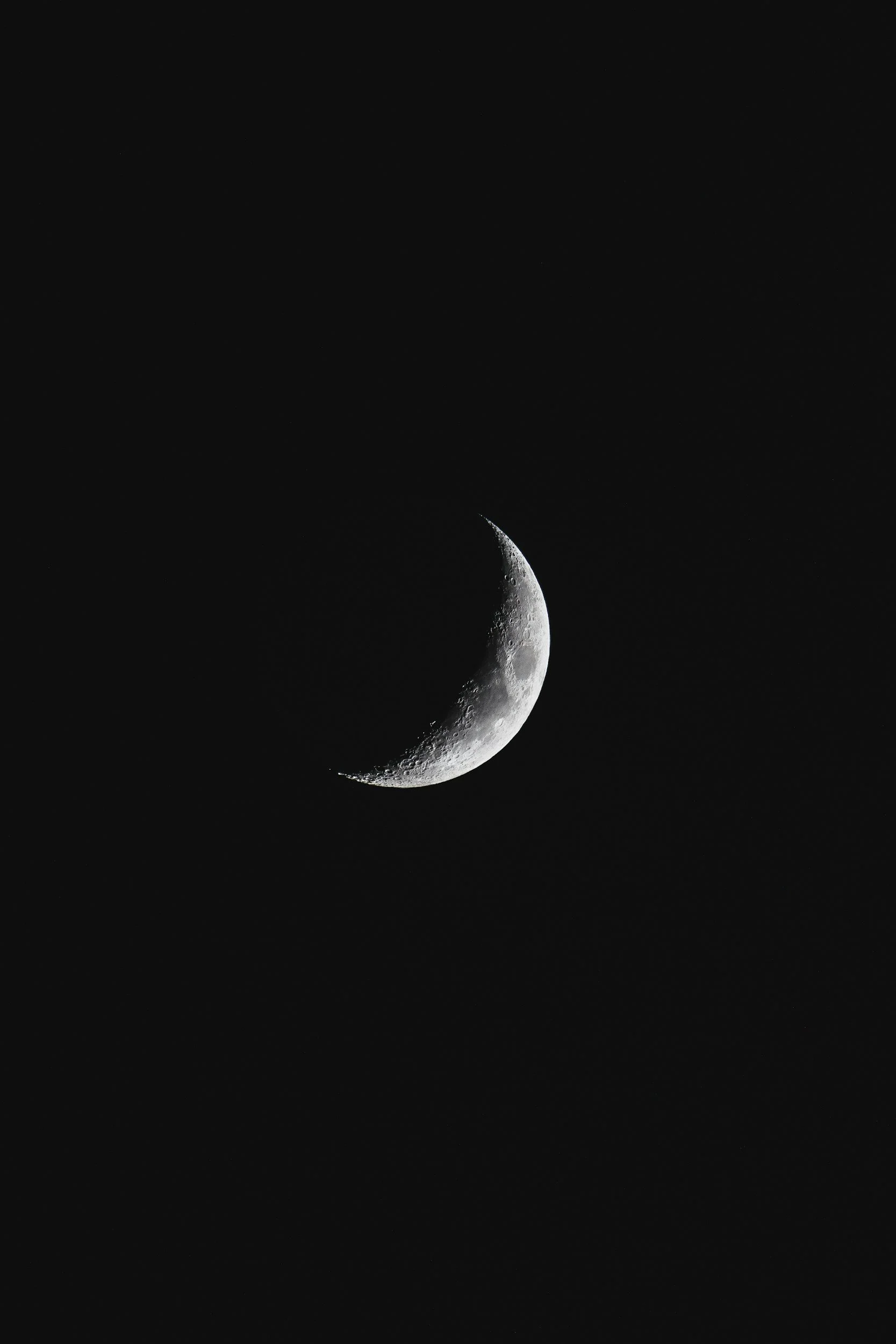
In modern astrology, the name Lilith is associated with several different astronomical and astrological points, the most common being Black Moon Lilith. This point represents the lunar apogee, the point in the Moon's orbit farthest from the Earth. The astrological glyph used for Black Moon Lilith typically consists of a black crescent moon resting on a cross. This symbol is a modern astrological creation and is entirely distinct from historical amulets, incantation bowls, or the line-based sigils used in contemporary occultism.

The interpretation of Black Moon Lilith in astrological charts often draws upon the modern feminist and psychological understandings of the Lilith figure. It is frequently associated with themes of hidden desires, rebellion, and the integration of the shadow self. While this astrological framework uses the name and some of the thematic associations of Lilith, it is a separate system of meaning with its own specific symbols and interpretive rules. Practitioners of astrology use this symbol to explore personal psychology and life patterns, rather than engaging with the historical folklore of the demoness.

The Intersection of Literature and Folklore

The evolution of the lilith symbol is deeply intertwined with the intersection of literature and folklore. The Alphabet of Ben Sira serves as a crucial bridge, transforming a folkloric threat into a literary character with a defined narrative. This literary depiction provided a foundation for later Kabbalistic texts to expand upon her role, integrating her into complex cosmological systems. The symbols and imagery that emerged from these literary traditions often reflect the theological concerns of their authors, rather than a direct continuation of ancient Mesopotamian beliefs.

In modern times, literature continues to shape the perception of Lilith. Novels, poetry, and feminist midrash have reimagined her story, offering new interpretations that resonate with contemporary audiences. These literary works often generate new symbols and metaphors, contributing to the ongoing evolution of her meaning. When analyzing any symbol associated with Lilith, one must consider whether its origins lie in ancient artifacts, medieval texts, or modern literary imagination.

Cultural Boundaries in Modern Practice

Growing modern spiritual and occult interest in Lilith makes the cultural boundaries surrounding historical symbols especially relevant. The traditional Jewish amulets and incantation bowls are artifacts of specific religious practices, often tied to closed community traditions. Modern practitioners should be mindful of the context in which these objects were created and used. Appropriating specific ritual forms, such as the use of sacred Hebrew names or traditional exorcism formulas, out of their cultural context can be disrespectful and historically inaccurate.

Instead of attempting to replicate these closed practices, modern engagement can focus on the broader themes that Lilith represents today. The modern symbols created to honor her, such as the 2007 line-based sigil or various artistic interpretations, offer a way to connect with her contemporary meaning without appropriating historical religious artifacts. By respecting these boundaries, practitioners can develop a meaningful and ethically informed approach to their spiritual explorations.

Conclusion on the Evolution of Imagery

The history of the lilith symbol is evidence of the dynamic nature of cultural and religious imagery. From the protective bowls of Late Antiquity to the astrological glyphs and feminist emblems of the modern era, the symbols associated with her have constantly adapted to reflect the fears, beliefs, and aspirations of different communities. There is no single, unbroken visual tradition that defines her. Instead, sources and modern communities offer varied interpretations that reflect the changing reception of her story.

Evaluating Symbols in Modern Practice

Modern reflective or devotional use of a lilith symbol can begin with its documented provenance and historical setting. Rather than attempting to replicate closed magical practices or ancient exorcisms, modern practitioners can engage with the themes of independence and transformation that she represents today. This approach respects the historical boundaries of traditional practices while allowing for personal connection and interpretation.

A practical exercise for modern engagement involves researching the provenance of a claimed symbol. Before adopting a design, investigate its origins. Is it a modern creation, an astrological glyph, or an image derived from a historical artifact? Understanding the source of a symbol can deepen appreciation of its context and prevent the unintentional appropriation of specific ritual forms, such as the use of sacred Hebrew names out of their cultural context. By approaching these symbols with historical awareness, practitioners can develop a more informed and respectful personal practice.

For further reading on related topics, practitioners might explore banishing doubt in practice, learn how to internalize connection with spirits, or consider how to modify magical workings to suit individual needs. Additionally, understanding the role of the mind in the magical process and how to work with the spirits of the home and the land can provide valuable context for these explorations.

If you want to go further with this, my class How to Work with Spirits walks you through how to contact and work with spirits collaboratively.


Related reading

Hag Stone: Meaning, Folklore, and Uses

A hag stone is a naturally perforated rock, often shaped by erosion, abrasion, weathering, or rock-boring organisms. British and European folklore collections document holed stones as protective objects for homes, sleepers, and livestock, although names and uses vary by region. Modern practitioners may use one as a symbolic ward, viewing tool, or focus for reflection.

The Geological Formation of a Hag Stone

The creation of a hag stone is a slow geological process driven by the relentless forces of nature. These stones are most commonly found along coastlines, riverbeds, and chalk cliffs, where the constant movement of water and abrasive particles gradually wears away the weaker parts of a rock. Over decades or even centuries, this continuous friction can bore a complete hole through the stone. In some cases, the holes are created by the boring action of marine organisms, such as certain types of bivalve mollusks, which drill into softer rocks like limestone or chalk to create protective shelters.

Because the formation process requires specific environmental conditions and a significant amount of time, finding a naturally holed stone is often considered a rare and fortunate event. The type of rock plays a significant role in how the hole forms. Softer sedimentary rocks are often more susceptible to erosion and biological boring, so they frequently supply naturally perforated objects later used when creating magical tools. Harder igneous or metamorphic rocks are less likely to develop these natural perforations, though it is not impossible given enough time and the right circumstances.

The natural origin of the hole is a key element in the stone's perceived magical value because it distinguishes a found object from a drilled bead. Modern writers sometimes explain its protection through associations with moving water, but this is not a universal historical doctrine and not every specimen formed in flowing water. The visible geology should be identified before a symbolic account is added.

Regional Names and the Adder Stone Distinction

Naturally holed stones occur in many places, but their names do not form one global taxonomy. English-language sources use terms such as hag stone or witch stone, while German Hühnergötter, literally chicken gods, refers to holed stones associated with household or poultry protection. The Stone of Odin was a particular perforated monolith in Orkney, not a general name for every small holed pebble. Regional labels should remain attached to their own evidence.

Modern writing often conflates a hag stone with the adder stone, but the oldest descriptions do not establish that they were identical. In Natural History, Pliny the Elder reports a Gallic claim about an anguinum produced by intertwined snakes and cast into the air, where it had to be caught before touching the ground. He says its owner expected success with rulers and lawsuits. This polemical Roman report describes a snake-generated object, not plainly a water-worn pebble with a hole.

While modern usage often treats the terms interchangeably, the earlier adder stone tradition involved a specific mythological origin related to snakes, whereas the folklore of the holed stone centers primarily on its natural water-eroded perforation and protective qualities against witchcraft and nightmares. The conflation likely occurred because both were highly valued natural amulets with protective properties, but their historical origins and specific uses were distinct.

Documented British and European Protective Folklore

Among the uses recorded for naturally holed stones in British and European folklore, protection is especially prominent. They belong within the wider study of ancient and traditional magical artifacts, but each claim needs a date and region. Sources describe stones placed around homes, beds, stables, or animals to guard against nightmares, illness, witchcraft, or harmful night beings.

In rural communities, these stones were frequently used to protect valuable livestock from disease and malevolent magic. Farmers would hang them in barns, stables, and over the doors of cowsheds. It was believed that witches or hags could steal the milk from cows or ride horses to exhaustion during the night, a phenomenon known as being hag-ridden. A holed stone suspended by a natural cord, such as red thread or leather, was thought to prevent these afflictions.

The stones were also sometimes tied directly to the animals, particularly horses, or placed in their drinking troughs. This practice reflects the deep concern for the health and well-being of livestock in agricultural societies, where the loss of an animal could have severe economic consequences. The stones served as a tangible form of insurance against unseen threats, providing peace of mind to the farmers who relied on their animals for survival.

Within the home, the stones served a similar protective function. Edward Lovett, in his 1925 work Magic in Modern London, documented the continued use of holed stones as charms against nightmares and disease in early twentieth-century Britain. The stones were often hung above the bed or tied to the bedpost to prevent the night hag from sitting on the sleeper's chest and causing terrifying dreams or sleep paralysis.

They were also placed near doorways and windows to prevent malevolent spirits from entering the home, acting as a physical and spiritual barrier when working with spirits of home and land. Modern practitioners sometimes describe the hole as a trap or filter for harmful influence, but that language should not be projected onto every historical use. This use of the stone as a domestic ward highlights its role in providing psychological comfort and a sense of security in an unpredictable world.

Looking Through the Hole: Customs and Beliefs

Looking through a naturally formed hole is a recurring motif in later folklore and modern retellings, where the stone may expose a witch, fairy, spirit, or hidden influence. The evidence is regional and uneven, so it is safer to describe this as a cluster of viewing customs than as one belief shared across all Celtic or British traditions.

In such accounts, the hole acts as a framing device through which an otherwise hidden being or danger might be recognized. That is a statement about folklore, not evidence that the stone changes human vision. The simple action of narrowing the visual field may also explain why modern practitioners use it to concentrate attention on a place, object, or question.

Popular culture often turns the motif into a reliable supernatural lens. Historical reports do not justify that certainty, and focused meditation is a modern adaptation rather than a proven explanation for every earlier custom. A careful practice can acknowledge the story while using the hole only as an ordinary visual frame.

Modern divinatory use extends this lens metaphor to lost objects, confusing situations, or suspected harmful influence. Such use should be labeled contemporary unless a dated regional source is available. It should never be treated as evidence that another person caused misfortune.

Modern Magical Practice and Misconceptions

In contemporary magical practice, the holed stone remains a popular and versatile tool. Practitioners continue to use them as protective amulets, often incorporating them into reviewing protection magic or carrying them as personal talismans. The stones are also used in meditation and visualization exercises, drawing on the historical belief in their ability to provide clarity and insight.

However, several misconceptions and modern urban legends have emerged surrounding these stones. One common claim is that a true holed stone must be found by the person using it and cannot be bought or gifted. While finding a stone oneself can certainly add personal significance to the object, there is no widespread documented rule prohibiting the purchase or exchange of these amulets. The effectiveness of the stone is generally considered to depend more on the practitioner's intention and connection to the object than on how it was acquired.

Another modern legend involves the claim that Aleister Crowley cursed the town of Hastings and that only a holed stone can break the curse. This is a contemporary urban legend with no basis in historical folklore or Crowley's documented activities. It serves as an example of how traditional beliefs can be adapted and incorporated into modern narratives.

Practitioners should reject historical claims that these stones can cure snakebites or diseases. While they were historically used as charms against illness, they should never be used as a substitute for professional medical advice or treatment. The value of the stone lies in its symbolic and psychological significance, not in any literal medical efficacy.

Historical Sources and Folklore Documentation

The study of holed stones and their associated folklore relies on a variety of historical sources and ethnographic documentation. These records provide valuable insights into the ways in which human societies have historically interacted with their environment and sought protection from unseen threats.

Evidence What it supports What it does not prove Pliny the Elder, Natural History, first century CE A Roman report of a Gallic snake-generated anguinum associated with rulers and lawsuits That the anguinum was an ordinary water-worn hag stone Edward Lovett, Magic in Modern London, 1925 Continued British collection and use of holed stones as protective charms That every modern interpretation was present in earlier centuries Regional folklore collections Protective placement near sleepers, households, stables, livestock, or thresholds One name, method, or belief shared throughout Europe Geological examination Whether abrasion, weathering, boring organisms, or another natural process formed the hole Any supernatural effect or guaranteed symbolic meaning

These sources document different objects, periods, and beliefs rather than one unbroken tradition. Pliny's anguinum belongs to a Roman report about Gaul, while Lovett's holed stones belong to much later British collecting and charm use. Comparing them is useful only when the gap and the uncertain identification are kept visible.

Practical Applications in Contemporary Settings

For those interested in incorporating these stones into their own practices, there are several practical methods grounded in documented custom. The most common application remains the use of the stone as a protective ward. Hanging a stone near the front door or above the bed is a simple and traditional way to create a sense of security and boundary within the home.

The stone can also be used as a focal point for observation. Holding it while considering the geological processes that formed it can support attention to the local environment and work with the genius spirit of the land. Looking through the hole can serve as a visualization technique, helping to clear the mind of distractions and focus on a specific intention or question.

If cleaning is needed, use plain water at home and dry the stone fully. Do not place soap, salt, oil, or ritual substances in a stream, and do not assume every stone formed in running water. The object's physical texture and visible wear can serve as reminders that symbolic use begins with an ordinary natural process.

The continued use of these natural amulets reflects a broader human desire to find tangible connections to the past and the environment. Whether used for protection, meditation, or simply as a beautiful natural object, the holed stone remains a compelling symbol of the intersection between the natural world and human belief.

By understanding the history and folklore associated with these stones, practitioners can engage with them in a way that is both respectful of tradition and relevant to modern life. Holding a stone shaped by abrasion, weathering, organisms, or other natural processes can support patient observation and a sense of connection to the wider environment.

Ethical Foraging and Environmental Considerations

Before collecting any stone, check the rules for the specific beach, river, park, archaeological area, or protected habitat. Laws vary by jurisdiction, ownership, conservation designation, and quantity removed. Public access does not automatically grant permission to take natural material, and even lawful removal can damage a sensitive site when repeated by many visitors.

Ethical foraging practices emphasize leaving no trace and respecting local laws and regulations. Practitioners are encouraged to appreciate the stones in their natural environment while walking the land, perhaps photographing them or using them as temporary focal points for meditation before returning them to the landscape. If one wishes to acquire a stone for personal use, seeking legally obtained specimens from reputable vendors or finding them on private land with permission are responsible alternatives.

The desire to connect with nature through the use of natural amulets should not come at the expense of the environment. By adopting sustainable and ethical practices, practitioners can honor the traditions associated with these stones while ensuring that the natural landscapes that produce them are preserved for future generations.

If you want to go further with this, my book Walking with Nature Spirits shows you how to connect with nature spirits to create relationships with the land.

Fae Meaning: Etymology, Folklore, and Modern Use

The fae meaning refers to European words and ideas for otherworldly beings whose forms, powers, and rules vary by place and period. The term traces to Latin fata through Old French, and later writers reshaped it. Earlier accounts describe morally complex figures linked to specific sites, not solely tiny, winged helpers.

Fae meaning in historical sources

Across written records, the category now labeled fae gathers material from different languages and communities rather than a single ancient system. Latin writers used fata for powers of fate, then medieval French texts adopted fée for an enchantress or fairy woman. Later English authors repurposed related forms to name beings, places, and states of enchantment. A careful reading keeps these layers distinct. Early sources tend to treat such beings as powerful neighbors or rulers of otherworldly courts, not standardized species. Later romantic and children’s literature reframed expectations. Understanding usage by century and genre is the best guide to accurate interpretation.

Etymology and earliest attestations

Latin fatum means a decree or destiny, and its plural fata contributed to later Romance vocabulary associated with fate-bearing or enchanted women. By the twelfth century, Old French fée appears in Arthurian romance, including references to Morgan la fée. In this context, the word marks a woman linked to enchantment. Anglo-Norman and Middle English writers borrow and adapt both vocabulary and story motifs, and by the fourteenth century English texts use forms like fairye to describe enchantment or an otherworldly place. The sixteenth century introduces influential literary codifications, especially Edmund Spenser’s The Faerie Queene, which shifts faerie toward a grand courtly setting populated by diverse beings.

Seventeenth century materials expand detail on everyday encounters. Robert Kirk’s The Secret Commonwealth of Elves, Fauns and Fairies, written in 1691, discusses Scottish traditions in a clerical observer’s voice. Nineteenth century compilers such as Thomas Keightley, Thomas Crofton Croker, Wirt Sikes, Lady Wilde, and W. B. Yeats record regional lore alongside commentary. These works sit between older oral accounts and modern expectations, so they must be read with attention to the era, the collectors’ methods, and local informants.

Spellings and related terms

Spelling signals context. Fay often echoes French influence or archaic style. Fairy becomes the common modern English form. Faerie signals a literary register shaped by Spenser and later imitators. The short form fae is a modern back-formation patterned on fée and fay, now used as a cover term. Fey is separate, a Scots and northern English adjective meaning doomed or uncanny. Accurate writing separates fey from fae, and distinguishes fairies as beings from fairy as enchantment or place in older texts. These differences help prevent anachronism when reading or summarizing sources.

Regional traditions across the Isles

Irish, Scottish, and Welsh traditions keep their own names, stories, and expectations. In Ireland, references to the daoine sí or Aos Sí describe peoples connected with burial mounds and raths, sometimes interpreted as former gods living in the sid, the otherworld mounds. Literary material such as the Lebor Gabála Érenn and later tales inform this backdrop, and nineteenth century collectors like Lady Wilde and Yeats recorded household cautions and seasonal customs. The stress falls on boundaries, offerings, and care around particular places like ringforts and lone hawthorns.

Scottish sources use sìth-related terms for otherworldly neighbors, but they do not present one uniform national taxonomy. Lowland Scots evidence includes seelie, meaning blessed or fortunate, and unseelie, meaning unhappy or ill-favored; later writers often systematized these adjectives as opposing courts. Robert Kirk’s seventeenth-century account discusses second sight, food concerns, and risks attributed to unseen neighbors. Ballads and local histories add motifs of abduction, repayment of hospitality, and harmful interference. Each claim should remain tied to region and source.

Welsh materials speak of the Tylwyth Teg, the Fair Family. Wirt Sikes, writing in the 1880s, summarized lakeside brides, changelings, and gifts that fail if conditions are broken. The Mabinogion contains otherworldly courts and crossings that scholars compare with later fairy lore, though terms differ. In these accounts, geography matters. Lakes, uplands, old trackways, and ruins organize stories about disappearance, luck, and taboo-breaking rather than a single empire of fairies.

English lore and household spirits

English records often emphasize domestic and local spirits such as brownies, hobthrusts, pixies, and boggarts. Shakespeare’s A Midsummer Night’s Dream presents named figures like Oberon and Titania in a theatrical court, while other plays and poems mention helpful household elves or mischievous night-walkers. Later regional collections from Cornwall and Devon document pixy-led wanderers and borrowing rules. Katharine Briggs, a twentieth century scholar, synthesized much of this material, organizing motifs of helpful labor, gift refusal, and sudden offense. The common pattern is conditional cooperation: small courtesies bring help, insults bring trouble.

Euphemisms and naming customs

Some folklore records describe avoidance of direct naming. Expressions such as the Fair Folk, the Good Neighbors, the Gentry, or Irish na daoine maithe could signal respect and caution. The practice reflects the belief that names carry force and that overhearing is possible. Texts and field notes record formulaic compliments, careful circumlocutions, and avoidance of boasting. The habit parallels practices directed at human superiors and dangerous animals. In scholarship and modern discussion, using local names alongside euphemisms preserves context without claiming secret true names.

Moral ambiguity and reciprocity

Many folk accounts resist a simple good-or-evil division and instead emphasize conditional conduct. In some household-spirit stories, food is accepted while wages, clothing, insults, or excessive scrutiny end the help; details vary by being and locality. Changeling narratives expressed fears about illness, disability, development, and family disruption, and they sometimes enabled abuse of children or vulnerable adults. These stories require historical analysis rather than reenactment. Reciprocity is a frequent motif, but it is not one enforceable code shared by every tradition.

Victorian miniaturization and popular culture

Nineteenth century art and publishing reframed fairies for salons and nurseries. Painters and illustrators developed images of tiny, winged figures linked with flowers and dew. Michael Drayton’s Nymphidia in the seventeenth century helped set a small scale, then Victorian and Edwardian artists such as Richard Doyle and Arthur Rackham standardized it. Children’s anthologies edited by Andrew Lang and fiction by George MacDonald and J. M. Barrie presented charming companions and instructive adventures. The Cottingley photographs of 1917, later promoted by Arthur Conan Doyle, show how wish and image shaped belief despite weak evidence.

Modern fantasy borrows heavily from this visual library. Roleplaying games and novels compress diverse beings into courts and species with stat blocks and family trees. This system can be useful for storytelling, yet it does not reflect the patchwork of older sources. When writing history or practicing regionally informed spirituality, separating entertainment conventions from documented customs avoids confusion. Popular culture can inspire interest, but historical reading resets scale, conduct, and risk back to earlier assumptions about sovereignty, territory, and unpredictable help.

Folklore, psychology, and interpretation

Interpretation spans more than one frame. Folklore studies classify motifs and track transmission patterns through families, parish boundaries, and print. Cognitive psychology studies attention, pareidolia, hypnagogic imagery, and how expectation shapes perception during night travel or liminal hours. Both frames help explain experiences without dismissing them. For spiritual practitioners, imagination functions as a tool for focus and symbol. Considering the connection between spirits and the imagination encourages disciplined creativity anchored to historical norms, so that practices remain reflective rather than credulous.

Modern interpretations and land practice

Contemporary Pagan and animist communities often use fae as a practical umbrella for neighbor-spirits, place guardians, or independent otherworldly peoples. This modern usage varies, and writers frequently advise local focus instead of universal taxonomies. Respectful conduct centers on place, boundaries, and reciprocity. Guidance for building a relationship with your land stresses observation, seasonal attention, and simple offerings that do not pollute. Resources on working with the spirits of your home and the land outline house care, kitchen courtesies, and clear limits, matching older counsel about wells, thresholds, and shared spaces.

Some practitioners frame practices around site-specific sovereignty. Essays on working with the genius spirit of the land emphasize learning a location’s history, names, and prior uses before acting. Walks and quiet attention are a common first step. A guide to walking with nature spirits highlights posture, reciprocity, and leaving a place cleaner than it was found. In such frameworks, spiritual claims are presented as interpretations and working hypotheses, checked against environmental ethics, community safety, and the historical record.

Research methods and critical reading

Historical accuracy starts with source evaluation. Dates establish whether a claim reflects medieval belief, early modern systematization, or Victorian reinvention. Regional labels point to languages and archives. Identifying whether a text is a literary work, a field notebook, or a synthesis prevents category errors. Practical guides to researching mythology for magical workings recommend building notes that track quotations, place names, collector bias, and variant tellings. Comparing multiple editions, seeking local archives, and distinguishing entertainment from ethnography improve reliability and reduce unintentional fabrication.

Practical, ethical, and reflective guidelines

  • Treat regional names with care, and avoid flattening distinct traditions into a single system.

  • Prefer offerings and practices that do not harm wildlife, waterways, or soil.

  • Read older sources in context, and check whether a detail is literary, ritual, or anecdotal.

  • Respect private property, access rules, and protected sites, including ringforts and burial grounds.

  • Use euphemisms or local titles when appropriate, and avoid boastful claims in public settings.

  • Keep reciprocity modest, and end exchanges that feel coercive or unsafe.

  • Distinguish imagination used for focus from external claims, and label speculation clearly.

  • Avoid appropriating closed traditions or renaming living cultures’ spirits as generic fae.

  • Record observations with dates and places, and revise practices when evidence changes.

  • Teach children caution about waterways, caves, and night paths, framing safety as courtesy.

Key takeaways on fae meaning

Fae meaning gathers layered words, texts, and practices shaped by language contact and changing media. Latin fata and Old French fée seeded later English forms, then regional traditions generated distinctive rules about place, courtesy, and risk. Victorian art added miniaturized charm, while modern practice favors site-based respect. Keeping history, folklore, psychology, and spirituality in separate lanes supports accurate writing and careful conduct.

If you want to go further with this, my class How to Work with Spirits walks you through you can work with spirits collaboratively to create better results.

What Does It Mean When a Butterfly Lands on You?

What does it mean when a butterfly lands on you? Biologically, the insect may be seeking sodium and moisture from sweat, investigating color or scent, warming itself, or resting. Spiritual and grief-related meanings are personal interpretations rather than universal omens, so the event can be appreciated without treating it as proof of a supernatural message.

A butterfly resting on skin can feel significant because the contact is delicate and unexpected. The biological causes are observable, while symbolic meanings depend on culture, grief, memory, and personal association. Keeping those categories separate allows for reflection without turning an ordinary insect behavior into a fixed prediction. The encounter can matter emotionally even when no supernatural claim is made.

What Does It Mean When a Butterfly Lands on You? Biology First

Butterflies are delicate creatures that rely on specific environmental conditions and resources to survive. Their interactions with humans are usually incidental, driven by biological needs rather than a desire for connection. The primary reason a butterfly lands on a person is to extract moisture and minerals. This behavior is a crucial part of their survival strategy, allowing them to supplement the nutrients they obtain from nectar.

This behavior, called puddling, is most commonly observed in male butterflies. They gather around mud puddles, damp soil, or even animal dung to absorb sodium and amino acids. Human sweat contains these exact components, making a sweaty arm or forehead an attractive landing spot. The butterfly uses its proboscis, a long, tube-like appendage, to sip the moisture from the skin. The sodium gathered through puddling is often transferred to females during mating, playing a vital role in reproductive success.

In addition to seeking minerals, butterflies are drawn to certain colors and scents. Brightly colored clothing, especially in shades of red, yellow, or orange, can mimic the appearance of flowers. If you are wearing floral-scented perfumes, lotions, or sunscreens, a butterfly might mistake you for a nectar source. Warmth is another factor; butterflies are cold-blooded and often bask in the sun to raise their body temperature. A warm human body can provide a temporary resting place for a butterfly needing to warm up before taking flight. Understanding these biological factors helps demystify the encounter, grounding it in the practical realities of the insect's life cycle.

The sensory perception of butterflies is highly specialized. They possess compound eyes that can detect ultraviolet light, allowing them to see patterns on flowers that are invisible to the human eye. Their antennae are sensitive to chemical cues in the air, guiding them toward food sources and potential mates. When a butterfly lands on a person, it is responding to a complex array of visual and olfactory signals. The insect is essentially investigating a potential resource, assessing whether the human surface offers the necessary nutrients or warmth.

Furthermore, the environment plays a significant role in these interactions. Butterflies are more likely to land on people in areas where natural resources are scarce or during particularly hot and dry weather when moisture is at a premium. In such conditions, human sweat becomes a highly valuable commodity. Observing the environmental context can provide additional clues as to why the butterfly has chosen to land, reinforcing the biological basis of the behavior.

Cultural and Spiritual Interpretations

Beyond the biological explanations, many people wonder what does it mean if a butterfly lands on you from a spiritual perspective. Throughout history, various cultures have assigned profound symbolic meanings to butterflies, often associating them with the soul, transformation, and the afterlife. These interpretations offer a different lens through which to view the encounter, focusing on the emotional and psychological impact rather than the scientific mechanics.

In ancient Greek, psyche meant soul or breath, and butterfly imagery became a visual metaphor for the soul. That symbolism does not prove that ancient Greeks universally regarded every butterfly as the literal form of a dead person. In the Roman-era story of Cupid and Psyche recorded by Apuleius, Psyche is a mortal woman whose name signifies soul; later art often gives her butterfly wings. Mexican traditions also require specificity. Purépecha and Mazahua communities associate the seasonal arrival of monarchs with returning ancestors around Día de los Muertos, while some Nahua sources separately connect certain butterflies with warriors who died in battle.

Today, a butterfly landing on a person is frequently viewed as a sign of personal transformation. The insect's life cycle, progressing from a caterpillar to a chrysalis and finally to a winged adult, serves as a powerful metaphor for growth and change. When a butterfly makes physical contact, some interpret it as an encouragement to embrace a period of transition or to release old habits. The encounter is seen as a gentle nudge to trust the process of metamorphosis, recognizing that significant change often requires a period of vulnerability and restructuring.

During grief, a butterfly encounter may offer comfort. Some bereaved people interpret it as a message from someone who died or as a symbol that love continues. That meaning belongs to personal belief rather than verifiable evidence about an afterlife. It can still support remembrance, especially when the interpretation reduces isolation without replacing grief care, social support, or professional help when distress becomes persistent or overwhelming.

The symbolic power of the butterfly is also evident in various artistic and literary traditions. Poets and painters have long used the insect to represent the fleeting nature of beauty and the transient quality of life. In these contexts, a butterfly landing on a person can be seen as a reminder to appreciate the present moment, acknowledging that such encounters are rare and temporary. This perspective encourages a mindful approach to life, valuing the small, unexpected moments of connection with the natural world.

Observation, Biology, and Optional Meaning

The most useful interpretation begins with what was actually observed. Species, weather, location, clothing, scent, and skin moisture can explain much of the encounter. A reflective meaning may then be added as a personal response, not as a rule assigned by color charts or viral lists.

Observation Likely biological factor Optional reflective prompt The butterfly probes sweaty skin Sodium, moisture, or other dissolved nutrients What ordinary need might be hidden beneath a striking event? It approaches bright or floral-scented clothing Visual or chemical cues resembling a food source What drew attention before the meaning was assigned? It rests with wings positioned toward sunlight Thermoregulation or a pause between flights Where would rest or warmth be useful now? The encounter occurs during grief The behavior remains biological; grief shapes its emotional meaning What memory or bond does the moment bring forward? A particular color feels significant Color identifies physical features and may help with species recognition What does that color mean personally, and where did that association come from?

If color matters, identify the species before assigning symbolism. Lighting, wear, sex, season, and the upper or lower wing surface can change appearance. A regional field guide or conservation database offers a firmer basis than a generic spiritual color chart. Species identification also reveals whether the insect is resident, migrating, common, or threatened.

Personal associations can still support reflection. A color connected with a family member, event, or place may carry emotional weight for the observer without becoming a universal omen. Writing down the observation first and the interpretation second helps preserve that distinction.

Context matters more than a predetermined code. Note the weather, habitat, behavior, duration, and emotional circumstances. This method honors the butterfly as an animal while allowing the experience to prompt attention, gratitude, or remembrance.

Practical and Reflective Responses

When a butterfly lands on you, the most practical response is to remain still. Butterflies are fragile, and their wings are covered in microscopic scales that are essential for flight. Touching a butterfly's wings can remove scales and may impair flight, though the effect varies; avoiding contact is the safest approach. By staying calm, you allow the insect to gather the nutrients it needs or rest before moving on. This simple act of restraint is a demonstration of respect for the natural world.

This moment of stillness also provides an opportunity for mindfulness. Observing the intricate patterns on the butterfly's wings and the delicate movement of its proboscis can ground you in the present moment. This practice of quiet observation is a way of walking the land with intention, acknowledging your place within the local ecosystem. It encourages a sense of connection to the environment, fostering an appreciation for the complex web of life that surrounds you.

You can use the encounter as a catalyst for internal exploration. Consider what areas of your life are currently undergoing change. The butterfly's metamorphosis can remind you that growth often requires a period of retreat and restructuring. This reflection aligns with cultivating awareness, helping you to recognize and accept the natural cycles of your own life. By observing the butterfly, you can gain insight into your own processes of transformation.

If the experience brings up emotions related to a past loss, allow yourself to feel them without judgment. The physical presence of the butterfly can act as a focal point for healing the soul through nature, offering a tangible connection to the broader web of life. The encounter can serve as a gentle reminder that healing is a gradual process, much like the slow emergence of a butterfly from its chrysalis.

Additionally, the experience can prompt a broader reflection on your relationship with the natural world. Consider how your daily actions impact the environment and the creatures that inhabit it. This moment of connection can inspire a commitment to more sustainable practices, encouraging you to create spaces that support local wildlife. Planting native flowers or reducing pesticide use are practical ways to honor the encounter and contribute to the well-being of butterfly populations.

Integrating the Experience

Whether you view the event as a biological curiosity or a spiritual message, a butterfly landing on you can be memorable. Acknowledging the scientific reality of puddling does not diminish the beauty of the interaction. Instead, it highlights the intricate ways in which human biology and the natural world intersect. The encounter serves as a reminder that humans are not separate from nature but are an integral part of a complex ecological system.

Balancing the biological facts with personal reflection enriches the experience. This approach relies on imagination as the seed of reality, using a physical event to foster emotional and spiritual growth. By remaining open to both the scientific and the symbolic, you can draw deeper meaning from the encounter. This dual perspective allows for a more comprehensive understanding of the event, integrating rational observation with intuitive insight.

Ultimately, the significance of the event is shaped by your own perspective. Taking the time to pause and reflect on the interaction is a valuable exercise in mindfulness. This practice supports the purpose of a magical practice, which often involves finding meaning and connection in everyday occurrences. The butterfly becomes a mirror, reflecting your current thoughts, feelings, and aspirations.

As the butterfly eventually takes flight, you can express silent gratitude for the brief connection. Recognizing the fleeting nature of the encounter helps integrate the experience, reminding you of the importance of connecting with the energy of a season and appreciating the transient beauty of the natural world. The memory of the encounter can serve as a lasting source of inspiration, encouraging a continued practice of mindfulness and reflection in your daily life.

If you want to go further with this, my class Elemental Balancing Ritual covers how to work with a force as an element over time. I walk you through it step by step so you can apply it to your own practice rather than just read about it.

Zozo: The Modern Ouija Board Legend

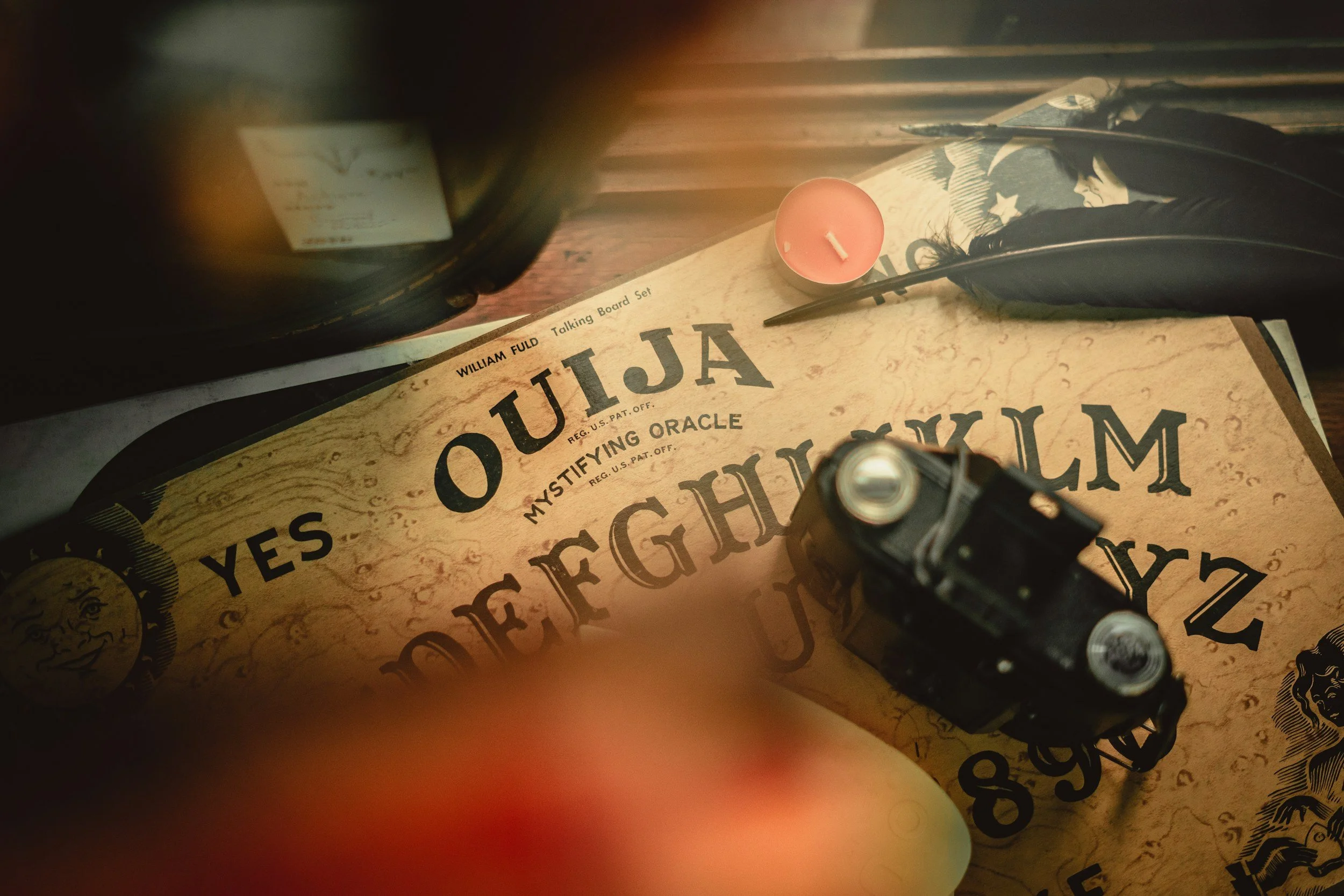
The zozo entity is a modern internet urban legend associated with Ouija boards, popularized in 2009 by a paranormal forum post, rather than an ancient historical demon. While some claim it is an ancient spirit, evidence supports that the zozo demon is a contemporary phenomenon amplified by digital media and the ideomotor effect.

The Origins of the Zozo Legend

The narrative of the zozo entity as a pervasive Ouija board spirit is largely an internet-era creation. The legend was primarily popularized around 2009 by Darren Evans on a paranormal forum. This modern origin contrasts sharply with claims that the entity is an ancient, widespread demon of destruction that has haunted spirit boards for centuries. The rapid spread of the story demonstrates how internet culture can quickly create and solidify new paranormal folklore. Before the widespread use of the internet, accounts of this specific entity were virtually nonexistent in the broader cultural consciousness, highlighting the role of digital communication in its genesis.

Modern accounts often cite Jacques Auguste Simon Collin de Plancy's Dictionnaire Infernal, first published in 1818, as proof of an older demon. Its entry on possession recounts an 1816 case in Teilly near Amiens involving a girl who said three demons named Mimi, Zozo, and Crapoulet controlled her. De Plancy says she was trying to pass as possessed; civil authorities determined that she was ill, admitted her to a hospital, and the possession claim ended. This is evidence that the name appeared in a nineteenth-century anecdote, not that an ancient Zozo demon or Ouija tradition existed.

Other claims attempt to connect the entity to the Mesopotamian demon Pazuzu or the Led Zeppelin "Zoso" symbol. These assertions lack historical or etymological evidence and are considered fabricated elements added to increase the perceived authenticity of the modern legend. The linguistic leap from a modern Ouija board spelling to a first-millennium BCE Mesopotamian demon requires ignoring significant cultural, historical, and linguistic boundaries. Understanding the role of the mind in the magical process is crucial when examining how these narratives are constructed and believed by participants. The human tendency to find connections where none exist plays a significant role in the development of such elaborate mythologies.

Some occultists interpret the modern legend through the concept of an egregore, meaning a thoughtform sustained by collective attention. That is a contemporary esoteric explanation, not a demonstrated historical origin. A simpler folklore model is sufficient: as people hear the story, expect the name, and share similar experiences, repetition makes the narrative feel established. Collective reinforcement can turn a widely circulated forum account into a recognizable cultural phenomenon without proving an independent entity.

The Psychology of the Ouija Board

The repetitive "Z-O-Z-O" planchette movement reported during Ouija board sessions is often attributed to psychological and physiological mechanisms rather than supernatural intervention. Scientific research points to the ideomotor effect, where users subconsciously move the planchette based on their expectations. When participants are aware of the zozo legend, their subconscious expectations can drive the planchette to spell out the name, reinforcing the belief in the entity's presence. The ideomotor effect operates below the threshold of conscious awareness, making the movements feel entirely independent and external to the users.

This phenomenon highlights why subjectivity matters in magick. The participant's internal state, beliefs, and prior knowledge significantly influence the outcome of the session. If a group sits down at a Ouija board with the expectation of contacting a specific entity, their collective subconscious movements are highly likely to produce results that align with that expectation. In controlled terms, the board can externalize fears, expectations, and culturally available words through movement; a spirit-world explanation is not needed to account for that output.

Furthermore, the intersection of psychology and religion in spirit work provides insight into why individuals might interpret these subconscious movements as communication with an external entity. The human brain is wired to seek patterns and meaning, often attributing agency to random or subconscious events. This cognitive bias, combined with the suggestibility of a group setting, can create a compelling illusion of spirit communication. The desire to connect with something beyond the mundane world often overrides critical thinking, leading participants to accept supernatural explanations for psychological phenomena.

The role of fear in these sessions cannot be understated. Fear heightens physiological arousal, making participants more susceptible to suggestion and more likely to interpret ambiguous stimuli as threatening. When the planchette begins to spell a name associated with a terrifying urban legend, the resulting panic can cause erratic, forceful movements that further convince the participants of a malevolent presence. This feedback loop of fear and subconscious movement is a primary driver of negative Ouija board experiences.

Media Amplification and Digital Folklore

The zozo narrative serves as a contemporary example of how folklore and urban legends spread and evolve through digital media. The internet provides a platform for the rapid dissemination of stories, allowing a single account to reach a global audience quickly. As the story is shared and retold, it often becomes embellished, with new details and historical claims added to increase its perceived authenticity. This process of collective storytelling is a hallmark of digital folklore, where the community actively participates in shaping and expanding the narrative.

Media amplification plays a significant role in solidifying these modern legends. Television shows, podcasts, and viral videos often present the entity as a factual being, blurring the lines between entertainment and reality. This media exposure not only introduces the legend to new audiences but also reinforces the expectations that drive the ideomotor effect during Ouija board sessions. The sensationalism of these media portrayals often prioritizes entertainment value over factual accuracy, contributing to the spread of misinformation and the perpetuation of unfounded fears.

The algorithmic nature of social media further accelerates this process. Content that generates strong emotional reactions, such as fear or outrage, is prioritized by algorithms, ensuring that terrifying urban legends receive maximum visibility. This creates an echo chamber where users are repeatedly exposed to the same narrative, reinforcing its perceived validity and making it difficult for skeptical or factual counter-narratives to gain traction.

When examining modern internet phenomena, it is essential to separate traceable history, psychological mechanisms, participant interpretation, and fiction. By critically evaluating the sources and understanding the role of media amplification, practitioners can approach spirit board use with a clearer perspective, avoiding the pitfalls of madness and magic that can arise from unverified supernatural claims. A critical approach allows individuals to explore esoteric subjects responsibly, without falling prey to the fear-mongering that often accompanies modern urban legends.

The Role of the Ideomotor Effect

To fully understand the mechanics of the Ouija board and the manifestation of specific names, a deeper examination of the ideomotor effect is necessary. The ideomotor effect refers to the process whereby a thought or mental image brings about a seemingly reflexive or automatic muscular reaction, often of minuscule degree, and potentially outside of the awareness of the subject. In the context of a spirit board, the participants' fingers rest lightly on the planchette, creating a situation where even the slightest unconscious muscle twitches can cause movement.

When multiple people have their hands on the planchette, the effect is compounded. The subtle movements of one person can influence the movements of others, creating a collective momentum that feels entirely external. If the group shares a common cultural touchstone, such as a popular internet legend, their collective subconscious will naturally guide the planchette toward spelling out words associated with that legend. The spelling of repetitive letters, such as Z and O, is particularly easy to produce through rhythmic, unconscious movements.

Controlled demonstrations of spirit boards support the ideomotor explanation. When users cannot see the layout, or when experimenters change the board's orientation without their knowledge, coherent spelling deteriorates because unconscious movement can no longer target the expected letters. Participants may still sincerely experience the motion as external. These results show that human movement and access to the board layout account for the ordinary effect without requiring an outside agent.

Understanding the ideomotor effect does not necessarily diminish the value of the Ouija board as a tool for psychological exploration. It can be viewed as a method for accessing the subconscious mind, allowing hidden thoughts, fears, and desires to manifest in a tangible way. However, recognizing the psychological origin of the movements is crucial for maintaining a grounded perspective and avoiding the unnecessary distress that can arise from attributing the messages to malevolent spirits.

Practical Guidance for Distressing Sessions

Experiencing distress during a Ouija board session is a common occurrence, often fueled by fear and the power of suggestion. When participants encounter frightening messages or movements, it is helpful to understand the psychological mechanisms at play. Recognizing that the planchette's movement is likely driven by the ideomotor effect can help demystify the experience and reduce anxiety. Education is the first line of defense against the panic that can arise from unexpected or frightening board activity.

If a session becomes distressing, participants can take practical steps to manage the situation. The most direct action is to calmly remove hands from the board, which immediately stops the planchette's movement. Engaging in grounding exercises, such as focusing on the breath, feeling the physical sensation of the floor beneath the feet, or observing the immediate physical environment, can help regulate emotions and bring the focus back to the present moment. It is important to break the psychological spell of the session and re-establish a connection with consensus reality.

Establishing boundaries in spirit communication before a session can reduce distress. Obtain consent from everyone present, agree that any person may stop immediately, avoid intoxicants, set a time limit, and do not use the board to make medical, legal, financial, or safety decisions. These limits keep participants in control whether they interpret the activity psychologically, spiritually, or as entertainment.

It is also helpful to be aware of common misconceptions about spirit communication, which can often exacerbate fear and anxiety during a session. Many people approach spirit boards with a set of preconceived notions derived from horror movies and urban legends, expecting the experience to be dangerous or demonic. By challenging these misconceptions and approaching the practice with a critical and informed mindset, participants can significantly reduce the likelihood of a negative experience. Education and awareness can reduce the effects of urban legends and sensationalized paranormal claims. If fear, intrusive thoughts, or sleep disruption continue after a session, stop using the board and seek support from a trusted person or qualified mental-health professional.

The zozo phenomenon illustrates the power of the internet to create and sustain modern folklore. By understanding the origins of the legend, the psychological mechanisms of the Ouija board, and the role of media amplification, individuals can engage with esoteric practices in a more informed and responsible manner. The evidence supports that the entity is a contemporary creation rather than an ancient historical demon. Approaching these subjects with critical thinking and an understanding of human psychology allows for a safer and more grounded exploration of the unknown.

If you want to go further with this, my book Walking with Spirits shows you how you how can work with spirits collaboratively to get better results.

Abraxas: Meaning, History, and Symbols

Abraxas, originally spelled Abrasax, is a significant figure in the Gnostic system of Basilides and a prominent name on late-antique Greco-Egyptian magical gems. In Basilidean cosmology, Abrasax is the Great Archon who rules over the 365 heavens, a number derived from the Greek isopsephy of the letters in his name.

This guide explores the historical origins of Abraxas, his role in Gnosticism, his appearance on magical gems, and his later reception in esoteric and psychological literature. By examining the primary sources and archaeological evidence, practitioners can better understand the complex history of this figure and avoid common misconceptions that have developed over the centuries.

Abraxas: Historical Origins and the Basilidean System

The name Abrasax first appears prominently in the second-century Gnostic system of Basilides. According to early Christian heresiologists like Irenaeus and Hippolytus, Basilides taught that Abrasax was the Great Archon, or ruler, of the 365 heavens. This number is not arbitrary; it corresponds to the numerical value of the Greek letters in the name Abrasax (ΑΒΡΑΣΑΞ) when calculated using isopsephy. These accounts come from hostile patristic reports, which must be read as opponent testimony rather than neutral Basilidean texts.

In this cosmological framework, Abrasax is subordinate to the unbegotten Father. He is not the Supreme God, as some later writers have mistakenly claimed. The association with the number 365 links Abrasax to the solar year, suggesting a role connected to time and the celestial spheres. The Basilidean system, as described by its critics, presents a highly structured universe where Abrasax occupies a specific, albeit powerful, position within the hierarchy of aeons and archons.

The reliance on heresiological sources means that the understanding of the Basilidean Abrasax is inherently filtered through the lens of those who sought to refute Gnostic teachings. Irenaeus, in his work Against Heresies, provides one of the earliest detailed accounts of this system, emphasizing the numerological significance of the name. Hippolytus later expands on this in his Refutation of All Heresies, further cementing the connection between Abrasax and the 365 heavens. These texts remain the primary historical basis for understanding the theological role of Abrasax in early Christianity.

Furthermore, the Basilidean cosmology describes a complex emanation of aeons from the unbegotten Father, with Abrasax situated as the ruler of the lowest set of heavens, which correspond to the physical world. This hierarchical structure is typical of many Gnostic systems, which often posit a series of intermediary beings between the ultimate, unknowable God and the material creation. Abrasax, in this context, is a powerful but limited figure, responsible for the administration of the cosmos but not its ultimate source.

The number 365 also mattered beyond its correspondence with the solar year. Ancient writers and practitioners sometimes treated numerical relationships among letters, names, and cosmic structures as meaningful. The surviving reports show that the numerical value of Abrasax was emphasized, but they do not prove who coined the name or that it was deliberately invented to produce that total. Source criticism should separate the demonstrable calculation from speculation about its origin.

Greco-Egyptian Magical Gems

Beyond Gnostic theology, the name Abrasax is frequently found on late-antique Greco-Egyptian magical gems and amulets. These artifacts, dating from the Roman period, often feature a distinct iconography. The most common depiction is an anguipede, a figure with serpent legs, bearing the head of a rooster. This figure typically holds a shield and a whip, symbols associated with solar and protective qualities.

While this cock-headed anguipede is widely recognized, it is crucial to understand that not every such figure on a magical gem depicts one single deity. The amuletic corpus is diverse, and the name Abrasax was often used as a powerful vox magica (magical word) alongside other divine names like IAO. These gems served various protective and practical functions in Graeco-Roman magic, reflecting a syncretic environment rather than a monolithic religious cult.

The imagery on these gems draws from multiple cultural traditions. The rooster head is often linked to solar symbolism and vigilance, while the serpent legs suggest chthonic or earth-bound power. The shield and whip further emphasize a martial or apotropaic function, designed to ward off evil or command spiritual forces. However, assigning a single, unified theology to all these amulets oversimplifies the complex and highly individualized nature of ancient magical practice.

For those interested in further experiments with pentacles and amulets, the historical context of these gems provides valuable insight into ancient practices. The use of Abrasax on these objects demonstrates how names and images were adapted and repurposed across different religious and magical traditions in the ancient Mediterranean world.

The production and use of these magical gems were widespread across the Roman Empire, indicating a broad popular appeal that transcended specific religious boundaries. The gems were often made of semi-precious stones like jasper, hematite, or chalcedony, and were worn as rings or pendants. The inscriptions on these gems, which frequently included the name Abrasax, were believed to activate the protective or strengthening qualities of the stone and the image.

The syncretic nature of these amulets is particularly evident in the combination of Greek, Egyptian, and Jewish elements. The name IAO, for example, is a Greek transliteration of the Hebrew Tetragrammaton, and its frequent appearance alongside Abrasax highlights the blending of different religious traditions in late antiquity. This syncretism was not a sign of theological confusion, but rather a pragmatic approach to magic, where practitioners sought to harness the power of multiple divine names and symbols to achieve their desired outcomes.

Misconceptions: Demons and the Ars Goetia

A persistent modern misconception is that Abraxas is a demon from the Ars Goetia. This classification is historically inaccurate. Christian polemic and later demonological reference works helped place Abrasax within discussions of demons, but that reception is not the same as a Goetic listing. Jacques Collin de Plancy's 1863 Dictionnaire Infernal says that demonographers made Abracax a demon while also describing the amulet image and Basilidean reports. Abraxas is not one of the 72 spirits of the Ars Goetia.

The Ars Goetia, part of the Lesser Key of Solomon, lists specific spirits with distinct ranks, offices, and seals. Abraxas does not appear in this tradition. The conflation of ancient Gnostic archons or magical names with later European demonology is a common error in modern occultism, often driven by a desire to categorize diverse spiritual entities into a single, unified system.

Understanding the distinction between ancient Gnostic cosmology and later demonological classifications is essential for anyone constructing a personal cosmological system of magic. The historical Abrasax was an archon or a magical name, not a malevolent spirit seeking invocation. Treating Abraxas as a Goetic demon fundamentally misrepresents the historical evidence and the original context in which the name was used.

The demonization of Abrasax can be traced back to the early Christian polemics against Gnosticism. Heresiologists like Irenaeus and Epiphanius sought to discredit Basilidean teachings by associating their cosmological figures with demonic forces. This rhetorical strategy was common in early Christian apologetics, where the gods and archons of rival sects were frequently recast as malevolent spirits.

Later writers repeated patristic descriptions in new theological and demonological settings. Collin de Plancy's entry is useful evidence of this nineteenth-century reception precisely because it preserves several categories at once: an amulet figure, a god in reported theogonies, a Basilidean figure, and a being whom demonographers recast as a demon. That mixed entry should not be read as proof of one continuous cult or as a source for the Ars Goetia.

Modern Esoteric and Jungian Reception

In the 20th century, the figure of Abraxas underwent a significant transformation in esoteric and psychological literature. Carl Jung, in his 1916 work Seven Sermons to the Dead, popularized Abraxas as a psychological symbol representing the primordial union of opposites, good and evil, light and dark. This Jungian interpretation heavily influenced modern esotericism and popular culture, including Hermann Hesse's novel Demian.

Jung's Abraxas transcends the moral dualism of traditional Christianity by encompassing creative and destructive forces. Separately, Aleister Crowley's Liber XV, the Gnostic Mass, invokes ABRASAX in a Greek-styled litany alongside IAO and Mithras. Crowley composed that ritual before Jung's Seven Sermons, so it is not evidence of Jung's influence. Both are modern receptions of ancient vocabulary rather than transparent accounts of Basilidean doctrine.

While this modern reception offers a compelling psychological framework, it is a literary and esoteric construct, not an ancient Gnostic doctrine. Practitioners exploring the cosmology of maps and magick must separate the historical evidence of the Basilidean archon from these later psychological interpretations. Conflating the two leads to a distorted understanding of both ancient history and modern psychological theory.

Jung's use of the name Abraxas was part of his broader project to integrate ancient mythological and religious symbols into his theory of the collective unconscious. For Jung, Abraxas represented the ultimate, terrifying reality of the cosmos, a force that encompasses both the highest good and the deepest evil. This interpretation, while influential, is a significant departure from the historical Abrasax, who was primarily a cosmological ruler and a magical name.

The influence of Jung's Abraxas can be seen in various modern esoteric traditions, where the figure is often invoked as a symbol of spiritual integration and the transcendence of duality. These modern practices may find value in the Jungian interpretation, but practitioners must acknowledge that they are engaging with a twentieth-century psychological construct rather than an ancient Gnostic deity.

Practical Considerations in Historical-Symbol Study

Studying Abraxas requires a careful historical-symbol approach. The evidence from patristic reports and magical gems provides a window into late-antique syncretism, but it does not offer a fabricated invocation or a universal religious truth. The shifting meanings attached to Abrasax also provide a useful case study for the historical study of sigils and other charged symbols.

The study of Abraxas highlights the importance of source criticism in historical research. The primary texts describing the Basilidean system are hostile, and the magical gems lack explicit theological commentary. Therefore, any conclusions drawn about the nature of Abrasax must be tentative and grounded in the available evidence, rather than speculative or based on later esoteric traditions.

Key points to remember when studying Abraxas include:

  • The original spelling in Greek sources and on gems is Abrasax.

  • The numerical value of the name (365) connects the figure to the solar year and the heavens.

  • The cock-headed anguipede is a common motif, but not all such figures represent a single deity.

  • Abraxas is not a Goetic demon.

  • Modern interpretations of Abraxas as a god uniting good and evil are 20th-century constructs.

By maintaining these distinctions, researchers can appreciate the historical complexity of the figure without falling into anachronism. This approach is similar to re-learning how to create magical tools based on accurate historical foundations rather than modern assumptions. It requires a willingness to accept ambiguity and to resist the urge to force ancient evidence into modern conceptual frameworks.

The Role of Correspondences

In ancient magic, the use of names like Abrasax relied heavily on numerical and symbolic correspondences. The isopsephy of 365 is a prime example of how language and mathematics intertwined in Hellenistic thought. Understanding how correspondences work in this context reveals the logic behind the magical gems and the Basilidean cosmology.

The number 365 links the name Abrasax directly to the solar year, suggesting a cosmic or temporal authority. This numerical correspondence was not merely symbolic; it was believed to hold actual power, aligning the practitioner or the amulet with the fundamental rhythms of the universe. The use of such correspondences was a common feature of Graeco-Roman magic, where words, numbers, and images were thought to possess inherent sympathetic connections to the divine.

The study of these ancient correspondences provides a fascinating glimpse into the worldview of late antiquity. It demonstrates how practitioners sought to understand and influence their environment through a complex system of symbolic associations. While modern approaches to magic may differ, the underlying principle of correspondence remains a central concept in many esoteric traditions.

The intricate web of correspondences associated with Abrasax also highlights the intellectual sophistication of ancient magical practice. The creation of a magical gem or the formulation of a Gnostic cosmology required a deep understanding of numerology, astrology, and symbolic imagery. By studying these ancient systems, modern practitioners can gain a greater appreciation for the intellectual foundations of the Western esoteric tradition.

Historical Context Role or Function Key Sources Basilidean Gnosticism Great Archon of the 365 heavens Irenaeus, Hippolytus Greco-Egyptian Magic Magical name (vox magica) on amulets Late-antique magical gems 19th-Century Demonology Recorded as an amulet figure and a being recast by demonographers Collin de Plancy, Dictionnaire Infernal 20th-Century Psychology Symbol of united opposites Carl Jung, Seven Sermons to the Dead

The table above summarizes the different contexts in which the name Abraxas has been used throughout history. Recognizing these distinctions is crucial for anyone studying the figure, as it prevents the conflation of ancient religious beliefs with later magical or psychological interpretations.

If you want to go further with this, my class How Magic Works covers a step by step process for turning desires into results. I walk you through it step by step so you can apply it to your own practice rather than just read about it.

Related reading

Hecate Goddess: History, Symbols, and Worship

Hecate

The phrase Hecate goddess refers to an ancient Greek deity whom Hesiod honored across earth, sea, and sky and later sources connected with thresholds, torches, crossroads, ghosts, and magic. Hecate's roles changed across antiquity, so her early epic honors, household cult, chthonic associations, and modern witchcraft reception should be studied separately.

Hecate Goddess Origins and Early History

The historical record of Hecate begins long before her association with witchcraft and the underworld. In Hesiod's Theogony, composed around the late eighth century BCE, she is described as the daughter of the Titans Perses and Asteria. Hesiod presents her as a highly honored deity who retained her vast privileges over the earth, sea, and sky even under the rule of Zeus. This early depiction grants her unusually broad honors and describes benefits in assemblies, war, athletics, horsemanship, fishing, and herding, without making her ruler of every sphere.

The Homeric Hymn to Demeter gives Hecate a precise role: she hears Persephone's cry from her cave but does not identify the abductor, then approaches Demeter with torches and helps seek information. At the poem's end she becomes Persephone's attendant and companion. Classical evidence also connects Hecate with entrances, boundaries, and crossroads. These strands contributed to later chthonic interpretations, but the hymn should not be rewritten as if Hecate saw the abduction.

Her connections with night, ghosts, and magic developed across classical, Hellenistic, and Roman sources. Curse tablets and later magical texts invoke Hecate or syncretized forms bearing her name, while household hekataia stood at entrances and crossroads as protective images. The evidence spans centuries and genres, so it does not describe one fixed cult or make magic her only ancient function.

Symbols and Iconography

The symbols associated with Hecate reflect her multifaceted nature and her role as a liminal deity. Torches are perhaps her most recognizable attribute, symbolizing her function as a guide in the darkness and her assistance in the search for Persephone. The light of her torches illuminates the unknown and provides safe passage through transitional spaces.

Key-bearing titles and later images fit her guardianship of thresholds and access. Modern writers often expand the key into a symbol of hidden knowledge or the underworld, but those interpretations should be distinguished from a specific ancient title, inscription, or artifact. The object supports a boundary function more securely than a claim that she universally kept the gates of the dead.

Dogs were closely associated with Hecate in literature and ritual, and ancient sources attest dog or puppy sacrifice in some purificatory and chthonic settings. The evidence does not make every dog black or every rite identical. Howling could signal a divine approach in literary scenes. Serpents also occur in some images and magical descriptions, where their meaning depends on the object and period rather than one fixed code.

The Triple Form and Modern Misconceptions

One of the most distinctive aspects of her iconography is her triple form, known as the hekataion. Ancient Greek art often depicted her facing three directions to watch over crossroads, boundaries, and entrances. This multiplied form represented her vigilance over transitions rather than three distinct personalities or life stages. Pausanias credits the sculptor Alcamenes with creating a prominent triple image of her in Athens, though single-faced depictions also existed.

A common modern misconception is that her ancient triple form originally represented the Maiden, Mother, and Crone life stages. This concept is a contemporary literary and spiritual invention popularized in the twentieth century, notably by writers like Robert Graves. Ancient triple images usually show three similarly aged figures arranged around a pillar or facing different directions; they do not depict a progression from Maiden to Mother to Crone.

Similarly, the modern Triple Moon symbol, representing the waxing, full, and waning moon, is often retroactively applied to her ancient worship. While she did develop lunar associations in later antiquity, the specific Maiden-Mother-Crone framework and its corresponding lunar symbolism do not reflect ancient Greek religious doctrine. Recognizing this distinction is essential for a historically accurate understanding of her evolution.

The Chaldean Oracles and Cosmic Elevation

The Chaldean Oracles, composed in the second century CE and surviving mainly through quotations by later philosophers, give Hecate a cosmic mediating role unlike a simple household or crossroads cult image. Fragments place her near the center of the system and use maternal, fiery, and soul-generating language.

Later Platonist interpreters treated this Hecate as a boundary or mediator between the paternal intellect and the generated cosmos. Scholars sometimes compare the role with a world soul, but calling her straightforwardly the Anima Mundi can conceal differences among fragments and commentators. This philosophical Hecate should be studied as a late-antique theological development, not projected unchanged into archaic or classical worship.

Late Platonist commentary helped transmit this cosmic interpretation to later readers, while Renaissance esoteric authors encountered Hecate through several classical and late-antique channels. The degree of dependence varies by author and passage, so influence should be traced rather than assumed. Study of ancient magical artifacts and texts shows how her image changed after traditional civic cult declined.

The Deipnon and Historical Worship

Hecate's Deipnon was an Athenian household observance near the end of the lunar month, associated with purification and offerings at a hekataion or crossroads. Ancient and later sources mention food lists that can include cakes, eggs, garlic, fish, and other items, but no single surviving menu applies to every household or century. The rite belongs to a broader monthly sequence rather than a universal festival for all Greek communities.

Comic and literary sources indicate that hungry people sometimes took food left for Hecate. Aristophanic material jokes about people eating such meals, which shows that the practice was recognizable. It does not establish that the Deipnon was designed as an organized charitable program. Modern donation to a food bank can be an ethical adaptation, but it should be labeled modern rather than presented as the rite's proven ancient purpose.

In addition to the Deipnon, she was honored with household shrines known as hekataia, which were placed at entrances to protect the home. These shrines served as a focal point for daily devotion and reinforced her role as a guardian of boundaries. researching mythology for magical work provides valuable context for understanding how these ancient practices were integrated into everyday life.

Practical Devotional Study and Safety

For those interested in contemporary engagement, a safe and historically bounded approach to devotional study is recommended. This involves focusing on primary texts, such as the Homeric Hymns and the Chaldean Oracles, to build a foundation of historical knowledge. Reciting historical hymns and contemplating her traditional symbols can foster a meaningful connection without requiring the replication of hazardous rites.

Establishing a simple household space for reflection is a practical way to honor her legacy. This space can include representations of her symbols, such as keys or torches, and serve as a focal point for study and meditation. Modern practitioners sometimes mark the lunar date by donating to a food bank or performing another charitable act. This is a contemporary ethical adaptation inspired partly by reports that people took the deposited food, not a direct reconstruction of an ancient charity system.

Maintain clear boundaries and concrete safety standards. Do not leave food, fire, sharp objects, or non-biodegradable materials at roads, private property, or public intersections, and do not enter traffic to imitate an ancient setting. Study does not require attempts to contact the dead. Focusing on discovering deity in contemporary practice through education and private reflection avoids litter, trespass, and preventable risk.

Historical Texts and Scholarly Perspectives

The study of Hecate relies heavily on a careful examination of historical texts and scholarly perspectives. Primary sources, ranging from early epic poetry to late antique philosophical treatises, provide the foundation for understanding her complex evolution. Scholars emphasize the importance of reading these texts in their original context rather than projecting modern interpretations onto them.

Hesiod's Theogony remains the most significant early source, establishing her foundational honors and powers. The Homeric Hymn to Demeter provides crucial narrative context for her role in the underworld. Later texts, such as the Greek Magical Papyri, offer detailed insights into her invocation in ancient magical practices. These documents attribute both harmful and protective powers to Hecate or to syncretized figures using her name, reflecting the aims of particular texts rather than one uniform theology.

Modern scholarship continues to refine scholarly understanding of her worship. By analyzing archaeological evidence, such as curse tablets and household shrines, researchers can reconstruct the lived reality of ancient religious practice. experimenting with ancient magic in an academic context allows for a deeper appreciation of the techniques and beliefs that shaped her veneration.

Distinguishing Ancient Belief from Modern Practice

A critical aspect of studying Hecate is distinguishing between ancient beliefs and modern practices. While contemporary Paganism and esoteric traditions draw heavily on her imagery and mythology, these modern interpretations often diverge significantly from historical reality. Acknowledging this separation is essential for intellectual honesty and historical accuracy.

The modern association of her with the Maiden-Mother-Crone archetype is a prime example of this divergence. While this framework holds deep spiritual meaning for many contemporary practitioners, it is not an ancient Greek concept. Similarly, the use of incense and the Orphic Hymns in modern rituals may be inspired by antiquity, but the context and theological underpinnings are often entirely different.

By maintaining a clear distinction between history and modern spirituality, students can appreciate both the ancient origins of the goddess and her ongoing evolution. This approach prevents the erasure of historical complexity and allows for a more nuanced understanding of how religious ideas adapt and transform over time.

The Enduring Legacy of the Goddess

The legacy of Hecate reflects her enduring power and adaptability. From the broad honors described by Hesiod to her later roles in magic and Chaldean philosophy, her many-sided character continues to interest scholars and practitioners. Her authority at boundaries and transitional spaces makes her a compelling figure in both historical study and contemporary reflection.

Her influence extends beyond religion and magic into literature, art, and philosophy. She has inspired countless works of art, from ancient sculpture to modern poetry, and her image continues to evoke a sense of mystery and awe. an astrological working with Saturn and the Moon might draw upon her lunar associations, demonstrating her continued relevance in esoteric traditions.

Approaching her study with historical accuracy, respect for her complex evolution, and a commitment to safe, structured engagement ensures that her legacy is honored. By looking beyond modern simplifications and engaging with the primary sources, a deeper and more authentic understanding of her nature can be achieved. This careful approach allows for a meaningful exploration of one of antiquity's most fascinating and powerful deities.

The Role of Hecate in Ancient Magic

The association of Hecate with ancient magic is one of her most defining characteristics, yet it is often misunderstood. In antiquity, magic was not always the marginalized practice it is sometimes considered today; it was deeply intertwined with religion and daily life. She was frequently invoked in the Greek Magical Papyri, a collection of texts from Greco-Roman Egypt that contain spells, formulas, and rituals. These texts reveal a deity who was petitioned for a wide range of purposes, from protection and healing to binding and cursing.

Some ancient magical texts connect Hecate or syncretized Hecate-Selene figures with the restless dead, including aoroi, people understood to have died before their allotted time. Certain coercive rites sought assistance from such dead near graves or liminal places. The surviving spells do not show what every devotee believed, and their ritual voices should not be generalized into Hecate's entire civic or household cult.

Despite this fearsome reputation, her role in magic was also protective. Amulets and protective charms often featured her image or invoked her name to ward off malevolent spirits and physical harm. The use of her symbols, such as the key and the torch, in these protective devices underscores her dual nature as both a bringer of darkness and a guide through it. Understanding this duality is essential for comprehending her complex role in ancient magical traditions.

If you want to go further with this, my book Tower Time explores how you can work with spirits such as Hecate during your experiences with the Tower.

Mephistopheles: History, Meaning, and Faust

mephistoceles

Mephistopheles is a literary demon who appears in the 1587 German Faustbuch and later in plays by Christopher Marlowe and Johann Wolfgang von Goethe; the figure functions as tempter, interlocutor, and philosophical foil who negotiates Faust’s fate, symbolizing skepticism, moral consequence, and the psychological shadow in cultural debate and literary analysis.

Mephistopheles: origins and early context

The earliest printed appearance of Mephistopheles is in the 1587 Historia von D. Johann Fausten, a German chapbook usually called the Faustbuch. That anonymous text presents the character as a demonic servant summoned by Faust to secure knowledge, power, and sensual pleasures in exchange for a soul. The chapbook is rooted in early modern concerns about magic, sorcery prosecutions, and Protestant moral instruction rather than in a preserved pre-Faust cult or classical demon catalogues. The Faustbuch frames the pact as a warning against illicit knowledge and the dangers of transgressing ecclesiastical boundaries.

Contextualizing the character requires separating literary creation from later occult appropriation. Mephistopheles does not appear among the 72 spirits listed in the Ars Goetia and should not be treated as a Goetic figure. Researchers and practitioners who incorporate mythological figures into narrative or ritual work should distinguish between the chapbook’s fictional apparatus and older religious or grimoire traditions; for methodological guidance on tracing literary versus historical roots, consult the discussion of researching mythology for magical workings.

Textual variants and name history

Early texts and translations show multiple spellings: Mephostophiles in the 1587 chapbook, Mephistophilis in Marlowe’s English, and Mephistopheles as fixed by Goethe and later editors. Scholarly attempts to derive a definitive etymology have produced a range of speculative proposals from Hebrew, Greek, or Latin elements, but none is conclusive. The safest scholarly stance treats the name as a literary coinage that acquired associative resonances through successive retellings rather than as a preserved ancient label.

Textual variants also reflect changing authorial aims. The Faustbuch is didactic and punitive; Marlowe’s adaptation heightens psychological torment and tragic momentum; Goethe’s work transforms the figure into a polemical and ironic interlocutor. Editions, marginal commentary, and performance history each affect how readers and audiences perceive Mephistopheles’ status, intent, and moral position.

Marlowe’s Mephistophilis and the theatrical tragic form

Christopher Marlowe’s The Tragical History of Doctor Faustus, composed in the 1590s, relocates the Faust narrative into English Renaissance tragedy and engages with theological concerns of damnation, free will, and pride. Marlowe’s Mephistophilis speaks with a mixture of servility and bitter insight. Passages that dwell on hell, separation from God, and the condition of the damned function as theatrical counterweights to Faustus’s hubris. Those speeches supply emotional and moral depth, making the demonic figure both instigator and reluctant witness to human error.

From a dramatic perspective, Marlowe uses blank verse and rhetorical flourish to stage the collision between Renaissance humanism and Protestant orthodoxy. Mephistophilis’ language often returns to images of confinement and loss, which complicates a simple categorization of the character as mere tempter. The interaction between Faustus and Mephistophilis produces moral tension on stage: the devil offers spectacle and gratification while also manifesting the spiritual cost of Faust’s choices.

Marlowe’s play influenced cultural perceptions of temptation and the cost of forbidden knowledge. It also shaped later interpretations that examine how theatrical representation constructs moral feeling. For connections between psychological framing and the religious context of spirit figures in literature, see analysis of psychology and religion and their role in spirit work.

Goethe’s Mephistopheles: dialectic, irony, and the wager

Johann Wolfgang von Goethe reworked the Faust legend across most of a life and presented Mephistopheles as a complex intellectual adversary in a two-part drama published in 1808 and 1832. Goethe’s character famously declares himself "the spirit that always negates," a definition that situates him as a dynamic critical force rather than a one-dimensional villain. The wager with God and with Faust reframes the exchange from a fixed contract to a trial of satisfaction: Faust loses his soul only if he finds an instant he wishes to preserve forever.

Goethe’s Mephistopheles functions as interlocutor, satirist, and ironic conscience. He exposes the limits of various systems of knowledge, mocks pretension, and at times facilitates creative action. The drama stages Enlightenment debates about reason, feeling, and social transformation; Romantic and classicist aesthetics also collide within the text. Mephistopheles’ role shifts across episodes, from urbane cynic in urban scenes to cosmic antagonist in larger allegorical sequences, which complicates binary readings of good and evil.

Goethe’s treatment influenced opera, visual arts, and philosophical commentary across Europe. The figure became a vehicle for exploring cultural skepticism, social critique, and the ethical cost of ambition. Modern treatments that recycle Faustian themes often reference Goethe’s emphasis on continuous striving, critique, and Faust’s eventual redemption despite the wager; these continuities appear in recent mappings of media and magical imagination as in pop culture discussions such as pop culture magick 20 years later.

Adaptations in music, theatre, and visual arts

Adaptations emphasize different facets of Mephistopheles: theatrical menace, seductive irony, or comedic sarcasm. Romantic composers and nineteenth-century dramatists found the character suited to musical dramatization, while later twentieth- and twenty-first-century artists have used the figure as shorthand for ethical compromise and technological Faustian bargains.

  • Charles Gounod’s opera Faust gives Mephistopheles a mocking, urbane persona that interacts with the lyricism of the score.

  • Hector Berlioz and other composers use orchestration to render diabolic presence and inner tension in musical form.

  • Arrigo Boito adapts Goethe’s scope, highlighting the cosmic and metaphysical dimensions of the character.

Visual artists and filmmakers compress the figure into emblematic scenes that interrogate desire, exchange, and consequence. For discussion of how imagination and spirit concepts intertwine in contemporary creative practice, see work on the connection between spirits and the imagination.

Psychological and Jungian interpretations

Modern psychological readings, especially within Jungian analysis, treat Mephistopheles as an archetypal figure rather than a literal entity. The most prominent Jungian framing identifies Mephistopheles with the shadow archetype: the repressed, denied, or unintegrated aspects of personality that present as provocation, temptation, and projection. Mephistopheles compels confrontation with desires and impulses that social or moral structures have suppressed.

Within individuation theory, Mephistopheles can function as an inner antagonist who forces the subject to acknowledge limitations, errors, and unexamined motives. The figure’s negation exposes one-sidedness in belief or identity, prompting a more complex self-assessment. Jungian commentary underscores that projection of the shadow onto external figures perpetuates moral blindness; reading Mephistopheles as a symbol highlights how inner conflict often appears as an external adversary.

Beyond the shadow concept, Mephistopheles can also be read through archetypal patterns such as the trickster, which complicates straightforward moral categorizations. The trickster-emissary role destabilizes norms, produces disruption, and sometimes catalyzes creative reconfiguration. Psychological readings therefore treat engagement with the figure as interpretive work: symbolic use of Mephistopheles helps explore ethical ambivalence, creative risk, and the structure of desire.

Practical guidance for researchers and practitioners

Approach Mephistopheles as a literary and symbolic resource. Recommended practices when studying or using the figure in creative, scholarly, or reflective contexts include:

  1. Consult primary texts and authoritative translations to observe how the figure changes across editions and historical contexts.

  2. Keep literary evidence distinct from claims about historical ritual or grimoire lineages; treat modern attributions of cultic practice as contemporary inventions unless supported by archival sources.

  3. Use interpretive frameworks, including Jungian archetypes, to make explicit when a reading is symbolic rather than factual.

  4. Document sources and provide context when adapting the figure in fiction, pedagogy, or practice to avoid misleading assertions about origins.

  5. Reflect on ethical implications before incorporating provocative imagery or pact motifs into public or communal settings; prioritize consent and clarity when engaging others in symbolic work.

Scholars and creators who wish to use Mephistopheles as a motif can draw on broader conversations about how imagination shapes spirit concepts and meaningful practice. See reflections on why subjectivity is important in magick for arguments about interpretive responsibility, and consult lessons from a fantasy book about magic for guidance on adapting literary motifs with care.

Ethical and reflective considerations

Ethical engagement requires clear separation between literary history and asserted spiritual facts. Present Mephistopheles as a constructed figure emerging from the 1587 Faustbuch and later artistic elaboration rather than as an ancient supernatural being. Avoid attributing pre-Faust cultic origins or Goetic status. When offering interpretive readings, indicate whether the claim is historical, literary, psychological, or speculative. Encourage critical reflection on social anxieties that produce fascination with bargains promising rapid gain at moral cost. For interdisciplinary perspective on how imagination and spirit concepts interact in modern practice, consult work on the connection between spirits and the imagination and investigations of pop culture magick 20 years later.

When drawing on Mephistopheles in pedagogical settings, emphasize archival evidence and historiography, and credit translations and commentaries. When using the character symbolically in therapeutic or ritual contexts, prioritize informed consent, psychological safety, and collaboration with qualified practitioners where relevant. Clear contextualization reduces the risk that symbolic language will be read as historical assertion.

Concise closing

Mephistopheles remains a potent literary creation whose form and function shift across the 1587 Faustbuch, Marlowe’s play, and Goethe’s drama. Treat the figure as a malleable cultural symbol useful for exploring ethics, aesthetics, and inner conflict while maintaining historical precision and ethical care in interpretation or reuse.

If you want to go further with this, my book Walking with Daemonic Spirits walks you through how to work with daemonic spirits collaboratively. so you can get better results.

Paimon: Grimoire History and Meaning

Paimon is a prominent spirit in Western esotericism, traditionally ranked as a King of Hell obedient to Lucifer in the 17th-century Ars Goetia. Historical grimoires describe him as a teacher of arts, sciences, and secret things, who appears riding a dromedary and preceded by loud music.

The Historical Origins of Paimon

The figure of Paimon emerges from the complex history of European grimoires and spirit catalogs. Unlike modern fictional portrayals, the historical texts present a structured hierarchy of spirits with specific offices and appearances. The earliest known references to this spirit appear in manuscript witnesses such as the 15th or 16th-century Livre des Esperitz, where he is identified as "Poymon," a principal cardinal direction spirit ruling the west. This early text establishes his high rank and association with a specific direction, a common feature in medieval spirit catalogs.

The tradition was further standardized in the sixteenth century by Johann Weyer. Pseudomonarchia Daemonum first appeared as an appendix to the 1563 edition of De praestigiis daemonum and was expanded in later editions, including 1577. Weyer lists Paimon as the twenty-second spirit. The most familiar description appears in the seventeenth-century Lesser Key of Solomon, specifically the Ars Goetia, where he is the ninth spirit and a Great King obedient to Lucifer.

The Book of Abramelin also lists Paimon among eight sub-princes. Its narrative is set in the fourteenth century, but the earliest surviving German manuscripts are from the early seventeenth century, so calling it simply a fourteenth-century grimoire confuses the story's setting with the textual evidence. Later operation lists associate spirits under these rulers with powers including knowledge of past and future events and apparent revival of the dead. Such cataloged claims belong to the grimoire, not verified abilities.

The evolution of these texts demonstrates how the concept of the Paimon demon developed over centuries. Early manuscripts often focused on cardinal directions and elemental associations, while later printed catalogs expanded on the specific offices and appearances of the spirits. This progression reflects the changing theological and intellectual landscape of early modern Europe, where the study of spirits was often intertwined with natural philosophy and the emerging sciences.

Furthermore, the transmission of these texts involved numerous translations and transcriptions, leading to variations in names, ranks, and attributes. For example, Joseph H. Peterson's digital edition of The Little Key of Salomon, transcribed from British Library Sloane MS 3825, highlights these manuscript variants. This careful textual scholarship is essential for understanding the historical reality of the grimoire tradition, separating it from later romanticized or sensationalized interpretations.

Appearance and Offices in the Ars Goetia

The Ars Goetia provides the most detailed and widely recognized description of King Paimon. According to this text, he appears in the form of a man with an effeminate face, wearing a glorious crown, and riding a dromedary. His arrival is preceded by a host of spirits playing musical instruments, including trumpets and cymbals. This elaborate procession underscores his royal status within the hierarchy of spirits.

The primary offices attributed to him involve the teaching of arts, sciences, and secret things. The text states that he can reveal the nature of the earth, the mind, and other hidden knowledge. Additionally, he is said to grant dignities and provide good familiars. The Ars Goetia notes that he rules over 200 legions of spirits, further emphasizing his power and influence.

The Ars Goetia states that when Paimon is cited alone, an offering should be made, and it names two attendant kings, Beball or Labal and Abalam. The passage does not specify what the offering is. It therefore cannot support claims that blood or human sacrifice is required, but it also should not be rewritten as a definite instruction for incense or another preferred modern substitute.

The specific mention of a dromedary and the musical procession are unique features that distinguish him from other spirits in the catalog. These details likely reflect the exoticism and theatricality often associated with the grimoire tradition. The emphasis on teaching arts and sciences also aligns with the intellectual pursuits of the Renaissance magicians who compiled and used these texts.

The requirement of an offering when calling him alone suggests a complex system of spiritual etiquette and hierarchy. The presence of subordinate kings further reinforces his high rank and the structured nature of the spirit world as conceived by the authors of the grimoires. Understanding these details is essential for accurately interpreting the historical texts and the practices they describe.

Modern Misconceptions and Popular Culture

In recent years, the figure of Paimon has gained significant mainstream recognition, largely due to his portrayal in popular culture. The most notable example is the 2018 horror film Hereditary, which features him as the primary antagonist. The film depicts him as a malevolent entity seeking a male human host through a generational curse, requiring horrific sacrifices and worshipped by a coven that rejects the Trinity.

These concepts are entirely modern cinematic inventions and are not found in the historical occult texts. The grimoires frame him within a Christian universe, where he is a spirit to be summoned and dismissed for knowledge and favors, not a deity seeking physical possession or multi-generational worship. The film's portrayal, while effective for horror, heavily distorts the historical lore.

Another modern misconception involves the video game Genshin Impact, where a character named Paimon serves as the player's companion. This has led to popular fan theories connecting the character to "Celestia" or the "Primordial One." While the game borrows the name from the grimoire tradition, the character's lore is entirely fictional and unrelated to historical demonology.

Furthermore, some modern occultists, such as Carroll "Poke" Runyon, have claimed that the name derives from a Middle Eastern Pagan Goddess, Isis, or means "a tinkling sound." These assertions lack historical linguistic support and are not corroborated by the primary texts. The precise etymology of the name remains uncertain, but it is firmly rooted in the European grimoire tradition.

The proliferation of these misconceptions highlights the need for rigorous historical study. When popular culture appropriates figures from the grimoire tradition, it often strips them of their original context and meaning, replacing them with sensationalized narratives designed for entertainment. While these modern interpretations can be fascinating in their own right, they should not be confused with the historical reality of the texts.

Comparing Historical Texts

To understand the evolution of this figure, it is helpful to compare the descriptions found in the primary historical texts. The following table outlines the key differences and similarities across four major grimoires.

Historical Text Century Rank or Title Key Attributes and Offices Livre des Esperitz 15th or 16th Principal cardinal direction spirit (West) High rank, associated with the west. Pseudomonarchia Daemonum First published 1563; expanded later King (22nd spirit) Rides a dromedary, teaches philosophy and secret things. Ars Goetia 17th Great King (9th spirit) Obedient to Lucifer, teaches arts and sciences, rules 200 legions. Book of Abramelin Earliest surviving manuscripts: early 17th Sub-prince Named among eight sub-princes; later lists assign spirits beneath the rulers various claimed powers.

Practical Considerations and Boundaries

When studying or engaging with the grimoire tradition, practitioners emphasize the importance of rigorous source study and clear boundaries. The historical texts frequently employ language of binding and commanding, reflecting the theological worldview of their time. Modern approaches often favor non-coercive symbolic reflection over the demanding language found in the original grimoires.

Establishing clear boundaries is essential when exploring these practices. Practitioners often focus on the psychological and symbolic aspects of the spirits, using them as a means of internal exploration rather than literal evocation. This approach respects the historical material while adapting it to a contemporary understanding of the mind and spiritual experience.

For those interested in the practical application of these concepts, Goetic pathworking for internal work offers a framework for integrating historical symbols into personal development. Understanding the rules of spirit summoning from a historical perspective can clarify the protocols described in the texts. Additionally, exploring the concepts behind building a relationship with spirits provides a modern context for these practices.

For a critical look at historical methods, a commentary on evocations offers valuable insights. It is also crucial to understand boundaries in spirit communication to maintain a grounded approach. Finally, addressing common misconceptions about communicating with spirits helps separate historical fact from modern fiction.

The emphasis on non-coercive reflection represents a significant shift from the historical practices described in the grimoires. While the original texts often present a transactional and sometimes adversarial relationship with the spirits, modern practitioners frequently seek a more collaborative and psychologically integrated approach. This evolution reflects broader changes in how contemporary society understands the nature of consciousness and the unconscious mind.

Furthermore, the use of these symbols for internal work requires a high degree of self-awareness and psychological stability. The intense imagery and complex rituals associated with the grimoire tradition can be overwhelming, making clear boundaries and a grounded approach essential for safe and effective practice. By focusing on the symbolic meaning of the spirits, practitioners can explore the depths of their own psyche without resorting to the coercive methods of the past.

The Value of Source Study

The study of the grimoire tradition requires careful attention to primary sources and historical context. The figure of Paimon serves as a prime example of how historical texts, manuscript variations, and modern cultural interpretations intersect. By prioritizing texts such as the Livre des Esperitz, Weyer's Pseudomonarchia Daemonum, and the Ars Goetia, researchers can uncover the precise ranks, appearances, and offices attributed to these entities.

This historical grounding is essential for separating the authentic tradition from the sensationalized portrayals found in modern fiction and popular culture. Whether approached as a subject of academic historical study or as a framework for symbolic reflection, the texts of the Goetic tradition offer a fascinating window into the history of Western esoteric thought. The careful examination of these texts reveals a complex and structured system of belief that continues to influence modern esoteric practices.

The enduring fascination with these figures highlights the ongoing relevance of the grimoire tradition. By approaching these texts with a critical and historical lens, practitioners and scholars alike can gain a deeper understanding of the cultural and psychological forces that shaped them. The careful study of these primary sources remains the most reliable method for uncovering the true nature of the spirits described within their pages.

In addition to the primary texts, modern scholarship plays a crucial role in contextualizing the grimoire tradition. Academic studies of the history of magic and esotericism provide valuable insights into the social, political, and religious environments in which these texts were produced. This broader perspective helps to illuminate the motivations of the authors and the intended audience for these complex and often controversial works.

Ultimately, the study of the grimoire tradition is an ongoing process of discovery and interpretation. As new manuscripts are uncovered and new analytical tools are developed, the understanding of these texts and the spirits they describe will continue to evolve. By maintaining a commitment to rigorous source study and critical inquiry, practitioners and scholars can ensure that the history of Western esotericism is preserved and understood in all its complexity and richness.

If you want to go further with this, my book Walking with Daimonic Spirits shows you how to work with King Psaimon and other Daimonic spirits using a collaborative approach to spirit work.

Crone Meaning: History and Modern Use

Crone

The crone meaning has two distinct layers: historically, crone was a disparaging word for an old woman; in modern feminist spirituality and Neopaganism, it has been reclaimed as an elder archetype associated with experience, authority, mortality, and later life. The positive Maiden-Mother-Crone model is modern, not an unchanged ancient doctrine.

Historical Origins of the Crone Meaning

The word crone first appeared in the late fourteenth century, deriving from the Anglo-French word carogne, which translates to carrion or carcass. In its original context, the term was used as an insult directed at older women, emphasizing physical decline and associating age with decay. For centuries, this negative connotation persisted in European literature and folklore, where older women were frequently depicted as malicious figures, hags, or witches who posed a threat to societal norms.

Early modern witch prosecutions drew on gendered ideas about malice, dependency, piety, and disorder, but no single profile explains the accused. In some communities, age, poverty, widowhood, reputation, or neighborhood conflict increased vulnerability; elsewhere the patterns differed. The popular claim that accused witches were mainly midwives or healers is not supported as a general explanation. Literary images of the malicious old woman interacted with these anxieties, but they should not be substituted for local trial records.

The reclamation of the word began in the mid-twentieth century, driven by the emergence of modern Neopaganism and feminist spirituality. Writers and practitioners sought to challenge the negative stereotypes associated with aging and to create a spiritual framework that honored the entire life cycle of women. By redefining the term, they transformed a historical insult into a symbol of respect, emphasizing the value of lived experience and the unique perspectives that come with age.

The Modern Triple Goddess Framework

The contemporary spiritual use of crone is closely linked to the Maiden-Mother-Crone framework. Robert Graves's 1948 book The White Goddess was influential in presenting triadic goddess ideas as ancient and far-reaching, although his historical method is not accepted as proof of one universal religion. Later feminist-spirituality and Neopagan writers helped standardize Maiden, Mother, and Crone as a life-cycle model. The familiar formulation is therefore a modern synthesis rather than a direct continuation of one ancient doctrine.

In this modern framework, the Maiden represents youth, new beginnings, and potential. The Mother symbolizes fertility, creation, and nurturing. The third aspect represents later-life experience, introspection, mortality, and the possibility of wisdom without claiming that age guarantees it. This structure provided a compelling narrative for modern practitioners, offering a way to conceptualize spiritual growth alongside physical aging.

While the Triple Goddess model has been widely adopted, it has also faced significant criticism. Some practitioners argue that the framework relies heavily on biological essentialism, tying a woman's spiritual value to her reproductive capacity. This approach can inadvertently exclude individuals who do not fit traditional biological categories, such as trans women, or those who choose not to have children. Critics suggest that focusing too rigidly on these stages can reinforce the very stereotypes the framework sought to dismantle, prompting a reevaluation of why an archetype should not replace individual experience.

Symbolism and Associations

In modern practice, the third aspect of the Goddess is associated with specific symbols, seasons, and natural phenomena. These associations help practitioners connect with the energy of the archetype and integrate its lessons into their spiritual work. The waning moon and the dark moon are frequently linked to this stage, representing the withdrawal of energy, the necessity of rest, and the preparation for a new cycle.

The season of winter is also closely tied to this concept. Winter is a time of dormancy and reflection, when the natural world retreats and conserves its resources. This seasonal alignment encourages practitioners to focus on internal work, releasing what is no longer needed and making space for future growth. Understanding these cycles is essential for working with the energy of a season effectively.

Colors such as black, deep purple, and dark blue are often used to represent the depth and mystery of the elder years. Animals associated with this stage include owls, ravens, and spiders, creatures that are often linked to wisdom, the night, and the weaving of fate. These symbols serve as focal points for meditation and ritual, allowing individuals to explore the darker, more introspective aspects of their spirituality.

The Role of the Elder in Community

Beyond personal spiritual development, the modern archetype raises questions about the place of elders within a community. Historical treatment of older people has never been uniformly reverent: status depended on gender, wealth, health, kinship, labor, and local custom. Some elders held authority as advisors, storytellers, ritual specialists, or keepers of family knowledge, while others faced dependency or exclusion. Reclamation should challenge ageism without inventing an idealized past.

An elder may provide continuity between past and future by sharing skills, stories, and values developed through experience. That role depends on trust, accountability, memory, and willingness to serve; it is not conferred automatically by a birthday. People who choose it can find purpose and connection while recognizing that later-life contributions take many forms and are not measured by physical capacity.

One version of this community role shifts attention from personal status toward collective well-being. A trusted elder may preserve institutional memory, mentor others, or mediate conflict, while remaining open to correction and new leadership. The role should support younger members without demanding deference, silencing disagreement, or assuming that seniority produces objective judgment.

Practical Applications in Modern Magic

Integrating the lessons of the elder years into a modern magical practice involves specific exercises and rituals designed to foster introspection and acceptance. One common practice is dark moon journaling, where individuals use the time of the new moon to reflect on their fears, regrets, and the aspects of their lives that need to be released. This practice aligns with the introspective nature of the archetype and supports ongoing shadow work initiatives.

Another practical application is the conscious decluttering of physical and emotional space. As individuals age, they often accumulate possessions, relationships, and habits that no longer serve them. The process of letting go is a central theme of the elder years, requiring honesty and the courage to release attachments. This practice not only creates physical space but also lightens the emotional load, allowing for greater clarity and focus.

Meditation on mortality is also a key component of this work. While modern culture often avoids discussions of death, the elder archetype encourages a direct and unflinching examination of life's impermanence. By confronting the reality of death, practitioners can cultivate a deeper appreciation for the present moment and a more profound understanding of the mysteries of death and rebirth.

Croning Rituals and Ceremonies

In recent decades, the development of Croning rituals has provided a formal way to celebrate a woman's transition into her elder years. These ceremonies are typically held around the time of menopause or a significant milestone birthday, such as the fiftieth or sixtieth year. The purpose of the ritual is to honor the individual's life experience, acknowledge their wisdom, and mark their entry into a new phase of life.

The structure of a Croning ritual varies widely depending on the tradition and the preferences of the individual. Common elements include the sharing of stories, the passing of symbolic objects, and the taking of new vows or commitments. The ceremony often involves a community of friends and family, who gather to offer their support and respect. These rituals provide a powerful counter-narrative to the societal expectation that aging should be hidden or resisted.

By publicly acknowledging the transition into the elder years, Croning rituals help to normalize the aging process and to highlight the positive aspects of growing older. They offer a space for individuals to claim their authority, express their authentic selves, and define their own path forward, free from the expectations and pressures of youth.

Finding Purpose in the Elder Years

A central challenge of the elder years is the search for continued meaning and purpose. As career and family responsibilities shift, individuals may find themselves questioning their identity and their role in the world. The archetype of the wise elder offers a framework for managing this transition, encouraging a focus on internal growth and the sharing of wisdom.

Finding purpose in this stage of life often involves a reevaluation of personal values and priorities. It may mean pursuing long-held interests, engaging in creative projects, or dedicating time to community service. The key is to identify activities that bring joy and fulfillment, rather than simply filling time. This process of discovery is essential for maintaining a sense of purpose in a magical practice and in life more broadly.

The elder years also offer an opportunity for deep spiritual exploration. With fewer external demands, individuals can dedicate more time to meditation, study, and reflection. This period can be a time of profound spiritual awakening, as the distractions of youth fade and the deeper truths of existence become more apparent. Engaging with Saturnic wisdom and inner alchemy can provide valuable tools for this internal work.

Summary of Key Concepts

Aspect Historical Context Modern Interpretation Origins of the Term Late fourteenth-century derogatory term for an old woman, derived from the word for carrion. Reclaimed in the twentieth century as a symbol of elder wisdom and strength. Triple Goddess Framework A modern synthesis popularized by Robert Graves, not an ancient universal religion. Represents the third stage of life, focusing on introspection and the acceptance of mortality. Symbolic Associations Historically linked to witchcraft, malice, and societal fears of independent older women. Associated with the waning moon, winter, dark colors, and animals like owls and ravens. Community Role Older women's status varied by household, wealth, health, gender norms, and local conditions. Uses the elder as a possible guide or storyteller without assuming that age automatically grants authority. Practical Engagement Historical attitudes toward aging included respect, dependence, stigma, authority, and decline in different combinations. Involves dark moon journaling, decluttering, and the conscious study of life transitions.

Embracing the Full Cycle of Life

The exploration of the crone meaning requires a willingness to confront societal prejudices and personal fears about aging. By understanding the historical origins of the term and the development of the modern Triple Goddess framework, practitioners can engage with the archetype in a thoughtful and informed manner. The figure of the wise elder challenges the cultural obsession with youth, offering a compelling vision of the later stages of life as a time of power, clarity, and profound spiritual depth.

Integrating these concepts into a modern practice involves more than simply adopting a new set of symbols; it requires a fundamental shift in perspective. It demands the recognition that every stage of life holds inherent value and that the process of aging is a natural and necessary part of the human experience. By embracing the lessons of the elder years, individuals can cultivate a practice that is resilient, authentic, and deeply connected to the natural cycles of the universe.

Ultimately, this archetype can invite respect for insights developed through lived experience and a more direct approach to later life and mortality. Through careful reflection and intentional practice, the figure of the elder can serve as a powerful guide, illuminating the path toward self-acceptance and a deeper understanding of the mysteries of existence.

Related reading

Witches' Familiars: History and Modern Practice

familiar

A witch's familiar historically referred to a supernatural entity, often an animal, believed to assist witches in magical workings. In modern practice, familiars are understood as spiritual allies, symbolic companions, or beloved pets with whom a practitioner shares a meaningful bond.

What is the definition of a witch's familiar in English tradition?

The term "witch's familiar" originated in early modern England and Scotland during the sixteenth and seventeenth centuries. Familiars were believed to be supernatural beings, frequently taking the form of small animals such as cats, dogs, toads, or hares, that served witches. Under the Witchcraft Act of 1604 in England, it was a criminal offense to employ or feed any evil and wicked spirit, effectively criminalizing the keeping of familiars as demonic entities. This legal framework created a dangerous environment where ordinary pet ownership could be misconstrued as evidence of witchcraft.

Historical trial records describe familiars as spirits that assisted witches by performing tasks ranging from harmful magic to helping find lost objects or heal ailments. Many accounts claimed that witches fed their familiars their own blood, often from a so-called witch's mark. However, these narratives were typically extracted under torture or coercion and heavily influenced by the interrogators' expectations and folklore of the time. It is crucial to understand that these historical accounts do not reflect actual magical practices but rather the fears and anxieties of the period.

In England, familiars most commonly appeared as domestic animals like cats and dogs, while in Scotland they were sometimes depicted as otherworldly beings, such as fairies or the spirits of the dead, illustrating regional variations in belief. This complex folklore landscape includes both malevolent and benevolent interpretations of familiars, reflecting the ambiguous role these entities played in popular imagination. The historical fear of the familiar has thus been transformed into a symbol of connection with nature and the unseen world.

For a detailed exploration of the historical and conceptual background, refer to the concepts of familiars. Understanding this history is essential for contextualizing modern practices and avoiding the perpetuation of harmful stereotypes or historical inaccuracies.

Can a dog be a witch's familiar?

Yes, dogs have historically been reported as familiars, particularly in English witch trials. For example, Alizon Device, accused during the Pendle witch trials, was said to have a black hound as her familiar. Dogs could symbolize loyalty, protection, or hunting abilities within the magical framework of the time. The association between dogs and the supernatural is a recurring theme in European folklore, often linked to spectral hounds or guardians of the underworld.

In modern practice, dogs are often regarded as familiars when a practitioner experiences a strong energetic or emotional connection with them. This connection is based on mutual respect and companionship rather than coercion or control. A dog familiar might support a witch by providing grounding energy or emotional comfort during magical workings, but ethical care, including proper veterinary treatment and attention to the animal's wellbeing, remains paramount. Practitioners must ensure that their pets are never forced into magical roles or exposed to harmful substances during rituals.

It is a common misconception that only cats can be familiars; however, many animals, including dogs, toads, ferrets, and even insects, have historically and contemporarily served as familiars. The species of the animal is less important than the quality of the bond between the practitioner and the familiar. This bond is often described as a partnership, where both parties contribute to the relationship and benefit from mutual support and understanding.

To learn more about the range of animal symbolism in witchcraft, see animal symbolism. Exploring these symbolic associations can deepen a practitioner's understanding of their familiar and the unique qualities they bring to the magical practice.

Can a witch's familiar be a human?

While less common, historical records and folklore sometimes describe familiars taking human or humanoid forms. In Scotland, for example, some witches' familiars were described as spirits of the dead or fairy-like figures rather than animals. These entities acted as guides or helpers, blurring the line between familiars, ancestral spirits, and fairy folk. This regional variation underscores the complexity of familiar beliefs and their intersection with other supernatural traditions.

In modern witchcraft, the idea of a human familiar is rare and often metaphorical. Some practitioners might consider a close magical partner or mentor a familiar in a symbolic sense, although this usage is not widespread and should not be confused with the traditional concept of a familiar spirit. The term is more commonly applied to non-human entities, whether physical animals or spiritual beings.

It is important to differentiate familiars from servitors, which are magical constructs consciously created by a witch to perform specific tasks. Servitors lack the independent consciousness attributed to familiars. For further distinctions, consult the article on servitors. Understanding these differences is crucial for developing a clear and effective magical practice.

Another important distinction is between familiars and spirit guides. While both offer support and guidance, spirit guides are often viewed as higher-level teachers or archetypal energies, whereas familiars are typically seen as more grounded, everyday companions. For more information on this topic, explore the resources on spirit guides and familiars.

Are cats the best witch's familiar?

Cats, particularly black cats, are the most iconic and culturally recognized form of a witch's familiar. This association stems from early modern folklore, where cats were frequently cited in trial records as demonic imps. Their nocturnal habits, independent nature, and historical association with both reverence, as in ancient Egypt, and suspicion, in medieval Europe, cemented their status as magical companions.

However, whether a cat is the best familiar is entirely subjective and depends on the practitioner's individual path and connection. Many modern witches find cats to be excellent familiars due to their sensitivity to energy, grounding presence, and natural inclination to participate in or observe rituals. Yet, a practitioner might form an equally profound bond with a dog, a bird, or a non-physical spirit entity. The effectiveness of a familiar lies in the quality of the relationship and mutual understanding, not the species of the animal.

A familiar is a partner, and the best familiar is the one with whom the practitioner shares a genuine, respectful connection. This connection cannot be forced or manufactured; it must develop naturally over time through shared experiences and mutual trust. Practitioners should remain open to the possibility of forming bonds with unexpected animals or spirits, rather than limiting themselves to cultural stereotypes.

It is also important to recognize that not all cats are suited to be familiars. Some may have no interest in magical workings or may find the energy of rituals unsettling. Practitioners must respect the individual personality and preferences of their feline companions, ensuring that their involvement in magical practices is always voluntary and stress-free.

How are familiars represented in popular culture and media?

Popular culture has significantly shaped the modern perception of familiars, often romanticizing them and stripping away their historical associations with demonic pacts and harmful magic. In media, familiars are frequently depicted as quirky, loyal, and sometimes talking animal companions that assist protagonists with magic. These portrayals have contributed to the widespread appeal of familiars in contemporary society, while also obscuring their complex historical origins.

Examples of familiars in popular culture include Salem the black cat from Sabrina the Teenage Witch, who serves as a sassy, talking companion and advisor, embodying the classic magical pet trope. In Sailor Moon, Luna, a talking cat, acts as a guide and mentor to the protagonist, helping her handle her magical responsibilities. These characters highlight the supportive and communicative aspects of the familiar relationship, emphasizing loyalty and friendship over servitude or coercion.

The term familiar also appears in various other contexts, such as the Doctor Who Series 9 episode titled The Witch's Familiar. In this episode, the term is used metaphorically to describe the relationship between the characters Missy, the witch, and Clara, acting as her familiar, rather than depicting actual magical familiars. This metaphorical usage demonstrates the versatility of the concept and its ability to be adapted to different narrative frameworks.

In role-playing games like Dungeons and Dragons or Pathfinder, familiars are magical companions that grant specific mechanical benefits or abilities to spellcasting characters, reinforcing the idea of familiars as tools or extensions of the practitioner's power. While these representations can be entertaining, they often simplify the complex and nuanced relationships that modern practitioners seek to cultivate with their familiars.

What are common mistakes when working with or understanding familiars?

Several errors frequently occur among those new to the concept of familiars or engaging with them in practice. One of the most common mistakes is assuming all pets are familiars. While a pet may provide comfort or companionship, not every pet is a familiar in the spiritual or magical sense. A familiar relationship requires a specific energetic connection and a mutual willingness to engage in magical workings.

Another frequent error is confusing familiars with spirit animals or totems. These are distinct concepts rooted in different cultural and spiritual traditions. Using terms like spirit animal interchangeably with familiar can be a form of cultural appropriation and is offensive to Indigenous communities. Practitioners should be mindful of the terminology they use and respect the cultural origins of these concepts. For more information on this topic, see the article on animal totemism.

Taking historical witch trial confessions at face value is also a significant mistake. Many accounts were extracted under torture and reflect interrogators' beliefs rather than actual practices. Modern practitioners should approach these historical records with a critical eye, recognizing the context of coercion and fear in which they were produced.

Expecting familiars to perform physical magical tasks is another common misconception. Modern practitioners emphasize the symbolic or spiritual nature of familiars rather than viewing them as supernatural servants. Familiars are partners in the magical process, offering guidance, support, and grounding energy, rather than executing specific commands or producing guaranteed outcomes.

Neglecting animal welfare is a serious ethical violation. Treating a living pet as a magical tool rather than a sentient being requiring care is unethical and harmful. The physical and emotional wellbeing of the animal must always be the top priority. Forcing relationships or making permanent vows is also ill-advised. Relationships with familiars should develop naturally and be based on mutual respect, not coercion or magical contracts formed impulsively.

Where to start when exploring witches' familiars

Starting with familiars involves understanding their historical context, respecting cultural boundaries, and developing a personal, ethical relationship. The first step is to research the historical and cultural background of familiars during the early modern witch trials, separating folklore and legal accusations from modern interpretations. This foundational knowledge is essential for working through the complex landscape of familiar beliefs and practices.

Next, reflect on your intention. Determine whether you seek a symbolic companion, a spiritual guide, or a beloved pet as a familiar. Clarify your goals and expectations, and be honest with yourself about what you hope to achieve through this relationship. This self-reflection will help guide your exploration and ensure that your approach is grounded and realistic.

Observe natural connections in your life. Notice if certain animals or beings resonate with you energetically or symbolically. These may become candidates for a familiar relationship. Pay attention to recurring animal encounters, dreams, or intuitive feelings that may indicate a potential connection. However, do not force a relationship if it does not develop naturally.

Prioritize ethical care above all else. If your familiar is a living animal, ensure its needs are met physically and emotionally. Never expose pets to harmful ritual elements, such as toxic smoke or essential oils, and never force their participation in magical workings. The relationship must be based on mutual respect and consent, with the animal's wellbeing as the primary concern.

Build the relationship gradually. Spend time in quiet observation, meditation, or ritual to attune to your familiar's presence. Communication with a familiar may take many forms, including intuitive insights, physical gestures, or energetic shifts. Be patient and allow the connection to deepen over time. For deeper insight on forming relationships with spirits and familiars, the guide on developing a relationship with the spirits is recommended.

Summary table: Historical vs. Modern Perspectives on Familiars

Aspect Historical Witch Trials (16th-17th C.) Modern Witchcraft and Neopaganism Nature of Familiars Believed to be demonic spirits or imps taking animal forms, often fed by witches' blood Viewed as spirit allies, symbolic companions, or beloved pets with mutual respect Common Forms Small animals: cats, dogs, toads, hares, mice, insects Animals of various species, spirit beings, or symbolic archetypes Relationship Forced or coerced confessions; familiars seen as servants or spies Voluntary, respectful partnership; familiars as guides or emotional support Legal and Cultural Context Criminalized under Witchcraft Acts; associations with harmful magic and demonic pacts Part of spiritual practice or personal belief; emphasis on ethics and care Examples Alizon Device's black hound; Prince Rupert's poodle; Scottish fairy-like familiars Modern pets as familiars; astral spirit guides; oracle card symbolism

If you want to go further with this, my class How to work with spirits teaches you how to work different types of spirits collaboratively to get better results.

Developing Psychic Abilities: A Grounded Guide

psychic abilities

Developing psychic abilities is often approached through practices that enhance intuition and sensory awareness. While scientific consensus views these abilities as unsupported by empirical evidence, practitioners can explore grounded methods like meditation, sensory attention exercises, and controlled feedback protocols to cultivate their internal perception safely.

What does the scientific community say about extrasensory perception?

The scientific community largely rejects the existence of extrasensory perception and parapsychology due to a lack of empirical evidence, the absence of a viable theoretical mechanism, and consistent failures to replicate positive experimental results. Phenomena such as telepathy, clairvoyance, and precognition are generally classified as pseudoscience by mainstream researchers. The consensus is clear that extrasensory perception lacks empirical support, and the replication crisis in psychology highlights the methodological issues in parapsychological research.

Historically, research into extrasensory perception gained prominence in the 1930s with experiments at Duke University using Zener cards. However, these early studies were heavily criticized for methodological flaws, including sensory leakage and inadequate randomization, which allowed subjects to guess correctly without using any special abilities. Subsequent attempts by other institutions to replicate these findings were largely unsuccessful, casting doubt on the validity of the original claims.

A significant moment in parapsychological research occurred in 2011 when a paper was published claiming to have found evidence for precognition. This publication sparked widespread controversy and contributed to the broader replication crisis in psychology. Independent researchers attempted to replicate the findings using strict methodologies but failed to produce significant results. The consensus among critics is that the original findings were likely the result of questionable research practices, such as data peeking and flexible hypotheses, rather than genuine evidence of precognition.

Recent comprehensive reviews of neuroscientific research into extrasensory perception have found that much of the prior work in the field has been hampered by small sample sizes, inconsistent analyses, and inadequate controls. While some areas show promise for future research, the overall conclusion remains that it is premature to make any definitive statements about the neural underpinnings of these phenomena. Evidence for supernatural abilities remains absent in rigorous scientific literature.

How do psychological explanations account for psychic experiences?

Many experiences commonly labeled as psychic can be grounded in well-documented psychological and cognitive processes. The scientific consensus does not support the existence of supernatural powers; rather, it points to highly developed, often unconscious, human capabilities. Understanding these psychological mechanisms is crucial for anyone exploring this field, as it provides a rational framework for interpreting unusual experiences.

Interoception is the brain's ability to perceive sensations inside the body, such as heart rate, respiration, and gastrointestinal activity. This internal sensory system is closely linked to what is often called intuition or gut feelings. When a person feels that something is right or wrong without conscious reasoning, it is often the result of the brain processing interoceptive signals and past experiences rapidly and unconsciously. This can feel like a premonition, but it is actually a sophisticated biological and cognitive function.

The human brain is wired to recognize patterns. High pattern recognition, which is sometimes more pronounced in neurodivergent individuals, allows people to notice subtle details and predict outcomes based on past data. This rapid, unconscious processing can appear as foresight. Furthermore, signal detection theory explains how individuals detect meaningful signals amidst background noise. In the context of perceived abilities, individuals may have a bias toward detecting patterns while ignoring the noise or misses, heavily influenced by confirmation bias.

Cold reading is a well-documented psychological strategy used by mentalists, magicians, and self-proclaimed psychics to create the illusion of mind reading. It relies on high-level observational skills, understanding of human psychology, demographics, and the use of broad statements that apply to many people. The reader observes the subject's subtle reactions, such as body language and facial expressions, to refine their statements, making the reading seem incredibly specific and supernatural, when it is actually a skillful manipulation of observation and probability.

How can one develop psychic abilities through grounded practices?

The development of these capacities can be approached through grounded, practical training protocols rather than purely mystical frameworks. Modern parapsychology research has explored these phenomena using controlled, falsifiable tests. While the broader scientific community often views parapsychology with skepticism due to challenges in replicability, researchers in the field have established rigorous protocols to test and train these capacities. A foundational element of grounded training is nervous system regulation.

Practitioners emphasize that a calm, regulated nervous system is necessary to perceive subtle signals. Daily meditation, breathwork, and grounding exercises are considered non-negotiable prerequisites. Without this baseline, individuals are likely to confuse anxiety, imagination, or psychological projection with genuine intuitive information. Establishing a consistent routine is vital for anyone serious about exploring their internal perception. More details can be found in how to create and sustain a consistent meditation practice.

The training process typically begins with sensory attention and sensitization. Rather than attempting complex feats, students are encouraged to focus on a single channel, such as clairsentience, which is clear feeling. A common exercise involves holding an object belonging to an unknown person and noticing the physical sensations or impressions that arise before the conscious mind attempts to label or interpret them. This practice mirrors cognitive-perceptual factors found in ordinary perception.

To move from subjective experience to objective skill, protocols must incorporate blinding and feedback. Blinding ensures the practitioner has no prior knowledge of the target, preventing cold reading or subconscious deduction. Feedback is critical for calibration; practitioners must record impressions before checking the actual target to track accuracy and distinguish genuine intuitive hits from imagination. This structured approach helps build a reliable foundation for further exploration.

For a deeper understanding of the underlying concepts, readers can explore concepts of psychic senses and the connection between spirits and the imagination. These resources provide valuable context for the practices and theories discussed.

What are the best books and resources for psychic development?

While the provided research does not explicitly list the best books, practitioners often seek resources that focus on grounded, falsifiable protocols. Works on controlled remote viewing and texts that emphasize sensory attention, blinding, and feedback are recommended over those that promise guaranteed supernatural outcomes or rely heavily on unverified entities. It is important to approach any resource with a critical mind and an understanding of the scientific consensus.

When selecting reading material, look for authors who acknowledge the psychological mechanisms behind these experiences and who provide practical, testable exercises. Avoid books that make grandiose claims or that appropriate closed cultural practices. A grounded guide will always prioritize safety, mental health, and ethical considerations over sensationalism. Readers are encouraged to explore the value of spiritual discernment to maintain critical awareness in their studies.

Additionally, engaging with communities that value skepticism and empirical testing can be highly beneficial. Online forums and local groups that focus on parapsychology from a scientific perspective can provide support and constructive feedback. However, it is crucial to remain vigilant against exploitation and to prioritize personal well-being above all else.

For those interested in specific techniques, this class on cultivating psychic senses offers structured guidance. It is essential to remember that no single resource holds all the answers, and a diverse, critical approach to learning is the most effective strategy.

Can crystals and stones aid in psychic development?

The research does not provide empirical support for the efficacy of crystals or stones in developing these abilities. However, in many practitioner frameworks, tools like crystals are used as focal points for meditation or intention setting. The primary mechanism remains the practitioner's focused attention and intention rather than inherent properties of the stones themselves. It is important to understand this distinction to avoid falling into magical thinking.

Using tools for focus and intention can support nervous system regulation and consistent practice, which are essential components of grounded development. For example, holding a specific stone during meditation can serve as a tactile anchor, helping to keep the mind focused and the body relaxed. This psychological anchoring is a well-documented phenomenon and can be a useful technique for many individuals.

What are the risks and cautions when attempting to develop psychic abilities?

Several safety and ethical concerns arise in this field. Mental health is a primary consideration. Experiences interpreted as supernatural can sometimes be symptoms of psychological conditions such as bipolar disorder or schizophrenia. It is important to seek professional mental health evaluation if distressing thoughts or experiences occur. Delusions of grandeur, including the belief that one possesses supernatural powers, can be associated with serious psychiatric conditions.

Cultural appropriation is another significant concern. Many spiritual practices linked to these abilities are closed traditions, such as Hoodoo, Voodoo, and Indigenous rituals like smudging with white sage. Engaging in these without initiation or permission is disrespectful and culturally inappropriate. It is crucial to distinguish between modern eclectic practices and specific, living cultural traditions, avoiding the blending of distinct belief systems.

Exploitation is a major risk. Vulnerable individuals seeking guidance or meaning are often targeted by scammers offering expensive courses, guaranteed outcomes, or claiming to remove curses for a fee. Cold reading and psychological manipulation are common tactics used to exploit people. A grounded approach requires a high degree of skepticism and a focus on psychological well-being.

Overclaiming is also a danger. Assuming these abilities are infallible or scientifically proven can lead to poor decision-making and neglect of professional advice. Practitioners must maintain clear boundaries to prevent emotional and sensory overwhelm. Safety involves recognizing the psychological aspects of these experiences and avoiding the substitution of intuitive guidance for professional medical or psychological help.

What are common mistakes when trying to develop psychic abilities?

Several pitfalls commonly occur when individuals attempt to cultivate these skills. One of the most frequent errors is attempting to develop all senses simultaneously instead of focusing on one channel at a time. This can lead to sensory overload and confusion, making it difficult to distinguish genuine intuitive signals from background noise. A focused, step-by-step approach is generally more effective and sustainable.

Another common mistake is forcing impressions rather than allowing them to arise passively. Intuition often operates on a subtle level, and actively trying to generate insights can result in psychological projection or imagination taking over. Practitioners must learn to cultivate a receptive state of mind, which requires patience and practice. Skipping grounding and nervous system regulation work is also a critical error, as a dysregulated nervous system cannot accurately perceive subtle signals.

Failing to seek objective feedback or track accuracy is a significant barrier to progress. Without a system for verifying impressions, practitioners can easily fall victim to confirmation bias, remembering only the hits and forgetting the misses. Incorporating blinding protocols and keeping detailed records are essential steps for anyone serious about developing their skills objectively.

Appropriating closed cultural practices under the guise of general development is a serious ethical mistake. Practitioners must educate themselves on the origins of the techniques they use and respect the boundaries of living traditions. Additionally, confusing high pattern recognition with supernatural foresight is a common cognitive error. Understanding the psychological mechanisms behind these experiences can help practitioners avoid this pitfall and maintain a grounded perspective.

Where to start with psychic development safely and respectfully?

Starting this process requires a commitment to safety, ethics, and grounded practices. The first step is to establish a solid foundation of nervous system regulation through daily meditation and grounding exercises. This baseline is essential for distinguishing between genuine intuitive signals and psychological noise. Practitioners should prioritize their mental health and seek professional support if they experience distressing symptoms.

Next, individuals should focus on sensory attention and sensitization exercises, starting with a single channel. Practicing psychometry or other simple techniques can help build confidence and familiarity with subtle sensations. It is crucial to incorporate blinding and feedback into these exercises to ensure objectivity and track progress accurately. This structured approach helps prevent the development of grandiose beliefs and keeps the practice grounded in reality.

Education is also a vital component of a safe and respectful practice. Practitioners should familiarize themselves with the psychological mechanisms behind these experiences, such as interoception, pattern recognition, and cognitive biases. Understanding these concepts provides a rational framework for interpreting unusual phenomena and helps prevent the misattribution of natural cognitive processes to supernatural causes.

Finally, practitioners must respect cultural boundaries and avoid appropriating closed traditions. Engaging with these practices requires a deep understanding of their origins and a commitment to ethical behavior. By approaching this field with skepticism, respect, and a focus on psychological well-being, individuals can explore their internal perception safely and responsibly. For further reading on related topics, consider exploring techniques for psychic awareness and concepts of sensorial, somatic, and psychic awareness.

Psychological Mechanism Description Common Misinterpretation Interoception The brain's ability to perceive internal bodily sensations. Supernatural premonitions or gut feelings. Pattern Recognition The ability to notice subtle details and predict outcomes based on past data. Foresight or precognition. Cold Reading Using observation and broad statements to create the illusion of mind reading. Genuine telepathy or clairvoyance. Confirmation Bias The tendency to remember hits and forget misses. Proof of infallible abilities.

If you want to go further with this, my class psychic and spirit perceptions teaches you how to combine your psychic abilities with magical practices to get better results.

Pendulum Divination: Getting Reliable Answers

Pendulum divination is a practice using a weighted object suspended from a cord to answer questions. The movement is driven by the ideomotor effect, where unconscious muscle movements translate expectations into visible motion. It requires clear questions and strict calibration to minimize bias and produce readable swings.

How does pendulum dowsing work

Pendulums operate through the ideomotor effect. When a practitioner holds the chain, small, unconscious muscle movements in the hand and arm cause the weight to swing. These movements reflect the user expectations, beliefs, or subconscious processing rather than an external force moving the object. Because the movement comes from the user, results are highly susceptible to confirmation bias. If a practitioner strongly desires a positive answer, their micro-movements will likely produce a positive swing. Acknowledging this mechanism is the first step in establishing a reliable practice. The scientific consensus on the ideomotor effect and the failure of dowsing in controlled trials is well-documented. Trials such as the Munich and Kassel dowsing experiments have consistently shown that dowsing and pendulum divination are no more accurate than random chance. In the Munich experiments, out of five hundred dowsers, only forty-three showed any initial promise, and in rigorous double-blind tests, their success rates fell to chance levels. Practitioners tend to remember the times the pendulum was correct and forget or rationalize the times it was wrong.

How to use a pendulum for dowsing

Using a pendulum requires a stable physical posture and a clear mental focus. The goal is to isolate the movement to the ideomotor response while minimizing conscious interference. Sit at a table with feet flat on the floor. Rest the elbow of the holding arm on the table to stabilize the shoulder. Hold the chain or string between the thumb and index finger, leaving three to five inches of slack. Keep the wrist relaxed and the hand steady. Stop the pendulum completely before asking a question. For a detailed breakdown of posture and grip, review these core pendulum techniques.

How to ask a pendulum questions

Question design is the most critical variable in pendulum work. The ideomotor effect responds poorly to ambiguity. Questions must be binary, specific, and bounded by time or condition. If a question cannot be answered with a simple yes or no, it must be broken down further. The Tower of Inquiry method provides a structured approach for deconstructing complex issues into a series of testable binary questions. Questions must be clear, concise, and formulated to elicit a definitive yes or no. Ambiguous, complex, or leading questions can confuse the response or allow the conscious desires of the user to dictate the swing.

How to calibrate a pendulum

Calibration establishes what yes, no, and unclear look like for a specific session. Swings can change based on energy levels, the weight of the pendulum, or the length of the chain. Never assume yesterday yes is today yes. To calibrate, hold the pendulum still and ask a question with a known, undeniable true answer. Observe the direction of the swing. Stop the pendulum. Ask a question with a known false answer. Observe the swing. These establish the baseline for the session. Pendulum divination, also known as dowsing or radiesthesia, involves using a weighted object suspended from a cord or chain to seek answers or guidance. The practice has historical roots dating back to ancient civilizations, including Egypt and China, where it was used to locate water, minerals, and lost objects. In the sixteenth century, German miners utilized dowsing rods to find metal ores, a technique that spread across Europe despite opposition from religious authorities who often associated it with occultism or superstition. For more details on using divination tools, see this guide on divination tools like planchette and pendulum.

Pendulum dowsing chart and boards

Charts and boards expand the range of the pendulum beyond binary answers. A chart is typically a semi-circle divided into wedges, each containing a word, number, or phrase. The pendulum swings outward from the center point toward a specific wedge. When using a chart, place the pendulum directly over the bottom center hinge point. Ask the question and wait for the swing to build momentum along a specific line. If the swing wavers between two wedges, the answer is unclear, or the question needs refining. Charts are useful for selecting from a known list of options, such as days of the week or specific materials for a project. Avoid using charts with dozens of tiny wedges; the ideomotor effect lacks the precision to reliably select one degree of difference. You can read more about astrology, divination, and pattern recognition to understand these cognitive patterns.

Pendulum dowsing stones and materials

Pendulums can be made from almost anything with a distinct weight and a flexible tether. Common materials include crystal, brass, wood, and glass. The material does not dictate the accuracy of the swing, but weight and aerodynamics do affect the speed and readability of the movement. Heavy metals like brass and steel swing slowly but resist minor air currents. They are good for outdoor use or unsteady hands. Crystals like quartz and amethyst are lighter and faster to respond. They are often preferred for aesthetic or traditional reasons. Wood is very light and requires a shorter chain to maintain tension and clear movement. The choice of material is personal. If integrating the tool into a broader practice, one might select materials based on specific correspondences. However, the material itself does not possess magical properties that bypass the ideomotor effect. The effectiveness of the pendulum remains tied to subconscious movements. For those interested in using divination for problem-solving, consider reading about divination for troubleshooting.

Pendulum dowsing letters and numbers

Using a pendulum to spell out words or select numbers requires a specific chart layout. A letter chart usually arranges the alphabet in a wide semi-circle. The practitioner asks a question and records the letters the pendulum swings toward, one by one. This method is slow and highly prone to spelling bias. Once the first two letters are selected, the subconscious often anticipates the rest of the word, driving the pendulum toward that letter regardless of the initial prompt. To mitigate this, some practitioners use randomized letter charts, though this increases the cognitive load and can stall the ideomotor response entirely. If a board must be used for complex answers, separate letters and numerals. Keep fonts large and spacing wide enough to see clear directional differences. It is also advisable to use blinding techniques, where the user does not know the possible answers or the specific question being asked. This can help reduce the influence of the ideomotor effect driven by conscious expectation.

Safety and psychological mechanisms

Pendulum divination relies entirely on the ideomotor effect, meaning the answers reflect subconscious thoughts, expectations, or biases, rather than external spiritual forces or objective truths. Practitioners should be cautious not to use pendulums for critical medical, financial, or life-altering decisions, as the results are not scientifically reliable for predicting the future or uncovering unknown facts. Relying on pendulums for medical diagnoses or treatment decisions is dangerous and unsupported by scientific evidence. Practitioners should never use a pendulum to diagnose illnesses, determine medication dosages, or replace professional medical advice. Claims that pendulums can detect energetic imbalances or treat conditions like ADHD are pseudoscientific and can lead to serious harm if individuals forgo evidence-based medical care. While some practitioners use pendulums for whole-picture healing or energy work, these practices should be viewed as complementary and not as substitutes for conventional medicine. It is essential to maintain a clear boundary between spiritual practices and medical treatment. If a practitioner chooses to use a pendulum for personal reflection on well-being, they must do so with the understanding that the answers reflect their internal state and not objective medical facts. For a deeper understanding of the limitations and protocols, review the health and body dowsing protocol. Always consult a qualified healthcare professional for any medical concerns or conditions. Furthermore, attempting to divine information about others without their explicit consent is an ethical violation that can lead to misguided assumptions and breached boundaries.

Search disambiguation

When researching pendulum practices, users may encounter unrelated media. The song Witchcraft by the band Pendulum, its associated album, bass tab, chords, and Beat Saber maps are entirely unrelated to pendulum divination or dowsing practices.

Common mistakes in pendulum dowsing

Practitioners often make several common errors when using a pendulum. One of the most frequent mistakes is relying on the pendulum for critical life decisions, such as financial investments or legal matters. Another common error is ignoring the ideomotor effect and attributing the pendulum movement to external or spiritual forces. This misunderstanding can lead to a false sense of reliability and overconfidence in the answers. Failing to calibrate the pendulum before use is also a significant mistake. Without establishing a clear baseline for yes, no, and unclear responses, the practitioner cannot accurately interpret the swings. Asking ambiguous, complex, or leading questions is another frequent error. The ideomotor effect responds best to clear, binary questions. Vague or leading questions can confuse the response or allow conscious desires to dictate the swing. Practitioners also often fall victim to confirmation bias, remembering the times the pendulum was correct and forgetting or rationalizing the times it was wrong. Using the pendulum while anxious or emotionally overwhelmed can also lead to inaccurate results, as strong emotions can heavily influence the movement. To avoid these pitfalls, practitioners should approach pendulum divination with a grounded understanding of its psychological mechanisms and maintain a healthy skepticism regarding its answers. You can also read about whether you need divination to get good results.

Mistake Correction Asking vague questions Use specific, binary questions with clear parameters. Skipping calibration Always establish baseline swings for yes and no before starting. Ignoring the ideomotor effect Acknowledge that movements are driven by subconscious muscle actions. Relying on pendulums for medical advice Consult qualified healthcare professionals for health concerns. Reading for others without consent Respect personal boundaries and only ask questions about yourself.

Where to start

For those new to pendulum divination, the best place to start is by understanding the psychological mechanisms behind the practice. Acknowledge that the pendulum movement is driven by the ideomotor effect and reflects subconscious thoughts and expectations. Begin by selecting a pendulum that feels comfortable and balanced in the hand. The material is less essential than the weight and aerodynamics. Practice holding the pendulum with a steady hand and relaxed wrist, allowing the micro-movements to translate into clear swings. Start with simple calibration exercises, asking questions with known true and false answers to establish baseline swings for yes and no. Once there is a clear understanding of the responses, practice asking clear, binary questions about low-stakes topics. Avoid using the pendulum for critical decisions or medical advice. Keep a log of questions, answers, and the context of each session to track accuracy and identify patterns of bias. As comfort with the practice grows, practitioners can explore using charts and boards, but remain mindful of the potential for spelling bias and conscious interference.

If you want to go further with this, my class Hidden Harvest provides an advanced pendulum practice you can use for protection and divination purposes.

The Goetia: The 72 Demons and How Practitioners Approach Them

The Ars Goetia is a seventeenth century compilation detailing seventy two spirits and the methods used to approach them. Practitioners approach these entities through various frameworks, ranging from traditional Solomonic constraint to modern psychological models and devotional practices, depending on their specific goals and ethical boundaries.

What are the 72 goetia demons in order?

The list of seventy two spirits found in the Ars Goetia is not an ancient, unchanging pantheon. It is a compilation that evolved significantly over centuries. The most direct predecessor is Johann Weyer's Pseudomonarchia Daemonum, published in the year fifteen seventy seven. Weyer's list contained only sixty nine entities, and their sequence and characteristics varied from the later Goetia. For example, the spirit Pruflas appears in Weyer's text but was omitted from the Ars Goetia, while the Goetia added Vassago, Seere, Dantalion, and Andromalius to reach the number seventy two.

The number seventy two is not arbitrary. It was likely chosen to correspond with the seventy two angels of the Shem HaMephorash, which is the explicit name of God in Jewish mysticism. In a later manuscript copy by Thomas Rudd, the seventy two entities were explicitly paired with these seventy two angels, who were intended to protect the conjurer and control the spirits. This integration highlights the syncretic nature of Renaissance magic, which blended Christian demonology with Jewish Kabbalistic elements and Greco Roman astrological concepts.

Many of the entities listed are not original medieval inventions but rather ancient deities that were demonized over centuries. For example, Astaroth is derived from the Canaanite goddess Astarte, Bael from the storm god Baal, and Amon from the Egyptian god Amun. This process of demonization highlights the cultural and historical shifts in religious practices, where the gods of conquered or competing nations were recast as infernal spirits. It is crucial to clarify that the Ars Goetia is a seventeenth century compilation that evolved from earlier, differing lists, and that its seventy two entities are not a timeless pantheon.

The text categorizes the entities into a hierarchy of Kings, Dukes, Princes, Marquises, Counts, and Presidents, each with specific attributes and legions under their command. This hierarchical structure reflects the political and social organization of the era in which the text was compiled. The traditions of the 72 demons of the goetia show a complex interplay between religious orthodoxy and esoteric practices during the Renaissance and early modern periods.

Are ars goetia demons real or evil?

The question of whether these entities are real or evil depends entirely on the framework through which a practitioner approaches them. Historically, the practice of goetia, from the Greek word meaning charm or witchcraft, was often viewed negatively, contrasting with theurgy or divine magic. The Lesser Key of Solomon, however, frames the summoning of these spirits within a religious context, claiming King Solomon used divine knowledge to control them. This reflects a Renaissance Christian worldview where these entities are commanded and constrained using divine names and angelic forces.

In the twentieth century, the interpretation of the Goetia underwent significant shifts. Aleister Crowley, who published an edition of the text in nineteen hundred and four, proposed a psychological model. He suggested that the entities represent portions of the human brain and that summoning them is a way to access hidden human potential. This secularized approach contrasts with the traditional demonic realism of earlier eras. Other modern interpretations incorporate Jungian psychology or transpersonal psychology, viewing the entities as archetypes or aspects of the subconscious.

Conversely, traditionalist or Solomonic practitioners often view the entities as literal, external spiritual intelligences. They emphasize strict adherence to the complex rituals, purifications, and protective measures outlined in the original texts, operating within the Christian theological framework where the magician commands the entities through the authority of God. Other modern approaches, such as Demonolatry, reject the coercive and adversarial methods of the Solomonic tradition, instead seeking to build respectful, collaborative relationships with the entities. They view these entities as ancient intelligences, teachers, or divine beings rather than evil spirits to be dominated.

Because of these textual variants and differing interpretations, no single modern list or approach should be treated as the definitive or original version. The Ars Goetia is a snapshot of a living, evolving tradition of magical literature. Practitioners must decide for themselves which framework aligns with their beliefs and ethical boundaries. The concepts of goetia are multifaceted and require careful study to understand fully.

How do practitioners approach goetic demon bael and others?

Practitioner approaches to the Goetia vary significantly and often conflict ethically and methodologically. The traditional Solomonic approach relies on constraint and coercion. Practitioners use circles of protection, triangles of art, and the names of the Abrahamic God and angels to bind and command the entities. This method views the spirits as dangerous or unruly forces that must be subjugated to the magician's will. Traditionalists argue that modifying or simplifying these rituals compromises safety and efficacy.

In stark contrast, Demonolatry approaches the seventy two entities with reverence and respect. Their practice is devotional, involving offerings, respectful communication, and mutual cooperation. Demonolaters strongly criticize the Solomonic method of constraint, viewing it as hostile, disrespectful, and potentially dangerous, arguing that one should not threaten or coerce entities they seek help from. They often use enns, which are specific chants, and offerings to build a relationship with the entity.

The psychological approach, heavily influenced by Aleister Crowley and Carl Jung, interprets the seventy two entities not as external beings but as aspects of the human psyche. Crowley framed the rituals as methods of psychological exploration, where summoning an entity is akin to confronting and integrating repressed or shadow aspects of the self. This approach removes the literal belief in external entities, focusing instead on personal transformation and self mastery. The goetic pathworking for internal work is a common application of this psychological model.

Pathworking, popularized by modern authors, offers a simplified, visualization based method. It discards the complex ceremonial tools and constraints of traditional Solomonic magic, relying instead on guided imagery and mental focus to connect with the spirits. This method is often debated. Some find it accessible and effective, while traditionalists argue it lacks necessary protections, and some Demonolaters feel it can still carry coercive undertones depending on how it is applied. The techniques of the goetia are constantly evolving as practitioners experiment with new methods.

What are the best goetic demons to work with?

There is no universal agreement on which entities are the best to work with, as this depends entirely on the practitioner's goals and the specific attributes of the entity. The text categorizes the entities into a hierarchy, each with specific areas of expertise. For example, some entities are said to teach sciences and arts, while others are said to cause love or reveal hidden things. The historical texts are not ancient pagan grimoires but rather Renaissance era compilations that adapted earlier works, so claims of ancient unbroken lineages should be treated with skepticism.

When selecting an entity to work with, practitioners often research the entity's historical background, attributes, and the experiences of other practitioners. However, it is crucial to state clearly where evidence is absent and where claims are contested. The historical origins of the entities are often murky, with many names likely derived from earlier deities or corrupted through translation errors. Practitioners should not promise outcomes or overclaim the efficacy of these rituals for material gain or control.

Some practitioners prefer to work with entities that align with their personal interests or professional goals. For example, a writer might seek an entity associated with eloquence and communication, while a student might seek an entity associated with learning and memory. The reasons practitioners like to work with the goetia and other spirits are as diverse as the practitioners themselves.

It is also common for practitioners to use specific symbols and sigils associated with the entities. These sigils are often complex geometric designs that are believed to represent the entity's energetic signature. The concepts of goetic symbols are a central part of many traditional and modern practices. However, the use of these symbols varies widely depending on the practitioner's chosen framework.

What is the 72 goetia demons list and hierarchy?

The Ars Goetia presents a detailed hierarchy of the seventy two entities, categorizing them into various ranks such as Kings, Dukes, Princes, Marquises, Counts, and Presidents. This hierarchical structure reflects the political and social organization of the era in which the text was compiled. Each rank is associated with specific attributes, such as the number of legions under their command and the types of services they offer to a conjurer.

The following table provides a brief overview of the different ranks and their general associations, based on the descriptions found in the Ars Goetia. It is important to remember that these descriptions are part of a seventeenth century compilation and should not be treated as absolute or universally agreed upon facts.

RankGeneral AssociationsExamples KingSolar attributes, leadership, wealthBael, Paimon, Asmoday DukeVenusian attributes, love, arts, sciencesAgares, Valefor, Eligos PrinceJupiterian attributes, hidden knowledge, dignityVassago, Sitri, Orobas MarquisLunar attributes, military strategy, conflictSamigina, Amon, Marchosias CountMartial or Mercurial attributes, destruction, speedBotis, Marax, Andromalius PresidentMercurial attributes, logic, healing, philosophyMarbas, Buer, Haagenti

This hierarchy is a central component of the traditional Solomonic approach, where the practitioner uses the entity's rank to determine the appropriate rituals, offerings, and timing for the invocation. For example, the techniques for the invocation of the goetic daimon Marchosias, a Marquis, would differ from those used for a King or a President. However, modern practitioners who adopt a psychological or devotional approach may place less emphasis on this strict hierarchy, focusing instead on the individual characteristics of the entity.

The list of seventy two entities is not a static document. As mentioned earlier, it evolved from earlier lists, such as Johann Weyer's Pseudomonarchia Daemonum, which contained only sixty nine entities. The addition of Vassago, Seere, Dantalion, and Andromalius to the Ars Goetia demonstrates the fluid nature of these texts. Practitioners should be aware of these historical variations and avoid treating the Ars Goetia as the definitive or only list of these entities.

Common Mistakes and Where to Start

The Ars Goetia involves invoking entities that some traditions consider dangerous or spiritually hazardous. Modern practitioners often emphasize strict adherence to traditional protective measures, such as the magic circle and specific sigils, and warn against modifying or simplifying these rituals, as doing so may lead to unintended psychological or spiritual consequences. There are significant mental health risks associated with coercive practices and the intense psychological experiences of ceremonial magic. Practitioners may experience anxiety, paranoia, or distress if rituals are perceived to go wrong or if they feel manipulated by the entities or the practice itself.

A frequent error is treating the Ars Goetia as an ancient pagan text rather than a Renaissance compilation. Blending Solomonic constraint with Demonolatry without understanding the contradiction is another frequent mistake. Assuming all practitioners view the entities as literal beings ignores the psychological approach popularized by Crowley and Jung. Failing to recognize the historical context of the grimoire tradition can lead to a superficial understanding of the practice.

The tradition has historical ties to the demonization of ancient deities, such as Canaanite, Egyptian, and Zoroastrian gods, which raises cultural and historical sensitivities. Practitioners are advised to treat living religions and cultural practices as distinct traditions. It is important to avoid presenting closed practices as open or flattening them into generic witchcraft. Additionally, the occult community is not immune to scams. Beginners may be targeted by individuals selling expensive, unnecessary tools or offering fraudulent magical services, leading to financial loss and psychological harm.

When starting out, it is essential to research thoroughly and approach the subject with a critical mind. Practitioners are encouraged to read the historical texts, but also study the academic analysis of their origins and evolution. It is helpful to understand the different frameworks through which practitioners approach the Goetia, and carefully consider the ethical and psychological implications of each method. Practitioners are advised not to rush into practice without a solid foundation in magical theory and mental stability. Practical safety is also a significant concern; practitioners should be mindful of fire hazards from candles or incense, the physical strain of fasting, and the potential for sleep disruption during intense rituals. Always prioritize safety and well being, and be wary of anyone promising guaranteed outcomes or demanding large sums of money for magical assistance.

If you want to go further with this, my class psychic and spirit perceptions walks you through how to use your psychic abilities to contact spirits including daemonic spirits

Ancestor Veneration: Practice and Respect

ancestor veneration

Ancestor veneration is a living practice across many cultures that honors deceased relatives through memory, gratitude, and ritual, without deifying them. The usual method is to start with known ancestors, establish a respectful home altar, observe cultural boundaries, and avoid universal claims about supernatural outcomes.

What is ancestor veneration and how is it distinct from worship?

Ancestor veneration, or ancestor reverence, describes acts of memory, gratitude, and ceremonial honor directed toward those who have lived in the past. It functions within kinship systems and religious worlds without assigning divine status to the deceased. The terminology matters: "ancestor veneration" emphasizes respect and ongoing relational duties, whereas the term "ancestor worship" can imply deity-like status and is contested in many traditions. In practice, most communities distinguish between honoring an elder and offering worship to a god. A practitioner might encounter varying definitions depending on local religious landscapes and historical interactions with Christianity, Buddhism, Islam, or indigenous beliefs. The usual goal is to sustain family cohesion, seek guidance, and express gratitude rather than to obtain magical favors. For a broader understanding of the kinds of entities involved in ancestral practice, see resources on entities and ancestral figures linked below.

What are the regional expressions and key practices of ancestor veneration?

How do East Asian traditions practice ancestor veneration?

In China, ancestor veneration is closely tied to Confucian ethics of filial piety (xiao). Mortuary rites and memorial rituals occur at home altars or gravesites, with offerings of food, tea, or symbolic "spirit money" and incense to honor the living memory of forebears. The Qingming Festival (Tomb Sweeping Day) is a prominent occasion for families to clean graves, present offerings, and reflect on lineage. These acts reinforce family continuity and social obligations rather than worship of the deceased as deities. In Korea, the ritual practice known as jesa or jerye is deeply rooted in Confucian tradition and kin-group organization. It remains a cornerstone of family identity, even as modern Christians may reinterpret the rituals in light of monotheistic theology. In Japan, ancestor practices are often integrated with Buddhist rites; the family altar (butsudan) remains a central feature in many homes, serving as a focal point for offerings and remembrance during seasonal events such as Obon. In Vietnam, ancestor veneration is pervasive and frequently framed as reverence that aligns with Catholic or Protestant communities without claiming deification of ancestors. A 2024 Pew study highlighted the continued prominence of incense offerings among Vietnamese adults, illustrating how these practices persist across religious diversity. While these traditions share a common impulse - to maintain connection with the dead - the specific rituals, vocabulary, and ceremonial calendars differ. For deeper context on East Asian forms, see the linked resources on spiritual and blood ancestors.

Many East Asian communities emphasize harmony between earthly duties and spiritual presence. The rituals often center household altars where items tied to the ancestors' preferences - photographs, personal objects, favorite foods, or symbolic tokens - are arranged with care. The practice is typically framed as filial obligation, gratitude, and memory rather than an appeal to deities for intervention. When discussing these practices in a broader comparative frame, it is important to distinguish Confucian family ethics from Buddhist or Shinto elements that may color ritual form. For readers seeking more on regional specifics, the internal resources on entities and ancestral practices can provide structured detail on related figures and ritual roles.

What are the ancestor veneration practices in West and Central Africa?

In West and Central Africa, ancestor reverence often centers on the belief that ancestors act as mediators between the living and the supreme being. Among the Yoruba, family ancestors and deified community ancestors participate in ongoing social and spiritual life, with rituals aimed at seeking protection, guidance, and justice. The Serer tradition in Senegal features the pangool, ancestral spirits or saints who serve as guardians of lineage and community memory. In these contexts, ancestor veneration reinforces kinship networks, land rights, and communal identity, rather than presenting the ancestors as gods. In the diaspora, ancestral reverence persisted under the pressures of displacement and adaptation. Enslaved Africans carried these practices into the Americas, where altars, offerings, and the belief in intercession by forebears remained central to community resilience. Diasporic forms often intersect with Christianity or Indigenous beliefs, producing blended expressions that preserve core kinship values while negotiating new religious landscapes. A careful reading of sources across these traditions helps prevent homogenizing claims and respects the distinctions among lineages, saints, and ancestral intermediaries.

How is ancestor veneration practiced in African American traditions?

Within African American spiritual life, ancestor veneration is frequently linked with Hoodoo and related folk traditions. Hoodoo centers on practical magic, healing, protection, and justice, often operating within a Christian framework. Hoodoo is a closed tradition grounded in specific communal histories and lineages, and it is not appropriate for outsiders to adopt wholesale. When engaging with these themes, it is essential to acknowledge the cultural boundaries that define Hoodoo as a living, community-based practice with guarded symbols and rituals. For practitioners exploring the topic, neutral resources that separate general ancestor remembrance from closed spiritual practices provide essential guidance. See discussions in the linked internal resources for broader context and safe, respectful exploration of these traditions.

What are the safety boundaries and common mistakes in ancestor veneration?

Engagement with ancestor veneration requires attention to safety, cultural boundaries, and realistic expectations. The following points summarize widely accepted guidelines drawn from anthropological and theological discussions, along with practical custodianship advice. Emphasis is placed on approaching living traditions with respect, not appropriation, and on recognizing the difference between honoring memory and invoking power.

  • Respect cultural boundaries. Many traditions, such as Hoodoo or Ifá, are closed practices tied to specific communities and histories. Outsiders should avoid adopting these rites or symbols as if they were universal techniques. Where appropriate, seek education about the tradition and engage with open, acknowledged practices with permission and guidance from members of the community.

  • Avoid terms that blur distinctions. Use "ancestor veneration" or "ancestor reverence" rather than "worship" unless the specific community you study uses that term in a clear, culturally appropriate way. The distinction matters for theological and ethical reasons.

  • Do not promise outcomes. Ancestor veneration is about memory, grounding, and moral obligation, not a guaranteed mechanism for wealth, healing, or control of events. Present practices as culturally meaningful rituals that support personal and communal well-being rather than as a system of guaranteed results.

  • Altar hygiene and safety. Keep altars organized and safe. Use appropriate containers for offerings, clean up after rituals, and never leave candles or incense unattended. Food offerings should be refreshed regularly and disposed of respectfully when no longer needed.

  • Address trauma with care. Family histories can contain pain or abuse. It is permissible to set boundaries and to focus on benevolent ancestors or more distant kin when recent generations are problematic. Community-based guidance or counseling can help handle difficult memories within a respectful framework.

  • Record-keeping as a practice aid. Maintain a simple ritual journal noting names invoked, dates, offerings, and reflections. This supports continuity and helps track emotional responses and changes in practice over time.

  • Avoid cultural appropriation. Treat practices rooted in specific cultures as living traditions with particular contexts, rites, and ethical norms. When in doubt, opt for respectful study and cultivation of personal genealogical connection rather than shared ceremonial practice.

  • Offerings and ritual scope. Boundary-setting is essential. Focus first on simple offerings to known ancestors, such as photos or heirlooms, rather than ambitious, multi-part ceremonies. Increase ritual complexity only with clear guidance from appropriate cultural authorities or community members.

For guidance on thoughtful, responsible offering practices and discernment, see the article on spiritual discernment. It is useful to reflect on how offerings align with personal ethics, community norms, and the broader spiritual landscape. Readers may also explore practical guides to offerings at safe, culturally appropriate scales by consulting the linked resources on offering practices and discernment.

How can beginners start practicing ancestor veneration respectfully?

  1. Clarify intent. Understand why remembrance matters in personal or family contexts, and decide how formal the practice will be. Emphasize memory, gratitude, and ethical duties rather than seeking specific outcomes.

  2. Map the known dead. Start with close family members and loved ones whose stories can be respectfully recalled. If genealogical research is possible, gather names, dates, and meaningful details to personalize the altar.

  3. Design a simple altar. Create a dedicated, clean space with a modest portrait or a photo, a candle or a small light, a container for offerings, and a small symbol of the ancestors' remembered preferences. Keep the arrangement neat and change offerings regularly to maintain hygiene.

  4. Establish routine, not ritual excess. A short ritual weekly or on significant dates (birthdays, death anniversaries) helps create a structured habit. Maintain a ritual journal to record names spoken, offerings given, and any thoughts or emotions that arise.

  5. Choose offers carefully. Use offerings that reflect the ancestors' known preferences and avoid foods that spoil quickly if not consumed. When in doubt, opt for simple, fresh offerings and dispose of leftovers respectfully.

  6. Respect boundaries regarding culture. If curiosity extends to traditions that are closed to outsiders, seek education through community sources, scholars, or official cultural centers rather than directly practicing rites.

  7. Document learning with discernment. Reflect on the difference between cultural respect and religious belief. Use discernment to determine boundaries, avoid sensational claims, and recognize the distinction between cultural practice and personal spirituality.

Region or Context Core Practice Notable Rituals or Objects Boundaries and Cautions East Asia (China, Korea, Japan, Vietnam) Filial piety; honoring memory and lineage through ritual at home altars or graves Grave visits; incense, offerings of food and drink; family altars (butsudan in Japan) Distinguish veneration from worship of deities; integrate with local religious histories while avoiding deification of ancestors West and Central Africa; Afro-diasporic traditions Ancestors as mediators; maintaining kinship networks and community memory Altars, offerings, and ritual acts to seek mediation or protection; veneration embedded in social ethics Respect lineage-specific protocols; avoid misrepresenting unique customs; do not equate with closed practices African American and Afro-diasporic contexts Remembrance within a Christian or spiritual framework; continuity of lineage and resilience Altars, family stories, and ritual acts honoring ancestors; ties to Hoodoo and related practices Hoodoo and similar practices are closed to outsiders; avoid appropriation; honor community-specific forms Christian and secular interplays Prayer for the dead and memory-based rites within monotheistic traditions Commemorations, memorial prayers, and family rites that respect doctrinal boundaries Identify doctrinal positions on praying for the dead; recognize diversity within Christianity and Islam

Where to start and what are the common mistakes in ancestor veneration?

Beginning with a respectful, culturally aware approach lays a solid foundation. Start by focusing on known ancestors, keeping the practice modest, and observing safety and hygiene standards. Use the table above as a quick reference to regional differences and key cautions. For broad perspectives on building a personal practice, see how to work with spiritual ancestors and how to make offerings to spirits, which offer practical guidance on initiating respectful rituals. For deeper context about ancestral figures and lineage, explore the entities resources on ancestors, blood ancestors, and spiritual ancestors. These references help distinguish living traditions from universal claims that may not apply across cultures. A practitioner might also consider consulting the DNA ancestor healing resource to understand how some modern approaches frame lineage and memory, while remaining mindful of cultural boundaries and ethical considerations. Finally, for reflective guidance on discernment within spiritual exploration, the value of spiritual discernment provides a framework for evaluating claims and personal experiences without conflating distinct traditions.

Common mistakes include treating ancestor veneration as a universal method for achieving particular outcomes, conflating distinct cultural practices, and overlooking the social and ethical dimensions of kinship. It is essential to respect the living traditions by avoiding appropriation, refraining from presenting closed practices as open to outsiders, and acknowledging the historical contexts in which these practices arise. The goal remains to foster memory, respect, and community ties, rather than to extract power or guarantee results. By maintaining humility, scholars and practitioners can engage with ancestor veneration as a living tradition that continues to shape identities and rituals across societies.

If you want to go further with this, my class How to Work with Spirits walks you through how to respectfully contact and work with your ancestors using spirit work

Ouija and Spirit Boards: How They Work and How to Use One Safely

Ouija or spirit boards are lettered boards used with a planchette to spell messages. Science attributes motion to the ideomotor effect, while many practitioners frame results as spirit contact. Safe use means a calm group, clear boundaries, respectful questions, time limits, and always closing by moving the planchette to Goodbye.

How does spirit boarding work?

A spirit board session places one or more fingertips lightly on a planchette that glides across letters, numbers, and yes or no markers. Historically, talking boards were commercial parlor tools from the late 1800s, later adopted by Spiritualists and popular culture. Most laboratory work explains planchette movement through the ideomotor effect: tiny, unconscious muscle movements that track expectations and group dynamics. Studies with eye tracking and group tasks show that people often anticipate letters before the planchette arrives there, and participants underestimate their own contribution to the motion. The effect is stronger when attention drifts and when a group shares belief or a narrative about the session.

Outside scientific settings, many mediums and occult practitioners treat the board as a way to engage with spirits or the dead. Some religious authorities, especially in Christian contexts, discourage or forbid any use and warn of demonic risk. These perspectives cannot be resolved by experiment. Readers weighing the question might compare the scientific mechanism with spiritual claims. A balanced primer that asks are spirits real? can help frame what a practitioner expects, how interpretation works, and where to set personal boundaries.

If a session is approached as spirit contact, some practitioners adopt protocols similar to mediumship. This can include calling protective forces, establishing house rules, and screening alleged entities. An overview of entities and the Ouija board outlines common classifications and cautions used by experienced users. Whether one takes a psychological or spiritual view, the messages may feel meaningful. Keep that sense of meaning separate from literal truth, and avoid using board results for health, legal, or financial decisions.

How to use a spirit board safely

Many mistakes stem from rushing in or playing while distressed. The steps below aim to reduce confusion and prevent sessions from spiraling into fear.

  1. Assess readiness: Skip the board during grief spikes, panic, intoxication, or sleep deprivation. Sessions are more stable with grounded, rested participants.

  2. Choose a small group: Two to four calm users plus a scribe works well. Larger groups fracture attention. Avoid using the board alone.

  3. Set the space: Quiet room, stable table, good lighting. Place the board on a smooth surface. Remove rings or bracelets that snag.

  4. Agree on intention and limits: Decide acceptable topics, time cap, and stop rules. See the role of boundaries in spirit communication for practical boundary-setting methods.

  5. Ground and center: A minute of breathwork or a brief guided grounding reduces tension. If practicing energetically, shielding rituals may help some users focus.

  6. Hand placement and pressure: Two or more participants rest fingertips lightly on the planchette. Keep pressure minimal so movement is noticeable even with small impulses.

  7. Calibrate: Ask neutral yes or no questions with known answers to get a feel for drift and speed. This is also a good time to rehearse the Goodbye motion.

  8. Question hygiene: Use clear, brief questions. Avoid leading phrasing. Do not ask about medical diagnoses, death dates, or irreversible choices.

  9. Observe time and state: Limit the first session to 15 to 30 minutes. If anxiety rises, stop promptly. A scribe or observer can track responses and group mood.

  10. Close formally: Move the planchette to Goodbye. Remove hands. If anything feels lingering or agitating, conclude the session and tidy the space before debriefing.

Interpretation benefits from skepticism and self-awareness. A short primer on spiritual discernment explains how practitioners evaluate impressions, test claims, and avoid being carried by wishful thinking. If a session becomes aggressive or frightening, end it. Strategies for escalation are outlined in how to deal with hostile spirits. Also review common misperceptions about communicating with spirits to prevent common pitfalls.

Best Ouija board: what to buy or make

The “best” board is readable, steady, and easy to glide on. Consider these factors instead of brand hype:

  • Lettering and layout: High contrast letters, generous spacing, and a smooth alphabet arc reduce misreads.

  • Surface and glide: Laminated wood or acrylic with felt feet on the planchette moves predictably. Cardboard works, but humidity and warping cause drag.

  • Size: Larger boards suit groups and allow slower, clearer travel between letters.

  • Minimal artwork: Busy graphics distract eyes and influence ideomotor expectations. Simple designs reduce bias.

  • Planchette window: A clean, centered window makes letter selection clear to all participants.

DIY options are viable. A printed board on smooth cardstock with a coin or glass as a planchette can perform comparably for short sessions. Seal the print or use a clear sheet protector to improve glide. If printing, ensure the font is bold enough to read from a meter away.

Option What it is Pros Cons Best for Commercial physical board Manufactured board and planchette set Durable, consistent glide, readable Cost, variable build quality across brands Regular group sessions, collecting DIY print Printed board plus coin/glass planchette Low cost, customizable size and font Wear from use, needs lamination for smoothness First tries, workshops, travel App Mobile simulation of board or planchette Accessible, solo-friendly, tutorials included No shared ideomotor effect, privacy/ads Entertainment, personal journaling Browser “online board” Website version with click or drag Free, no install, easy to demo Latency, randomness, distractions Curiosity, casual play

Best Ouija board app (Android, free, and privacy)

Apps simulate a board or animate a planchette. Some randomize letters. Others script responses for atmosphere. Because users are not jointly guiding a physical planchette, the ideomotor component is replaced by code. Treat any results as entertainment or as prompts for self-reflection rather than external messages.

Selection tips for Android or other platforms:

  • Transparency: Clear description of how responses are generated. Avoid apps that claim guaranteed spirit contact.

  • Privacy: Check permissions. “Free” often means targeted ads or analytics. Offline-capable apps reduce tracking.

  • Interface: Large, legible letters and a manual mode if you want to slide a virtual planchette.

  • Safety features: Easy stop, session timer, and an on-screen Goodbye.

Free versions can be fine for curiosity. Expect ads and fewer settings. Paid or ad-free versions may be calmer to use. When anxiety rises, close the session and switch to grounding activities instead of chasing more answers.

Best Ouija board online and best Ouija board game

Online boards in a browser are simple demonstrations. They typically rely on random or rule-based outputs. If the goal is a shared psychological experience, a physical board with a small group is closer to classic use. If the goal is spooky fun, many themed party games riff on the idea without simulating communication. As with apps, treat web boards as entertainment, not authority.

Best Ouija board questions (including Phasmophobia)

Steer questions toward clarity and low stakes. Avoid health, death, crimes, finances, and irreversible decisions. Practitioners commonly begin with calibration, then general topics. Here are examples to keep early sessions simple:

  • Is anyone willing to communicate?

  • Can yes be used for the right side and no for the left?

  • Do you understand the boundary of respectful questions only?

  • Is now an acceptable time to continue?

  • Should the way questions are asked be adjusted?

  • Can you point to the first letter of your name?

  • Is there a message that can be recorded briefly today?

Verification questions should be specific but noninvasive. If a board claims a historical name, ask for a verifiable detail that can be checked later in public records, not private data. If responses become insulting or coercive, stop the session and close with Goodbye.

For the video game Phasmophobia, the in-game Ouija mechanic responds to a fixed set of prompts. Players commonly use short, recognized questions such as:

  • Where are you?

  • How old are you?

  • Are you friendly?

  • How many are here?

  • When did you die?

  • What is your favorite room?

Those are game-specific triggers rather than guidance for real-life boards. Keep the two contexts separate to prevent importing game tropes into practice.

Spirit board and pendulum: using both

A pendulum is a weighted object on a chain that swings in response to tiny muscle movements. Some practitioners use it to warm up focus before touching a planchette, or to confirm yes or no after a message. A practical overview of planchette and pendulum techniques explains common patterns, calibration tips, and typical mistakes.

When combining tools, keep procedures clean. Calibrate the pendulum’s yes and no. Do not let one person dominate interpretations. If answers conflict or you feel pressured to force a result, stop and reset boundaries.

How many in a spirit boarding group?

Two to four participants is a common sweet spot. Fewer than two loses the cross-checking that prevents one person’s expectations from steering the session. More than four increases chatter and fatigue.

Suggested roles for clarity:

  • Operators: Two people with fingertips on the planchette.

  • Scribe: One person notes letters, timestamps, and mood shifts. The scribe can also read back partial words to confirm.

  • Observer or facilitator: One person monitors time, airflow, and distractions, and calls for a break if agitation rises.

Switch roles every 10 to 15 minutes to prevent numb fingers and drift. Keep water nearby, and take a short break if the planchette begins to skid from sweaty palms.

Spirit board (very scary) game: what to expect vs hype

Horror marketing primes fear. Fear increases sensitivity to creaks, drafts, and ambiguous motion, which then feel like proof of an outside force. This loop can escalate quickly. Treat the board as a tool that amplifies attention and group expectation. If participants are already frightened, postpone the session. If at any point someone feels coerced or panicked, say Goodbye and stop. Rational debriefing and a snack often help re-ground the group.

Not about air travel: spirit boarding pass, print pass, and boarding groups

Queries like “how to get spirit boarding pass,” “how to print spirit boarding pass,” and “how many spirit boarding groups” refer to Spirit Airlines check-in and gate procedures. They are unrelated to spirit boards. For travel needs, use the airline’s official channels. For occult practice, use the safety guidelines in this article.

Common mistakes with Ouija and spirit boards

  • Using the board alone: Reduces cross-checking and can magnify anxiety. Use a small group.

  • Skipping a clear close: Always move to Goodbye. Leaving a session open invites rumination.

  • Treating messages as literal facts: The ideomotor effect and group bias are strong. Keep claims provisional and verify later.

  • Asking high-stakes questions: Health, death, or legal issues do not belong on a board.

  • Forcing movement: Heavy hands create friction and confusion. Light touch works best.

  • Playing while distressed or intoxicated: Heightens fear and misinterpretation.

  • Provoking “entities” for a scare: Irreverent dares can fuel group panic. Maintain a respectful tone or skip the session.

Where to start: a simple, safe first session

Use the smallest useful setup. Two calm people, a simple board, and a 20-minute cap. Prepare the space and agree on limits. Try a centering breath, then five calibration questions. If the planchette drifts, proceed with brief, low-stakes questions. Keep a neutral attitude. End by moving to Goodbye, remove hands, and record thoughts. If anything felt off, take a short walk, hydrate, and read about spiritual discernment to help parse impressions. If the session ever feels pressured or hostile, stop and review how to deal with hostile spirits before trying again later.

Many concerns around spirit boards are narrative and cultural. A calm, structured approach reduces the power of that narrative. An article on common misperceptions about communicating with spirits answers frequent worries and highlights what users often misread during sessions. If one’s framework includes spirits, review entities and the Ouija board and the role of boundaries in spirit communication to set clear rules before any future work. If one prefers a scientific lens, focusing on ideomotor research and group dynamics can keep expectations realistic and sessions emotionally manageable.

If you want to go further with this, my class space/time magic walks you through how to use ouija boards for space/time magic and spirit contact

Cleansing Rituals for Space, Objects and Self

cleansing

Cleansing rituals involve symbolic acts-such as smoke, water, or sound-to renew spaces, objects, or oneself. These rituals engage the senses and focused intention to promote perceived removal of negativity or stagnant energy. Practices vary widely across cultures and require respect for their origins and attention to safety.

What are the different locations for cleansing rituals?

Cleansing rituals take place in various locations depending on cultural context, the subject of cleansing, and the intended effect. Common sites include:

  • Homes and personal spaces: Living rooms, bedrooms, or work areas are often cleansed to refresh atmosphere and mood through burning herbs, ringing bells, or visualization.

  • Natural sites: Rivers, waterfalls, oceans, and springs play roles in water purification rituals, such as Shinto’s Misogi and Hindu snanam, which use natural water sources to cleanse impurities.

  • Temples and sacred sites: Locations like Bali’s Tirta Empul temple host purification ceremonies where participants immerse in holy springs to cleanse spiritual impurities.

  • Objects and ritual tools: Items like jewelry or crystals are cleansed with smoke, sound, or salt baths-adjusted according to material sensitivity.

Choosing a culturally appropriate location supports the ritual’s integrity and enhances connection and respect.

Where is the Araumi cleansing ritual location?

The Araumi cleansing ritual is fictional, appearing in video games such as Genshin Impact. It does not correspond to any real-world cultural or religious practice. While inspired by traditional rituals, its purpose is entertainment. Those seeking authentic cleansing rituals should consult established cultural or spiritual traditions.

Where is the Bali cleansing ritual in Ubud?

The Balinese Hindu Melukat ceremony, performed near Ubud at Tirta Empul temple, is a traditional purification ritual. Participants immerse themselves in holy spring water believed to cleanse karma and restore spiritual balance. The ritual includes offerings, prayers, and immersion, emphasizing renewal within Balinese cosmology.

Respect for its religious significance is essential, especially as tourism has led to adaptations. Practitioners should approach Melukat mindfully, honoring its cultural context rather than treating it as a tourist activity.

What is the best day and time for performing a cleansing ritual?

Timing varies by culture, purpose, and personal circumstances. Common factors include:

  • Lunar cycles: New moons suit releasing old energy; full moons symbolize completion and illumination.

  • Weekdays: Certain days hold specific energies-Mondays for emotional cleansing, Saturdays for grounding and protection.

  • Personal timing: Life transitions like moving, illness recovery, or emotional shifts are practical moments to cleanse and mark change.

Ultimately, selecting a time meaningful to the practitioner enhances psychological impact through intention and focus.

How to perform the best home cleansing ritual?

An effective home cleansing ritual may combine sensory and symbolic elements. A common secular approach includes:

  1. Ventilation: Open windows and doors to circulate fresh air and remove stale energy, also ensuring safety when burning materials.

  2. Smoke cleansing: Burn herbs like rosemary, lavender, or garden sage to produce cleansing smoke. Waft smoke into corners and entryways. Avoid white sage unless culturally authorized, as it is a closed Indigenous practice with significant cultural importance.

  3. Sound cleansing: Use bells, chimes, or singing bowls to create vibrations that clear energetic blockages and promote calm.

  4. Visualization: Imagine bright, purifying light filling rooms and dissolving negativity, supporting mental engagement.

  5. Intentions and affirmations: State the ritual’s purpose clearly, anchoring the process emotionally and psychologically.

Safety notes: Use fire-safe containers, maintain ventilation, and consider smoke sensitivity of household members and pets. Avoid burning large amounts in small spaces.

What cleansing rituals are recommended after abortion, miscarriage, breakup, or death?

Cleansing rituals after significant loss serve as symbolic acts for grief processing and restoring balance, complementing professional support when needed. Examples include:

  • After abortion or miscarriage: The Buddhist Mizuko kuyo memorial honors lost pregnancies with offerings and prayers to Jizo Bodhisattva. Adapted versions exist beyond Buddhist contexts emphasizing respectful remembrance.

  • After breakup: Practices like cleansing baths, smoke clearing, or meditation symbolically release attachments and encourage renewal.

  • After death: African death-cleansing rituals involve medicinal baths, hair shaving, and mourning attire to purify and aid social reintegration, understood within cultural contexts.

These rituals provide frameworks for healing but are not substitutes for counseling or medical care in trauma or complicated grief.

How to perform a purification ritual like the one in Ghost of Tsushima?

Ghost of Tsushima depicts purification inspired by Shinto Misogi, involving ablutions in natural water to wash away impurities (kegare). Traditional Misogi includes:

  1. Immersion or washing in cold natural water such as rivers or waterfalls.

  2. Mental focus on clarity and reverence for kami (spirits) through meditation or prayers.

  3. Recitation of Shinto prayers or chants for purification and blessings.

Authentic practice requires study and guidance from qualified Shinto priests. The game’s portrayal simplifies these complex rituals and is not a substitute for genuine experience.

What is the meaning of purification rituals?

Purification rituals symbolically remove spiritual, emotional, or social impurities to restore harmony within individuals or communities. Anthropologically, they mark transitions and distinguish the sacred from the profane.

  • Restoring purity to approach the sacred or begin new life phases.

  • Providing psychological relief by creating a sense of control over uncertainty or trauma.

  • Reinforcing social cohesion through communal participation and shared values.

These rituals operate through embodied action, sensory engagement, and focused intention. They do not physically remove negativity but can produce meaningful psychological effects via placebo responses and cognitive reframing.

What psychological mechanisms underpin cleansing rituals?

Cleansing rituals produce psychological effects explained by cognitive and social psychology mechanisms such as:

  • The Macbeth effect: Physical cleansing behaviors reduce feelings of moral or psychological impurity, named after Shakespeare’s symbolic handwashing.

  • Placebo response: Ritual elements-sensory input and intention-lead to perceived well-being improvements without direct physical causation.

  • Multisensory engagement creates immersive experiences reinforcing cognitive shifts.

  • Communal rituals enhance belonging and social support, aiding healing.

Understanding these mechanisms helps approach cleansing rituals with realistic expectations and appreciation for their symbolic benefits.

What is the purification ritual at Tirta Empul temple?

Tirta Empul temple near Ubud, Bali, hosts the Hindu Melukat purification ritual. Participants immerse in pools fed by natural springs believed holy and purifying. The ritual involves:

  • Entering multiple pools with water jets representing stages of purification.

  • Offering flowers and incense alongside prayers in Balinese Hindu tradition.

  • Guided immersion to symbolically cleanse spiritual impurities and restore balance.

This ritual emphasizes harmony among humans, gods, and nature. Visitors should respect its religious protocols and avoid treating it as a tourist spectacle.

What safety and cultural appropriation considerations apply to cleansing rituals?

Practicing cleansing rituals requires attention to safety and cultural respect:

  • Fire and smoke safety: Use fire-safe containers, ensure ventilation, and consider sensitivity of household members and pets to smoke.

  • Material care: Avoid water or salt cleansing on delicate items like selenite or certain metals to prevent damage.

  • Cultural respect: Some rituals are closed or specific to particular cultures, such as Indigenous smudging with white sage. Using such practices without permission is disrespectful and constitutes cultural appropriation.

  • Environmental impact: Overharvesting plants like white sage and palo santo threatens sustainability; ethical sourcing is important.

  • Appropriateness and consent: Seek permission when engaging with rituals from other cultures, avoid blending distinct practices indiscriminately, and acknowledge origins.

  • Complementary use: Cleansing rituals do not replace professional medical or mental health care.

Respectful practice preserves ritual integrity and protects individuals and cultures.

What are common mistakes when performing cleansing rituals?

Common errors that affect ritual effectiveness or cause issues include:

  • Confusing general smoke cleansing with Indigenous smudging, which requires permission and cultural understanding.

  • Using white sage or palo santo without awareness of cultural significance or environmental effects.

  • Expecting symbolic rituals to physically remove negative energy or illness rather than appreciating psychological benefits.

  • Neglecting fire safety and ventilation, risking respiratory problems or fire hazards.

  • Applying water or salt cleansing to delicate materials causing damage.

  • Mixing distinct cultural rituals into generic cleansing without honoring their meanings.

  • Relying on rituals instead of seeking professional help for trauma or grief.

Where to start with cleansing rituals?

Beginners should begin with simple, respectful methods aligned with personal beliefs, safety, and cultural awareness. Examples include:

  • Opening windows and doors to freshen space physically and symbolically.

  • Using sound cleansing with bells or singing bowls to create clearing vibrations without smoke.

  • Practicing mindful water cleansing through showers or baths, visualizing release of tension.

  • Applying visualization to focus intention and create mental clarity.

Explore techniques for cleansing for practical guidance. Studying the cultural background of rituals and avoiding appropriation of closed or sacred practices is advised.

Additional helpful resources include purification as a magical process, letting go, banishment, and purification, physical cleansing exercise, and nine purification breaths.

If you want to go further with this, my class combat and protection magic walks you through how to do cleansing and banishing rituals to protect yourself and your space

Spirit Guides: Types, Contact and Discernment

Spirit guides are defined as non-physical entities or psychological archetypes believed to offer direction, protection, and insight. The concept spans historical spiritualism, contemporary esoteric traditions, and modern psychological frameworks. Engaging with these figures requires careful discernment, clear boundaries, and respect for distinct cultural origins and closed practices.

What are the 7 types of spirit guides?

Contemporary esoteric literature often categorizes spirit guides into seven distinct types, though these classifications are modern syntheses rather than historical traditions. The first category includes angels, which are primarily associated with Abrahamic religions as celestial messengers. The second category comprises ancestors, revered in many global traditions as deceased family members who continue to influence the living. The third type involves nature spirits, which are entities connected to specific places or natural elements. The fourth category is animal guides, often conceptualized as symbolic representations of traits or lessons. The fifth type includes ascended masters, described as highly evolved beings who once lived on Earth. The sixth category encompasses deities from various polytheistic pantheons. The seventh type involves star beings, a concept popularized in recent esoteric movements.

It is crucial to recognize that blending these categories can strip them of their specific cultural contexts. For example, traditional African belief systems emphasize ancestor reverence as a distinct practice, separate from the Western esoteric idea of non-human cosmic entities. Similarly, the concept of angels carries specific theological weight in Judaism, Christianity, and Islam that differs from New Age interpretations. Practitioners often use meditation or divination to identify which type of guide they might be interacting with, but evidence for the objective existence of these entities remains unsupported by mainstream science.

Psychological frameworks offer an alternative interpretation of these seven types. From a Jungian perspective, these figures can be viewed as archetypes or manifestations of the collective unconscious. In this view, interacting with an animal guide or an ascended master is a process of accessing deep, unconscious parts of the psyche for problem-solving and self-exploration. This psychological approach provides a secular method for understanding experiences that feel profoundly real to the individual without requiring belief in literal external spirits.

Are spirit guides your ancestors?

Ancestors are frequently identified as a specific type of spirit guide, but the relationship between the two concepts depends heavily on cultural context. In many traditional belief systems, particularly across African and Asian cultures, ancestor reverence is a central practice. Deceased relatives are believed to act as mediators, protectors, and sources of wisdom for the living. In these traditions, ancestors are distinct from other types of spiritual entities because of their direct familial or lineage connection to the practitioner.

In contemporary Western esoteric practices, ancestors are often included under the broader umbrella of spirit guides. This inclusion allows practitioners to seek guidance from their lineage, but it can sometimes lead to misunderstandings if the specific cultural protocols of ancestor veneration are ignored. For instance, traditional practices often involve specific rituals, offerings, and community structures that are absent in individualized modern approaches. When exploring ancestral connections, practitioners are advised to research their own familial folk traditions rather than borrowing rituals from closed cultures.

How to define spirit guides?

Defining spirit guides requires examining the concept through historical, cultural, and psychological lenses. Historically, the contemporary Western understanding traces its roots to the nineteenth-century Spiritualist movement. Influenced by figures like Emanuel Swedenborg and Helena Blavatsky, early Spiritualists believed that mediums could contact spirits of the dead or highly evolved beings to acquire wisdom. This foundational belief established the idea that non-physical entities could provide direction to the living.

In modern esoteric and New Age practices, the definition has expanded to include a wide array of entities, from angels and deities to nature spirits and extraterrestrial beings. These guides are generally viewed as benevolent forces assigned to assist an individual's personal growth. However, contemporary occultism offers a more complex taxonomy, suggesting that spirits can be amoral or even inimical. This perspective emphasizes that not all entities encountered in spiritual practices are helpful, highlighting the need for caution and discernment.

How to find spirit guides for beginners seeking spiritual guidance?

Beginners seeking to connect with spirit guides often start with foundational practices that emphasize relaxation and focused intention. Meditation is the most commonly recommended method. Practitioners suggest finding a quiet space, grounding oneself, and setting a clear intention to connect with a helpful and benevolent guide. Guided visualizations are frequently used to facilitate this process, helping the individual create a mental landscape where interaction can occur.

Journaling is another widely used technique. Automatic writing, where the individual relaxes their conscious control and allows thoughts to flow onto paper, is sometimes employed to receive messages. Additionally, beginners may look for signs or synchronicities in their daily lives, such as recurring numbers, specific animals, or unexpected encounters, which are interpreted as communications from guides. Divination tools, including tarot cards or pendulums, are also utilized to establish a framework for receiving answers.

What are the best questions to ask spirit guides?

When attempting to communicate with spirit guides, the phrasing and focus of questions are considered crucial for receiving useful insights. Practitioners generally advise asking open-ended questions that encourage reflection and personal growth rather than seeking simple yes or no answers. Questions often revolve around life purpose, career direction, relationship clarity, and personal healing.

Examples of recommended questions include asking what lessons need to be learned from a current challenge, how to overcome specific fears or blockages, or what steps can be taken to align more closely with one's values. Inquiring about how to improve relationships, how to cultivate self-compassion, or what hidden talents should be developed are also common approaches. The goal is to use the interaction as a tool for self-exploration and agency.

What are the best crystals and meditations for meeting spirit guides?

In esoteric traditions, certain tools and practices are believed to facilitate connection with spirit guides. Crystals are frequently used to amplify intention and focus during meditation. Clear Quartz is widely recommended for its purported ability to enhance clarity and spiritual communication. Amethyst is often used for its association with intuition and the third eye chakra, while Selenite is favored for clearing energetic blockages and creating a peaceful environment.

Meditation practices designed for meeting guides usually involve deep relaxation and visualization. A common technique is the "staircase" or "garden" meditation, where the practitioner visualizes descending a staircase into a safe, enclosed garden. In this mental space, they invite a benevolent guide to step forward. The practitioner observes the appearance, feelings, and any messages conveyed by the figure before safely returning to waking consciousness.

Is there a Bible verse about spirit guides?

Within conservative Christianity, the concept of spirit guides is highly contested and generally viewed with suspicion. Theological perspectives often draw on specific biblical passages to argue against the practice of contacting spirits. Leviticus 19:31 warns against turning to mediums or seeking out spiritists, stating that doing so defiles the individual. Similarly, Deuteronomy 18:10-12 explicitly forbids divination, sorcery, and consulting the dead, labeling these practices as detestable.

Christian apologists frequently reference 2 Corinthians 11:14, which states that Satan masquerades as an angel of light. In this framework, entities presenting themselves as benevolent spirit guides are interpreted as demonic forces or "familiar spirits" attempting to deceive the practitioner. The theological consensus in these traditions is that true spiritual direction comes exclusively from the Holy Spirit, and seeking out other entities opens one to spiritual danger.

How can one ask spirit guides for guidance?

Asking for guidance involves establishing a clear method of communication and setting appropriate boundaries. Practitioners emphasize the importance of creating a dedicated space and time for the practice, which helps signal intention and focus the mind. Before initiating contact, it is common to state a clear boundary, such as declaring that only entities with benevolent intentions are welcome to interact.

The process of asking can take many forms. Some individuals speak aloud, while others prefer silent mental communication or writing their questions in a journal. After asking, the practitioner must remain open to receiving answers, which may not come immediately or in the expected format. Answers are often described as arriving through sudden insights, emotional shifts, or external synchronicities.

Discernment is a critical component of this process. Practitioners must evaluate the guidance received to ensure it is helpful and constructive. Genuine guidance is generally described as feeling supportive and loving, whereas messages that cause anxiety or demand obedience should be disregarded. For more detailed approaches on establishing these protocols, readers can explore resources on the role of boundaries in spirit communication.

What are the best books and resources on spirit guides and angels?

Numerous books and resources explore the topic of spirit guides from various perspectives. For those interested in the psychological dimensions, Carl Jung's writings on active imagination provide a foundational understanding of how the mind interacts with archetypal figures. Books focusing on transpersonal psychology also offer valuable insights into the therapeutic use of these experiences.

In the esoteric and New Age genres, there are many popular texts that categorize guides and offer practical exercises for contact. These books often blend different traditions and provide step-by-step instructions for meditation and discernment. Readers seeking a comprehensive overview of the terminology used in these practices might consult a glossary of terms related to meeting and working with spirit guides.

What are the best podcasts about spirit guides?

Podcasts have become a popular medium for discussing spiritual practices, offering interviews with practitioners, authors, and psychologists. Shows dedicated to esoteric topics often feature episodes on how to connect with guides, the importance of discernment, and personal stories of spiritual encounters. These audio resources can provide a sense of community and practical tips for beginners.

High-quality podcasts will often address the psychological aspects of spiritual experiences and emphasize the importance of mental health. They may explore the connection between spirits and the imagination, helping listeners understand how internal processes shape their spiritual encounters. Engaging with content that encourages critical reflection and personal agency is the most beneficial approach.

Common Mistakes to Avoid When Working With Spirit Guides

Working with spirit guides, whether viewed as external entities or psychological archetypes, involves several potential pitfalls. One of the most significant errors is failing to exercise discernment. Assuming that all spiritual entities or internal voices have benevolent intentions can lead to negative psychological or spiritual consequences. Practitioners must actively evaluate the messages they receive, ensuring they promote well-being and personal growth. Understanding the value of spiritual discernment is essential for safe practice.

Another common mistake is cultural appropriation. The use of terms like "spirit animal" or "totem" by non-Indigenous individuals is widely considered disrespectful, as it strips these concepts of their specific, closed-practice contexts. Writers and practitioners are advised to use culturally neutral terms like "animal guides" or "nature spirits" instead. Similarly, attempting to practice Hoodoo or Voodoo without the appropriate cultural background is harmful and appropriative.

Conflating different types of spiritual entities is also a frequent error. Treating ancestors, angels, and familiars as interchangeable ignores their distinct historical and cultural roots. For example, understanding the differences between spirit guides and familiars helps maintain respect for the specific traditions from which these concepts originate. Additionally, relying entirely on perceived spiritual guidance for major life decisions, while ignoring practical realities and mental health care, is a dangerous mistake that can lead to dependency and distress.

What are the common categories of spirit guides?

The following table outlines the common categories of spirit guides found in contemporary esoteric literature, along with their traditional origins and psychological interpretations. This synthesis highlights the complexity of defining these entities across different frameworks.

Category Traditional Origin Psychological Interpretation Ancestors Global traditional belief systems (e.g., African, Asian) Internalized memories, heritage connection, and grief processing Angels Abrahamic religions (Judaism, Christianity, Islam) Archetypes of protection, moral guidance, and higher ideals Animal Guides Indigenous and animistic traditions (often closed practices) Symbolic representations of instincts, traits, or life lessons Deities Polytheistic religions (e.g., Hinduism, ancient pantheons) Manifestations of universal forces or collective human experiences Nature Spirits Animistic and folk traditions Connection to the environment and grounding psychological states

Understanding these distinctions is vital for anyone exploring the concept of a spirit guide. By recognizing the historical roots and psychological dimensions of these figures, individuals can engage with them respectfully and safely. Whether seeking to understand the broader taxonomy of spirit guides or exploring personal psychological archetypes, maintaining clear boundaries and critical discernment remains the most important aspect of the practice.

If you want to go further with this, my class How to work with spirits shows you how to work with spirits in a collaborative and respectful way that creates better results.

New Moon Rituals and Setting Intentions

new moon

A new moon ritual is a structured period of reflection and intention setting performed during the invisible phase of the lunar cycle. Practitioners use this time to clarify goals, write down specific plans, and focus their attention. The practice combines psychological mindfulness techniques with symbolic actions to encourage habit formation and personal growth.

Best New Moon Practices and Rituals

The core of a new moon ritual involves setting clear, actionable intentions. Unlike vague wishes, effective intentions function as specific plans that align your focus with your values. Research in psychology demonstrates that forming specific plans significantly enhances goal attainment. The ritualistic aspect of writing down goals and visualizing success aligns with psychological principles of self-awareness and cognitive focus. When you articulate a goal clearly, you engage the brain's attentional systems, making it easier to recognize opportunities that align with your stated objectives.

Common practices include creating a quiet space, meditating, and writing down specific intentions in the present tense. Practitioners often use the dark phase of the moon as a symbolic blank slate. This period serves as a consistent, monthly temporal landmark that prompts individuals to pause, reflect, and reset their goals. This structured framework can combat procrastination and improve mental well-being by providing a regular interval for self-assessment.

To focus your attention and intention, start by identifying one or two specific areas of your life that require adjustment. Write down your intentions clearly. For example, instead of writing "The practitioner wants to be healthier," write "The practitioner will walk for thirty minutes every morning." This level of specificity helps align your brain's attentional systems with your goals. Phrasing intentions in the present tense reinforces the behavior as a current reality rather than a distant possibility.

Another effective practice is the creation of a dedicated ritual space. This does not require an elaborate altar; a clean, quiet corner of a room is sufficient. The purpose of this space is to signal to your brain that you are entering a period of focused reflection. By consistently using the same physical location for your new moon rituals, you establish a psychological anchor that makes it easier to transition into a contemplative state of mind.

Best Time for a New Moon Ritual

In astronomy, the new moon occurs at the exact moment of conjunction, when the Sun and Moon share the same ecliptical longitude. During this phase, the Moon is positioned between the Earth and the Sun, making its illuminated side face away from Earth. The astronomical new moon is invisible to the naked eye and rises and sets around the same time as the Sun. Because it is obscured by the Sun's glare, the astronomical new moon cannot be observed directly, except during the rare event of a solar eclipse.

Historically, and in many lunisolar calendars, the new moon refers to the first visible waxing crescent. This crescent typically appears low in the western sky just after sunset, about 16 to 24 hours after the astronomical conjunction. Modern calendars use a filled black circle to denote the astronomical new moon, but historical rituals and observations were based on the visible crescent. This distinction is crucial for understanding the historical context of lunar observation.

For modern intention setting, practitioners commonly perform rituals during the astronomical new moon or within the first 24 to 48 hours following it. The exact timing is less critical than the consistency of the practice. The goal is to use the lunar cycle as a natural rhythm for personal growth. Understanding the role of astrological cycles can provide a framework for timing your rituals, but the psychological benefits stem from the act of focused intention rather than celestial mechanics.

Candle Magic and Cleansing Rituals for the New Moon

Many practitioners incorporate symbolic actions into their new moon rituals. Lighting candles is a common practice, often using white or silver candles to represent newness and clarity. When practicing candle magic, always prioritize fire safety. Never leave burning candles unattended, and ensure they are placed on heat-resistant surfaces away from flammable materials. The act of lighting a candle can serve as a powerful focal point for meditation.

Cleansing the ritual space is another frequent component. It is crucial to distinguish between generic smoke cleansing and specific, closed cultural practices. The use of white sage and palo santo for smudging is a sacred, closed practice belonging to Indigenous North American cultures. Non-Indigenous practitioners should use alternative smoke cleansing methods with herbs like rosemary, lavender, or pine. This respects cultural boundaries and avoids the environmental threats posed by the overharvesting of white sage and palo santo.

Capricorn New Moon Ritual Guide and Astrological Context

Astrology and astronomy diverged significantly over time. The astronomical zodiac is based on the actual, current positions of constellations, which have shifted due to the precession of the equinoxes. The Western astrological zodiac is a fixed system that divides the ecliptic into twelve equal segments starting from the vernal equinox. Therefore, an astrological new moon in a specific sign, such as Capricorn, does not necessarily align with the Moon's physical presence in the astronomical constellation of Capricorn.

When planning a ritual around a specific astrological sign, practitioners often focus on the themes associated with that sign. For a Capricorn new moon, the focus might be on discipline, structure, and long-term goals. You can work with Saturn and the Moon symbolically to reinforce these themes. However, it is important to remember that these associations are symbolic frameworks, not literal astronomical influences.

A Capricorn new moon ritual might involve reviewing your financial goals, organizing your workspace, or creating a detailed project plan. The earthy, pragmatic energy associated with Capricorn encourages a focus on tangible results and practical steps. Practitioners might choose to incorporate elements that symbolize stability and endurance, such as stones or earth-toned candles.

Historical Context vs. Modern Intention Setting

Historically, the new moon has been a significant marker of time for agricultural and religious purposes. Ancient and indigenous cultures relied on lunar calendars to track seasons, planting, and harvesting. In ancient Mesopotamia, the new moon marked the beginning of the month, and the observation of the first visible crescent was a crucial civic and religious duty. In ancient Israel, the New Moon Festival (Rosh Chodesh) was a major religious observance. Rosh Chodesh is a specific, closed religious observance with deep historical roots, involving specific prayers, study, and communal gathering. It is not a generic template for lunar manifestation.

The contemporary practice of setting intentions during the new moon is largely a product of 20th-century esoteric movements, particularly Wicca, modern paganism, and New Age astrology. While some modern practitioners claim ancient roots for new moon intention setting, the specific framework of aligning personal goals with astrological signs during the invisible conjunction is a modern development. In Wicca, the moon's phases are often associated with the Triple Goddess, with the new moon representing new beginnings and the planting of metaphorical seeds.

It is essential to recognize the difference between these modern eclectic practices and the historical religious observances they sometimes reference. Conflating ancient agricultural moon tracking with modern psychological intention setting is a common error. While modern rituals can be valuable tools for personal growth and reflection, they are contemporary syntheses rather than ancient, unbroken lineages of manifestation magic.

Comparing Astronomical and Traditional New Moons

Feature Astronomical New Moon Traditional/Historical New Moon Definition Exact moment of conjunction (Sun and Moon share ecliptical longitude). First visible waxing crescent. Visibility Invisible to the naked eye (except during a solar eclipse). Visible low in the western sky just after sunset. Timing Occurs at a specific mathematical moment. Occurs 16 to 24 hours after the astronomical conjunction. Historical Use Not used for historical timekeeping or rituals. Used to mark the beginning of the month in lunisolar calendars. Modern Use Primary focus for modern intention setting and New Age rituals. Still observed in specific religious calendars (e.g., Hebrew, Islamic).

Building Energy and Intention Over Time

A common misconception is that a single ritual will produce immediate results. In reality, the benefits of intention setting compound over time through consistent practice and practical action. You must build energy and intention over time by revisiting your goals during each lunar cycle. The new moon provides the starting point, but the subsequent waxing phase is when you must take concrete steps toward your objectives. The ritual itself is merely the catalyst; the sustained effort in the days and weeks that follow is what drives actual change.

There is no empirical evidence to support the claim that the moon's physical properties directly influence the success of these intentions or cause material manifestation. The benefits are psychological and behavioral. Studies on manifestation suggest that while belief in manifestation can increase a person's perception of success and hope, it operates largely through psychological mechanisms like the placebo effect, increased self-efficacy, and primed attention.

Common Mistakes in New Moon Rituals

Practitioners frequently encounter pitfalls when beginning new moon rituals. Understanding these common errors can help you develop a more grounded and effective practice. Avoiding these mistakes ensures that your rituals remain safe, respectful, and psychologically beneficial.

  • Conflating definitions: Confusing the astronomical new moon (invisible) with the traditional new moon (first visible crescent). This often leads to misunderstandings about historical practices and the physical reality of the lunar cycle.

  • Cultural appropriation: Using white sage or palo santo for smudging without cultural ties, or appropriating closed practices like Rosh Chodesh without cultural context. It is vital to use culturally neutral cleansing methods and respect the boundaries of closed religious observances.

  • Magical thinking: Expecting guaranteed material results from lunar rituals or believing the moon's gravity directly causes manifestation. Intention alone will not get you results without practical effort. The ritual is a psychological tool, not a substitute for action.

  • Ignoring safety: Leaving burning candles unattended or ignoring fire safety protocols when using incense or herbs. Always prioritize physical safety when incorporating fire or smoke into your practice.

  • Lack of specificity: Focusing solely on outcomes rather than actionable steps, or using negative language instead of present-tense affirmations. Vague intentions are difficult to act upon and rarely lead to meaningful change.

Where to Start with New Moon Rituals

If you are new to this practice, begin with a simple, focused approach. You do not need elaborate tools or complex ceremonies to benefit from intention setting. Start by setting aside fifteen minutes during the astronomical new moon or the following day. Find a quiet space where you will not be disturbed. The simplicity of the practice is often its greatest strength, allowing you to focus entirely on the cognitive process of intention setting.

Use a journal to write down one or two specific, actionable intentions for the upcoming month. Frame these intentions in the present tense and focus on behaviors you can control. You might also incorporate a brief meditation for future manifestation to help clarify your goals. The most important element is your commitment to following through with practical action in the days and weeks that follow. By treating the new moon as a regular, monthly check-in, you can establish a sustainable habit of self-reflection and purposeful action.

If you want to go further with this, my class space/time magic walks you through how to work with space and time as elements of manifestation magic

Full Moon Rituals: What to Do and Why

Full Moon

A full moon ritual is a structured practice performed during the peak of the lunar cycle to reflect, release unwanted habits, and set intentions. While the moon does not physically force change, these rituals provide a predictable psychological anchor for mindfulness, self-care, and symbolic closure.

What are the benefits of a full moon ritual?

The belief in a lunar effect, the idea that the full moon causes erratic behavior or physical changes in humans, is not supported by scientific evidence. The gravitational pull of the moon does not alter human biology or behavior. Instead, the benefits of a full moon ritual are primarily psychological. Rituals offer a structured framework for processing emotions and reducing anxiety. The lunar cycle serves as an external timer for regular self-reflection. Engaging in symbolic acts, such as writing down and destroying representations of negative habits, can provide a powerful sense of psychological release and closure. The moon acts as a metaphor for culmination and illumination, prompting practitioners to assess what is no longer serving them. Claims that the moon physically alters human behavior through gravity are unsupported by scientific evidence. Any historical correlation between the full moon and increased activity is more likely due to the increased nighttime illumination before the advent of artificial lighting, which allowed for more nighttime activity and potential sleep deprivation.

For many modern practitioners outside of specific religious traditions, full moon rituals serve as a psychological tool for reflection and intention-setting. The full moon is often viewed symbolically as a time of culmination, release, and letting go of what no longer serves them, contrasting with the new moon, which is seen as a time for new beginnings. These practices, which may include journaling, meditation, or symbolic burning of written intentions, offer a structured time for mindfulness and self-care, independent of any supernatural claims. It is crucial to separate the symbolic and psychological value of these rituals from literal, empirical claims. The energy of the full moon is a metaphor for culmination, not a physical force that guarantees outcomes.

What is the best time for a full moon ritual?

Astronomically, the full moon is a specific moment when the Earth is directly between the Sun and the Moon. However, practitioners generally observe a full moon window that spans about three days: the day before, the day of, and the day after the exact full moon. During this period, the moon appears fully illuminated to the naked eye. You can perform your ritual at any point during this window, choosing a time that aligns with your schedule and energy levels. The full moon occurs when the Earth is directly between the Sun and the Moon, fully illuminating the lunar surface facing Earth. Astronomically, the exact moment of the full moon is a specific point in time. However, in both observational and ritual contexts, the full moon window is generally considered to span about three days. During this period, the moon appears fully illuminated to the naked eye.

Throughout history, various cultures have observed the full moon for timekeeping, agriculture, and spiritual purposes. The naming of full moons often stems from a mix of Native American, Colonial American, and European folklore, popularized by almanacs. In many ancient cultures, the full moon was a time of heightened spiritual significance, often associated with deities, fertility, and the cyclical nature of life. The full moon has been a source of fascination and reverence across cultures and throughout history. In many ancient societies, the moon served as a calendar, guiding agricultural activities and religious observances. For example, Native American tribes used full moon phases to track the seasons, with names reflecting regional ecology and customs.

What are the best full moon practices and rituals?

Contemporary full moon rituals are highly individualized and generally focus on themes of release, gratitude, and reflection. The full moon is symbolically viewed as a time of culmination, making it an ideal moment to let go of unwanted patterns. Taking time to review the past lunar cycle is a common practice. Practitioners acknowledge achievements and identify areas of stagnation. This structured reflection helps maintain focus on personal goals and emotional well-being. A release ritual often involves writing down limiting beliefs, toxic relationships, or negative habits on paper. The practitioner then safely burns or disposes of the paper to symbolize letting go. This act of physical destruction can offer a strong sense of psychological release.

Lighting specific candles can represent intentions or provide a focal point for meditation. The practice of candle magick is a common element in many modern rituals, serving as a visual anchor for the practitioner's focus. Using tools like tarot or oracle cards during the full moon is a popular way to gain insight into current life situations. Practitioners use the symbolic illumination of the full moon to seek clarity on complex issues. Full moon rituals are intentional practices designed to connect with the lunar cycle, often focusing on reflection, release, and manifestation. These practices span various cultures and histories. Modern rituals often incorporate elements like meditation, journaling, and gathering in moon circles to foster community and spiritual connection.

A common element in these rituals is the use of fire, such as burning written intentions or lighting candles. This symbolizes the release of negative energy or habits. Practitioners are advised to use fireproof containers and ensure complete extinguishment to maintain safety. Another popular practice is creating moon water by leaving a jar of water under the moonlight, which is then used for watering plants or personal cleansing. When making moon water, water left outdoors should not be ingested unless it is properly sealed and safe for consumption. Fire rituals, such as burning paper with written intentions, must be conducted safely in fireproof containers to prevent accidents. Fire safety is a primary concern when performing candle magic or burning paper for release rituals; practitioners must use fireproof containers, keep extinguishing materials nearby, and never leave flames unattended.

What are the best crystals and herbs for a full moon ritual?

Crystals are frequently used in full moon rituals, with practitioners believing the moon's light can cleanse and charge them. However, scientific research does not support the claim that crystals possess healing powers or emit energy that interacts with the human body. Studies indicate that any perceived benefits from crystal healing are likely due to the placebo effect. While crystals do not offer medical treatment, they can serve as focal points for meditation and mindfulness, providing psychological comfort and a sense of grounding. There is no scientific evidence supporting the physical healing powers of crystals or their ability to emit measurable energy that affects the human body. Any perceived benefits are largely attributed to the placebo effect and the psychological benefits of mindfulness and meditation.

The use of herbs and incense is prevalent, but it carries significant cultural and safety considerations. The practice of smudging with white sage or palo santo is a closed Indigenous practice. The mainstream adoption of these materials has led to cultural appropriation and environmental concerns due to overharvesting. Non-Indigenous practitioners are encouraged to use alternative herbs like rosemary or mugwort and refer to the practice as smoke cleansing. Additionally, many plants used in rituals or kept as houseplants are highly toxic to pets, necessitating careful selection and placement. Many plants and herbs used in rituals or kept as houseplants are toxic to pets. For example, aloe, amaryllis, azaleas, dieffenbachia, lilies, and sago palms can cause severe illness or death in cats and dogs. Always verify the safety of any plant brought into a home with pets.

How to integrate astrological cycles into full moon rituals?

Many practitioners incorporate astrological concepts into their full moon rituals. The zodiac sign the moon is in during the full phase is often used to theme the ritual. For example, an Aries full moon might focus on releasing anger or impulsive behaviors, while a Taurus full moon might center on gratitude for material stability. However, it is essential to remember that astrology is a symbolic system, not a scientific one. The positions of the planets do not exert physical forces that dictate human behavior or guarantee the success of a ritual. Instead, astrological themes provide a structured vocabulary for self-reflection and intention-setting. The role of astrological cycles is to offer a framework for continuous personal development, rather than a deterministic set of rules.

When working with astrological concepts, practitioners often look at the relationship between the moon and other planets. For instance, working with Saturn and the moon might involve themes of discipline, boundaries, and emotional maturity. These symbolic associations can deepen the psychological impact of a ritual by providing specific areas for reflection. Some practitioners also use specific tools, such as the pentacle of the moon, to focus their intentions during these astrological alignments. Others draw on lunar and sacred cross workings to create a structured ritual framework that aligns lunar timing with directional symbolism. However, it is important to maintain a grounded perspective and recognize that these tools are aids for focus, not magical devices that guarantee specific outcomes. The effectiveness of a ritual depends on the practitioner's psychological engagement and commitment to personal growth, not the literal alignment of celestial bodies.

In modern Pagan and Wiccan traditions, the full moon is a central time for ritual, known as an Esbat. Unlike the Sabbats, which celebrate the solar seasonal cycle, Esbats are typically reserved for the initiated coven members to perform specific magical workings, spellcraft, and healing. A key ritual within some Wiccan traditions is Drawing Down the Moon. Historically rooted in tales of Thessalian witches, the modern Wiccan practice is a ritual of possession. The High Priestess enters a trance state to allow the Goddess to enter her body and speak or interact with the coven. This is a specific, intense spiritual practice, distinct from the more casual modern interpretation of simply absorbing lunar energy or meditating in moonlight. Assuming Drawing Down the Moon is just standing in moonlight rather than a specific Wiccan ritual of possession is a common error. Blending distinct religious practices into a generic witchcraft category is also a common mistake.

What are common mistakes and where to start?

When beginning a full moon practice, many individuals encounter common pitfalls that can detract from the experience or pose safety risks. Understanding these errors is essential for developing a safe and meaningful ritual practice. One of the most frequent mistakes is expecting immediate or guaranteed magical outcomes from a ritual. Rituals are psychological tools for reflection and intention-setting, not mechanisms for forcing change in the external world. Believing that a ritual will automatically manifest wealth, heal physical ailments, or alter the behavior of others is a misunderstanding of the practice. The focus should remain on personal growth, emotional processing, and self-awareness. As discussed in the context of why intention alone is insufficient, practical action must accompany any ritual work.

Another significant error is the appropriation of closed cultural practices. Using white sage or palo santo for smudging, or adopting specific indigenous ceremonies without permission or context, is disrespectful and harmful. Practitioners should use culturally neutral methods, such as purification with rosemary or sound, and avoid blending distinct living religions into a generic spiritual aesthetic. Safety is also a critical concern. Leaving burning candles unattended, failing to extinguish ritual fires completely, or using toxic plants around pets are common mistakes that can lead to serious accidents. Always prioritize physical safety when designing and executing a ritual.

Common Mistake Why It Matters Better Approach Expecting guaranteed outcomes Rituals are psychological tools, not mechanisms for forcing external change. Focus on personal reflection and emotional processing rather than specific results. Using white sage or palo santo for smudging These are closed Indigenous practices; mainstream adoption causes cultural harm. Use culturally neutral herbs like rosemary or mugwort for smoke cleansing. Leaving candles or fires unattended Unattended flames pose serious fire hazards. Always use fireproof containers and keep extinguishing materials nearby. Treating crystals as medical treatments No scientific evidence supports physical healing claims for crystals. Use crystals as focal points for mindfulness, not as substitutes for medical care. Blending distinct religious traditions Flattening living religions into generic witchcraft erases cultural meaning. Treat each tradition as distinct; research before incorporating elements from other faiths.

For those wondering where to start, the best approach is to keep the practice simple and focused on personal reflection. Begin by observing the full moon window and setting aside time for journaling or meditation. Focus on themes of gratitude and release, identifying habits or beliefs that no longer serve a positive purpose. If incorporating physical elements like candles or written intentions, ensure all fire safety protocols are followed. Remember that the value of the ritual lies in the psychological comfort and structured reflection it provides, not in complex ceremonies or supernatural claims. By approaching full moon rituals with a grounded, respectful, and safety-conscious mindset, practitioners can develop a meaningful practice that supports their emotional well-being.

If you want to go further with this, my class Elemental Balancing Ritual covers how to work with a force as an element over time. I walk you through it step by step so you can apply it to your own practice rather than just read about it.